
 Ali Ikhwan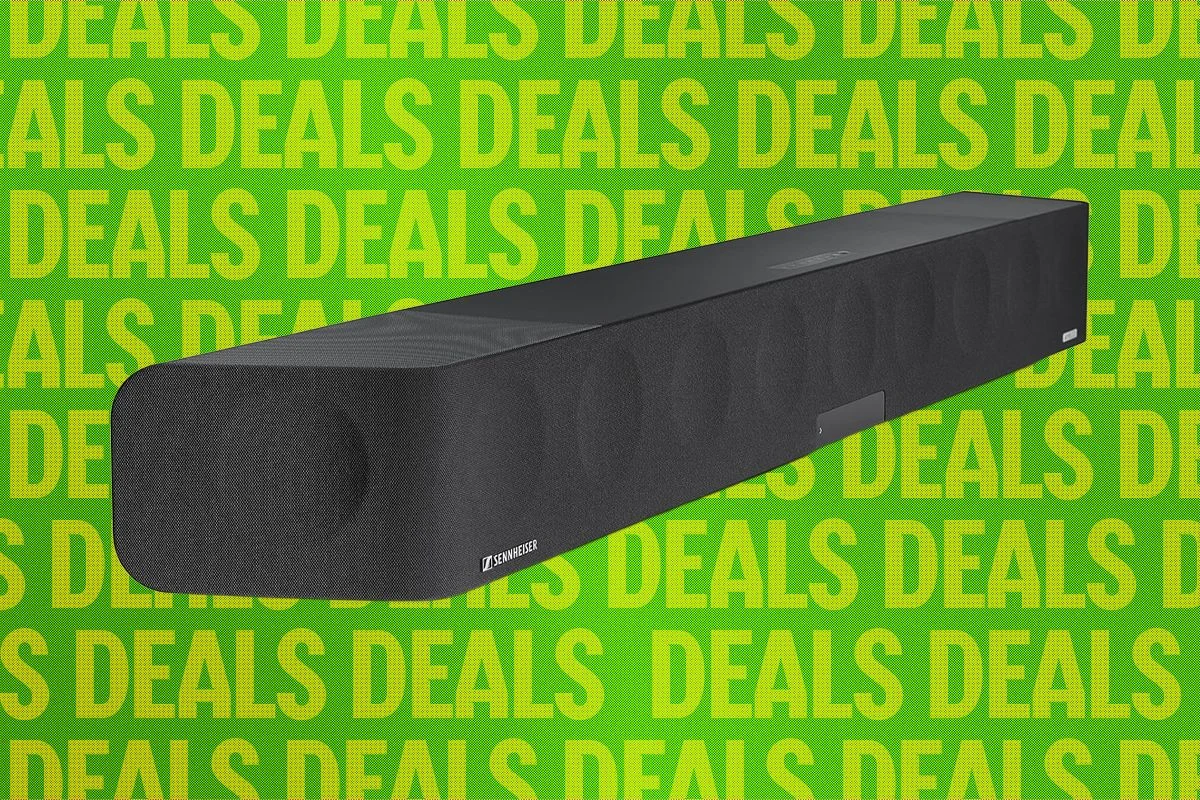
The consumer electronics market is witnessing a major shift in premium home audio accessibility as Best Buy has authorized a $1,000 price reduction on the Sennheiser Ambeo Soundbar Max, bringing the unit’s retail price down to $2,000 from its standard $3,000 list price. This significant markdown represents one of the most substantial discounts on the flagship audio device since its market debut, positioning the high-end soundbar as a competitive alternative to traditional multi-speaker home theater systems during a period of heightened retail activity. The Ambeo Soundbar Max, widely regarded as a benchmark in the "all-in-one" audio category, utilizes a large-form chassis to house a sophisticated array of drivers capable of reproducing 5.1.4-channel sound without the immediate necessity for an external subwoofer or satellite speakers.
Technical Architecture and Acoustic Engineering
The Sennheiser Ambeo Soundbar Max distinguishes itself through its sheer physical scale and the complexity of its internal hardware. Unlike the increasingly common trend toward slim, low-profile soundbars that often sacrifice acoustic resonance for aesthetics, the Ambeo Max measures approximately 50 inches in width and weighs nearly 41 pounds. This substantial volume is a deliberate engineering choice intended to facilitate the displacement of enough air to generate deep low-frequency responses, which Sennheiser claims can reach as low as 30Hz.
The internal architecture consists of 13 independent high-end drivers. This includes six 4-inch long-throw woofers constructed with cellulose sand-wich cones, five 1-inch high-fidelity aluminum dome tweeters, and two 3.5-inch top-firing drivers. The arrangement is designed to facilitate Sennheiser’s proprietary Ambeo 3D technology, developed in collaboration with the Fraunhofer Institute for Integrated Circuits IIS. This technology utilizes advanced virtualization to "map" the acoustic properties of a room, bouncing sound waves off walls and ceilings to create the illusion of a full surround-sound environment from a single source point.
The device supports a comprehensive suite of modern audio formats, including Dolby Atmos, DTS:X, and MPEG-H. Furthermore, it features an integrated Upmix Technology that can convert stereo or 5.1 audio into an immersive 3D experience, providing a broader soundstage for legacy content.
Chronology of the Ambeo Series and Market Evolution
The release of the original Ambeo Soundbar, later rebranded as the "Max" to distinguish it from newer, smaller siblings, marked a pivotal moment for Sennheiser. Traditionally known for its high-fidelity headphones and professional microphones, the German audio manufacturer entered the home cinema market in 2019 with the goal of creating a soundbar that could rival a dedicated A/V receiver and speaker setup.
Since its 2019 launch, the Ambeo Max has undergone several software evolutions. In early 2022, Sennheiser released a major firmware update that introduced the "Ambeo OS," which revamped the user interface and added support for Apple AirPlay 2, Spotify Connect, and Tidal Connect via Google Chromecast. This update effectively modernized the unit’s connectivity suite, ensuring its relevance in an ecosystem increasingly dominated by wireless streaming protocols.
Following the success of the flagship model, Sennheiser expanded the line to include the Ambeo Soundbar Plus and the Ambeo Soundbar Mini. These newer models targeted consumers with smaller living spaces or more modest budgets. However, the Max remains the only unit in the lineup featuring the larger 4-inch woofers and the high-output capacity required for large-scale home theaters, which explains why a $1,000 discount on this specific model is viewed by industry analysts as a significant market event.
Connectivity Suite and Integration Capabilities
One of the primary advantages of the Ambeo Max’s larger footprint is the inclusion of a comprehensive input/output panel, which often exceeds the capabilities of compact competitors. The device serves as a central hub for home entertainment, featuring:
- HDMI Connectivity: One HDMI 2.1 output with enhanced Audio Return Channel (eARC) support, alongside three HDMI 2.0a inputs. These inputs support 4K pass-through, allowing users to connect gaming consoles, Blu-ray players, and streaming boxes directly to the soundbar.
- Analog and Digital Inputs: The inclusion of an optical digital input and a stereo RCA (AUX) input allows for the integration of legacy hardware, such as turntables with built-in phono preamps or older CD players.
- Data and Networking: An Ethernet port is provided for stable wired internet connections, which is critical for high-bitrate audio streaming, alongside a USB port for service updates.
- Subwoofer Expansion: While the Ambeo Max is designed to operate without an external sub, it includes a dedicated pre-out (mono RCA) for users who wish to add a powered subwoofer to achieve even greater low-end extension.
The system also includes a professional-grade calibration microphone in the box. During the initial setup, users place this microphone at their primary listening position. The soundbar then emits a series of test tones to measure the room’s dimensions and reflective surfaces, automatically adjusting its equalization and virtualization parameters to optimize performance for that specific environment.
Comparative Market Analysis and Supporting Data
In the current premium soundbar landscape, the Sennheiser Ambeo Max competes directly with systems such as the Sony HT-A7000 and the Sonos Arc. While the Sonos Arc is significantly more affordable, it generally requires the addition of a Sonos Sub and Era 300 satellite speakers to match the atmospheric scale and bass output of the standalone Ambeo Max. At the discounted $2,000 price point, the Ambeo Max enters a price bracket where it challenges these modular systems on a value basis, offering a cleaner aesthetic with fewer cables and power outlets required.
Industry data suggests that the "all-in-one" premium segment is growing as urban consumers seek high-performance audio that does not require the complex wiring of a 7.1.4 component system. Market research indicates that approximately 40% of premium soundbar buyers cite "ease of setup" as a primary purchasing driver. The Ambeo Max addresses this demographic by providing a "plug-and-play" solution that does not compromise on the acoustic physics required for cinematic sound.
Broader Retail Context: The Spring Sales Phenomenon
The timing of Best Buy’s $1,000 discount coincides with the broader "Amazon Big Spring Sale" and similar promotional windows across major retailers. Historically, the month of March and early April serve as a transition period for consumer electronics, as manufacturers prepare to announce or ship new model year iterations.
While Sennheiser has not officially confirmed a direct successor to the Ambeo Max, large-scale price reductions of this nature often suggest an effort by retailers to manage inventory levels. However, for the consumer, these cycles provide a unique opportunity to acquire "end-of-cycle" flagship technology that still outperforms many newly released mid-range products.
Industry experts note that Sennheiser’s decision to maintain the Ambeo Max as its top-tier offering for five years is a testament to the unit’s over-engineered hardware. While many electronics become obsolete within two to three years, the physical driver quality and the processing power of the Ambeo Max have allowed it to remain at the top of "Best Of" lists since its inception.
Official Responses and Industry Implications
While Sennheiser’s corporate communications typically focus on the "audiophile heritage" of their products, retail partners like Best Buy emphasize the "home cinema transformation" aspect. In previous statements regarding the Ambeo line, Sennheiser representatives have noted that the goal of the Ambeo project was to "reset the expectations of what a soundbar can achieve."
The implication of this $2,000 price point is a potential democratization of high-end audio. By lowering the barrier to entry for a device that was previously priced out of reach for many enthusiasts, Sennheiser and Best Buy are likely to see an uptick in adoption among "prosumer" home theater builders. This move also puts pressure on competitors like Bang & Olufsen and Devialet, who maintain soundbar offerings in the $3,000 to $4,500 range, to justify their premium pricing against a now more affordable industry titan.
Final Considerations for Potential Adopters
Prospective buyers should take note of the physical requirements of the Ambeo Soundbar Max. Due to its height (over 5 inches), it may block the bottom of the screen on some televisions if placed on the same media console. Potential owners are encouraged to measure their furniture or consider wall-mounting the unit using the optional Sennheiser wall bracket.
Furthermore, while the Ambeo Max provides an exceptional standalone experience, its performance is highly dependent on the room’s acoustics. Rooms with vaulted ceilings or open-concept layouts on one side may see a slight reduction in the effectiveness of the side-firing and top-firing virtualization compared to a enclosed, rectangular living room.
As the Amazon Big Spring Sale continues to drive prices down across various categories, the Sennheiser Ambeo Max deal stands out as a high-value proposition for those looking to invest in a long-term audio solution. The $1,000 markdown is currently available through Best Buy’s online portal and select physical locations, though stock levels for flagship items at this discount level are traditionally volatile.







