rifanmuazin
A recent in-depth study, analyzing nearly 2 million videos, has provided critical insights into the optimal times for content creators to post on YouTube. The findings, released by Buffer, underscore a significant shift in viewer engagement patterns, now clearly differentiating peak posting times for traditional long-form videos and the increasingly popular YouTube Shorts. This updated analysis highlights the evolving nature of digital content consumption and the continuous need for creators to adapt their strategies for maximum impact.
The study, which encompassed both long-form videos and YouTube Shorts, aimed to offer concrete guidance on a crucial, yet often elusive, factor in YouTube success: timing. While acknowledging that content quality, compelling titles, and effective thumbnails remain paramount, the research posits that strategic posting can provide a vital boost to content visibility and engagement. This is particularly relevant given the platform’s dynamic algorithms and the competitive landscape faced by creators, from individual enthusiasts to professional marketers.
Methodology and Scope of the Analysis
Buffer’s research delved into the median engagement of 1.8 million videos, meticulously comparing their performance across every hour and day of the week. This extensive dataset allowed researchers to pinpoint discernible patterns in posting times that correlated with the highest levels of viewer interaction. A notable refinement from Buffer’s 2025 analysis is the explicit separation of data for long-form videos and YouTube Shorts. This methodological adjustment acknowledges the divergent consumption habits associated with each format, leading to more accurate and actionable recommendations for creators.
A key aspect of the study’s design was its universal applicability regarding time zones. Through sophisticated data normalization, the recommended posting times are designed to be universally relevant, eliminating the need for creators to convert times based on their specific geographical location. This simplifies the implementation of the findings for a global audience of YouTubers.
Key Findings: Optimal Times for Long-Form YouTube Videos
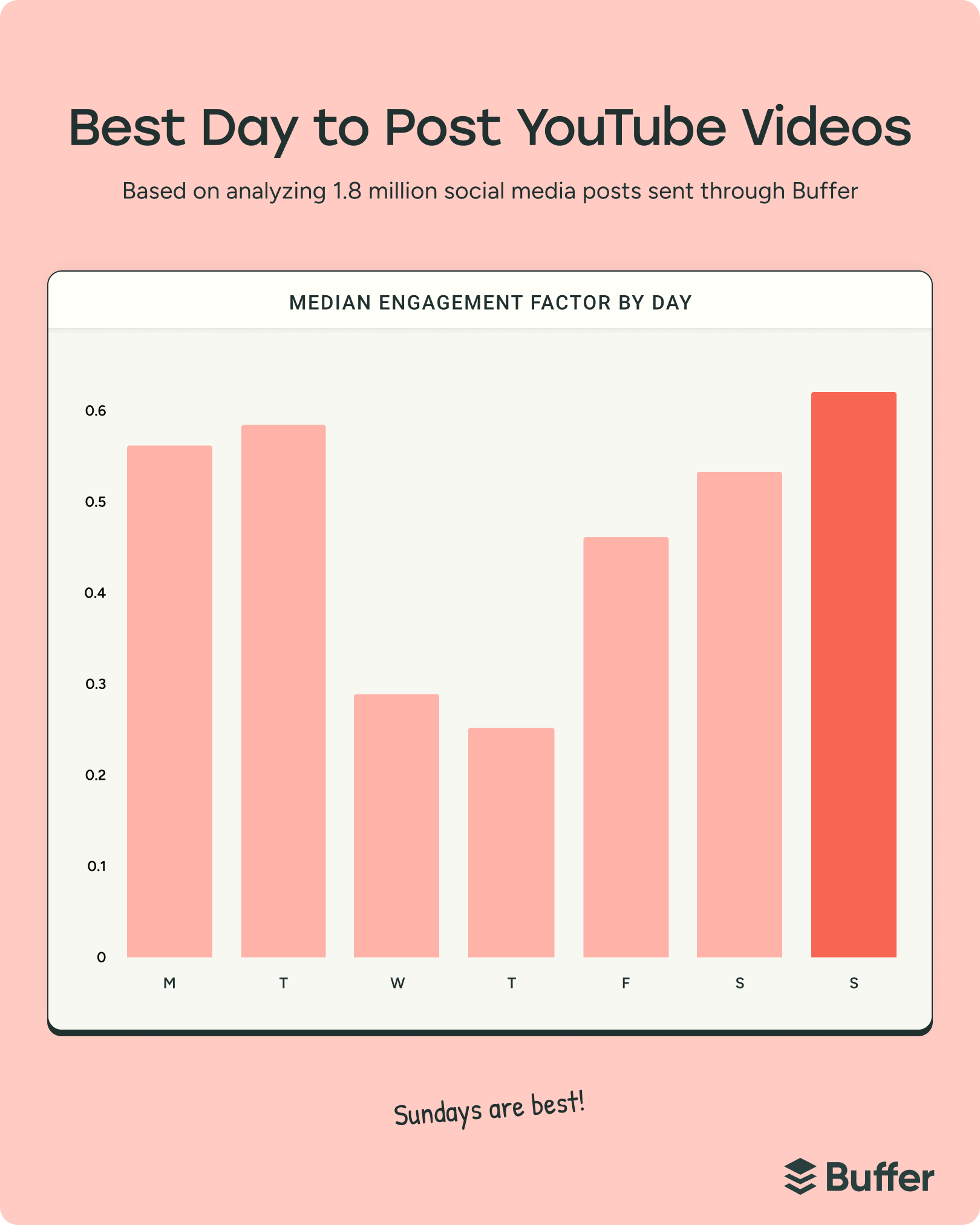
The analysis revealed a distinct shift in optimal posting times for long-form content, with weekend mornings now dominating engagement metrics.
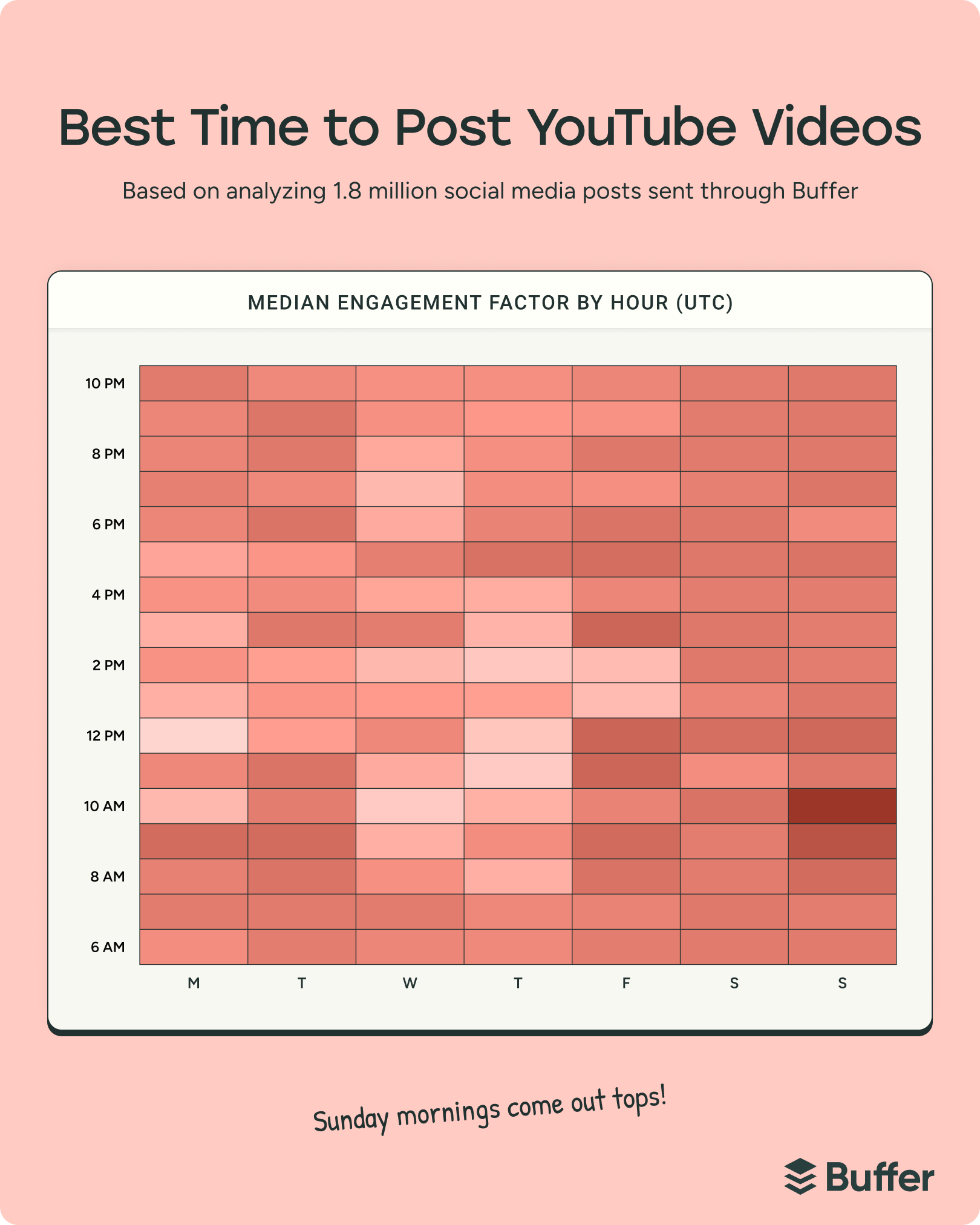
- Overall Peak: Sunday at 10 a.m. emerged as the unequivocally best time to post long-form videos, demonstrating significantly higher engagement than any other slot throughout the week. Other top-performing times on Sunday included 9 a.m. and 12 p.m.
- Morning Dominance: Generally, long-form videos shared during the morning hours—approximately between 8 a.m. and 11 a.m.—consistently garnered the highest engagement. This marks a substantial departure from Buffer’s previous analysis, which had identified late afternoon (3–5 p.m.) on weekdays as the sweet spot.
- Weekend Ascendancy: Weekends, particularly Sundays, now significantly outperform midweek days. This reversal suggests a change in viewer habits, possibly indicating increased leisure time dedicated to consuming longer-form content during non-working hours.
- Weakest Periods: Conversely, the study identified early-to-mid afternoon on weekdays, particularly Wednesday and Thursday, as the times with the lowest engagement. Thursday at 2 p.m. registered one of the lowest engagement factors recorded in the dataset.
Detailed Breakdown by Day for Long-Form Videos:
- Monday: The best time to post is 9 a.m., with strong secondary windows at 10 p.m. and 7 a.m. Monday mornings appear to be a favored time for viewers to initiate their week with engaging YouTube content, while the late-evening slot suggests a segment of the audience winds down with videos.
- Tuesday: Ranking as one of the strongest weekdays, Tuesday’s peak time is 9 a.m., with 11 a.m. and 8 a.m. also performing exceptionally well. The morning window from 8 a.m. to 11 a.m. is consistently high-performing, making Tuesday mornings a reliable choice for weekly uploads.
- Wednesday: While generally one of the weaker days, the best time to post is 7 a.m., followed by 3 p.m. and 5 p.m. Creators posting on Wednesday might manage expectations, but early morning and mid-afternoon still present reasonable engagement opportunities.
- Thursday: This day recorded the weakest engagement for long-form videos. The optimal time is 5 p.m., followed by 6 p.m. and 7 a.m. Midday and early afternoon slots showed particularly low engagement, prompting consideration for shifting Thursday uploads to Friday evenings where possible.
- Friday: Uniquely among weekdays, Friday’s midday peak at 12 p.m. stands out, boasting one of the highest engagement factors of the entire week (0.70). Other strong slots include 11 a.m. and 3 p.m., positioning Friday lunchtime as a robust alternative to Sunday for high-impact posts.
- Saturday: Engagement on Saturday is moderate and relatively consistent throughout the day, peaking at 12 p.m., followed by 10 a.m. and 3 p.m. It serves as a solid posting day, especially for audiences with strong weekend viewing habits.
- Sunday: The undisputed best day for long-form videos, with 10 a.m. scoring a remarkable 0.95 engagement factor. Secondary peaks at 9 a.m. (0.80) and 12 p.m. (0.67) further solidify Sunday mornings as the prime window for long-form content.
The significant shift from previous years, where weekdays were often preferred, suggests a change in how audiences integrate YouTube into their daily routines. Factors such as flexible work schedules, increased digital consumption during leisure hours, and the evolving sophistication of YouTube’s recommendation engine could contribute to this trend. Content creators, particularly those in educational, documentary, or entertainment niches that require longer engagement, should strongly consider leveraging these weekend morning slots.
Key Findings: Optimal Times for YouTube Shorts
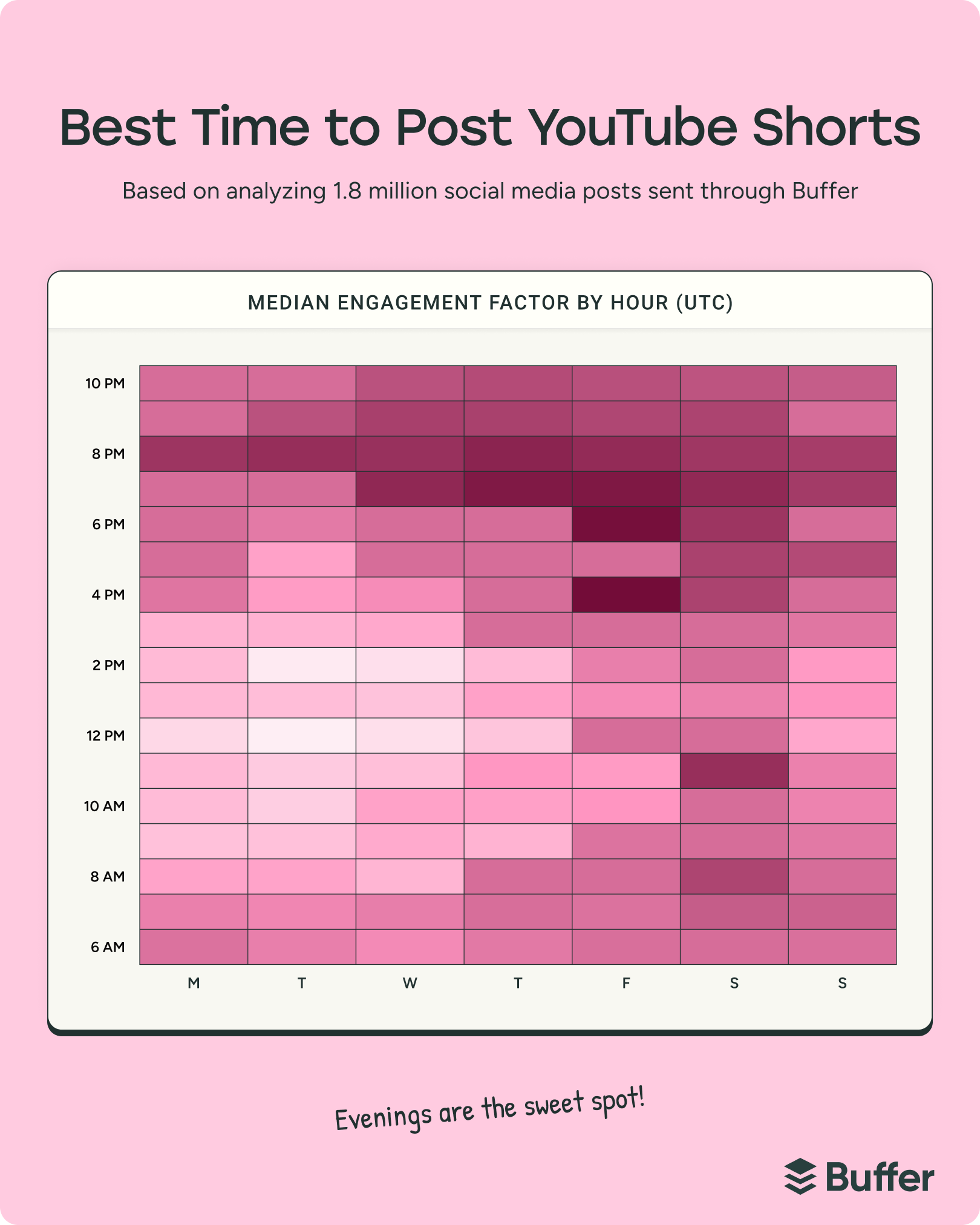
In stark contrast to long-form content, YouTube Shorts exhibit a fundamentally different engagement pattern, predominantly favoring evening hours.
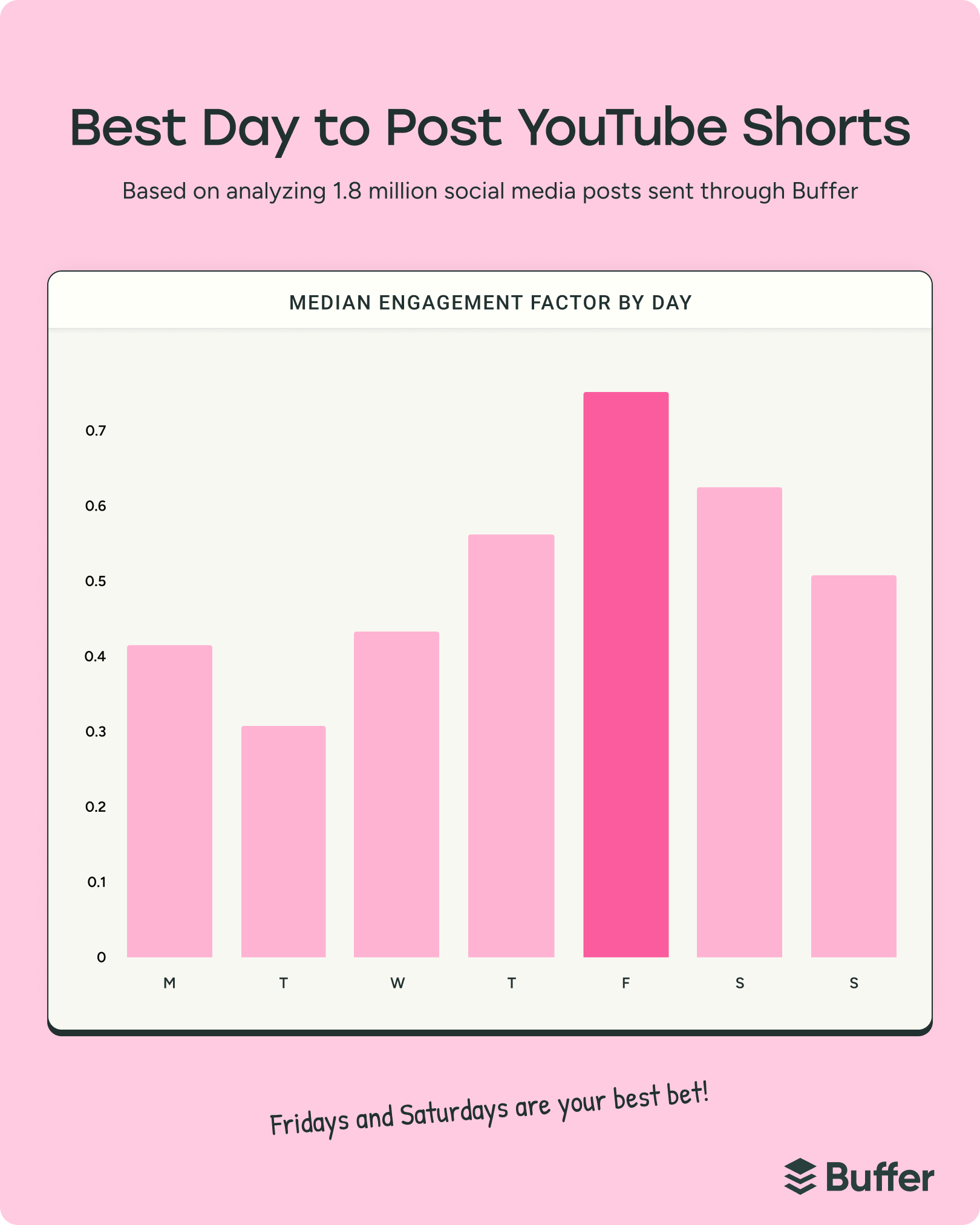
- Overall Peak: Friday at 4 p.m. emerged as the top slot for YouTube Shorts, closely followed by 6 p.m. and 7 p.m. on the same day. This firmly establishes Friday as the paramount day for short-form video engagement.
- Evening Dominance: While long-form videos thrive in the mornings, YouTube Shorts engagement consistently peaks in the evenings, generally between 6 p.m. and 11 p.m. This aligns with behavioral observations that short-form content is often consumed during periods of relaxation and unwinding at the end of the day.
- Weakest Periods: The study indicated that midday and early afternoon, typically between 12 p.m. and 5 p.m., are generally less effective for Shorts uploads, with Friday afternoon being a notable exception where it transitions into peak performance.
Detailed Breakdown by Day for YouTube Shorts:
- Friday: This day is unparalleled for Shorts, with multiple evening slots achieving top engagement. The 4 p.m., 6 p.m., and 7 p.m. timings underscore Friday evening as a prime opportunity.
- Saturday: An interesting anomaly, Saturday includes an 11 a.m. morning slot among its top three, alongside evening peaks. This suggests a potential window for early-day Shorts consumption on the weekend.
- Thursday: Following Friday and Saturday, Thursday also demonstrates strong evening performance for Shorts.
- Weakest Days: Tuesday and Monday were identified as the weakest days for posting YouTube Shorts.
The preference for evening consumption of Shorts can be attributed to their quick, digestible nature, making them ideal for casual browsing during commutes, before bed, or while multitasking. Creators focusing on quick tutorials, behind-the-scenes glimpses, or viral trends will find these evening slots, particularly on Fridays and Saturdays, to be most effective.
Long-Form vs. Shorts: A Strategic Divergence for Creators
The most compelling takeaway from this comprehensive analysis is the almost complete lack of overlap between optimal posting times for long-form videos and YouTube Shorts. This distinct separation presents a significant strategic advantage for creators who produce both formats.
- Long-Form: Best performance in morning hours, especially on Sundays.
- YouTube Shorts: Best performance in evening hours, especially on Fridays.
This divergence allows creators to schedule their content without self-competition. A creator can strategically deploy a long-form video on a Sunday morning to capture viewers seeking in-depth content during their leisure, then release a YouTube Short on a Friday evening to engage a different segment of their audience, or even the same audience in a different consumption mode, as they unwind. This dual-track scheduling can optimize overall channel engagement and reach.
Beyond General Data: Personalizing Your Strategy with YouTube Analytics
While the broad recommendations from Buffer’s study offer an excellent starting point, every YouTube channel serves a unique audience with specific behaviors. Therefore, relying solely on general data may not unlock a channel’s full potential. The key to truly optimizing a YouTube posting schedule lies in leveraging YouTube’s native analytics tools.
A Step-by-Step Guide to Using YouTube Studio for Personalized Insights:
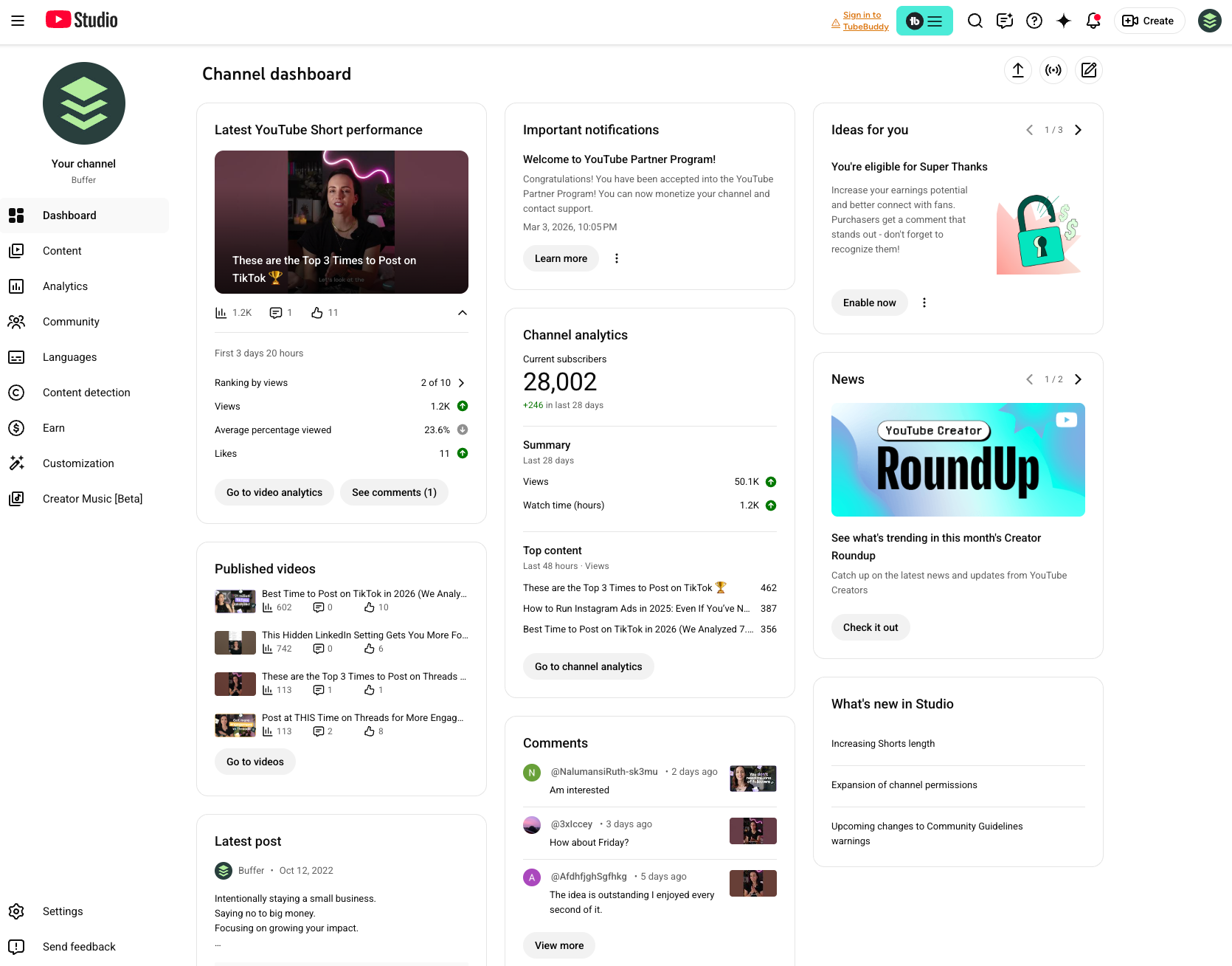
- Access YouTube Studio: The primary control center for any YouTube channel is studio.youtube.com. Familiarizing oneself with this platform is crucial for managing uploads, monitoring subscriber growth, moderating comments, and tracking video performance.
- Navigate to YouTube Analytics: Within YouTube Studio, the "Analytics" tab on the left-hand side provides a wealth of data. The "Overview" section offers immediate insights into overall viewership, watch time, subscriber growth, and engagement metrics. Regularly reviewing these statistics is a fundamental practice for any content marketer or full-time YouTuber.
- Utilize the Audience Tab: For specific insights into optimal posting times, the "Audience" tab is invaluable. Here, creators can explore detailed demographics of their viewers, including location, age, and gender. More importantly, this tab houses the "When your viewers are on YouTube" graph. This unique heatmap, presented in the creator’s local time zone, visually represents audience activity levels. Darker purple slots indicate periods of peak viewer activity, while lighter shades denote lower activity. These darker areas are the strongest indicators of when your specific audience is most engaged. It is imperative to check this data regularly, as it typically reflects the past 28 days and can shift over time, necessitating continuous adaptation of posting schedules.
By combining the generalized insights from Buffer’s study with the personalized data from YouTube Analytics, creators can develop a highly refined and effective content calendar tailored to their specific audience’s consumption patterns. This data-driven approach minimizes guesswork and maximizes the potential for engagement.
Your Checklist for High-Performing YouTube Videos and Shorts
While timing can provide a significant advantage, it is merely one component of a holistic strategy for YouTube success. For videos and Shorts to truly thrive, creators must focus on several interconnected factors:
- Content Quality and Value: This remains the single most critical factor. Videos must be well-produced, engaging, and deliver tangible value or entertainment to the viewer. High-quality content naturally fosters longer watch times and repeat viewership.
- Strategic Titles and Descriptions: Optimizing video titles and descriptions with relevant keywords is crucial for search engine optimization (SEO) on YouTube. Clear, concise, and keyword-rich titles help videos appear in search results and recommended feeds.
- Compelling Thumbnails: A captivating thumbnail is often the first point of contact with a potential viewer. It must be visually appealing, accurately represent the video’s content, and designed to maximize click-through rates.
- Audience Engagement and Community Building: Actively interacting with viewers through comments, Q&A sessions, and community posts builds loyalty and encourages repeat visits. A strong community can also amplify reach through shares and recommendations.
- Consistency in Uploads: A regular posting schedule, even if less frequent, helps to set viewer expectations and keeps the channel active in the algorithm’s eyes. This consistency also reinforces audience habits.
- Cross-Promotion: Leveraging other social media platforms, websites, and email newsletters to promote new YouTube content can significantly expand its initial reach and drive traffic back to the channel.
- Adaptability to Algorithm Changes: YouTube’s algorithm is constantly evolving. Creators must stay informed about platform updates and be prepared to adjust their content strategy and optimization techniques accordingly.
Conclusion and Future Outlook
Buffer’s latest analysis provides invaluable, updated guidance for content creators navigating the complex world of YouTube. The clear differentiation between optimal posting times for long-form videos and YouTube Shorts highlights the platform’s multifaceted ecosystem and the varied ways audiences consume content. The shift towards weekend mornings for long-form content and weekday evenings for Shorts underscores the dynamic nature of viewer behavior and the need for continuous adaptation.
For creators, the message is clear: data-driven decision-making is paramount. By leveraging both broad industry research and personalized YouTube Analytics, creators can strategically schedule their content to align with peak audience activity. However, this optimization of timing must always be supported by a foundational commitment to high-quality content, robust SEO, compelling visuals, and active community engagement. As YouTube continues to evolve, those who remain agile and responsive to these insights will be best positioned for sustained growth and success.