rifanmuazin
In a significant move aimed at enhancing user control and digital well-being, Instagram, the popular photo and video sharing platform owned by Meta, has officially rolled out a global feature allowing users to completely reset their algorithmic recommendations. This functionality, initially tested in late 2024 and subsequently expanded worldwide, provides a fresh start for users seeking to overhaul their Explore, Reels, and main feed content, effectively wiping the slate clean on their accumulated algorithmic preferences. The introduction of this tool reflects a growing industry trend towards greater algorithmic transparency and user empowerment, particularly in response to increasing concerns about social media’s impact on mental health and the potential for algorithmic echo chambers.
The Mechanics of Algorithmic Personalization: A Deep Dive
To fully appreciate the impact of an Instagram algorithm reset, it is crucial to understand how the platform’s sophisticated algorithms function. Instagram’s recommendation system is designed to personalize each user’s experience by predicting what content they are most likely to engage with. This personalization is built upon a vast array of "signals" continuously collected from user interactions. These signals can be broadly categorized into explicit and implicit cues.
Explicit signals are direct indicators of preference, such as liking a post, commenting on a photo, sharing a Reel with a friend, saving content for later, or following specific accounts. These actions clearly communicate a user’s interest in certain topics, creators, or content formats. Implicit signals, on the other hand, are more subtle but equally powerful. They include the amount of time spent lingering on a particular video or image, tapping on a profile to view more content, searching for specific hashtags or users, or even sending direct messages related to certain content. Every scroll, pause, tap, and search contributes to a complex user profile that the algorithm uses to curate future recommendations. Over months or years, these hundreds of thousands of signals create a highly tailored, yet sometimes inadvertently limiting, digital environment.
While this personalization aims to keep users engaged by serving content relevant to their perceived interests, it can also lead to unintended consequences. Users may find themselves trapped in content "rabbit holes" or exposed to an overwhelming amount of content that no longer aligns with their evolving lives or values. For instance, a user who heavily engaged with wedding planning content might continue to see such posts long after their nuptials, or an initial casual interest in a specific topic could spiral into an endless stream of related, and potentially distressing, content.
The Genesis: Addressing Digital Well-being and Teen Safety
The development and global release of the algorithm reset feature are not isolated events but rather part of a broader, ongoing effort by Meta to address critical issues surrounding digital well-being, particularly for younger users. Over recent years, social media companies have faced intensified scrutiny from lawmakers, parents, and mental health advocates regarding the potential negative impacts of their platforms on adolescent mental health. Concerns include increased rates of anxiety, depression, body image issues, and the phenomenon of "doom-scrolling" – passively consuming negative or overwhelming content.

Meta has responded to these concerns with a series of initiatives aimed at fostering safer and more positive online experiences. In September 2024, Instagram introduced enhanced protections for Teen Accounts, focusing on cultivating "safe, positive, age-appropriate experiences." The algorithm reset feature emerged as a direct extension of these efforts, initially conceived with teenagers in mind, offering them a clear pathway to refresh their digital environment. Instagram’s official statement from November 2024 emphasized their commitment to giving users "new ways to shape their Instagram experience, so it can continue to reflect their passions and interests as they evolve." While the initial impetus was teen safety, the company quickly recognized the universal appeal and utility of such a tool for all users, leading to its global rollout. This chronology underscores a proactive approach by the platform to empower users to take charge of their feeds, moving beyond passive consumption to active curation.
Why Users Seek a Digital Detox: Common Motivations for a Reset
The motivations for initiating an Instagram algorithm reset are diverse and deeply personal, reflecting the dynamic nature of users’ lives and digital interactions. One of the most common reasons is a simple shift in personal interests. Life transitions, such as starting a new job, moving to a new city, getting married, or pursuing a new hobby, often mean that old content preferences become irrelevant. The algorithm, however, continues to serve content based on past interactions, leading to a feed that feels stale or unhelpful.
Beyond mere irrelevance, many users opt for a reset to escape what they perceive as a "toxic" or mentally draining feed. Over time, an algorithm can inadvertently amplify negative content, creating a constant stream of anxiety-inducing news, comparison-driving lifestyle posts, or even content that promotes unhealthy behaviors. This can lead to increased feelings of stress, inadequacy, or simply a diminished sense of enjoyment from using the platform. For these users, a reset offers a crucial opportunity to break free from these detrimental patterns and cultivate a more positive and uplifting digital space.
Professionals, including content creators, marketers, and social media managers, also find significant value in this feature. A reset can serve as an invaluable research tool, providing a cleaner, unbiased look at what Instagram’s algorithm is organically surfacing within specific niches or industries. By clearing their personal browsing history, professionals can gain fresh insights into emerging trends, competitor strategies, and the types of content currently performing well, without the distortion of their own established engagement patterns. This "clean slate" allows for more objective market analysis and content strategy formulation.
Furthermore, some users simply seek to reduce overall screen time or combat addictive "doom-scrolling" habits. A feed saturated with highly engaging, yet ultimately unfulfilling, content can make it difficult to disengage. By resetting the algorithm, users can intentionally rebuild their feed with content that is more purposeful, inspiring, or less prone to endless scrolling, thereby fostering healthier digital habits.
How to Initiate Your Instagram Algorithm Reset
Executing an Instagram algorithm reset is designed to be straightforward, reflecting the platform’s intention to make user control accessible. The process involves navigating through the application’s settings:
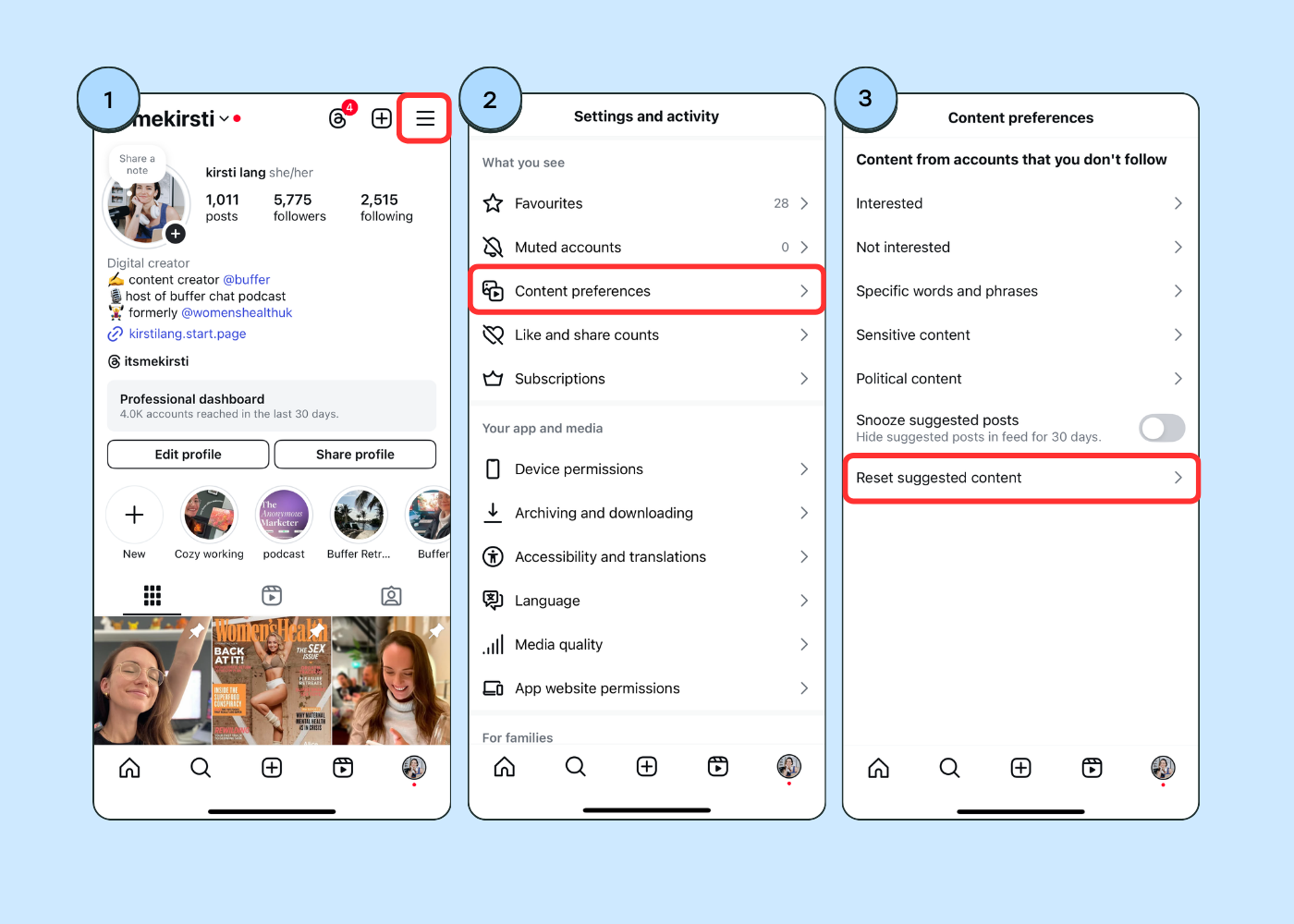
- Access Your Profile: Open the Instagram app and tap on your profile icon in the bottom right corner.
- Open Settings and Activity: Tap the three horizontal lines (hamburger menu) in the top right corner, then select "Settings and activity."
- Navigate to Suggested Content: Scroll down and find the "Suggested content" option. This section houses controls related to what Instagram recommends to you.
- Select "Reset suggested content": Within the "Suggested content" menu, locate and tap on "Reset suggested content."
- Confirm Reset: A prompt will appear, explaining what the reset entails. Confirm your decision by tapping the "Reset" button.
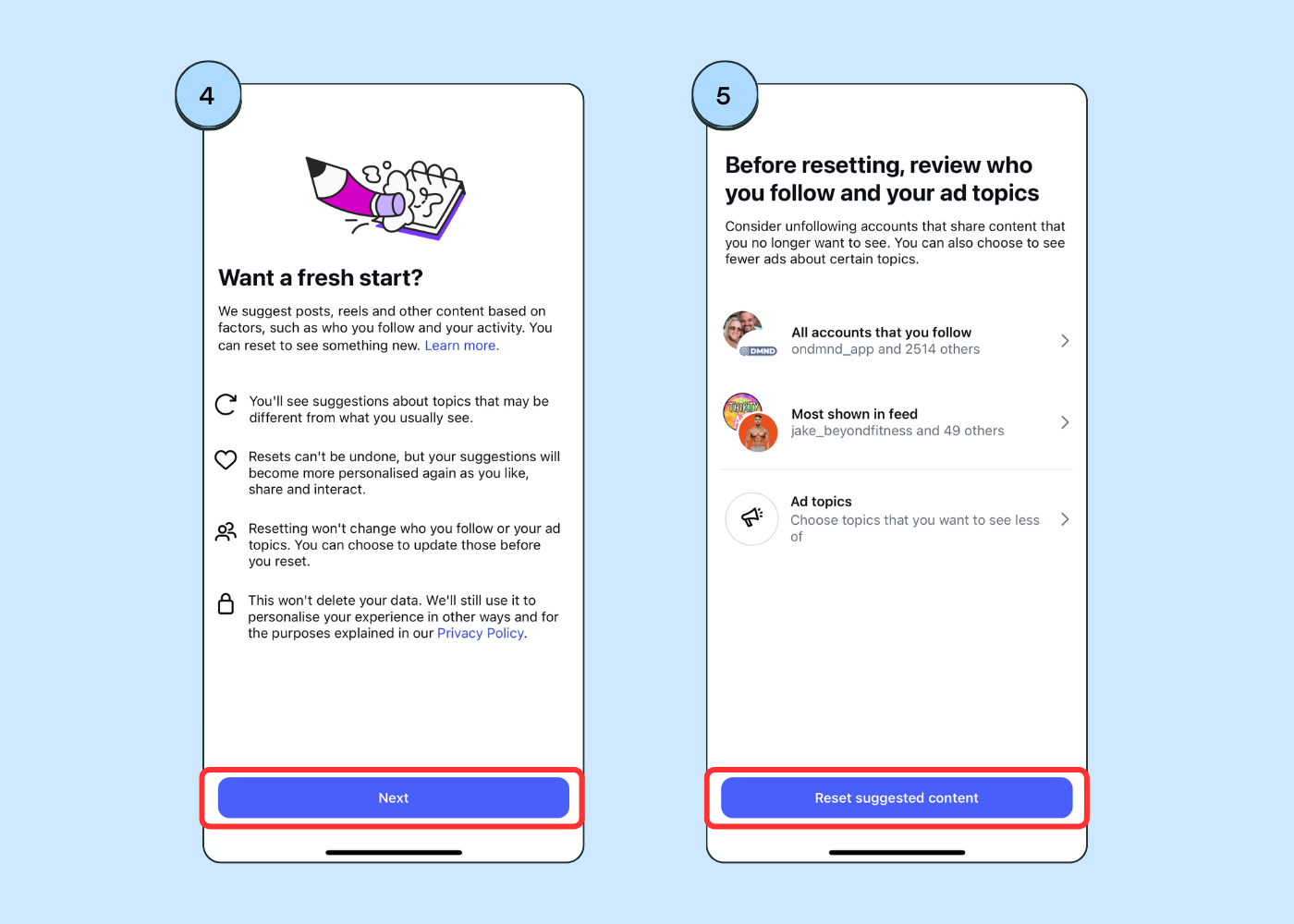
Before finalizing the reset, Instagram provides a valuable "Pro tip": users are given the option to review the accounts they are currently following. This is a crucial moment for strategic curation. Users can choose to unfollow accounts that no longer serve their interests, mute profiles they wish to temporarily silence, or adjust ad topics to refine their overall experience without necessarily opting for a full algorithm wipe. This intermediate step allows for a more nuanced approach to feed management.
Immediate and Long-Term Effects of a Reset
Upon confirming the algorithm reset, Instagram’s recommendation engine effectively treats the user’s account as if it were brand new in terms of content suggestions. The Explore page will feature a broader, less personalized array of content, and Reels and the main feed (beyond accounts the user explicitly follows) will present a mix designed to gauge initial interests. It’s akin to moving into a new neighborhood while keeping all your personal belongings and connections – your existing social graph (followers, following, DMs, posts, stories) remains entirely intact, but the surrounding environment of suggested content undergoes a radical transformation.
Here’s a concise overview of what changes and what remains the same:
| Feature | Status After Reset |
|---|---|
| Explore and Reels recommendations | Wiped / Reset to default |
| Accounts you follow | Unchanged |
| Your posts and stories | Unchanged |
| Direct messages (DMs) | Unchanged |
| Ad preferences | Unchanged |
| Saved content | Unchanged |
| Blocked accounts | Unchanged |
The long-term effect of the reset hinges entirely on the user’s subsequent engagement. After the reset, every interaction becomes a powerful signal. Liking, commenting, sharing, saving, and even simply pausing on content will begin to retrain the algorithm. The more intentional and discerning a user is in these initial days and weeks post-reset, the more effectively they can shape their new feed to align with their current preferences and goals. This period is critical for establishing a healthy, purposeful relationship with the platform’s recommendations.
Beyond the Reset: Proactive Tools for Feed Curation
For users who prefer a more gradual or granular approach to feed management, Instagram offers a suite of tools that enable ongoing curation without requiring a full algorithm reset. These features empower users to actively refine their content experience on a daily basis:
- "Not Interested" and "Don’t Suggest": When encountering content that is irrelevant or undesirable, users can tap the three dots next to a post or Reel and select "Not Interested" or "Don’t Suggest." This directly signals to the algorithm that similar content should be shown less frequently.
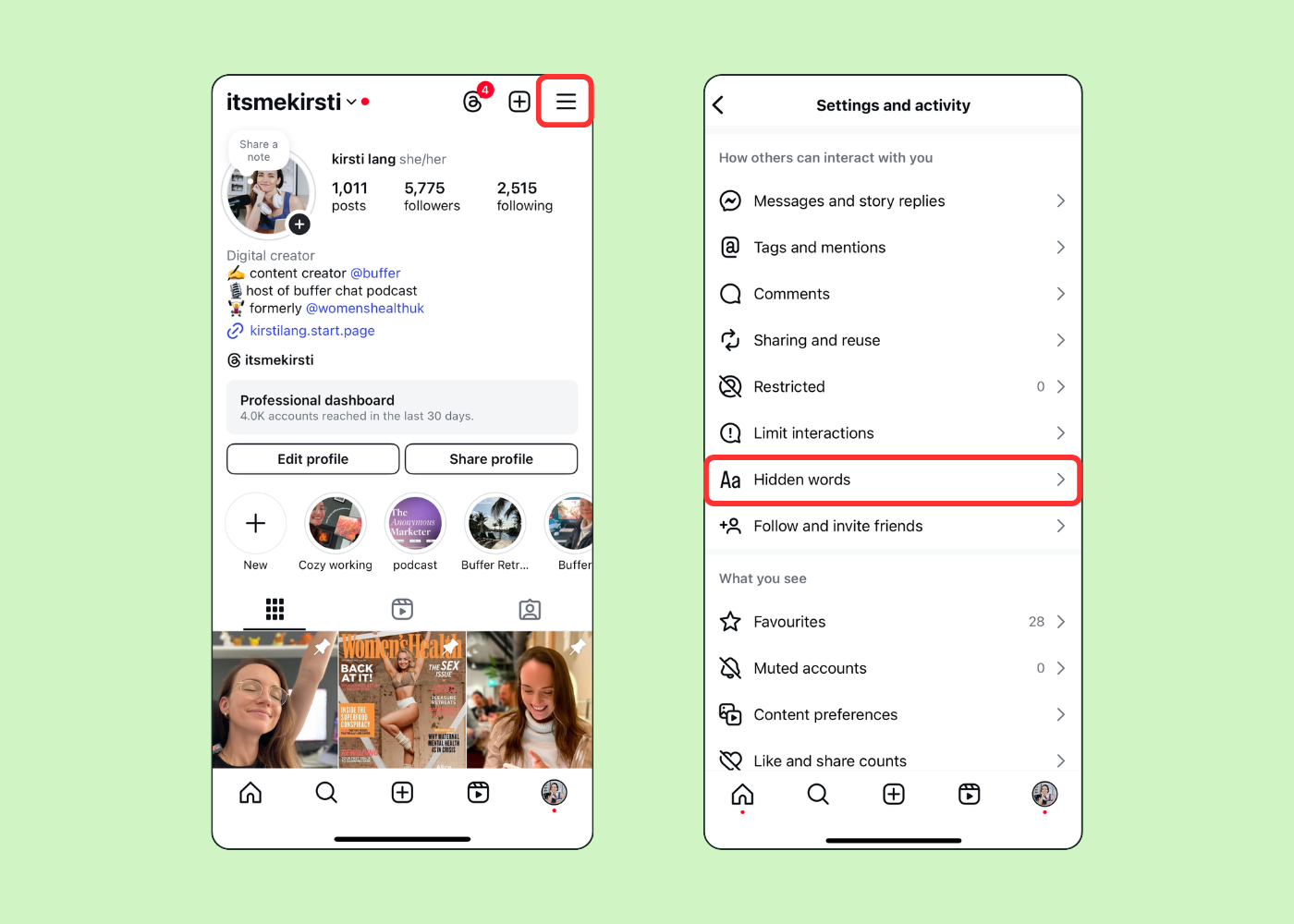
- Hidden Words: This feature allows users to filter out offensive or unwanted comments and direct message requests containing specific words, phrases, or emojis. It’s a powerful tool for combating cyberbullying and hate speech.
- Mute and Restrict: Users can mute accounts to stop seeing their posts and stories without unfollowing them, ideal for temporary breaks. The "Restrict" feature offers a more controlled interaction, hiding comments and messages from a restricted user unless manually approved.
- Favorites and Following Feeds: Instagram offers alternative feed views. The "Favorites" feed displays content only from accounts designated as favorites, ensuring users see posts from their closest connections. The "Following" feed shows posts chronologically from all followed accounts, bypassing algorithmic ordering. These options provide direct control over content visibility.
- Unfollow: The most direct way to remove unwanted content is to unfollow accounts that no longer align with interests. The algorithm reset process itself provides an opportune moment to review and prune one’s following list.
Broader Implications: User Empowerment, Mental Health, and the Future of Social Media
The global rollout of Instagram’s algorithm reset feature carries significant implications across several domains. Firstly, it represents a substantial step towards user empowerment. For too long, users have been passive recipients of algorithmic dictates. This feature shifts the balance of power, granting individuals a tangible mechanism to reclaim agency over their digital environments. It acknowledges that user preferences are dynamic and provides a tool to reflect that evolution.
Secondly, the potential positive impact on mental health and digital well-being is considerable. By enabling users to shed negative or unhelpful content, the reset can foster a more positive and constructive online experience. In an era where "doom-scrolling" and algorithmic reinforcement of anxiety-inducing content are prevalent concerns, providing a "reset button" can be a vital component of a personal digital hygiene strategy. Digital well-being advocates have long called for such tools, and Instagram’s implementation is likely to be welcomed by those seeking healthier relationships with social media.
From an industry perspective, this move could signal a broader trend. As social media platforms continue to mature and face increasing public and regulatory scrutiny, offering greater algorithmic control may become a standard expectation rather than a novel feature. It might pave the way for more nuanced controls, potentially allowing users to reset specific categories of content rather than a full wipe. This could contribute to greater algorithmic transparency, even if it’s not full insight into the algorithm’s inner workings, by giving users direct control over its output.
For content creators and businesses, the implications are two-fold. While a reset might temporarily disrupt established audience reach for some, it also creates new opportunities. A refreshed algorithm means new content has a chance to be discovered by users who are actively seeking to diversify their feeds. Creators who consistently produce high-quality, engaging content that aligns with current user interests will likely benefit from users intentionally curating their new feeds. It underscores the importance of authentic engagement and value delivery over simply chasing algorithmic trends.
Expert Recommendations for Post-Reset Engagement
To maximize the benefits of an algorithm reset, experts in digital psychology and social media strategy offer several key recommendations for post-reset engagement:
- Be Deliberate from Day One: The first few days after a reset are crucial. Every like, share, and follow sends a strong signal to the freshly wiped algorithm. Engage only with content that genuinely interests you and aligns with the type of feed you wish to cultivate.
- Actively Use "Not Interested": Don’t hesitate to use the "Not Interested" or "Don’t Suggest" options for any content that slips through and doesn’t align with your goals. These negative feedback signals are as important as positive ones in shaping your new feed.
- Seek Out New Accounts: Proactively search for and follow accounts that represent your current interests, aspirations, and values. Explore new hashtags and communities that resonate with you.
- Diversify Your Content Sources: Aim for a balanced feed. If you find yourself leaning too heavily into one type of content, consciously seek out others to broaden your perspective and prevent falling into a new content echo chamber.
- Monitor Your Mood: Pay attention to how your feed makes you feel. If certain content begins to evoke negative emotions, take immediate action using the available tools (unfollow, mute, "not interested") to maintain a positive digital environment.
Ready for that fresh start? The Instagram algorithm reset offers an unparalleled opportunity for a digital spring clean. Just as clearing out a physical space can bring clarity and renewed purpose, so too can decluttering your digital feed. By hitting reset and engaging intentionally, users can actively shape their Instagram experience into one that truly serves their interests and supports their well-being. This feature is not just about removing what you don’t want; it’s about making space for what you genuinely need and value in your online interactions.
FAQ about the Instagram Algorithm Reset
What is an Instagram algorithm reset, in simple terms?
It’s a feature that allows you to clear out your recommended content on Instagram, including your Explore page, Reels, and home feed suggestions, essentially giving you a fresh start as if you were a brand-new user. It doesn’t delete your existing content or connections; it just resets the personalized content Instagram shows you.
What actually changes when you reset your Instagram algorithm?
Your personalized recommendations across Explore, Reels, and suggested posts are wiped and reset to a default state. This means these sections will feel new again, populating with a broader mix of content. Your followers, accounts you follow, your posts, stories, direct messages, and ad preferences remain unchanged.
Will I lose followers or posts if I reset my Instagram algorithm?
No, absolutely not. The reset only affects the content Instagram recommends to you. Your account’s integrity, including your followers, the accounts you follow, your published content, saved items, and direct messages, remains fully intact.
Why would someone want to reset their Instagram feed?
Users typically reset their feed when their interests have evolved, or they find their current recommendations overwhelming, irrelevant, or even negative. It’s a way to break free from content "rabbit holes," reduce exposure to unwanted topics, or simply align their digital experience with their current life stage and preferences.
How long does it take for Instagram to relearn your preferences after a reset?
Instagram’s algorithm is designed to learn quickly. Within a few days of consistent and intentional engagement (liking, sharing, commenting, and even skipping content), it will begin to rebuild your personalized recommendations. The more deliberate your interactions are early on, the faster and more accurately your new feed will reflect your desired content.
What should I do right after resetting my algorithm?
Be highly intentional with your interactions. Actively engage with content you genuinely enjoy and want to see more of. Use the "Not Interested" feature for anything you wish to avoid. Consider following new accounts that align with your current interests to provide strong, positive signals to the algorithm.
Can I reset my Instagram algorithm more than once?
Yes, there are no limitations on how many times you can use the algorithm reset feature. While it’s designed to give you a comprehensive refresh, you can utilize it whenever you feel your feed has strayed from your preferences again.
Does resetting help with mental health or screen habits?
It can significantly contribute. If your feed is filled with content that induces stress, negativity, or encourages excessive scrolling, a reset offers a crucial opportunity to create a healthier digital environment. By intentionally curating your feed post-reset, you can foster a more positive, inspiring, and less addictive social media experience.