Muhammad Hendra
In an era defined by constant connectivity, information overload, and hyper-scheduled routines, the human brain increasingly relies on cognitive shortcuts to navigate daily life. These mental heuristics, while efficient for survival and productivity, often blind individuals to their immediate surroundings. Routine commutes, familiar neighborhood strolls, and habitual interactions are frequently processed through a filter of presumed knowledge—a phenomenon psychologists term "inattentional blindness."
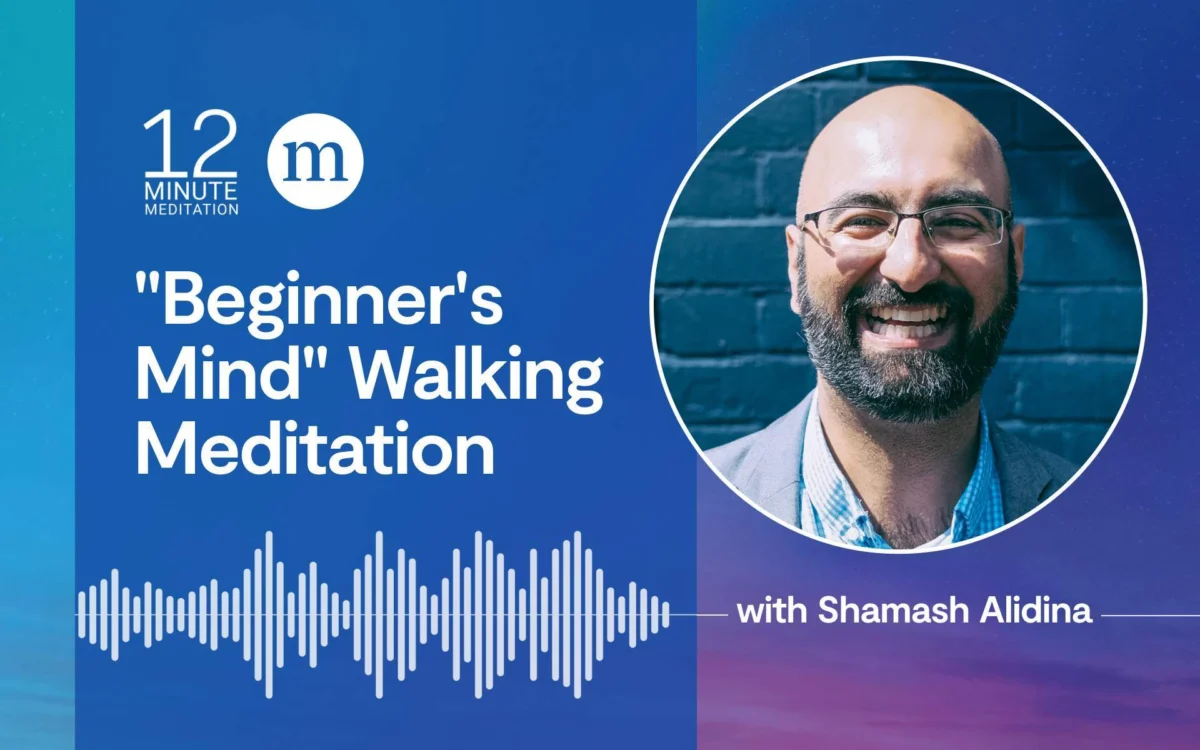
To combat this modern malaise, renowned mindfulness teacher and author Shamash Alidina has introduced a structured, accessible intervention: the "Beginner’s Mind" walking meditation. Designed to recalibrate sensory perception and dismantle rigid cognitive assumptions, Alidina’s protocol merges traditional contemplative practices with contemporary psychological insights. The technique invites individuals to step outside the confines of automatic pilot, offering a deliberate framework to pause, observe, and re-engage with the physical world through fresh eyes.
Defining the Beginner’s Mind in Modern Psychology
The concept of the "beginner’s mind"—known in Zen Buddhism as shoshin—refers to an attitude of openness, eagerness, and lack of preconceptions when studying a subject, even when studying at an advanced level. In recent years, behavioral scientists and mental health researchers have increasingly examined how cultivating this mindset can mitigate chronic stress, reduce anxiety, and enhance cognitive flexibility.
According to preliminary wellness studies conducted over the past decade, adults spend upwards of 45% of their waking hours operating on cognitive autopilot. This mental state divorces individuals from sensory feedback, contributing to emotional fatigue and a diminished capacity for creative problem-solving. Alidina’s walking meditation addresses this issue directly. Nurturing a beginner’s mind does not require individuals to feign ignorance of established facts; rather, it demands a deliberate, intentional pause to interrogate whether long-held assumptions about people, environments, and routines remain accurate.
By integrating physical movement with sensory awareness, Alidina’s protocol bridges the gap between seated meditation and the dynamic, unpredictable nature of daily urban and suburban life.
The Anatomy of the Protocol: A Step-by-Step Chronology
The structured walking meditation developed by Alidina is systematically sequenced to guide practitioners from a state of external distraction to deep sensory immersion. Rather than demanding absolute silence or secluded retreat settings, the practice is explicitly designed for integration into ordinary environments.
The chronological progression of the exercise unfolds across several distinct phases:
Phase One: Grounding and Environmental Assessment
The practice begins before any forward movement occurs. Participants are instructed to locate a safe walking environment—such as a local park, residential sidewalk, or quiet pathway—and ensure that if they are utilizing audio-guided instructions via headphones, external ambient volume remains audible for safety.
The journey then moves into stillness:
- Static Posture: Practitioners stand upright, directing internal awareness to the physical contact points between their feet and the ground, taking a single, conscious breath to anchor themselves in the present moment.
- The "First Contact" Simulation: Before initiating movement, individuals are encouraged to imagine arriving at their current location directly from an extraterrestrial environment. Stripped of linguistic markers, labels, and historical associations, the participant views the familiar landscape with the unburdened curiosity of a child.
Phase Two: Slowed Locomotion and Kinesthetic Awareness
Once the psychological framing is established, physical movement commences at a pace intentionally decelerated from the individual’s habitual stride.
- Kinesthetic Focus: Attention narrows to the mechanics of locomotion—the lifting, forward propulsion, and subsequent grounding of each foot.
- Rejection of Performance Metrics: The protocol explicitly relieves practitioners of the burden of achieving a transcendent or mystical state, emphasizing ordinary, unvarnished physical sensations.
Phase Three: Sensory Expansion and Linguistic Deconstruction
As the walk continues, Alidina introduces cognitive exercises designed to disrupt standard linguistic categorization.
- The Rule of Three: Practitioners challenge themselves to identify three distinct features in their environment that they have never consciously registered before. These can range from structural anomalies, such as pavement cracks, to ephemeral environmental details like cloud formations or subtle chromatic variations in foliage.
- Seeing Without Naming: Participants are urged to suppress the automatic labeling mechanism of the brain. Instead of mentally categorizing an object with a deterministic label—such as identifying a botanical structure as "a tree"—the individual is instructed to experience the raw, unmediated visual data of light, shadow, and texture.
- Acoustic Re-engagement: Attention subsequently shifts to the auditory spectrum. Participants tune into environmental soundscapes—traffic, avian vocalizations, wind dynamics, or the rhythmic impact of their own footsteps—measuring distance and volume without assigning emotional valence to the noises.
Phase Four: Deconstructing Resistance and Embracing Novelty
The final stages of the walk confront the inevitable psychological friction that arises when individuals attempt to break deeply ingrained behavioral loops.
- Naming the Internal Critic: When the mind inevitably generates deterministic resistance—such as the thought, "I know this place well; there is nothing interesting here"—the practitioner acknowledges the mental narrative without judgment, reframing the observation simply as an output of cognitive habit.
- Radical Acceptance of Boredom: Alidina explicitly incorporates negative or ambivalent emotional states, such as impatience or boredom, into the curriculum. Rather than viewing impatience as a failure of meditation, the emergence of the thought, "When will this end?" is treated as a valid sensory discovery.
- The Uniqueness Paradigm: The protocol concludes with the realization that any specific spatial-temporal coordinate is entirely unprecedented. Regardless of how frequently a path has been traversed, the exact convergence of weather patterns, light quality, auditory feedback, and internal emotional states occurring at that specific microsecond has never happened before and will never be replicated.
Broader Implications and Public Reception
The dissemination of Alidina’s walking meditation arrives at a critical juncture for public health. Public health data consistently highlights rising levels of chronic stress and burnout across global populations. While traditional mindfulness-based stress reduction (MBSR) programs have long demonstrated efficacy in clinical settings, their requirement for dedicated, seated meditation sessions often serves as a barrier to entry for busy professionals.
By embedding mindfulness practices directly into locomotion, Alidina’s approach offers a scalable alternative. Occupational health analysts suggest that low-barrier, movement-integrated cognitive resets can be easily integrated into midday breaks, potentially reducing workplace fatigue and enhancing focus during subsequent professional tasks.
Furthermore, educational psychologists note that teaching children and adults to bypass automatic labeling and embrace sensory curiosity fosters critical thinking and empathy. When individuals learn to suspend judgment regarding inanimate objects and familiar environments, the same cognitive flexibility often transfers to interpersonal relationships, reducing implicit biases and fostering more nuanced understandings of complex social dynamics.
As public interest in accessible mental wellness tools continues to expand, protocols like the Beginner’s Mind walking meditation represent a shift away from esoteric, time-intensive mental disciplines toward practical, everyday cognitive hygiene. By reframing the mundane into an exploratory landscape, practitioners are equipped with a sustainable mechanism to reclaim agency over their attention in an increasingly distracted world.