The modern digital landscape demands an unprecedented level of consistency from brands, creators, and enterprises operating across multiple social media networks. Establishing a centralized operational hub has shifted from a mere convenience to an absolute operational necessity for modern marketing teams. Choosing the correct social media management tool dictates not only workflow efficiency but also budgetary control and audience engagement outcomes. Among the crowded field of digital marketing utilities, Buffer and Later have emerged as two of the most prominent legacy names in the industry. Both platforms provide structured environments designed to help digital marketers schedule posts, interact with target audiences, and analyze campaign performance metrics. However, their underlying philosophies, feature rollouts, and pricing architectures diverge significantly, presenting distinct strategic advantages depending on user requirements.
A comprehensive analysis of both platforms reveals stark contrasts in how they approach core competencies such as channel allocation, user seats, artificial intelligence integration, and cross-platform publishing limits. Understanding these functional discrepancies requires examining their structural development and historical evolution within the software-as-a-service market.
Evolutionary Background And Strategic Positioning
Buffer entered the digital ecosystem during the early days of social media management tools, initially focusing on streamlined, queue-based scheduling across a modest number of platforms. Over the subsequent decade, the platform expanded its architecture to embrace a broader array of networks while maintaining its core commitment to user-friendly simplicity and predictable, channel-based pricing. Its design philosophy has historically targeted individual creators, small businesses, and lean marketing teams seeking frictionless content deployment without convoluted financial structures.
Conversely, Later—originally launched under the moniker Latergramme—was conceived primarily as an Instagram-first scheduling tool. Its initial value proposition centered around visual content planning and drag-and-drop calendar capabilities tailored specifically to aesthetically driven platforms. As visual-first mediums like TikTok and Pinterest gained prominence, Later evolved its infrastructure to support multi-platform scheduling while preserving its heavy emphasis on visual asset management, grid previews, and comprehensive media library architectures. This foundational heritage continues to influence how both platforms structure their pricing tiers, feature accessibility, and user interfaces today.
Comparative Pricing Structures And Cost Implications
Financial investment remains one of the primary determinants when organizations select digital infrastructure tools. The divergence in pricing models between Buffer and Later highlights fundamentally different approaches to software monetization.
Buffer utilizes a flexible, channel-based pricing model. Users can select the exact social media channels they require, paying exclusively for active connections. Buffer offers a robust free tier supporting up to three social media channels across any compatible platform, accompanied by limited post scheduling capabilities and basic analytics. Paid tiers for Buffer begin at a competitive entry point of six dollars per month per channel, ensuring that solopreneurs and small agencies can scale their digital presence linearly without absorbing sudden financial leaps when adding a single profile. Furthermore, Buffer’s pricing model includes unlimited user accounts on its higher-tier team plans, ensuring predictable overhead regardless of internal team expansion.
Later adopts a bundled monetization strategy built around "social sets." A social set bundles one account from each supported platform into a single administrative unit. Consequently, users cannot cherry-pick individual channels in the same granular fashion as Buffer. If an organization wishes to connect merely a Facebook Page and a LinkedIn profile under Later’s paid structure, they remain obligated to pay for a comprehensive social set bundle. Furthermore, connecting multiple accounts on the same platform—such as two distinct Instagram business profiles—requires purchasing additional social sets, which rapidly inflates operational expenditures. Later’s paid plans commence at twenty-five dollars per month for baseline configurations, with team and growth tiers scaling upward based on user seat allocations and advanced functional access.
Supported Channels And Ecosystem Integration
Platform compatibility dictates the breadth of an organization’s digital reach. A critical evaluation of supported networks illustrates distinct disparities in platform inclusivity between the two competitors.
Buffer currently supports a robust array of twelve distinct social media platforms and publishing destinations. This comprehensive roster includes Instagram, Facebook (Pages and Groups), X (formerly Twitter), LinkedIn, TikTok, Pinterest, Google Business Profiles, Substack, Mastodon, YouTube Shorts, Threads, and Bluesky. This wide-ranging support accommodates modern diversification strategies, allowing digital marketers to experiment with emerging decentralized networks and newsletter-adjacent ecosystems like Substack and Bluesky.
Later supports eight primary platforms: Instagram, Facebook (Pages only), Threads, Pinterest, TikTok, LinkedIn, YouTube Shorts, and Snapchat. While Later omits support for platforms such as X, Mastodon, Bluesky, and Google Business Profiles, it uniquely incorporates native scheduling support for Snapchat—a channel currently absent from Buffer’s architectural roadmap. Additionally, Later restricts Facebook integrations exclusively to Pages, whereas Buffer extends publishing and engagement capabilities to both Facebook Pages and Groups.
Content Scheduling Mechanics And Workflow Efficiency
The core utility of any social media management platform lies in its ability to streamline content creation, modification, and deployment. Both Buffer and Later offer centralized dashboards equipped with pre-defined time slots and multi-network customization features. However, operational restrictions vary noticeably between the two tools.
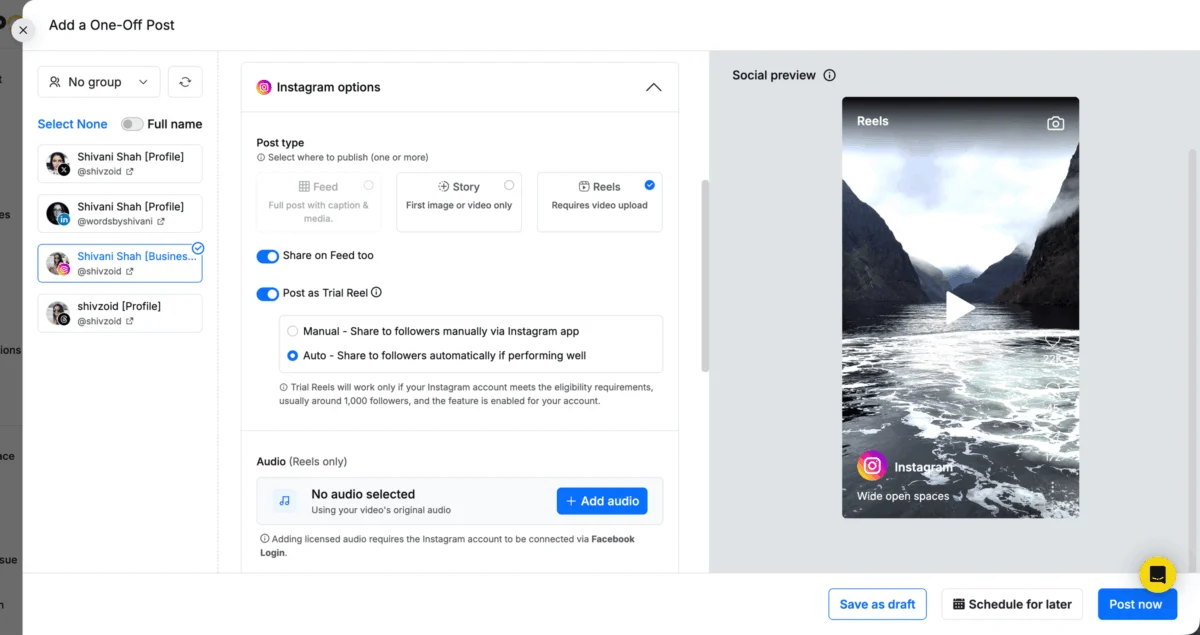
Buffer places no restrictions on the number of scheduled posts per channel across its paid tiers, while its free plan permits ten scheduled posts per channel simultaneously. Moreover, Buffer facilitates bulk content scheduling via CSV file uploads on paid plans, enabling digital marketers to upload up to one hundred posts concurrently. This capability significantly accelerates large-scale campaign management and editorial calendar execution. Buffer also supports channel grouping—allowing users to bundle frequently targeted networks (such as LinkedIn, Facebook, and Threads) and publish synchronized updates with a single click.
Later enforces strict volume limitations on scheduled content across its lower-tier plans. The Starter plan restricts users to thirty scheduled posts per profile per month, while the Growth plan caps volume at one hundred and eighty posts per profile monthly. Unlimited scheduling is reserved exclusively for Later’s highest-tier Scale plan. Unlike Buffer, Later does not natively support bulk CSV scheduling, requiring marketing teams to handle larger campaign rollouts through manual, individual post entries.
However, Later maintains distinct advantages in visual planning workflows. Its visual content calendar features drag-and-drop media library integration, enabling users to preview their Instagram grid or Pinterest boards effortlessly prior to publication. While Buffer offers an Instagram grid preview feature, it lacks the seamless drag-and-drop calendar manipulation native to Later’s interface.
Artificial Intelligence Integration And Content Generation
The integration of generative artificial intelligence has fundamentally transformed digital content creation pipelines. Both platforms have incorporated AI assistants designed to accelerate copywriting, brainstorming, and multi-platform content adaptation, yet their access models differ markedly.
Buffer embeds its AI Assistant across all subscription tiers, including the permanent free plan, with unlimited usage parameters. Users can generate fresh post ideas, refine captions, and repurpose long-form text across multiple social networks without encountering usage caps or token depletion risks. This unmetered approach mitigates operational friction during intensive campaign development cycles.
Later ties its AI-powered "Ideas" and caption generation capabilities to paid subscription tiers through a restrictive credit-based system. Users are allocated a specific quantity of monthly credits depending on their subscription level, where generating captions or content pillars consumes defined token quantities. Once monthly credit allocations are exhausted, users must either wait for the subsequent billing cycle or purchase supplementary token packs, introducing potential friction points for heavy content producers.
Audience Engagement And Social Inbox Management
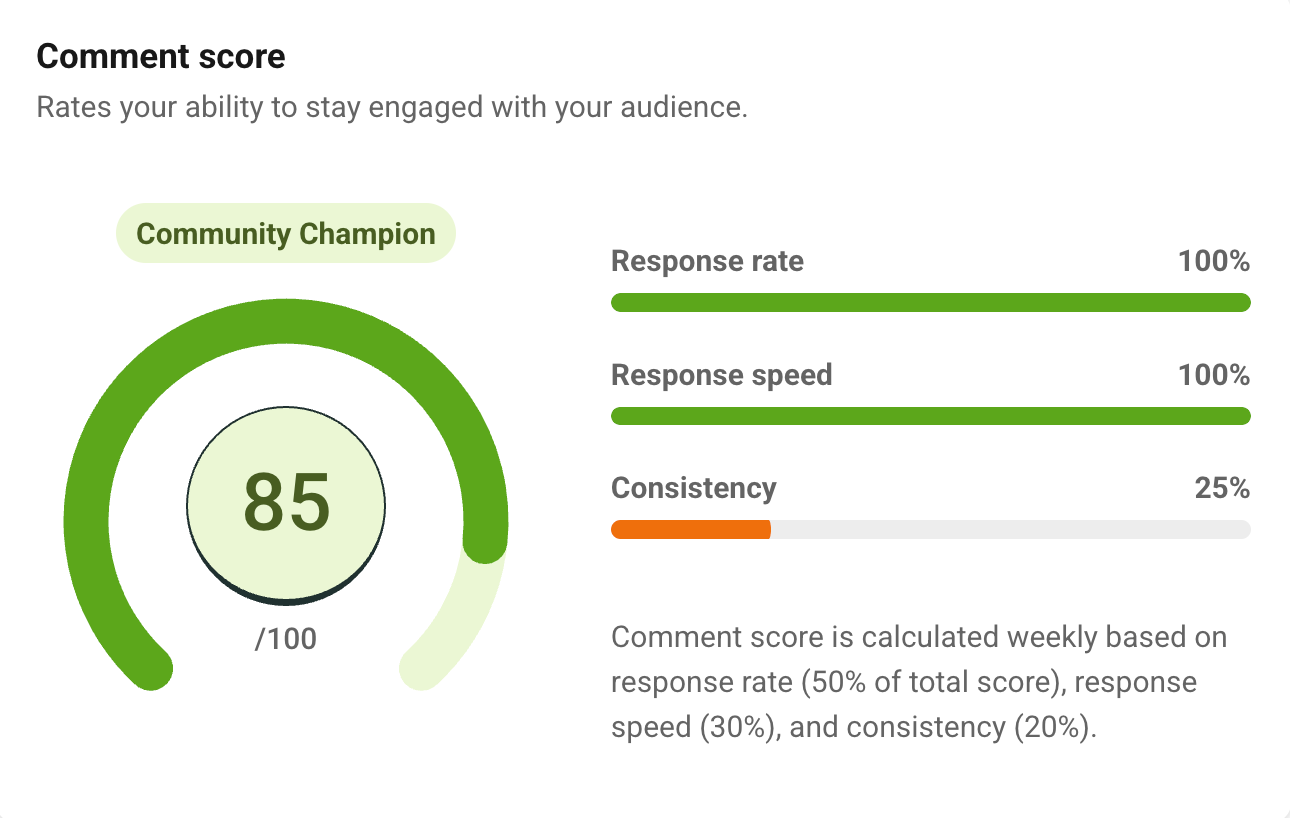
Maintaining active dialogue with digital communities is vital for brand loyalty and algorithmic visibility. The structural handling of incoming comments, mentions, and direct messages represents a major philosophical division between Buffer and Later.
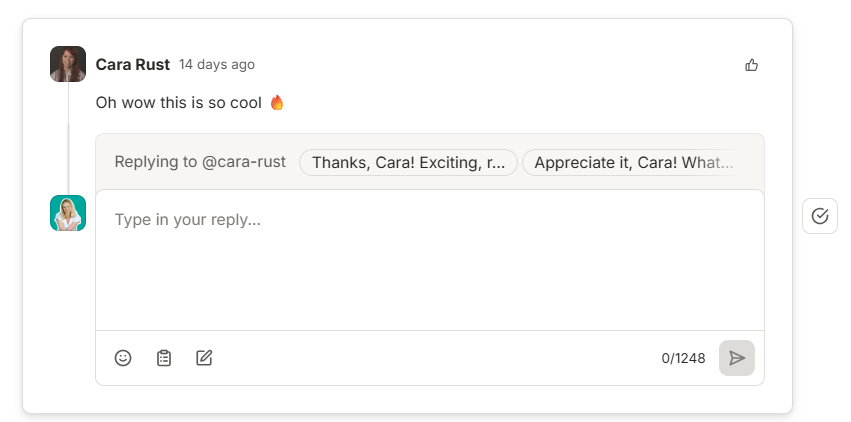
Buffer provides its centralized engagement utility, known as Community, across all subscription tiers, including the free plan. This tool aggregates comments and mentions from supported networks into a single interface, permitting rapid responses supplemented by AI-generated reply suggestions and saved templates for frequently asked questions. Furthermore, Buffer introduces a quantitative "comment score" metric that tracks response times and consistency across channels, providing operational oversight regarding community management performance.
Later positions its social inbox as an advanced enterprise feature, restricting access exclusively to higher-tier Growth and Scale plans. Solo operators utilizing Later’s Free or Starter tiers cannot manage incoming comments or direct messages directly within the platform. When accessible on team tiers, Later’s inbox consolidates Instagram and Facebook direct messages and comments alongside TikTok comments, while offering a helpful comment-hiding feature designed to mitigate digital spam and inappropriate discourse.
Analytics, Reporting, And Data-Driven Insights
Measuring return on investment and evaluating audience demographics requires sophisticated reporting architecture. Both platforms provide analytical dashboards, but their access distribution and reporting depths diverge.
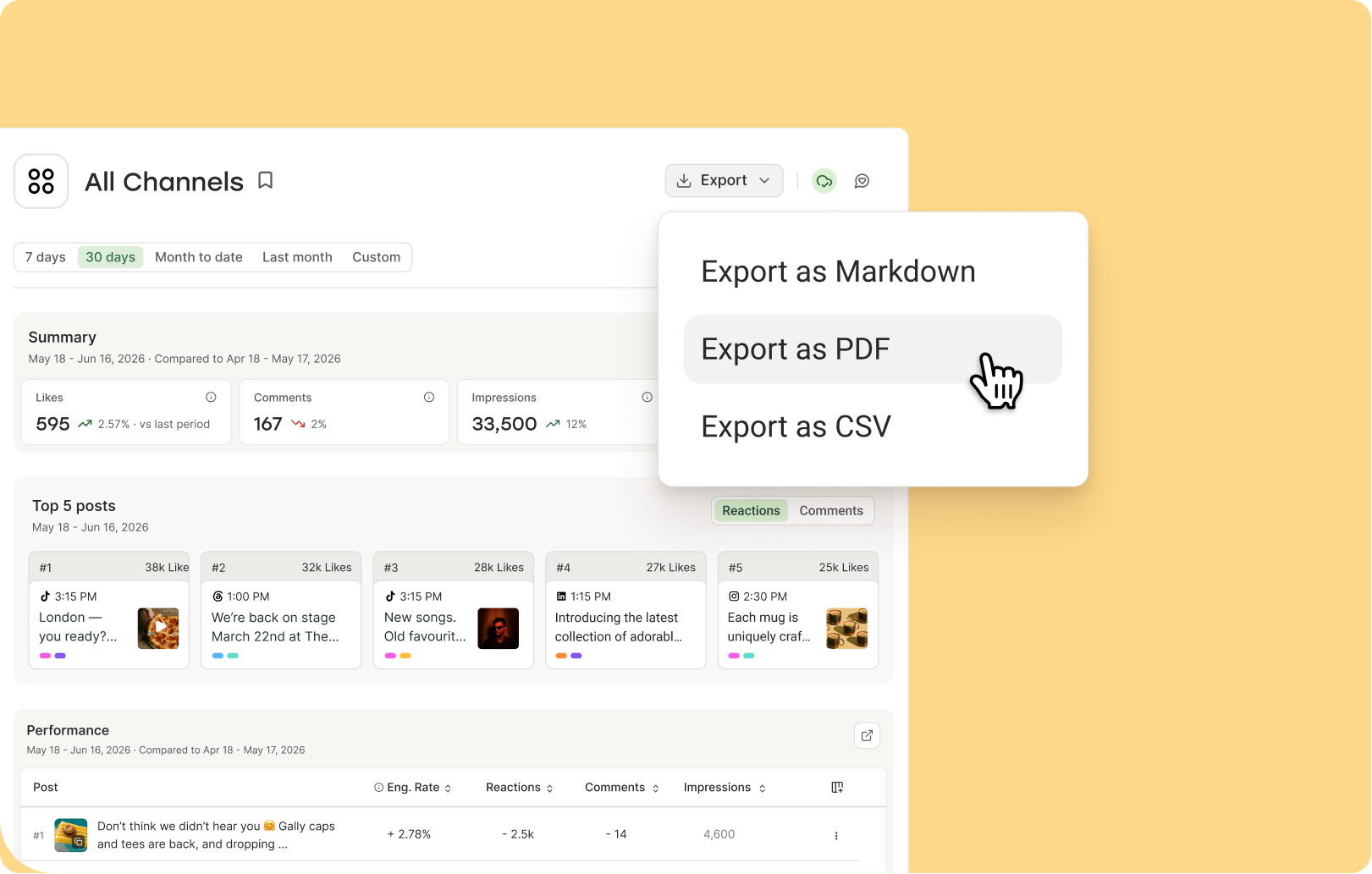
Buffer offers fundamental performance insights across all subscription tiers, unlocking advanced historical data, custom date ranges, and exportable PDF or CSV reporting on paid plans. A standout capability within Buffer’s analytical suite is its AI-powered "Takeaways" feature, which automatically synthesizes complex performance graphs into actionable strategic recommendations, identifying high-performing content patterns and areas requiring adjustment.
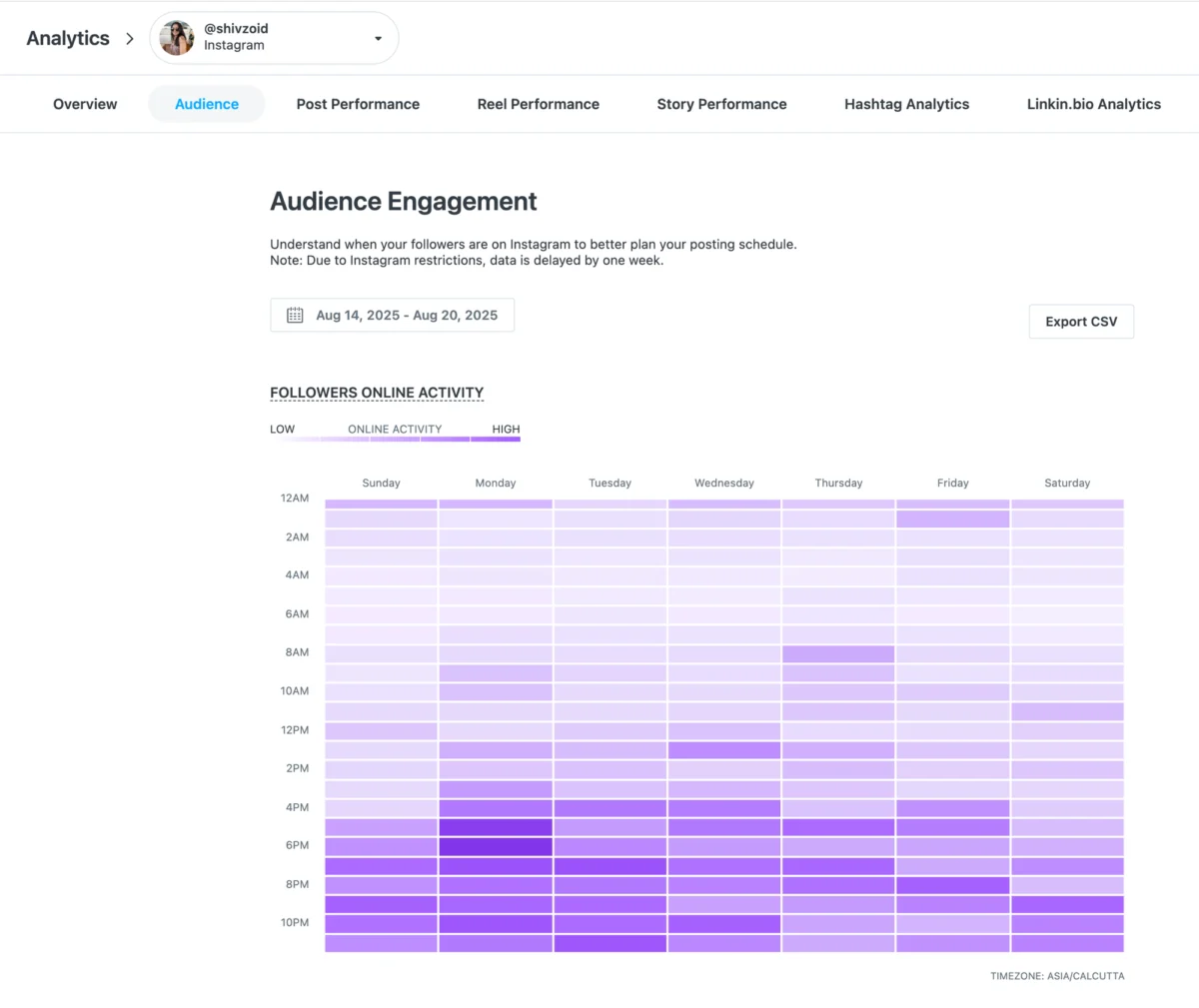
Later delivers robust analytical depth tailored heavily toward audience demographic breakdowns—such as age, gender, and geographic distribution—across Instagram, Facebook, TikTok, and Threads. Later also features predictive audience activity heatmaps for Instagram and TikTok, highlighting optimal publishing windows based on historical follower engagement patterns. However, multi-account analytical aggregation is restricted to the platform’s highest pricing tiers, and automated PDF report generation is absent, requiring users to rely on CSV data exports for external presentation preparation.
Link-In-Bio Solutions And Auxiliary Ecosystem Features
Digital creators frequently leverage landing page utilities to circumvent single-link restrictions on social profiles. Both competitors supply integrated link-in-bio tools.
Buffer’s Start Page functions as a modular landing page builder utilizing customizable content blocks. Users can deploy multiple instances of identical block types—such as dual image grids, video embeds, and email collection forms—providing extensive design flexibility. Furthermore, creators can integrate affiliate links directly into their Start Page architecture to monetize web traffic.
Later’s Linkin.bio tool emphasizes commerce integration. It connects natively with e-commerce infrastructure such as Shopify, enabling merchants to tag specific products within social posts and track conversion metrics directly from their bio landing page. Additionally, Later incorporates integration with the Mavely affiliate marketing platform to streamline revenue generation.
Beyond core scheduling, Later maintains a distinct commercial division dedicated to influencer marketing software. This separate product suite enables brands to discover, vet, and manage influencer relationships, execute product-gifting campaigns through Shopify integrations, and measure collaborative return on investment. Buffer deliberately avoids the influencer marketing software space, maintaining its strategic focus on sustainable organic growth, publishing execution, and community engagement for lean teams and solopreneurs.
Implications For Digital Marketing Strategy
Selecting between Buffer and Later ultimately depends on an organization’s specific operational framework, budgetary constraints, and content creation methodology.
Organizations prioritizing predictable overhead, channel-level budgetary flexibility, unmetered artificial intelligence assistance, inclusive community engagement tools, and multi-platform diversification encompassing emerging networks like Bluesky and Mastodon will find Buffer to be a more cost-effective and functionally accommodating operational base.
Conversely, enterprises and lifestyle brands heavily anchored in visual-first platforms, requiring sophisticated Instagram grid curation, visual drag-and-drop calendar planning, robust e-commerce Shopify integrations, and specialized influencer campaign management utilities will derive superior value from Later’s specialized ecosystem.