
 Indra Kusuma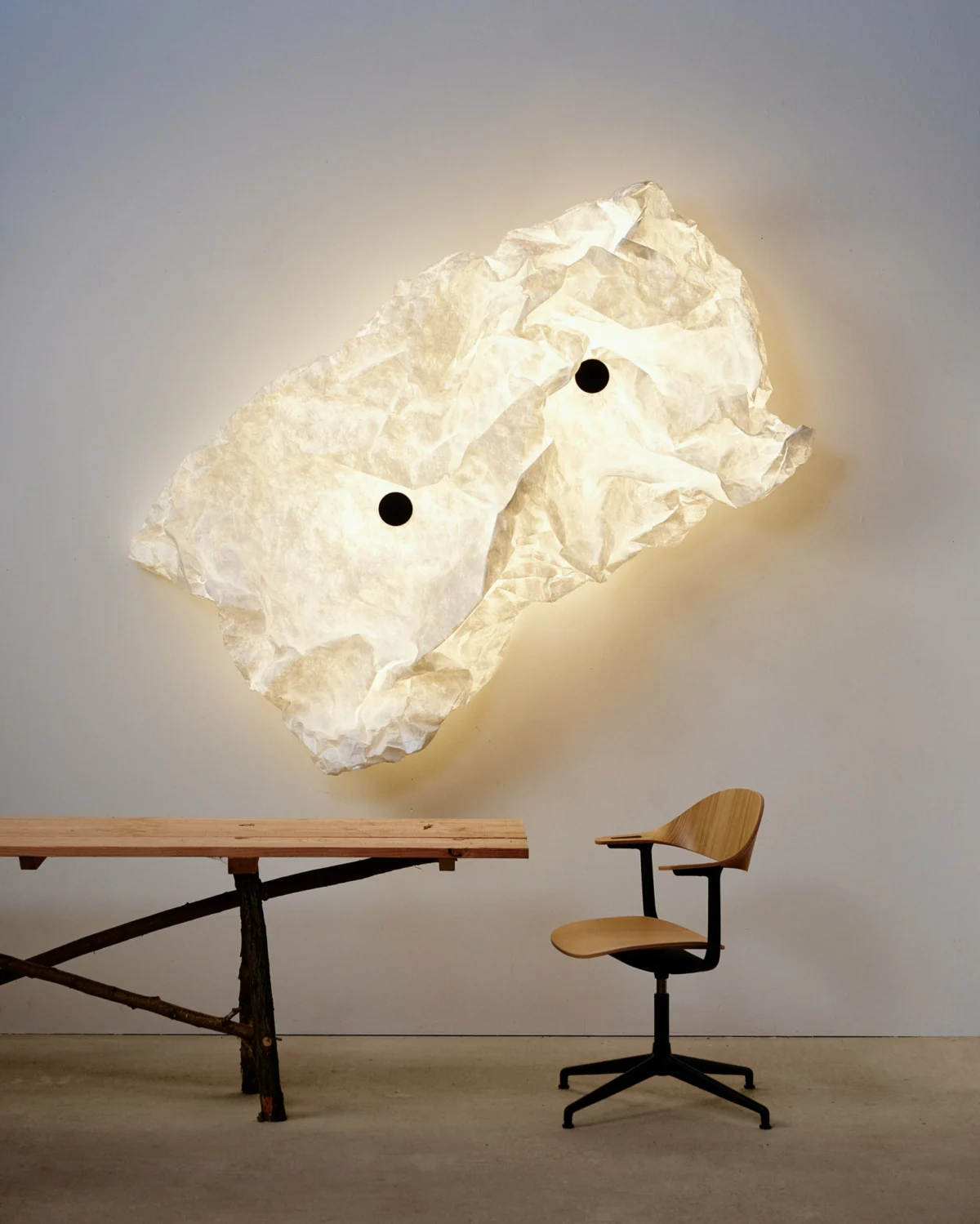
The design world is buzzing with the latest collaboration between acclaimed French designer Erwan Bouroullec and Italian lighting powerhouse Flos, resulting in the innovative Maap wall-mounted lighting system. Set for release on July 21, Maap fundamentally redefines the relationship between a lighting fixture and its owner, transforming static illumination into an interactive, evolving art piece. Eschewing a fixed form, Bouroullec has engineered a system built around a pliable, crumpled Tyvek® diffuser, designed to be shaped, reshaped, and interpreted by the individual inhabiting the space, ensuring each installation is a truly one-of-a-kind composition.
The Genesis of Maap: A Philosophy of Collaboration and Evolution
Erwan Bouroullec, widely recognized for his collaborative work with his brother Ronan and their studio’s distinctive approach to industrial design, has consistently explored themes of modularity, flexibility, and the integration of objects within their environments. His extensive portfolio, which includes numerous notable lighting designs, frequently challenges conventional notions of utility and aesthetics. With Maap, Bouroullec delves deeper into this philosophy, articulating a vision where design transcends mere object creation to become an integral, cooperative element of a larger whole. "I see design as part of a whole," Bouroullec states, elaborating on his ethos. "Designs need to cooperate with a given environment and somehow enhance it." This perspective is profoundly embedded in Maap’s core concept, inviting users to become active participants in the design process rather than passive recipients of a finished product. The system embodies a deliberate departure from prescriptive design, offering instead a framework for individual expression and ongoing adaptation.
Bouroullec’s career trajectory has long been characterized by a quest to balance rigorous geometric precision with the organic unpredictability found in nature. This duality is a hallmark of his most celebrated works, which often feature simple, elegant structures that allow for complex, sometimes randomized, visual outcomes. Maap stands as a testament to this enduring interest, pairing a minimalist steel framework with the spontaneous, sculptural qualities of the Tyvek diffuser. This approach reflects a broader trend in contemporary design towards products that are not only functional but also deeply personal and responsive to their surroundings, fostering a sense of connection and ownership.
Flos’s Legacy of Innovation and Collaborative Excellence
Flos, established in 1962 in Merano, Italy, has long been a vanguard in the field of lighting design, renowned for its commitment to innovation, quality, and collaboration with the world’s leading designers. Over six decades, Flos has partnered with luminaries such as Achille Castiglioni, Philippe Starck, Jasper Morrison, and Patricia Urquiola, consistently pushing the boundaries of lighting technology and aesthetics. The company’s heritage is built on a foundation of experimentation, transforming materials and forms into iconic pieces that have shaped the landscape of modern interior design.
The partnership with Erwan Bouroullec for Maap aligns perfectly with Flos’s historical trajectory of fostering groundbreaking design. A Flos representative, speaking on the collaboration, emphasized the brand’s dedication to exploring new paradigms in lighting: "Flos has always sought out designers who challenge the status quo and envision the future of illumination. Erwan Bouroullec’s Maap perfectly encapsulates this spirit, offering not just a light source but an interactive experience that empowers the user. It represents a significant step forward in our mission to blend artistic expression with technological advancement and user engagement." This sentiment underscores Maap’s strategic position within Flos’s illustrious portfolio, signaling a continued commitment to leading the industry through inventive and user-centric solutions.
Deconstructing Maap: Form, Function, and Material Science
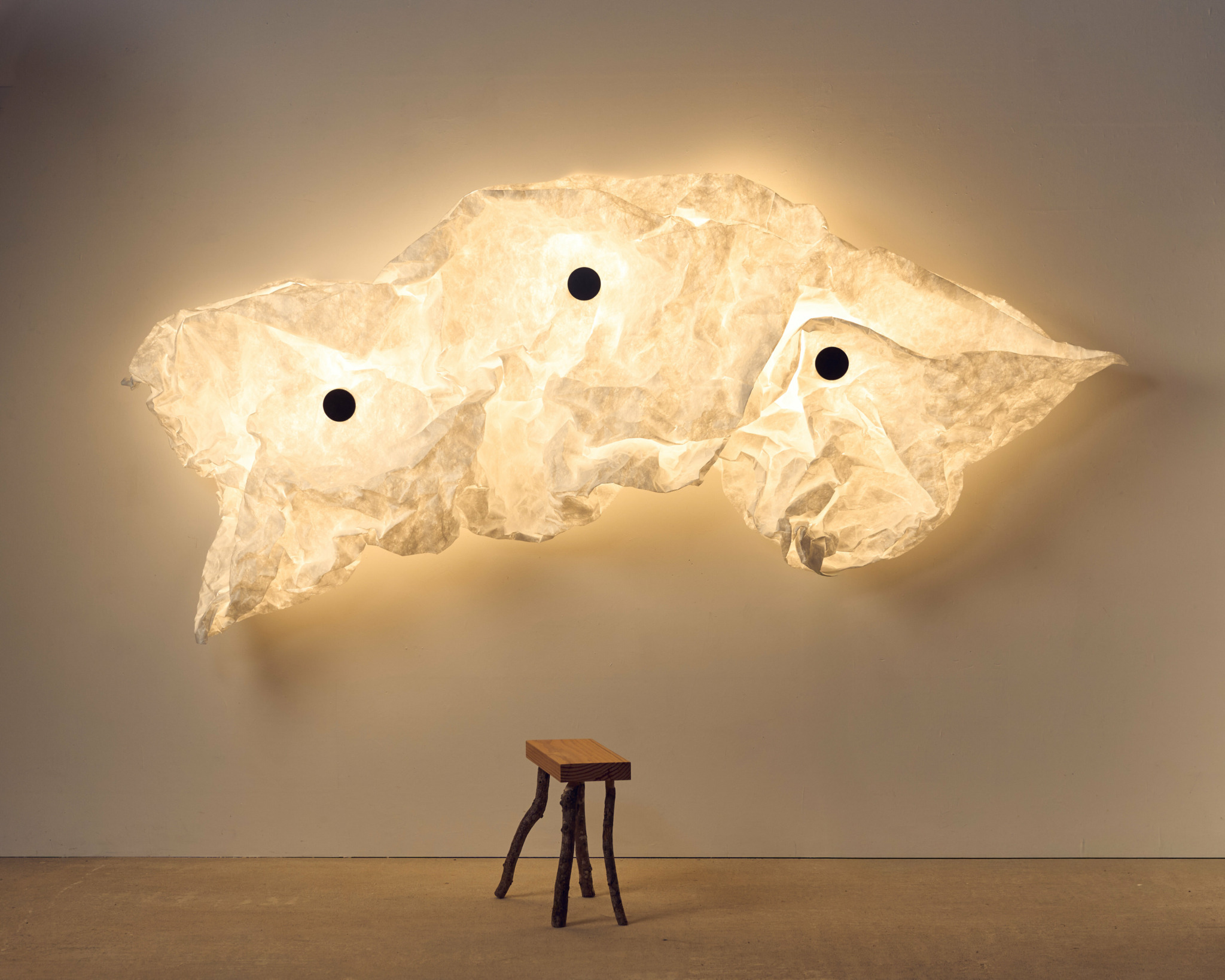
At the heart of Maap’s distinctive design lies its ingenious construction. The system comprises a simple yet robust steel framework that serves as the underlying structural support. This framework is equipped with strategically placed magnetic attachment points, which Bouroullec refers to as "Dots." These Dots are crucial to the system’s flexibility, allowing the diffuser material to be securely fastened while simultaneously enabling effortless repositioning and reconfiguration.
The choice of diffuser material was a critical aspect of Maap’s development. Bouroullec experimented extensively, initially exploring paper, a material often associated with delicate, ephemeral forms. However, the practicalities of durability and long-term reshaping led him to Tyvek®. This advanced non-woven material, manufactured by DuPont, is celebrated for its exceptional strength-to-weight ratio, tear resistance, water resistance, and breathability. Commonly used in industrial applications such as protective apparel, sterile packaging, and building envelopes, Tyvek’s properties make it an ideal candidate for a lighting diffuser that is intended to be repeatedly manipulated without degradation. Its unique fibrous structure allows it to hold folds and contours effectively, while remaining remarkably lightweight.
This interplay between the rigid, precise geometry of the steel framework and the malleable, unpredictable qualities of the oversized Tyvek envelope is what grants each Maap installation its unique character. The user’s interaction with the material—how they crumple, fold, and attach it—dictates the final sculptural form, ensuring that no two installations are ever precisely alike. This dynamic process challenges the traditional manufacturing paradigm of identical products, instead promoting a bespoke aesthetic born from individual creativity.

The User as Co-Creator: Redefining Design Engagement
Maap’s most radical proposition lies in its embrace of user participation. In an era where customization and personalization are highly valued, Bouroullec’s design goes beyond superficial choices, inviting the owner into a genuine co-creative process. "Maap embodies flexible and combinative construction principles which make it ready for architects to play with," Bouroullec explains. He further clarifies the underlying philosophy: "[It’s about] providing solutions instead of a given proposal, thinking about collaboration instead of uniqueness, play instead of execution." This statement encapsulates a paradigm shift, moving away from the designer as the sole arbiter of form towards a collaborative model where the user’s interpretation completes the design.
This approach resonates with contemporary design theories that advocate for user empowerment and adaptable living spaces. As urban environments become more fluid and individual preferences more diverse, products that offer inherent flexibility and allow for personal expression gain significant appeal. The magnetic "Dots" facilitate this ongoing interaction, permitting the Tyvek diffuser to be reconfigured over time, reflecting changes in mood, seasonal light, or interior decor. This reinforces the idea that Maap is not a static object but a living, evolving element within a space, open to continuous interpretation and transformation. It encourages a playful engagement with light and form, transforming a functional necessity into an interactive art piece.
Illumination as Architecture: Beyond Decorative Lighting
The scale and luminous quality of Maap are designed to transcend typical decorative lighting. Available in three distinct sizes, with the largest model impressively spanning just over 10 feet wide, Maap is conceived to transform an entire wall into a softly glowing surface. This expansive diffuser does not merely emphasize a single point of illumination; instead, it generates an ambient wash of light that Bouroullec poetically likens to "sunlight filtering through a window or glass wall."
This atmospheric presence positions Maap as an architectural intervention as much as a lighting fixture. It creates an immersive glow that softens edges, enhances spatial depth, and contributes to the overall mood of a room. Unlike directional lighting that focuses attention, Maap’s diffuse radiance envelops the space, fostering a sense of calm and expansive comfort. This approach aligns with modern architectural trends that integrate lighting seamlessly into the fabric of a building, using it to define volumes and create experiential environments rather than simply to provide visibility. The ability to control the intensity and character of this ambient light through the user-defined folds further blurs the line between functional illumination and sculptural art.

Market Context and Strategic Launch
The launch of Maap on July 21 is strategically timed to capture the attention of both design professionals and discerning consumers. Flos has ensured broad accessibility through its flagship stores and its official website, flos.com. Significantly, Design Within Reach (DWR) has been named the exclusive launch partner for Maap. DWR, a prominent retailer known for bringing authentic modern design to a North American audience, provides a robust platform for the product’s debut.
A spokesperson for Design Within Reach commented on the partnership, stating, "DWR is thrilled to be the exclusive launch partner for Erwan Bouroullec’s Maap. This innovative lighting system perfectly embodies the principles of modern design – functionality, beauty, and thoughtful interaction. Our customers seek unique, high-quality pieces that enhance their living spaces, and Maap’s customizable nature and striking aesthetic will undoubtedly resonate deeply with them." This strategic alliance ensures that Maap will reach a broad and engaged audience that values cutting-edge design and user-centric innovation, solidifying its position as a significant new offering in the high-end lighting market.
Broader Implications for Contemporary Design
Maap’s introduction holds several broader implications for the trajectory of contemporary design. Firstly, it champions the concept of sustainable design through adaptability. While Tyvek itself is durable and recyclable, Maap’s core value lies in its reconfigurability. By allowing users to continuously refresh its aesthetic, the product counters the trend of planned obsolescence, promoting longevity and sustained engagement rather than disposable design. This resonates with growing consumer demand for products that offer enduring value and reduce environmental impact.
Secondly, it further blurs the lines between art, craft, and industrial design. Maap functions as a highly engineered industrial product, yet its final form is a result of individual artistry, akin to a sculptural installation. This hybrid nature challenges conventional categorization and enriches the dialogue surrounding what constitutes "design" in the 21st century.

Finally, Maap could signal a growing appetite for interactive and participatory design experiences. In an increasingly digital world, there is a renewed appreciation for tangible, hands-on engagement with physical objects. Maap provides this tactile experience, allowing individuals to physically shape their environment and imprint their personality onto a functional object. This trend suggests a future where products are not just bought but actively ‘co-created’ and evolved over time, fostering a deeper, more personal connection between users and their living spaces.
In conclusion, Erwan Bouroullec’s Maap, in collaboration with Flos, is more than just a new lighting fixture; it is a statement on the evolving nature of design. By empowering the user to dictate its form, embracing a dialogue between precision and spontaneity, and utilizing innovative materials, Maap offers a compelling vision for interior illumination that is personal, adaptable, and profoundly architectural. Its launch marks a significant moment, promising to influence future conversations about flexibility, user engagement, and the aesthetic potential of light in contemporary living environments.







