
In an increasingly complex digital ecosystem, social media management platforms have become indispensable tools for individuals and organizations alike. Among the leading contenders, Buffer and Sprout Social have established themselves as prominent solutions, yet a closer examination reveals a deliberate and strategic divergence in their target markets, feature sets, and pricing structures. While both platforms offer robust capabilities for managing and growing a social media presence, their fundamental design philosophies cater to very different versions of the "someone who manages social media."
The Evolution of Social Media Management Tools
The journey of social media management tools began in the early 2010s, primarily addressing the nascent need for scheduling posts across multiple platforms. Early adopters, often individual creators and small businesses, sought simplicity and efficiency to maintain a consistent online presence without the manual overhead of logging into each network. As social media matured, becoming a critical channel for marketing, customer service, and brand building, the demands on these tools escalated. Enterprises required sophisticated analytics, intricate team workflows, advanced listening capabilities, and seamless integration with their broader business intelligence systems. This market evolution has naturally led to the specialization observed today, with platforms like Buffer and Sprout Social optimizing their offerings for distinct segments.
Core Differentiations: Target Audience and Philosophy

Buffer is explicitly designed for creators, small businesses, and growing agencies seeking a flexible, affordable, and user-friendly tool to streamline their social media operations. Its philosophy centers on empowering users to publish content efficiently, understand performance intuitively, and engage with their audience without unnecessary complexity or prohibitive costs. This approach prioritizes ease of use and accessibility, making it an ideal choice for lean teams or solo entrepreneurs who need to maximize their output with limited resources.
In contrast, Sprout Social is engineered for large, enterprise-level teams that necessitate complex team workflows, advanced social listening, comprehensive reporting, and deep integration capabilities. Its architecture supports the intricate operational requirements of dedicated social media departments within major corporations, where brand reputation management, customer support, and strategic insights are paramount. The platform’s robust feature set addresses the unique challenges of managing social media at scale, where multiple stakeholders, stringent approval processes, and granular data analysis are daily necessities.
Pricing Models: A Fundamental Divide (as of April 2026)
The most immediate indicator of this market segmentation lies in their pricing models. Buffer adopts a channel-based pricing structure, offering a free plan with significant utility and paid plans starting at $6 per channel per month for its Essentials tier. Critically, its Team plan, priced at $12 per channel per month, includes unlimited user seats at no additional cost. This model significantly benefits growing teams, as the cost scales with the number of social profiles managed, not the number of people accessing the platform. For instance, a small business managing five channels on the Team plan would pay a flat $60 per month, whether two or ten users are collaborating.
Sprout Social, conversely, employs a seat-based pricing model, starting at $99 per seat per month for its Essentials plan. Each additional user on any plan incurs a separate charge, ranging from $99 to $499 per month per seat, depending on the chosen tier. This structure, while standard for enterprise-grade software, quickly escalates costs for larger teams. Furthermore, essential team features like approval workflows are only available on higher-priced plans, starting from Professional at $399 per seat per month. Sprout Social also offers a suite of paid add-ons for features like Social Listening, Premium Analytics, Employee Advocacy, and Influencer Marketing, further increasing the total investment for comprehensive enterprise solutions.

To illustrate the practical implications, consider a three-person marketing team managing eight social channels. With Buffer’s Team plan, this setup would cost $96 per month (8 channels x $12/channel). On Sprout Social, assuming they require features like approval workflows (available from Professional plan), the cost would be $399 per seat per month, totaling $1,197 per month for three users. This stark difference, amounting to over $13,000 in annual savings with Buffer, underscores that Sprout Social’s pricing reflects a premium for its advanced functionalities and enterprise-grade support.
Scheduling and Publishing: Simplicity Versus Complexity
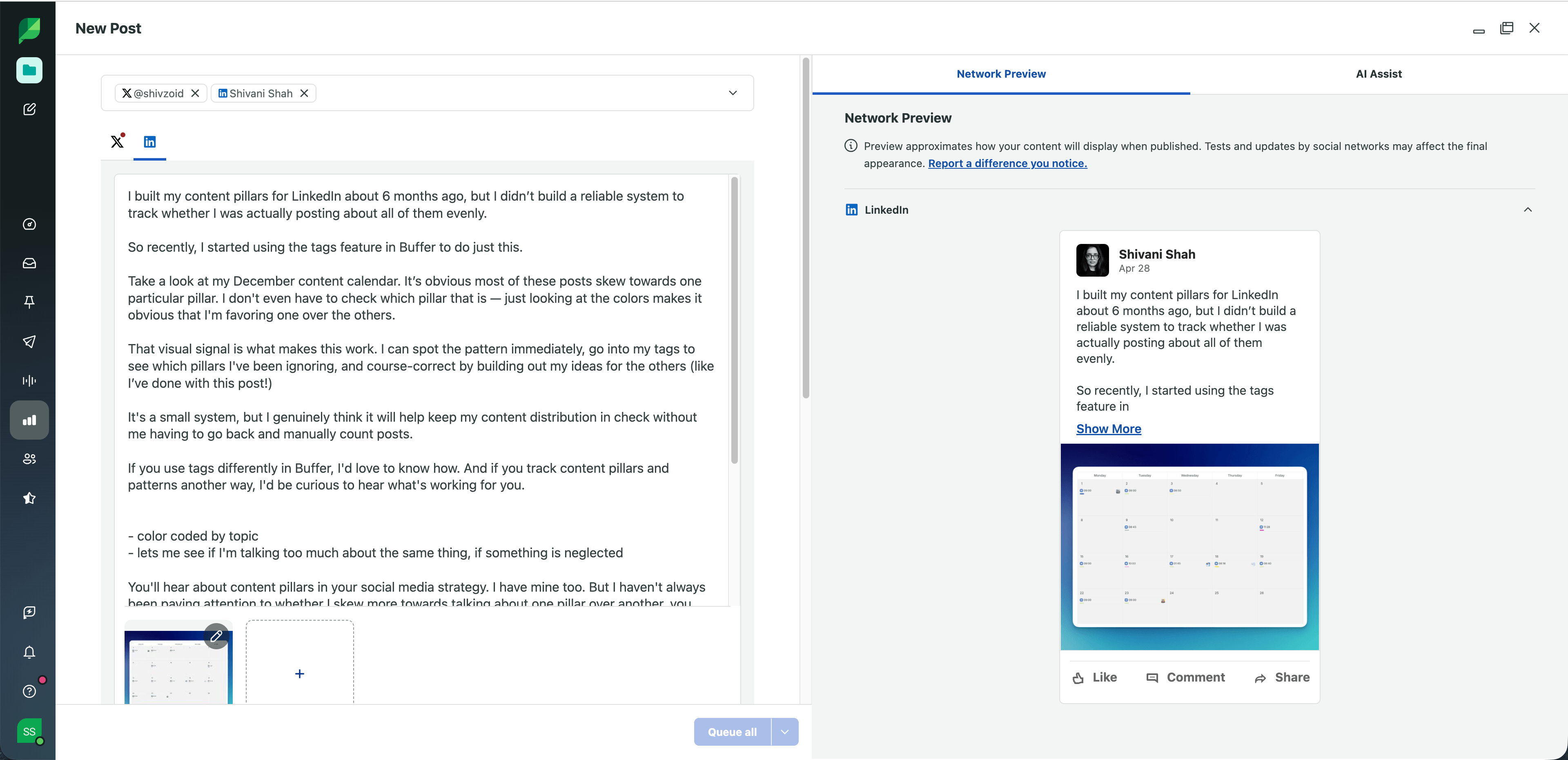
Both platforms provide the fundamental capabilities for scheduling and publishing content, allowing users to craft posts, select optimal times, and distribute them across various social networks. However, their interfaces and workflow depths differ significantly.
Buffer’s publishing interface is renowned for its simplicity and intuitive design. Users can quickly compose posts, customize them for specific platforms, and schedule them with minimal friction. The Team plan integrates a straightforward approval workflow, enabling users to submit posts for review before publication, ensuring brand consistency without hindering agility. This streamlined approach is a core strength for creators and small teams prioritizing speed and ease of content deployment.
Sprout Social’s publishing interface, while comprehensive, presents a steeper learning curve due to its denser layout and extensive feature set. On Professional plans and higher, users gain access to a shared asset library for media, multiple configurable approval workflows, and integrated campaign planning and management tools. These functionalities are crucial for large organizations that manage complex content calendars, adhere to strict brand guidelines, and coordinate multi-channel campaigns with various internal stakeholders. Both platforms offer robust queue systems for consistent posting, allowing users to manually set or leverage AI-suggested optimal times.
Analytics and Reporting: Actionable Insights vs. Strategic Overview
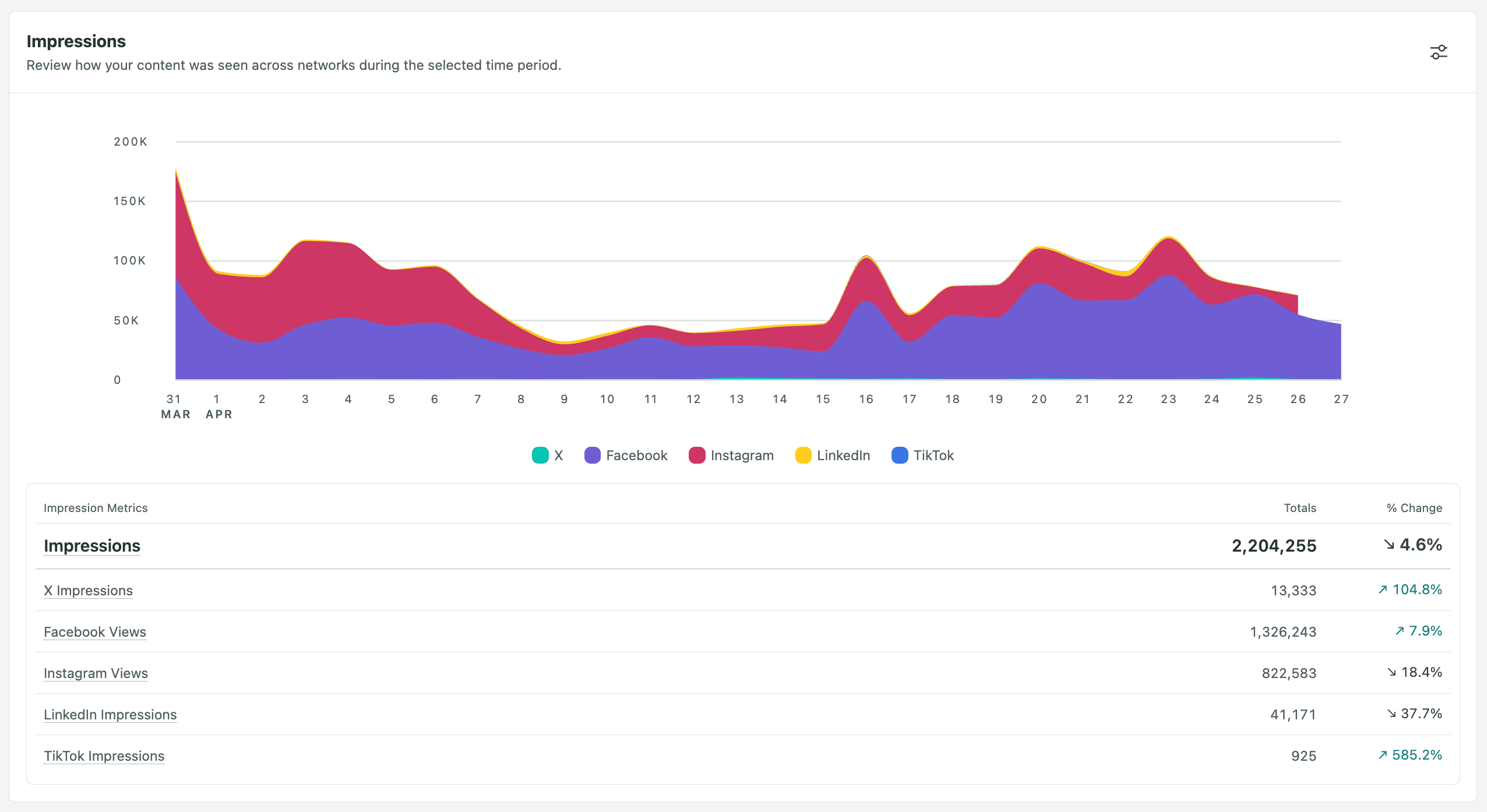
The approach to analytics and reporting further highlights the platforms’ divergent focus. Buffer Insights, currently in beta but available across all plans, delivers both granular and holistic views of social media performance. It provides AI-powered takeaways that identify successful content types and suggest future strategies, alongside post-level data and follower metrics. This focus on actionable, easy-to-understand insights is particularly valuable for creators and small businesses looking to quickly adapt their content strategy. Paid plans allow data export in formats like PDF, CSV, and Markdown, facilitating further custom analysis.
Sprout Social offers a more extensive and deeper reporting suite, particularly on its Professional and higher-tier plans. This includes competitor insights, detailed paid ad performance tracking, and granular engagement reports, which are invaluable for businesses running sophisticated advertising campaigns or managing high volumes of customer service interactions on social media. The Advanced plan introduces team productivity reports, offering operational insights into social media team performance, and integration with business intelligence tools. Sprout Social also provides AI Insights as a premium add-on, offering advanced analytical capabilities. The platform is designed to generate comprehensive stakeholder reports with branded outputs, sentiment trends, and competitive benchmarks, catering to the strategic reporting needs of large organizations.
Social Inbox and Engagement: Community Building vs. Customer Service
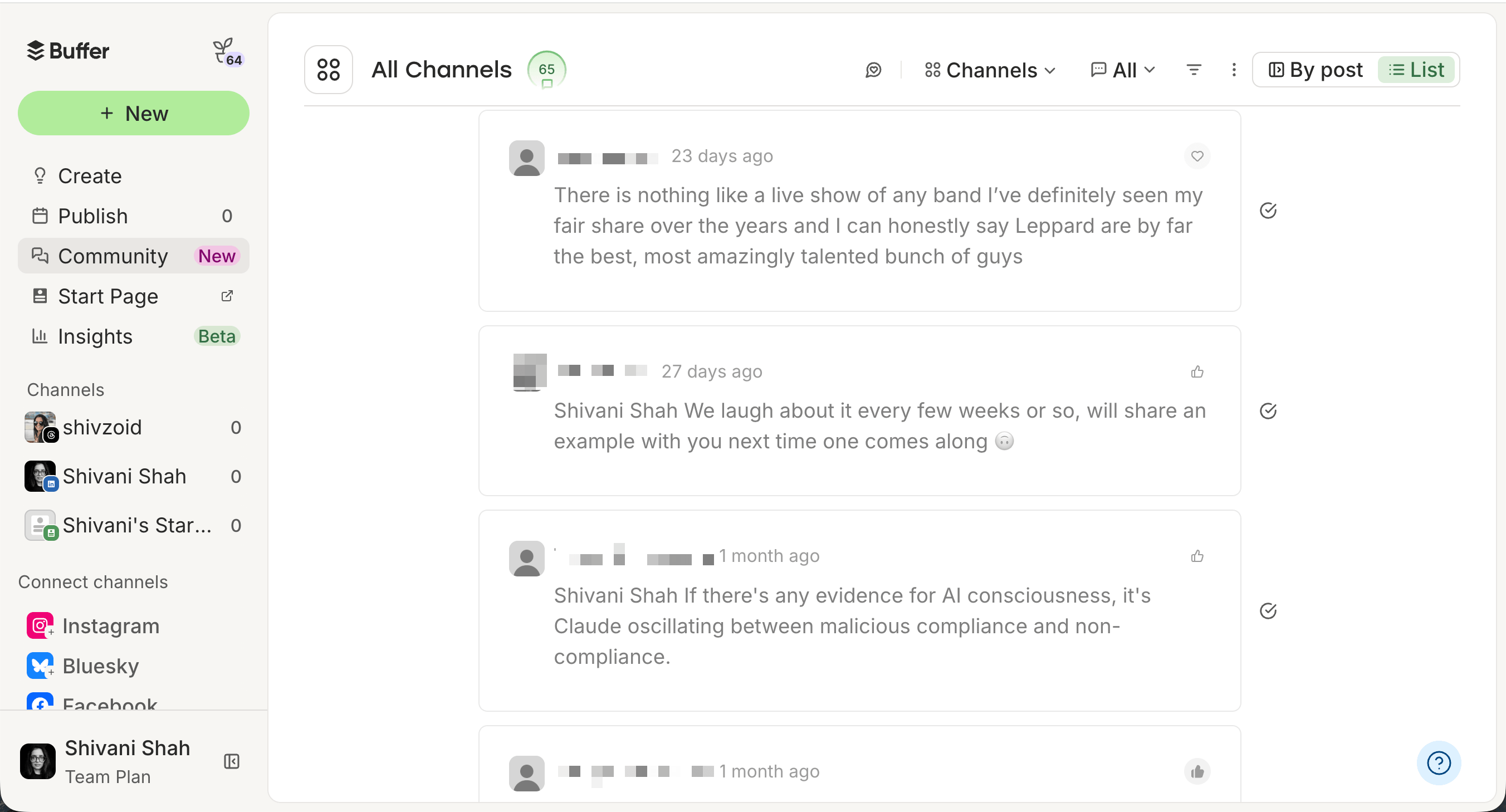
Engagement management is another key area of distinction. Buffer’s Community inbox is tailored for comment management, allowing users to view and respond to comments on their posts from a centralized location. This feature, available on all plans, supports direct audience interaction and relationship building without requiring users to navigate individual social media platforms or manage a full-fledged customer support queue. It’s designed for creators and small businesses focused on fostering audience relationships.

Sprout Social’s Smart Inbox, available from the Standard plan upwards, represents a far more comprehensive solution for high-volume inbound communications. It aggregates messages, comments, mentions, and direct messages from all connected platforms into a single, unified stream. This inbox enables teams to assign conversations, tag messages by topic or sentiment, and respond efficiently without switching applications. Coupled with keyword monitoring, it empowers brands to track mentions even when not directly tagged, facilitating proactive brand reputation management and customer service. For teams that view social media as a critical customer support channel, Sprout Social’s Smart Inbox provides the necessary tools for streamlined, accountable, and scalable engagement.
AI Features: Democratization vs. Enterprise Augmentation
Both platforms have significantly invested in artificial intelligence, integrating AI capabilities to enhance various aspects of social media management. Buffer’s AI Assistant, accessible on every plan including the free tier, democratizes AI for content creation. It helps users generate ideas, draft posts, and repurpose content across channels, effectively removing the "empty canvas" challenge. In the Community inbox, AI-powered reply suggestions provide starting points for responses, boosting efficiency for engagement (with a weekly cap on the Free plan). AI takeaways in Buffer Insights offer clear, actionable recommendations based on performance data.
Sprout Social’s AI features scale with its plans, offering more sophisticated functionalities at higher tiers. On Professional and above, the "Enhance Post" tool helps optimize captions, translate content, or generate new posts based on top-performing material. For Advanced plan users, AI-powered reply suggestions significantly reduce response times in the Smart Inbox, while the "Summarize Conversation" feature allows team members to quickly grasp the context of long threads. Sprout Social also introduces "Trellis," an AI agent capable of providing insights and recommendations based on integrated data and social listening. This enterprise-focused AI aims to augment team productivity, deepen analytical insights, and streamline complex operational tasks.
API and Integrations: Flexibility vs. Ecosystem Harmony
Connectivity and extensibility are vital for modern digital tools. Buffer offers a public API accessible on all plans, including Free. This accessibility allows individuals and small teams to build custom workflows, integrate with other personal tools, or develop niche applications. Its MCP (Multi-Channel Publishing) capabilities further extend its reach, enabling connections to generative AI models like Claude, ChatGPT, and Perplexity for advanced content creation and analysis.
Sprout Social’s API is positioned as an enterprise-grade feature, available exclusively on its Advanced plan. This high-tier access caters to large organizations needing to integrate social data—including post performance, profile analytics, and inbox activity—into their existing business intelligence tools, CRM systems, or data warehouses for comprehensive reporting and monitoring. Sprout Social also has an MCP, though currently focused on TikTok data integration with ChatGPT.
Regarding direct platform support, Buffer connects to 12 platform types, notably including early adoption of decentralized networks like Mastodon and Bluesky, alongside Google Business Profiles. Sprout Social supports a similar number of platforms but distinguishes itself with integrations for WhatsApp, TripAdvisor, Glassdoor, and helpdesk platforms like Zendesk, Salesforce, and HubSpot. These integrations underscore Sprout Social’s utility for customer service, review management, and comprehensive enterprise workflow integration.
Ease of Use and Customer Support
Buffer consistently receives high marks for its ease of use. Its intentionally simple interface ensures a flat learning curve, allowing users to quickly connect channels, set schedules, and begin content creation without extensive onboarding. This focus on user experience minimizes the time spent learning the tool, maximizing time for content development.

Sprout Social, by design, presents a more complex interface due to its depth of features. While powerful, mastering its advanced functionalities like social listening, competitive reporting, and intricate approval workflows requires a greater time investment. For enterprise teams needing this level of capability, the learning curve is a justifiable trade-off.
In terms of customer support, both platforms offer extensive self-serve knowledge bases. Buffer provides email support across all plans, including Free, with a global team ensuring rapid response times, typically within two hours. Its advocacy team is also active in its Discord community, offering additional support channels. Sprout Social offers email, live chat, and toll-free phone support (for North American customers) five days a week. Higher-tier plans include onboarding support, and a Premier Success option provides guaranteed two-hour first replies for enterprise clients. This tiered support structure reflects Sprout Social’s commitment to high-touch service for its enterprise clientele.
Implications and Strategic Positioning
The strategic divergence of Buffer and Sprout Social is a clear reflection of the maturing social media management market. Industry analysts often highlight a growing segmentation, where "good enough" for small players is vastly different from "mission-critical" for large enterprises.
For Buffer, its continued focus on affordability, user-friendliness, and agile adoption of new platforms positions it as a vital enabler for the burgeoning creator economy and the millions of small businesses navigating digital marketing. The emphasis on AI accessibility and an open API for all users suggests a commitment to democratizing advanced social media tools, empowering smaller entities to compete effectively. Product managers at Buffer likely prioritize feature iterations that simplify workflows and provide immediate value, aligning with user feedback from its core demographic.
Sprout Social’s trajectory, conversely, aligns with the increasing demands of corporate governance, data security, and complex organizational structures. Its robust reporting, advanced listening, and integrated workflow solutions speak to the strategic needs of CMOs and social media directors in large organizations. Executives at Sprout Social would emphasize the platform’s ability to drive measurable ROI, ensure brand compliance, and provide actionable intelligence from vast datasets. The high price point is justified by the specialized infrastructure, dedicated support, and extensive feature set required to operate at an enterprise scale, often replacing multiple disparate tools with a unified solution.
The ongoing evolution of social media, with new platforms emerging and existing ones refining their algorithms, means both companies must remain agile. Buffer’s quick adoption of Threads, Bluesky, and Mastodon demonstrates its responsiveness to new social frontiers, catering to users who value being at the forefront of digital trends. Sprout Social’s integration with critical business tools like helpdesks and review platforms signifies its commitment to becoming an integral part of the broader enterprise operational ecosystem.
Conclusion: Choosing the Right Tool
Ultimately, the choice between Buffer and Sprout Social is not about which platform is inherently "better," but rather which one is the "better fit" for specific needs, operational scales, and budgetary constraints.
- For Creators and Solopreneurs: Buffer is the clear recommendation. Its genuinely free plan, generous paid tiers, AI-powered content creation, and basic analytics offer unparalleled value without the need for a credit card. Sprout Social’s entry-level pricing and feature limitations for single users make it economically unfeasible for this segment.
- For Small Businesses and Growing Teams: Buffer remains highly competitive. The Team plan, with its unlimited users and comprehensive features like approval workflows and branded reports, provides a scalable and cost-effective solution. Unless specific enterprise-grade features like advanced social listening are non-negotiable, Buffer offers everything needed at a fraction of Sprout Social’s cost.
- For Mid-size Companies and Agencies: The decision becomes nuanced. If social listening, comprehensive competitive benchmarking, unified inbox management for customer service, and deep stakeholder reporting are critical and justify a higher budget, Sprout Social’s Professional and Advanced plans are purpose-built for these demands. However, if the primary needs revolve around efficient scheduling, robust analytics for content optimization, and team collaboration, Buffer’s Team plan can still provide significant value at a much lower investment.
- For Enterprise Teams: Sprout Social is the favored choice. Its Advanced and Enterprise plans are meticulously crafted to address the complex requirements of large corporations, including helpdesk integrations, compliance features, sentiment analysis, dedicated account management, and extensive data integration capabilities. Buffer, by deliberate design, does not aim to compete in this highly specialized and resource-intensive segment.
In essence, Buffer empowers agile content creators and small businesses with an accessible, efficient, and cost-effective platform. Sprout Social equips large organizations with a powerful, comprehensive, and deeply integrated suite of tools to manage their social media presence strategically and at scale. As the digital landscape continues to evolve, the clarity of their respective missions ensures both platforms will continue to serve their distinct user bases effectively. New users are encouraged to explore Buffer’s free plan, which offers an honest-to-goodness, indefinite trial period to assess its suitability for their needs.