
 Ali Ikhwan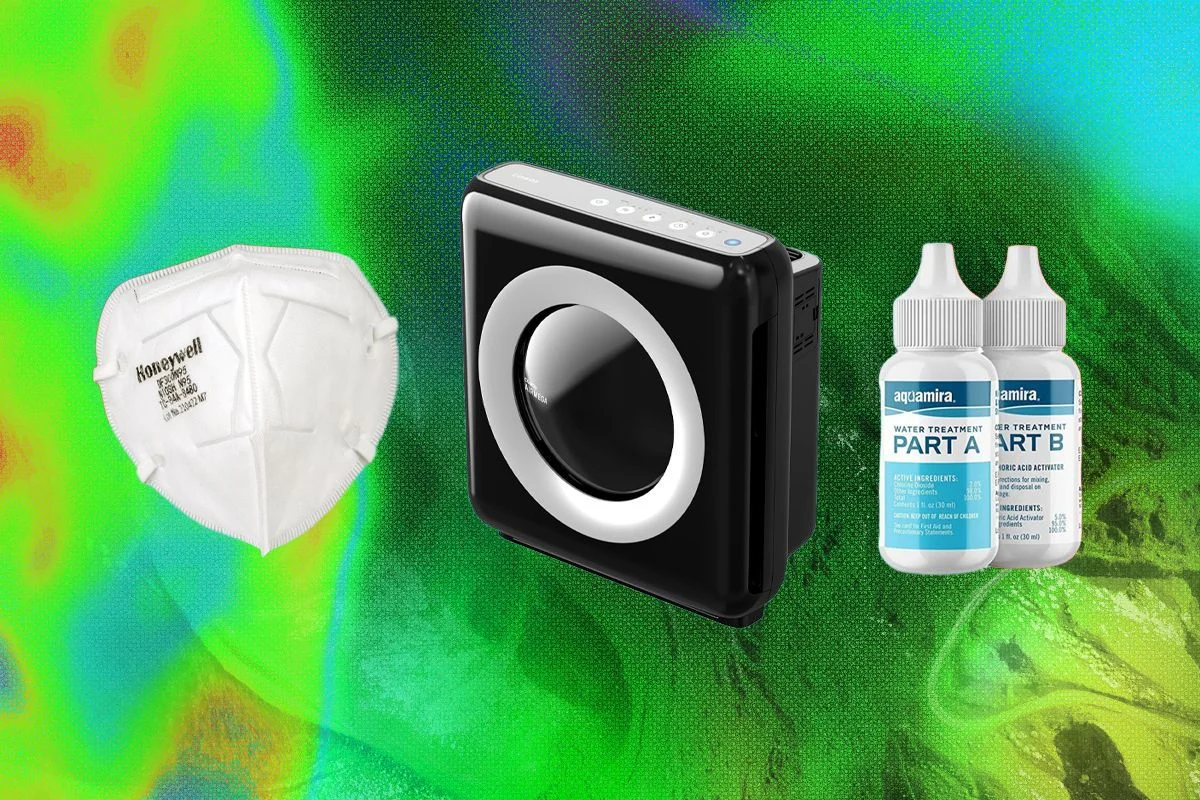
As the 2026 wildfire season begins with unprecedented intensity across the Western United States, sending plumes of smoke across the Midwest and into the Northeast, the necessity of disaster preparedness has transitioned from a niche hobby to a fundamental requirement for modern living. Experts in emergency management and public safety emphasize that the unpredictability of the current political and environmental landscape means that the window for preparation often closes before a crisis begins. Disasters, whether natural like hurricanes and earthquakes or systemic like power grid failures and civil unrest, do not follow a schedule. Consequently, the ability to "bug out" on short notice or "shelter in place" for extended periods is now a critical skill set for every household.
The Dual Scenarios of Disaster Response
Jonathan Sury, a senior staff associate at Columbia University’s National Center for Disaster Preparedness, identifies two primary scenarios for which families must prepare. The first is the rapid evacuation, often triggered by fast-moving wildfires or flash floods. In this situation, individuals must have a "go bag" or "bug-out bag" containing the barest essentials for a minimum of 72 hours. This kit must be light enough to carry and organized enough to grab in seconds.
The second scenario is sheltering in place, which occurs during severe blizzards, earthquakes, or large-scale utility failures. In these instances, the home becomes a bunker. Access to tap water, electricity, and heating may be severed for days or weeks. Charlie Woodrum, the National Weather Service (NWS) preparedness lead, notes that households must plan for the total loss of infrastructure. "You have to think in that mindset of, ‘We could lose power for a couple of days, or even a week, and we also could lose water,’" Woodrum stated. Effective planning requires distinct strategies for both mobility and endurance.

Hydration and Water Purification Standards
Water remains the most critical component of any survival strategy. The Federal Emergency Management Agency (FEMA) and the Red Cross recommend a minimum of one gallon of water per person per day for drinking and sanitation. For a family of four, a one-week supply requires 28 gallons of stored water, a volume that is often difficult to transport.
To bridge the gap between storage and mobility, experts recommend a tiered approach to purification. For home storage, simple household bleach can be used to disinfect water, provided users follow Environmental Protection Agency (EPA) dosing guidelines carefully. For those on the move, chemical purifiers such as Aquamira’s chlorine dioxide drops or Aqua Tabs provide a lightweight, shelf-stable solution for treating water from questionable sources.
However, particulate matter and microorganisms often require mechanical filtration. Modern advancements have led to durable, stainless-steel filtered bottles, such as those from Clearly Filtered, which remove contaminants without the risk of microplastic leaching. For larger groups or family use, personal filters like the Lifestraw or the Katadyn BeFree allow individuals to draw water directly from natural sources, filtering out 99.9% of bacteria and protozoa.
Energy Resilience and the Fragility of the Grid
In 2026, the reliance on digital devices for emergency information and communication has made portable power a top-tier priority. Lithium-ion power stations have largely replaced loud, gas-guzzling generators for short-term needs. Portable units from manufacturers like Jackery offer capacities ranging from 300-watt-hours for charging phones and laptops to massive 2,000-watt-hour units capable of running small appliances.

For long-term outages where solar recharging is not feasible, fuel-based generators remain a fallback. However, safety experts issue a stern warning regarding carbon monoxide (CO) poisoning. Fuel-based generators must never be operated indoors, in garages, or within 20 feet of any window or door. The NWS highlights that CO poisoning is a leading cause of post-disaster fatalities, often occurring when families attempt to heat their homes or cook during power outages.
Beyond household power, vehicle readiness is paramount. Portable jump-starters, such as the Wolfbox 4000A, allow individuals to start a dead car battery without the assistance of another vehicle—a vital tool when emergency services are overwhelmed and neighbors are unavailable.
Atmospheric Safety: Managing Wildfire Smoke and Disease
The proliferation of wildfires has introduced a new, long-term health threat: fine particulate matter (PM 2.5). Research conducted by the University of Oregon indicates that prolonged exposure to wildfire smoke is linked to increased risks of stroke, cardiovascular disease, and adverse mental health outcomes. Heidi Huber-Stearns, a wildfire expert, suggests that every home should have at least one "clean air room" equipped with a high-efficiency particulate air (HEPA) purifier.
For those on a budget, the "Corsi-Rosenthal Box"—a DIY air purifier made from a standard box fan, duct tape, and MERV 13 filters—has proven to be nearly as effective as commercial units. Because MERV 13 filters often sell out during major smoke events, experts advise stocking these items during the off-season. When outdoor travel is unavoidable, N95 or KN95 respirators are essential, as standard cloth or surgical masks do not provide adequate protection against microscopic smoke particles.

Nutrition and Sustenance for the Long Haul
Emergency food supplies should prioritize nutrient density, shelf life, and ease of preparation. While canned goods are a staple for sheltering in place, their weight makes them suboptimal for evacuation. Dehydrated or freeze-dried meal kits, such as those from Mountain House or Nutrient Survival, offer 15-to-25-year shelf lives and can be prepared with nothing more than boiling water.
For cooking during a power outage, a two-burner propane camping stove is a versatile tool. It allows for the preparation of hot meals and the boiling of water for purification. However, like generators, these stoves must be used in well-ventilated areas to prevent the buildup of toxic gases. Additionally, a high-performance cooler, such as those made by Pelican, is necessary not only for food preservation but for maintaining the efficacy of temperature-sensitive medications like insulin.
Digital Security and the Intangible Go-Bag
One of the most overlooked aspects of disaster preparedness is the protection of "intangibles." Jonathan Sury emphasizes that losing physical documents—titles, deeds, insurance policies, and identification—can hamper a family’s ability to rebuild for years after a disaster.
A "digital go-bag" should include encrypted backups of all vital records stored on a rugged, waterproof external drive, such as the OWC Envoy Pro Elektron. While cloud storage is a valuable secondary backup, internet infrastructure is often the first thing to fail during a major catastrophe. Physical paper maps of the local region are also recommended, as GPS systems can become unreliable or inaccessible.

In an era of increased surveillance and data tracking, some individuals may also consider "burner" technology. An affordable, data-cleansed smartphone (an "altphone") and a signal-blocking Faraday bag can provide a layer of privacy and security when crossing borders or navigating areas of civil instability.
Property Mitigation and the McLeod Tool
For homeowners in wildfire-prone areas, preparation extends beyond the kit to the property itself. Amanda Stasiewicz, a wildfire human-impact researcher, recommends creating a "defensible perimeter" by removing all flammable materials—including mulch, wooden fences, and dried vegetation—within five feet of the home.
A critical tool for this task is the McLeod, a heavy-duty rake-and-hoe combination used by wildland firefighters. The McLeod allows for the rapid scraping of earth to create firebreaks, potentially stopping a low-intensity grass fire from reaching a structure. "It’s about cutting line," says experts, emphasizing that prophylactic measures taken weeks in advance are more effective than last-minute efforts.
The Human Element: Psychological Recovery and Community
While gear is essential, the human element of survival is often the most taxing. Stasiewicz notes that wildfire victims frequently regret losing items of sentimental value—family recipes, photo albums, and heirlooms—more than their physical electronics. She suggests keeping a "sentimental list" of items to grab if time permits, as the stress of an evacuation often causes a cognitive "freeze" that makes it difficult to remember what matters most.

Furthermore, the most resilient form of emergency preparation is social. Getting to know neighbors and establishing a community check-in system can provide a safety net that no amount of gear can replace. In the event of a systemic failure, the "best form of emergency prep is often other people."
As the complexities of 2026 continue to unfold, the message from disaster experts is clear: the time to build a kit was yesterday, but the second-best time is today. Preparedness is not a one-time task but a continuous process of auditing supplies, updating digital backups, and maintaining the social ties that form the true foundation of survival.







