
 Reynand Holland
Economic volatility and seasonal climate shifts frequently converge to place unprecedented stress on both household budgets and personal wellness. As winter weather strips the skin of essential moisture and inflationary pressures constrain discretionary spending, consumers increasingly seek accessible methods of self-care that do not compromise financial stability or environmental health. The modern wellness landscape has consequently experienced a profound paradigm shift toward sustainable, non-toxic at-home spa treatments. This comprehensive market overview examines the intersection of clean beauty, eco-friendly manufacturing, and holistic wellness, providing a curated analysis of sustainable personal care regimens designed for face, body, hair, nails, and mental tranquility.
Economic and Environmental Pressures Driving At-Home Wellness
The modern demand for at-home spa solutions is not merely a lifestyle trend, but a calculated response to macroeconomic factors and heightened consumer awareness regarding product safety. Industry analyses indicate that traditional personal care products often contain synthetic chemicals, parabens, phthalates, and artificial fragrances that can disrupt endocrine functions and exacerbate dermatological sensitivities. Concurrently, commercial spa services have seen steep price escalations, pricing out significant segments of the population.
In response, consumers are pivoting toward high-efficiency, sustainable alternatives. Dermatological and environmental experts emphasize that fundamental wellness begins with foundational habits—adequate hydration, consistent sleep schedules, and structured stress management—rather than expensive formulations. Furthermore, accessible household staples such as Epsom salt, unrefined coconut oil, and bentonite clay provide foundational therapeutic benefits at a fraction of the cost of commercial treatments. However, for individuals seeking specialized formulations or wishing to support ethical enterprises, a growing sector of independent, eco-conscious businesses offers transparently sourced, sustainable alternatives.
Face and Body Care: Clean Formulations and Sustainable Manufacturing
The market for facial and body care has undergone rigorous scrutiny regarding supply chain transparency and ingredient safety. Consumers increasingly demand formulations that eliminate harmful toxins while prioritizing regenerative agriculture and ethical labor practices.
Grown Alchemist has emerged as a prominent player in this sector, offering targeted kits for skincare, hand care, and body care. The brand distinguishes itself through meticulous supply chain vetting to ensure ecological sustainability, complemented by the utilization of majority recycled and refillable packaging. Similarly, OSEA Malibu incorporates sustainably harvested seaweed as a core ingredient across its product lines. By adhering to a strict blacklist of harmful chemicals, OSEA ensures its at-home spa sets remain entirely non-toxic and vegan.
For consumers seeking clinical-grade efficacy at a more accessible price point, MyChelle offers a robust selection of vegetarian, cruelty-free exfoliators, masks, and peels. Formulated without phthalates, parabens, sulfates, artificial fragrances, or genetically modified organisms (GMOs), these products cater to ethically conscious buyers.
Advanced anti-aging and corrective treatments have also evolved to embrace clean chemistry. Surreal Skincare, a trans-owned enterprise, utilizes natural tree resin extracts to deliver potent healing compounds. Their targeted resurfacing regimens, including the Advanced Guide to Cheating Death, leverage natural pharmacopoeia to achieve dermatological renewal. Meanwhile, Tata Harper provides comprehensive in-home spa tools and facial sets sourced consciously from over 68 countries, entirely free from synthetic fillers and chemical additives.
Holistic facial techniques have simultaneously gained scientific and cultural traction. The Wildling Gua Sha Empress Collection capitalizes on traditional practices to encourage lymphatic drainage, facial tension release, and micro-circulation. By sourcing plants from local farms and fair-trade communities at peak potency, Wildling bridges ancient ritual with modern sustainability. Additional specialized care, such as the botanical foot care kits offered by Naturally London, addresses neglected areas of the body through rigorous, plant-based formulations.
Hair Restoration and Chemical-Free Coloring
Hair care represents one of the most chemically intensive segments of the beauty industry, historically relying on ammonia, resorcinol, and synthetic dyes that compromise scalp health and environmental integrity. The clean hair care movement seeks to rectify these impacts through botanical restoration and certified organic dyes.

Hairprint offers a biochemical alternative to traditional hair dyes. Rather than depositing synthetic color through chemical oxidation, Hairprint replenishes the natural eumelanin pigment found in brown and black hair. Acting as a true protein treatment, it strengthens hair structure, reduces frizz, and restores sheen without disrupting the scalp microbiome.
For consumers desiring traditional color alteration without synthetic exposure, Desert Shadow provides certified organic, vegan, and palm-oil-free at-home hair dye kits priced under twenty dollars. Similarly, Surya Brasil utilizes henna and botanical extracts to safely cover grey hair while protecting the scalp. These formulations reflect a broader industry movement toward biodegradable, cruelty-free hair maintenance that mitigates aquatic toxicity caused by chemical dye runoff.
Nail Health and Non-Toxic Manicures
Conventional nail care routines—particularly gel manicures and acrylic applications—frequently result in nail plate dehydration, structural thinning, and prolonged exposure to formaldehyde and toluene. The shift toward natural nail conditioning has catalyzed innovative product development in non-toxic manicures.
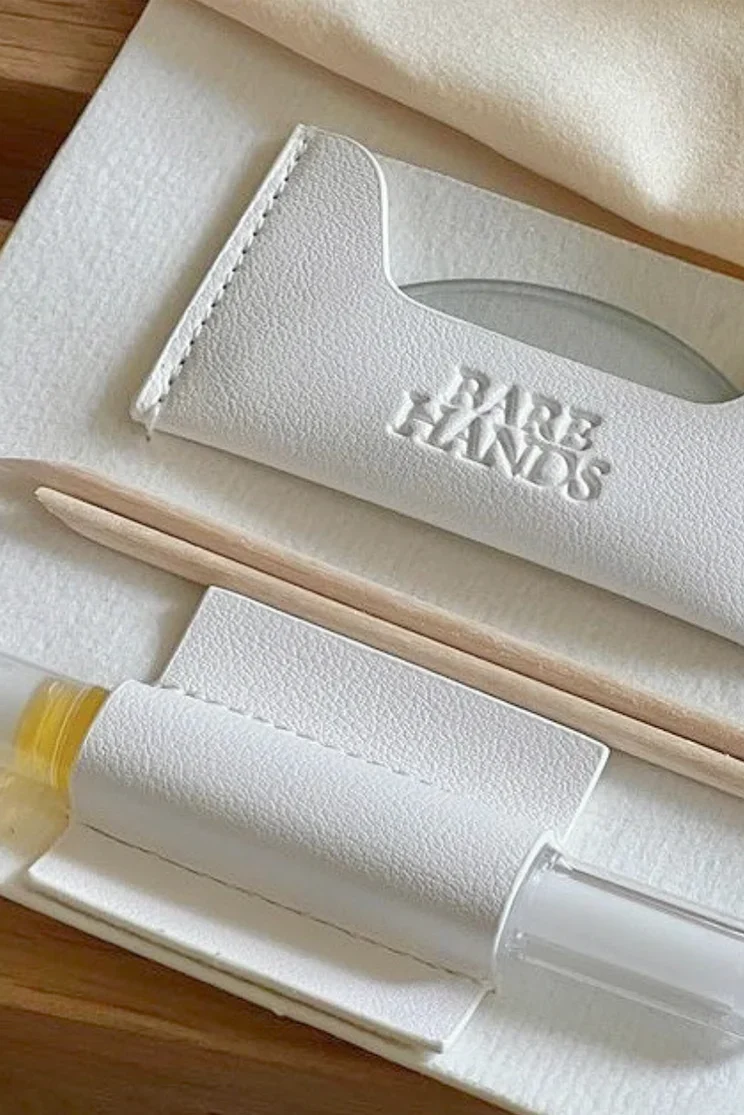
The Bare Hands Dry Gloss Manicure Kit eliminates the need for chemical polishes entirely, utilizing specialized glass files and natural balms to buff the nail plate to a healthy, reflective shine. For individuals experiencing brittle nails or slow growth, Lauren B. Beauty offers targeted treatments such as its Nail Growth Serum. Formulated with amino acids, antioxidants, vitamins E and C, peptides, and biotin, the serum instantly penetrates the nail bed to stimulate natural keratin production and enhance structural resilience without the application of harsh lacquers.
Mental Tranquility and Holistic Stress Management
The psychological dimensions of wellness are inextricably linked to physical health. Chronic stress elevates cortisol levels, which in turn degrades skin barrier function and exacerbates systemic inflammation. Consequently, at-home spa protocols increasingly incorporate holistic stress-reduction tools.
BLK + GRN curates artisan wellness bundles, such as the Total Tranquility Set, featuring chakra soy candles, cleansing botanicals, and therapeutic essential oils designed to foster a calming domestic environment. Complementing these sensory rituals, Prima utilizes organically grown whole hemp extract to formulate optimized CBD supplements. By incorporating bioavailability enhancers like black pepper and curcumin oils, these supplements support nervous system regulation and stress mitigation.
Hydrotherapy remains a cornerstone of physical and mental recovery. Herbivore Botanicals, 100% Pure, and Unplugged Essentials offer specialized bath salts and soaks infused with therapeutic minerals, magnesium sulfate (Epsom salt), and hemp extracts. Inspired by flotation therapy principles, these formulations promote transdermal magnesium absorption, easing muscle tension, accelerating detoxification, and facilitating deep mental relaxation.
Broader Implications and Industry Trajectory
The proliferation of sustainable at-home spa and wellness products signifies a permanent maturation of the clean beauty sector. As regulatory scrutiny increases and consumers demand verifiable environmental credentials, brands are compelled to abandon superficial "greenwashing" in favor of rigorous third-party certifications, transparent supply chains, and circular packaging economies.
Ultimately, the democratization of wellness through high-quality, non-toxic at-home regimens demonstrates that personal self-care and environmental stewardship are mutually reinforcing. By prioritizing ingredient integrity, ethical sourcing, and holistic health practices, consumers can navigate economic and environmental uncertainties while maintaining optimal physical and psychological well-being.