Muhammad Hendra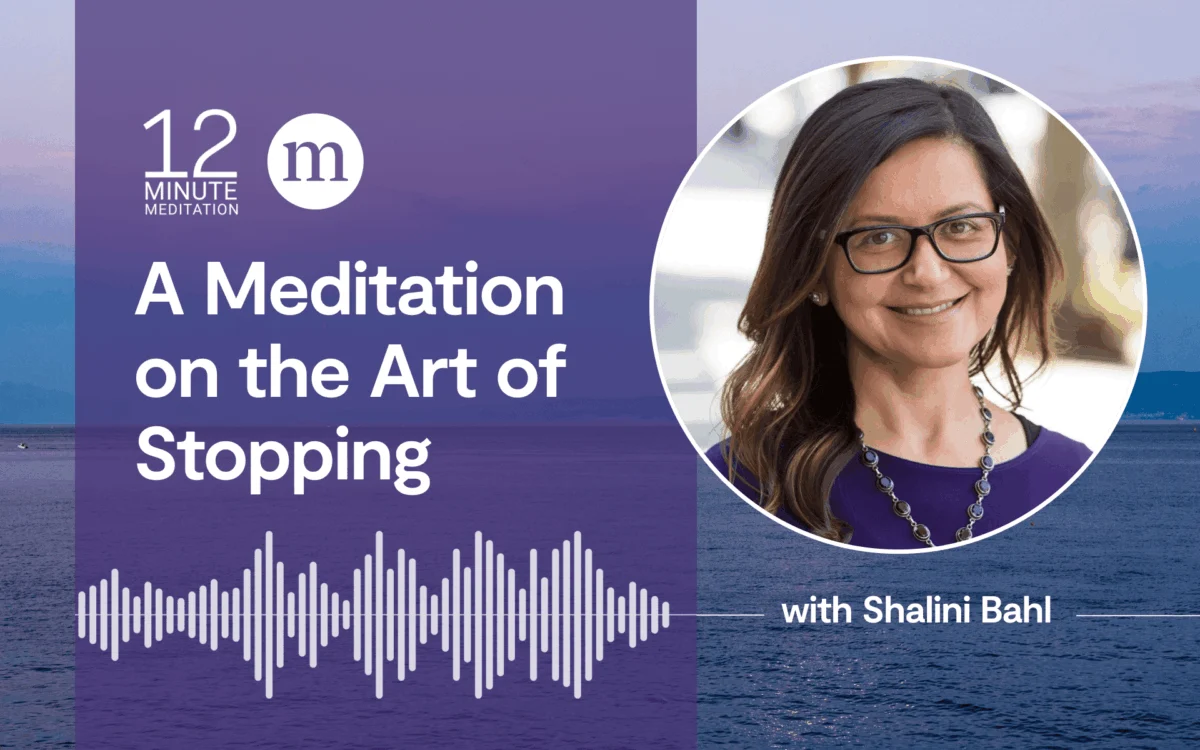
In a contemporary landscape increasingly defined by relentless pace and digital distraction, mindfulness teacher Shalini Bahl offers a profound yet elegantly simple redefinition of mindfulness, asserting that at its core, it is merely about stopping—a deliberate pause to notice, to breathe, and to gently interrupt the ingrained habits of thought with a quiet, present awareness. This perspective challenges the common misconception of mindfulness and meditation as protracted, time-consuming exercises, instead framing them as an accumulation of accessible micro-moments that can be seamlessly integrated into the fabric of daily life. Bahl’s teachings, highlighted through a recent guided practice, emphasize "the art of stopping" as a critical skill for cultivating mental tranquility and enhancing conscious living.
Understanding Mindfulness: Beyond the Traditional Mat
Mindfulness, a practice rooted in ancient Eastern contemplative traditions, particularly Buddhism, has gained considerable traction in the Western world over the past several decades. Traditionally, it has often been associated with extended meditation sessions, requiring dedicated time, often in serene environments, to achieve a state of focused attention and non-judgmental awareness. This perception, while valid for certain forms of practice, can inadvertently create a barrier for many individuals leading busy, demanding lives, who may feel they lack the time or discipline for such sustained exercises.
The pioneering work of figures like Jon Kabat-Zinn, who founded the Mindfulness-Based Stress Reduction (MBSR) program at the University of Massachusetts Medical School in the late 1970s, played a pivotal role in secularizing mindfulness and introducing it to mainstream medical and psychological contexts. Kabat-Zinn defined mindfulness as "the awareness that arises through paying attention, on purpose, in the present moment, non-judgmentally." While groundbreaking, even MBSR typically involves structured, multi-week programs with daily formal meditation. Shalini Bahl’s current emphasis on "micro-moments" represents an evolution of this accessibility, making the practice even more granular and immediate.
The contemporary relevance of this refined approach cannot be overstated. According to the American Psychological Association’s annual "Stress in America" surveys, stress levels have remained consistently high, exacerbated by global events, economic uncertainties, and the pervasive nature of digital communication. A 2023 survey indicated that a significant portion of adults report experiencing symptoms of stress, such as irritability, fatigue, and feelings of being overwhelmed, on a daily basis. In this environment, a mindfulness paradigm that champions brief, potent interventions becomes not just appealing, but arguably essential for mental well-being.
Shalini Bahl’s Pedagogy: Embracing the Pause
Shalini Bahl’s unique contribution to the discourse on mindfulness centers on demystifying the practice by focusing on its most fundamental aspect: the intentional pause. She articulates that rather than being a grand, sustained exercise, mindfulness is merely "a collection of micro-moments of stopping, breathing, really noticing our own bodies and our own lives, getting distracted, and then coming back again. Over and over." This iterative, forgiving process dismantles the pressure to achieve perfect, unbroken concentration, instead normalizing the mind’s natural tendency to wander and emphasizing the gentle act of returning to the present.
Bahl’s recent guided practice, designed around "the art of stopping," directly addresses what she identifies as the "regular habits of the mind"—the incessant "pushing, pulling, running in circles" that characterize much of modern cognitive activity. This mental churning often manifests as rumination over past events, anxiety about future possibilities, or a constant striving for more, better, or different. By advocating for a simple cessation of these habitual patterns, even for a moment, Bahl invites practitioners to step out of this relentless cycle. The objective is not to eradicate thought, but to create a momentary space from it, allowing one to simply be rather than perpetually do.
This concept of "being" for a moment is a cornerstone of Bahl’s teaching. In a society that often equates worth with productivity and constant activity, the deliberate act of non-doing—of simply resting in one’s quiet presence—can feel counterintuitive, even radical. Yet, it is precisely in these moments of stillness that the mind can recalibrate, gain clarity, and experience a sense of calm that is often elusive amidst the daily grind. Her approach offers a compassionate invitation to self-awareness, acknowledging the inherent challenges of mental discipline while providing an accessible pathway to cultivate it.
The Potency of Micro-Practices: Bridging Meditation and Daily Choices
A significant facet of Bahl’s teaching, and one that resonates deeply with contemporary lifestyles, is the emphasis on micro-practices. While she offers extended guided practices for deeper immersion, she also provides condensed versions specifically designed for "busy days." These micro-practices are not diluted forms of mindfulness but rather concentrated bursts of awareness that can be inserted into various moments throughout the day.
Examples of such micro-practices include pausing for three conscious breaths before opening an email, taking a moment to fully experience the sensation of a doorknob before turning it, consciously chewing the first few bites of a meal, or simply noticing the feeling of one’s feet on the ground while walking. The cumulative effect of these small, intentional pauses can be profound. They serve as regular "check-ins" that interrupt automatic pilot mode, preventing the mind from becoming completely swept away by external stimuli or internal chatter.
As detailed in her article on Mindful.org, Bahl elaborates on "how micro-practices can be the bridge between your meditation and your choices." This highlights a critical link: sustained formal meditation builds the capacity for mindfulness, but micro-practices ensure that this capacity translates into real-world application, influencing daily decisions, reactions, and interactions. By consistently bringing awareness to these small moments, individuals can foster greater intentionality, emotional regulation, and a more conscious response to life’s challenges, rather than falling back on reactive, ingrained habits. This integration is crucial for transforming mindfulness from an isolated exercise into a pervasive way of living.
Scientific Validation and Growing Adoption
The accessibility championed by Shalini Bahl’s micro-practice approach is further bolstered by a growing body of scientific research validating the efficacy of mindfulness, even in short durations. Studies have consistently shown that regular mindfulness practice can lead to a host of physiological and psychological benefits. For instance, research published in journals like Psychological Science and Mindfulness indicates that even brief mindfulness interventions can significantly reduce stress, improve attention, enhance emotional regulation, and decrease symptoms of anxiety and depression.
Neuroscientific investigations using fMRI scans have revealed that mindfulness meditation can induce measurable changes in brain structure and function. Regular practitioners often exhibit increased gray matter density in regions associated with learning, memory, emotion regulation (e.g., the hippocampus and prefrontal cortex), and self-awareness (e.g., the insula). Concurrently, there is often a reduction in the volume of the amygdala, the brain’s fear center, suggesting a decreased reactivity to stressors.
Statistics underscore the widespread recognition of mindfulness’s benefits. A 2017 survey by the National Center for Health Statistics reported that 14.2% of U.S. adults had meditated in the past 12 months, a significant increase from 4.1% in 2012. This upward trend reflects a societal shift towards preventative mental health strategies and a growing acceptance of contemplative practices in mainstream culture. Organizations across sectors, from corporate giants to healthcare providers and educational institutions, are increasingly implementing mindfulness programs to enhance employee well-being, reduce burnout, and improve cognitive performance, further attesting to its practical value.
A Brief Chronology of Mindfulness in the West
The journey of mindfulness from ancient Eastern spiritual practices to a widely accepted secular well-being tool in the West has unfolded over several decades:
- Mid-20th Century: Early Western scholars and spiritual seekers began to explore Buddhist philosophies and meditation techniques, though these remained largely niche interests.
- 1979: Jon Kabat-Zinn founded the Mindfulness-Based Stress Reduction (MBSR) clinic at the University of Massachusetts Medical School, marking a pivotal moment in bringing mindfulness into a clinical, secular context.
- 1980s-1990s: MBSR gained recognition as an effective intervention for chronic pain and stress, leading to its adoption in various hospitals and clinics. Early scientific studies began to explore its effects.
- 2000s: The "mindfulness revolution" truly began to accelerate. Research into mindfulness exploded, fueled by advancements in neuroscience and psychology. Mindfulness-Based Cognitive Therapy (MBCT) emerged as an intervention for preventing relapse in depression.
- 2010s: Mindfulness entered mainstream culture with the proliferation of meditation apps (e.g., Headspace, Calm), corporate wellness programs, and its integration into schools and public health initiatives. Media platforms like Mindful.org emerged as key disseminators of information and guided practices, making the teachings of experts like Shalini Bahl widely accessible.
- Present Day: Mindfulness continues to evolve, with new applications in leadership, education, and social justice. The emphasis on accessible, short-form practices, as advocated by Bahl, represents a natural progression towards making these powerful tools available to an even broader population, acknowledging the constraints of modern life.
Expert Perspectives and Practitioner Insights
The re-framing of mindfulness by teachers like Shalini Bahl aligns with a broader consensus among mental health professionals regarding the importance of accessible and sustainable well-being practices. Psychologists and psychiatrists often observe that the perceived difficulty or time commitment of traditional meditation is a significant barrier for many individuals who could otherwise benefit. Therefore, the micro-practice approach is seen as a valuable entry point, democratizing mindfulness and making it less intimidating.
Dr. Sarah F. Johnson, a clinical psychologist specializing in stress management, notes, "Many clients express frustration with trying to ‘clear their mind’ during meditation. Bahl’s approach validates the reality of a busy mind and offers practical, bite-sized strategies that accumulate to create significant shifts over time. It’s less about achieving a perfect state and more about consistently choosing presence." While not a direct quote from Johnson regarding Bahl specifically, this represents a common professional sentiment.
Practitioners who have adopted micro-practices frequently report a palpable difference in their daily lives. Anecdotal evidence suggests that these brief pauses help to cultivate a sense of agency, preventing automatic reactions and fostering more thoughtful responses. Many find that while they may not always dedicate time to a 20-minute formal sit, the integration of micro-moments makes mindfulness an ongoing, living practice rather than an isolated event. This continuous engagement often leads to a more consistent experience of calm and clarity throughout the day. The recurring theme among those benefiting from this approach is that it transforms mindfulness from a chore into an intrinsic part of conscious living.
Implications for Individual and Societal Well-being
The implications of widely adopting Bahl’s "art of stopping" and the power of micro-practices extend far beyond individual mental peace. On an individual level, regular engagement with these brief moments of presence can significantly enhance emotional resilience, improve cognitive flexibility, and foster a deeper connection to one’s inner experience. By gently interrupting habitual thought patterns, individuals can develop a greater capacity to choose their responses rather than react impulsively, leading to improved relationships, better decision-making, and a reduced susceptibility to stress and burnout.
On a societal level, a collective embrace of accessible mindfulness could contribute to a more compassionate and considered world. As more individuals cultivate presence and self-awareness, there is potential for increased empathy, reduced interpersonal conflict, and a greater capacity for thoughtful, long-term planning over short-sighted reactivity. In workplaces, this could translate to improved team dynamics, reduced employee turnover, and enhanced innovation. In communities, it could foster greater civic engagement and a more mindful approach to complex social issues.
The ongoing work of teachers like Shalini Bahl, and platforms like Mindful.org which amplify these teachings, is crucial in making sophisticated contemplative practices digestible and actionable for the general public. By focusing on the profound simplicity of "stopping," Bahl provides a vital tool for navigating the complexities of modern existence, demonstrating that peace and presence are not distant ideals, but accessible realities woven into the very fabric of our everyday lives, waiting to be noticed, one breath, one moment, at a time. Engaging with Bahl’s guided practice or exploring her article on micro-practices offers a direct pathway to experience this transformative art of stopping.