
 Ali Ikhwan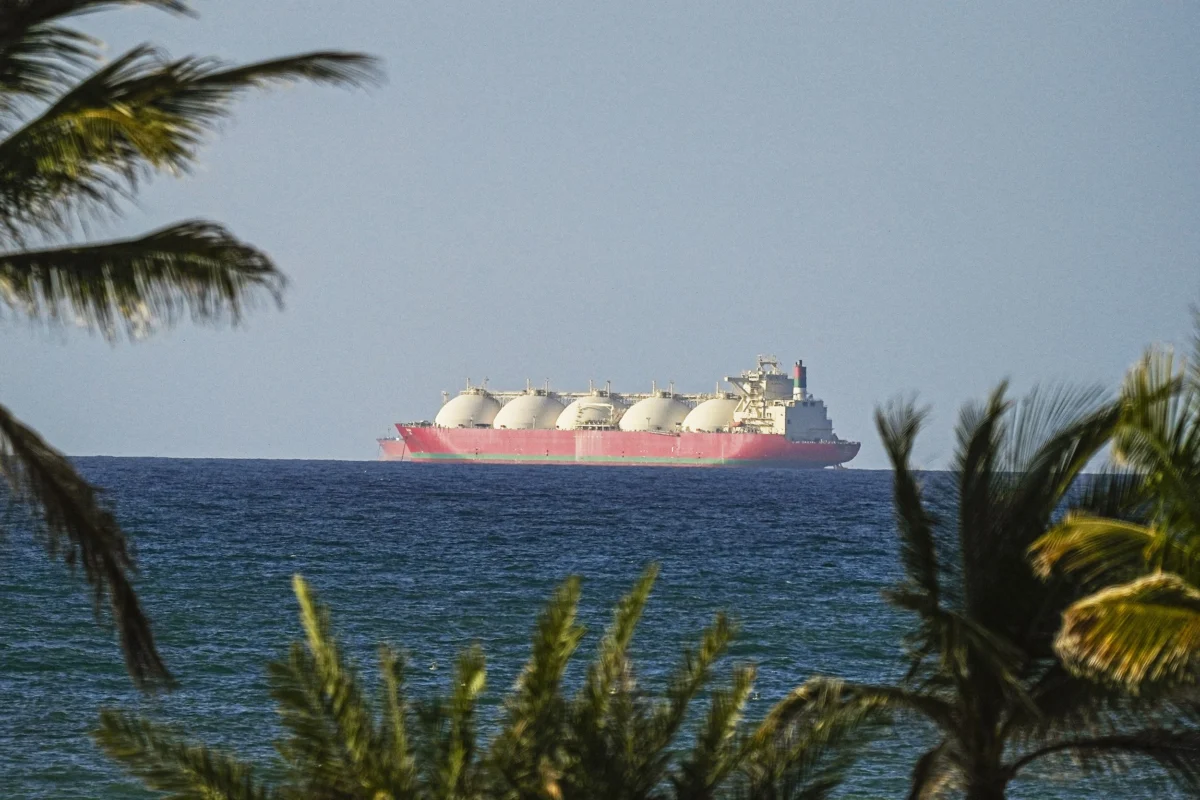
The announcement of a ceasefire on Tuesday night between the United States and Iran has sparked a cautious sense of relief across global capitals, signaling the potential end to a month-long maritime blockade that has paralyzed the world’s most critical energy artery. While the news prompted an immediate downward correction in crude oil prices, experts warn that the logistical and infrastructural damage wrought by the conflict will prevent a rapid return to normalcy. The Strait of Hormuz, a narrow waterway through which roughly one-fifth of the world’s daily oil consumption passes, has been effectively shuttered for over 30 days, leaving a massive backlog of vessels and a global supply chain in a state of profound disarray.
During the height of the hostilities, maritime traffic through the strait plummeted by an estimated 95 percent. This near-total cessation of movement did more than just halt the flow of crude; it choked the supply of refined petroleum products, including diesel, jet fuel, and gas oil, sending shockwaves through the manufacturing and aviation sectors. Carsten Ladekjær, CEO at Glander International Bunkering, noted that the resulting price surges were felt universally, though the severity of the impact was distributed unevenly across the globe. As the industry looks toward a reopening, the focus shifts from military de-escalation to the daunting task of clearing a maritime traffic jam of historic proportions.
The Magnitude of the Maritime Backlog
The scale of the disruption is best illustrated by the sheer volume of tonnage currently idling in and around the Persian Gulf. As of Wednesday morning, more than 800 cargo ships and tankers remain trapped inside the Gulf, unable to exit. Outside the strait, in the Gulf of Oman and the Arabian Sea, an additional 1,000 vessels are anchored or drifting, awaiting clearance to enter. Under normal operating conditions, the Strait of Hormuz facilitates the passage of approximately 150 vessels per day. Clearing the current backlog of nearly 2,000 ships is not a matter of simply "opening the gates"; it requires a complex, sequenced operation that could take weeks, if not months, to resolve.
The logistical challenges are compounded by the need for ship inspections, refueling, and crew rotations. Many vessels have been stationary for over a month, leading to potential maintenance issues and the exhaustion of onboard supplies. Furthermore, the process of navigating the strait remains a "controlled" environment. Early reports suggest that Iranian authorities are managing the outbound flow of traffic, leading to concerns among Western shipping firms regarding the criteria for prioritization. "It’s a logistical nightmare," says Arne Lohmann Rasmussen, chief analyst and head of research at Global Risk Management. "We don’t yet know what the current capacity will be, especially from a security standpoint. It’s not something that can be solved overnight."
Regional Dependencies and Economic Vulnerabilities
The month-long closure has highlighted the extreme vulnerability of Asian economies that rely almost exclusively on Middle Eastern energy exports. While Western nations have diversified their energy portfolios over the last decade, major industrial powers in Asia remain tethered to the Persian Gulf. Data provided by Ladekjær underscores this dependence: Japan sources a staggering 93 percent of its energy imports from the region, followed by Singapore at 70 percent, South Korea at 67 percent, India at 55 percent, and China at 50 percent.
For these nations, the blockade was not merely an economic inconvenience but a threat to national security. In India and China, the surge in energy costs has put upward pressure on inflation, complicating the efforts of central banks to manage post-pandemic recovery. In Japan and South Korea, the scarcity of refined products threatened to stall high-tech manufacturing and domestic transportation networks. Although the ceasefire offers a path forward, these nations remain on high alert, as the lag time between oil being loaded in the Gulf and arriving at Asian refineries typically exceeds 30 days.
Market Reactions and the "Price Lag" Phenomenon
Energy markets, which are inherently forward-looking, responded to the ceasefire with a sharp sell-off. Brent crude, the global benchmark, fell to approximately $94 per barrel, a 15 percent drop from the week’s high of $110. Refined products saw even more dramatic declines as traders priced in the expectation of renewed supply. However, analysts caution that these market prices do not immediately translate to lower costs for consumers or industrial end-users.
The "price lag" is a result of the physical reality of the supply chain. Fuel currently held in storage or in transit was purchased at the peak of the crisis. "Fuel already bought at higher prices is still in the system, so it takes time for cheaper supply to come through," Ladekjær explained. This transition period is expected to last at least a month. Furthermore, while the current price of $94 is a significant improvement over $110, it remains substantially higher than the pre-war baseline of $60 to $70 per barrel. The "risk premium"—the extra cost added to oil due to the possibility of renewed conflict—is expected to persist as long as the ceasefire remains tenuous.

Infrastructure Damage and Force Majeure
One of the most significant hurdles to a full recovery is the physical damage sustained by energy infrastructure across the Middle East during the month of conflict. Missile and drone strikes targeted several key facilities, leading to a declaration of "force majeure"—a legal clause that allows companies to void contracts due to unforeseeable circumstances—by several major energy producers.
QatarEnergy, one of the world’s largest suppliers of Liquefied Natural Gas (LNG), declared force majeure on several contracts after its facilities sustained hits. In Saudi Arabia, the state-owned giant Saudi Aramco was forced to suspend operations at its Ras Tanura refinery—the largest oil refinery in the world—following a fire linked to a drone attack. Similar reports of damage to ports, gas plants, and desalination units have emerged from the United Arab Emirates, Bahrain, Kuwait, and Iraq.
Repairing this infrastructure is a time-consuming process that requires specialized parts and technical expertise, much of which must be imported. Even if the Strait of Hormuz reopens fully tomorrow, the diminished capacity of these refineries and loading terminals means that the volume of exports may not reach pre-war levels for several months.
A Chronology of the Crisis
To understand the current situation, it is necessary to review the rapid escalation that led to the blockade:
- Week 1: The Inciting Incident. Following a breakdown in diplomatic negotiations and a series of maritime skirmishes, Iran announced the closure of the Strait of Hormuz, citing security concerns. Global oil prices immediately jumped by 20 percent.
- Week 2: The Blockade Hardens. As US and allied naval forces moved into the region, insurance premiums for tankers skyrocketed, leading most commercial shipping lines to suspend operations in the Gulf.
- Week 3: Infrastructure Strikes. The conflict expanded from the sea to the land, with drone and missile attacks targeting refineries and storage tanks in Saudi Arabia, the UAE, and Qatar.
- Week 4: Global Supply Crunch. Shortages of jet fuel began affecting international flight schedules, and several Asian nations dipped into their strategic petroleum reserves.
- Tuesday Night: A US-brokered ceasefire was reached, with Iran agreeing to a phased reopening of the strait in exchange for a cessation of hostilities and specific sanctions relief.
The Role of Insurance and Maritime Security
Even with a political agreement in place, the shipping industry remains hesitant. Maritime insurance companies, particularly those centered in London, have designated the Persian Gulf as a "high-risk area." This designation carries exorbitant "War Risk" premiums that can make a single voyage cost millions of dollars more than usual.
"I think many will be hesitant to reenter the strait until there’s more clarity because of the risk of being trapped again," Rasmussen noted. Shipping companies require guarantees that their vessels will not be seized or caught in a crossfire if the ceasefire collapses. There are also concerns regarding unexploded ordnance or sea mines that may have been deployed during the month of active conflict. Mine-clearing operations and security sweeps by naval forces will likely be a prerequisite before insurance companies lower their rates and allow large-scale commercial traffic to resume.
Long-Term Implications for Global Energy Policy
The month-long closure of the Strait of Hormuz is likely to have lasting effects on global energy strategy. The crisis has revitalized debates in Washington, Brussels, and New Delhi regarding the necessity of energy independence and the diversification of transit routes.
Countries like the UAE have long promoted bypass routes, such as the Habshan–Fujairah pipeline, which carries oil to the Gulf of Oman, bypassing the strait entirely. However, the capacity of these pipelines is currently insufficient to handle the total volume of the region’s exports. Moving forward, there will likely be increased investment in such bypass infrastructure, as well as a renewed push for renewable energy and nuclear power in Asia to reduce the existential risk posed by a Hormuz closure.
For now, the ceasefire marks a fragile transition from active conflict to a period of recovery. While the "sigh of relief" felt on Tuesday night was genuine, the road to restoring the world’s energy equilibrium remains long and fraught with logistical, economic, and political obstacles. The systems that move energy through the region are beginning to restart, but the world is learning that while a gate can be closed in an instant, reopening it is a painstaking process of clearing the wreckage left behind.







