Pranda Michaela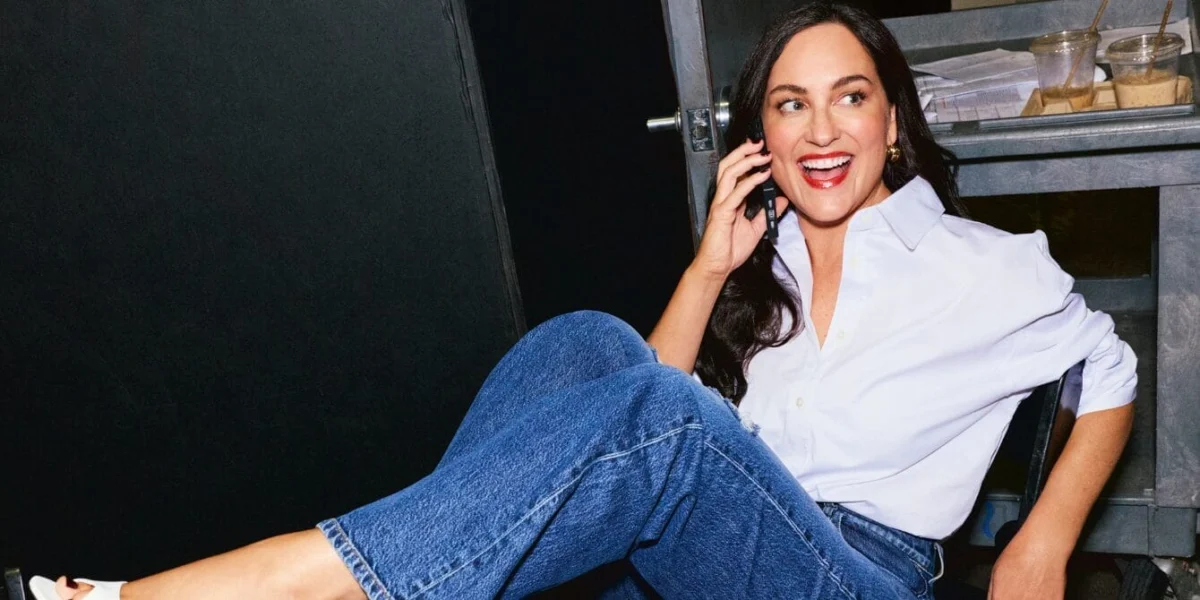
Taylor Strecker, a prominent voice known for her candid on-air style and popular podcast, Taste of Taylor, has embraced a new role: motherhood. Featured on the cover of Weight Watchers’ Mother Issue, a modern revival of the iconic magazine celebrating contemporary motherhood, Strecker and her wife, Taylor Donohue, share their journey to parenthood, a path marked by three years of in vitro fertilization (IVF), significant emotional and financial investment, and a unique approach to family building. Their daughter, Beau, born on New Year’s Eve 2025, represents the culmination of a deeply personal and often challenging process.

Strecker, who publicly came out in 2017 on her former SiriusXM morning show, has a history of using her platform to foster courage and authenticity for her listeners. Donohue, the producer and videographer behind Strecker’s brand, complements Strecker’s more effervescent personality with a grounded, solution-oriented demeanor. Together, they navigate the dynamics of their partnership, humorously referred to as "The Taylors," a name that, depending on perspective, is either a logistical marvel or a comedic constant.

The couple’s journey to Beau’s birth was not a simple one. It involved three years of IVF, resulting in two viable embryos. The path included a spontaneously scheduled embryo transfer appointment, an event Strecker admits she was initially unaware of, and significant financial strain. Strecker has openly discussed her initial hesitancy towards parenthood, a stark contrast to Donohue’s proactive approach, which led to the booking of the crucial embryo transfer appointment without prior consultation. Now, five months into parenthood, Strecker has fully embraced the role of "Dad," describing her primary contribution as "the entertainment," and confessing that life before Beau is now unimaginable. Donohue, equally devoted, expresses a desire to expand their family further, if only her wife were as ready.

The Genesis of a Family: Desire and Timing

The conversation around starting a family for Strecker and Donohue was a gradual evolution over their eleven years together. Strecker, who candidly admits to having contemplated a child-free life, found her perspective shifting as her love for Donohue deepened. She recognized that Donohue was inherently destined to be a mother, and her own desire for a family grew in tandem with her commitment to their relationship.

“I always thought I might be someone who never wanted kids, but I knew Teddy was destined to be a mother — and I loved her more than I loved not having kids,” Strecker shared. “I dragged my feet for a long time. We’ve been together 11 years and our baby is five months old, so yeah, a long time. Three years after Teddy did her egg retrieval and we got 2 embryos, I knew I couldn’t drag my feet any longer. Plus I was getting old as hell.”

Donohue echoed this sentiment, acknowledging that the appeal of a child-free life was initially strong. However, a profound shift occurred, marked by a surprising moment of envy. “Tay was never ready for kids — and honestly, I don’t think I was either,” Donohue revealed. “I loved our freedom and figured I’d miss the recklessness of a child-free life. Turns out I don’t miss it at all. If anything, I was getting a little sick of it. It wasn’t until I felt jealous of a pregnant woman at Whole Foods that something clicked. So I kind of just… scheduled the first embryo transfer appointment without asking Tay. She was panicking — but it was the only way to get her on board.” This anecdote highlights the differing paces at which they approached the decision and the lengths Donohue went to ensure they moved forward.

Navigating the Landscape of Queer Parenthood

For queer couples, the path to parenthood often involves a more deliberate and complex process than for heterosexual couples, frequently entailing significant financial and emotional investment. The journey of IVF, in particular, is a testament to this. The process involves multiple stages, including ovarian stimulation, egg retrieval, fertilization in a laboratory, embryo culture, and finally, embryo transfer. Each step carries its own emotional weight and financial implications.

The cost of IVF can be substantial, often ranging from $10,000 to $30,000 per cycle, excluding medications, which can add several thousand dollars more. This financial burden is compounded by the fact that multiple cycles may be necessary. Statistics from the Centers for Disease Control and Prevention (CDC) indicate that success rates for IVF vary based on factors such as age and the specific clinic, but the journey is rarely a one-time endeavor. For Strecker and Donohue, the financial aspect was a major hurdle.

“The financials nearly broke me — I had more meltdowns than I’d like to admit,” Strecker admitted. Fortunately, they were able to secure arrangements with California Cryobank and their IVF clinic, CCRM, which mitigated some of the financial strain. The emotional toll, however, was significant. Strecker, known for her expressive personality, made a conscious effort to manage her emotions during Donohue’s pregnancy. “I’m normally an emotional wreck, and I knew pregnant hormones were no joke, so once Teddy was pregnant I made a conscious effort to be the calmest version of myself. If you know me, you know how hard that is. But this was her pregnancy, and I was there to support her, so what surprised me the most was how well I was able to shift from being ‘the emotional one,’ to being the emotional support in our relationship.”

Donohue, approaching the process with her characteristic pragmatism, found the IVF protocol initially overwhelming but quickly adapted. “The IVF protocol felt overwhelming at first, but I got the hang of it quickly. For anyone scared of needles, I promise it gets easier after the first one,” she reassured. She also acknowledged the significant financial commitment involved. “And the price tag, while shocking, wasn’t entirely surprising. God bless anyone who goes through multiple rounds to have a child.” Her focus remained on the goal, meticulously managing the logistics: “I’m a solution-oriented person, so once I have a goal in sight, I put my head down and go. I was all over the logistics — appointments, medications, research, all of it.”

The Unexpected Transition to Parenthood

The transition from the structured, goal-oriented process of IVF to the unpredictable reality of caring for a newborn is a significant one. Donohue articulated this abrupt shift: "What surprised me most was how quickly you’re just thrown into the deep end. You go from prepping for motherhood to actually keeping a baby alive, with no real transition in between." The couple found solace and guidance in their strong support system of friends and family, acknowledging their invaluable role in navigating this new terrain.

The intentionality required in building a family, especially within the LGBTQ+ community, often contrasts with the more serendipitous nature of conception for heterosexual couples. Strecker humorously summarized this disparity: “Straight people get to buy Birkin bags and we have to buy babies. That’s crazy.” Donohue, however, maintained a more optimistic outlook, emphasizing gratitude for their relatively smooth journey: “I tend to see the world through rose-colored glasses… my wife, on the other hand, sees it through poo-colored glasses (see her answer above). And while we definitely had to jump through some hoops, I know how much harder it can be for people who adopt, use surrogates, or go through multiple rounds of IVF. I’m just grateful our journey was relatively smooth.”

The Unforeseen Joys of Motherhood

Despite the challenges, the arrival of Beau has brought an overwhelming sense of joy and fulfillment. Strecker, who now identifies as "Dad," expressed her profound love and the unexpected delight of parenthood. "I never anticipated how fun she would be, how much I could love her, how addicted I would be to the way she smells. I really can’t even remember life before her. I’m obsessed!"

Donohue highlighted the importance of their night nurse, who began working with them from the first night home, providing crucial guidance. She also noted the unexpected depth of Strecker’s maternal connection. "I didn’t expect Tay and I to be so equally hands-on, but it’s made the past five months so much easier. I also couldn’t have predicted how fast and how hard Tay fell in love. A lot of ‘dads’ struggle to connect during the ‘blob’ phase, but Beau melted her from the very beginning.”

A Legacy of Authenticity and Representation

Strecker’s personal journey, including her coming out, has undoubtedly shaped her approach to motherhood. She sees her role as "Dad" as a natural fit, allowing her to embrace a supportive and playful dynamic while relying on Donohue’s innate maternal instincts. "Getting to play the stereotypical ‘Dad’ role — I’m thriving. There’s so much comfort in knowing that my wife, who is so naturally maternal, always knows what to do and is such a calming presence for Beau. Quite frankly, I’m just the entertainment.”

Donohue, who always envisioned herself as a mother, found her role to be a natural extension of her nurturing disposition. “I’ve always felt maternal… a bit of a baby whisperer, honestly. Even when I came out as gay, it never crossed my mind that I wouldn’t have kids someday. Part of me wishes we’d done it sooner, but then we wouldn’t have this exact baby angel.”

The couple also emphasizes the importance of sharing their "origin story" with Beau, not as a point of contention, but as a source of pride and understanding. Strecker’s approach is direct and empowering: “It’s inevitable that some jerk kid at school will make fun of Beau’s parents, but I’m going to tell Beau to tell them that we wanted her so badly we paid a doctor to help make her and they picked the best egg and the best sperm… so she’s basically perfect, unlike that jerk kid who maybe wouldn’t be such a jerk if his/her parents had done the same.” Donohue believes that by the time Beau understands the uniqueness of their family structure, it will be their norm. “By the time Beau’s old enough to realize having same-sex parents is unique, she won’t know any different. All we can do is talk openly with her and shower her with love. And who knows — maybe kids in her generation won’t even tease about it.”

Being recognized in Weight Watchers’ Mother Issue holds significant meaning for Strecker, who views it as an opportunity to further normalize diverse family structures. "It feels amazing to be a part of Weight Watchers’ Mother Issue. The more representation that exists, the more normalized it becomes… if you can see her, you can be her!" She reflects on the impact her own coming out had on listeners and feels honored to extend that influence through her family’s story. “Two people in a loving, healthy relationship is the most important foundation you can give a child, and I’m happy to lead by example. Love is love, and family is family.”

This campaign, for Strecker, transcends personal recognition. It signifies a broader cultural shift towards inclusivity in mainstream wellness spaces. "What makes this campaign especially meaningful is that Weight Watchers is helping broaden the conversation around what health, motherhood, and family can look like today," she stated. "True wellness isn’t one-size-fits-all; it includes feeling supported, seen, and accepted for who you are. I think that’s something many of us could have benefited from growing up: seeing more families that looked like ours, and knowing there was space for us exactly as we were.” The visibility of families like theirs is crucial in fostering a society where all family structures are not only accepted but celebrated.