Cintya Tara Annisa
The traditional landscape of specialty coffee has long been anchored by a singular, undisputed metric: the nine-bar pressure standard. For decades, the distinction between a legitimate espresso and a concentrated coffee beverage has rested upon the machine’s ability to generate nine times the atmospheric pressure at sea level. This "gold standard" has dictated the engineering of commercial espresso machines, the training of professional baristas, and the judging criteria of international competitions. However, recent scientific inquiry from the University of Warsaw suggests that this foundational principle may be based on an incomplete understanding of fluid dynamics. A team of physicists has revealed that the relationship between pressure and flow is not only non-linear but becomes counterproductive well before reaching the industry-standard nine bars, potentially redefining the physics of extraction for the global coffee industry.
The Scientific Genesis: From the Café to the Laboratory
The research, recently published in the prestigious journal Physics of Fluids, originated from a practical inquiry during the Warsaw Coffee Conference. A professional barista posed a question regarding the phenomenon of "channeling"—the tendency of water to create high-velocity paths through a coffee bed, leading to uneven extraction. This interaction between the service industry and academia prompted a rigorous investigation into how high-pressure environments influence the behavior of water as it permeates a compressed bed of organic matter.
To investigate these dynamics, the Warsaw research team constructed a controlled experimental environment to observe the "shot" extraction process at a granular level. Utilizing pressures ranging from one to 12 bars, the researchers monitored the interaction between water and coffee grounds with extreme precision, recording pressure readings and output volumes at a frequency of 10 times per second. This high-resolution data collection allowed the team to map the life cycle of an espresso shot with a level of detail previously unavailable to the average coffee professional.
The Five-Bar Inflection Point: Data and Discovery
The study’s most significant finding challenges the "more is more" philosophy of pressure. During the initial phase of the experiment, the researchers observed a predictable, linear relationship between pressure and flow. Between one and five bars of pressure, the output followed the expected laws of fluid dynamics: doubling the pressure resulted in a proportional increase in the flow rate. In this range, the coffee bed behaves as a stable porous medium, allowing water to pass through the interstices of the grounds in a manner that scales with the force applied.
However, as the pressure exceeded the five-bar threshold, the data began to deviate from this linear path. Contrary to conventional wisdom, increasing the pressure beyond five bars did not continue to increase the flow rate. Instead, the researchers observed a paradoxical "choking" effect. As the pump applied more force, the output volume began to diminish, eventually slowing to a mere trickle despite the high-pressure environment.
This phenomenon is attributed to the "poroelastic" nature of the coffee bed. In physics, a poroelastic material is one that is both porous (containing voids) and elastic (capable of deforming under stress). As the pressure increases, the physical structure of the coffee puck—composed of thousands of microscopic grounds—begins to compress. This compression pinches the very pathways through which the water must travel. Effectively, the force intended to accelerate the extraction becomes the very mechanism that halts it.
The Chronology of an Extraction: The 30-Second Window
The Warsaw study provides a detailed timeline of what occurs inside the portafilter during a standard extraction. The process is divided into distinct stages that explain why high pressure often leads to sub-optimal results:
- The Saturation Phase (0–10 Seconds): During the first ten seconds, water enters the coffee bed and displaces the air trapped between the grounds. This causes the coffee particles to swell, a process known as "wetting." At this stage, the bed is at its most receptive.
- The Extraction Phase (10–30 Seconds): As the pressure stabilizes, the water begins to dissolve the soluble compounds—oils, acids, and sugars—that constitute the flavor profile of the espresso. In a low-pressure environment (below five bars), this flow remains consistent.
- The Compression Phase (30+ Seconds): By the 30-second mark, most of the easily dissolvable solubles have been removed. What remains is a structural matrix of cellulose and insoluble materials. Under the sustained force of nine bars, this remaining material becomes highly susceptible to deformation. The research indicates that after 30 to 40 seconds, the "poroelastic" material chokes the flow, resulting in a low-volume, over-concentrated, and often bitter final output.
Implications for Channeling and Shot Quality
The study sheds new light on "channeling," the primary antagonist of the professional barista. Channeling occurs when water finds a path of least resistance through the coffee puck, bypassing large sections of the grounds. While baristas often blame poor "tamping" (the manual compression of the grounds) for channeling, the Warsaw research suggests that the machine’s pressure settings may be the actual culprit.
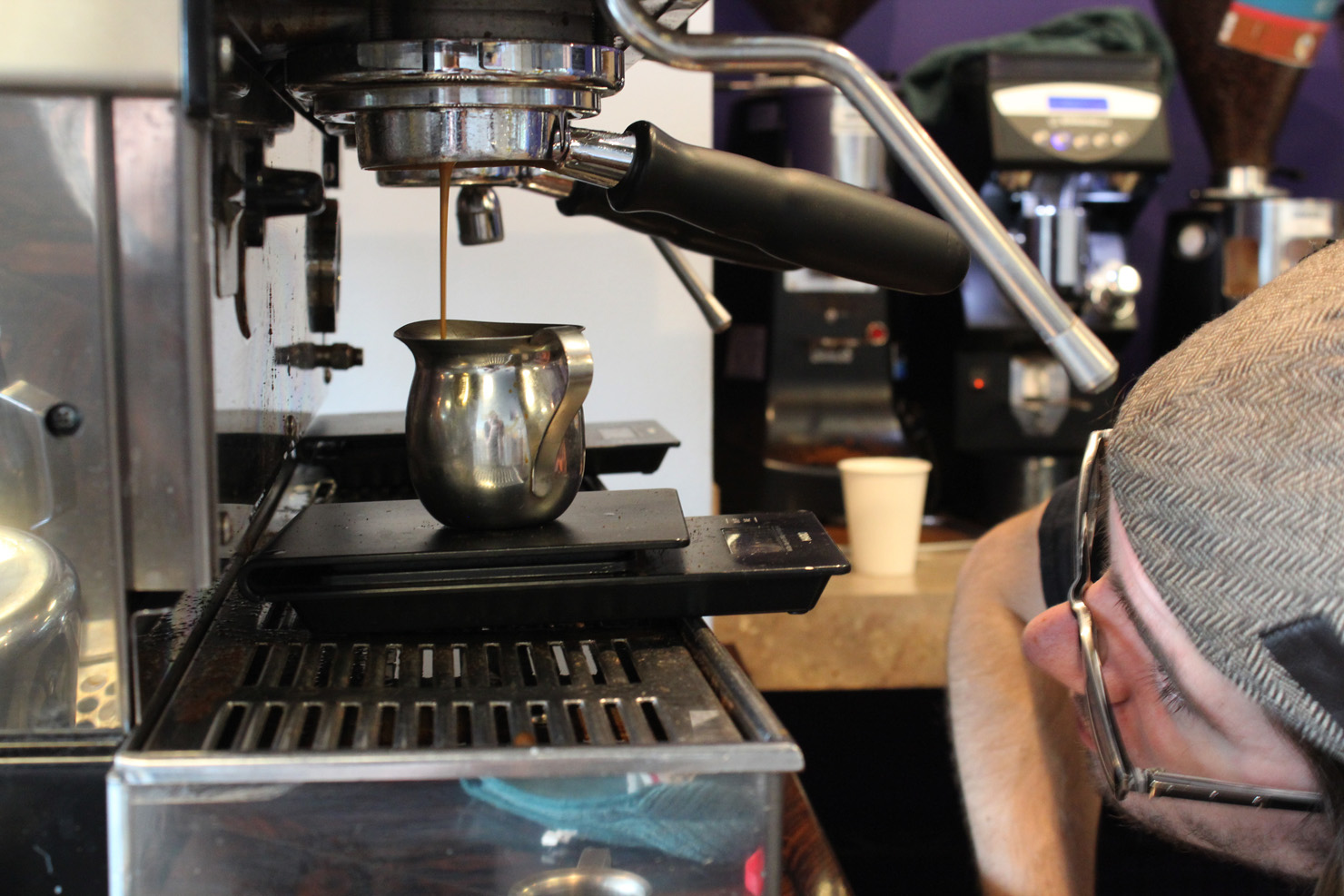
When the pressure is too high, the poroelastic compression is rarely uniform. If one area of the coffee bed is slightly less dense than another, the high pressure will exacerbate this disparity, forcing a "channel" through the weaker area while the rest of the bed remains "choked." The result is a shot that is simultaneously under-extracted (from the water rushing through the channel) and over-extracted (from the high-pressure stagnation in the rest of the bed). This creates the "sour and bitter" profile that plagues many high-pressure extractions.
Industry Context: The Rise of "Turbo Shots" and Low-Pressure Brewing
The findings from the University of Warsaw align with a growing movement in the specialty coffee industry toward lower-pressure extractions. In 2020, a separate study led by computational chemist Christopher Hendon—popularly known as the "Turbo Shot" paper—suggested that faster, lower-pressure shots (around six bars) with a coarser grind produced more consistent and flavorful results than the traditional nine-bar method.
The Warsaw research provides the physical "why" behind these industry observations. While the coffee world has treated nine bars as a mathematical constant for nearly a century, that figure was largely a byproduct of the mechanical limitations of mid-20th-century Italian espresso machines. Achille Gaggia’s 1947 lever machine, which introduced the world to crema, relied on a spring-loaded piston that happened to exert approximately nine to ten bars of pressure. This became the industry standard not necessarily because it was the physical optimum for flavor, but because it was the engineering benchmark of the era.
Expert Reactions and Future Directions
While official statements from major espresso machine manufacturers like La Marzocco or Victoria Arduino have yet to be issued in direct response to the Warsaw study, the trend toward "pressure profiling" in high-end equipment suggests the industry is already bracing for a shift. Modern machines now allow baristas to program "pressure curves," starting at low pressure, peaking briefly, and then tapering off—a technique that the Warsaw data suggests is far more scientifically sound than a flat nine-bar delivery.
Barista champions and industry consultants are expected to integrate these findings into upcoming competition routines. The prospect that "nine bars is too high" offers a competitive edge for those looking to maximize extraction yield and flavor clarity.
The Warsaw researchers are not finished with their investigation. Their next phase involves replacing coffee grounds with clear glass beads of varying sizes. This will allow the team to use high-speed imaging to visualize the actual movement of water and the deformation of the "bed" in real-time, without the visual obstruction of dark coffee oils. This "transparent portafilter" experiment aims to provide a definitive visual map of how poroelasticity affects fluid flow.
Conclusion: A Paradigm Shift in Coffee Science
The University of Warsaw’s research serves as a reminder that even the most entrenched "golden rules" of an industry are subject to the rigors of modern physics. By identifying the five-bar inflection point and the poroelastic nature of the coffee puck, this study provides a scientific roadmap for the future of espresso.
For the global coffee industry, the implications are profound. Equipment manufacturers may begin to prioritize more nuanced pressure controls over raw pump power. Baristas may shift their focus from grind size alone to the delicate balance of pressure and flow resistance. Ultimately, the quest for the "perfect shot" is moving out of the realm of tradition and into the laboratory, where the laws of physics are proving that, in the world of espresso, less pressure may indeed lead to a more refined cup.