
 Ali Ikhwan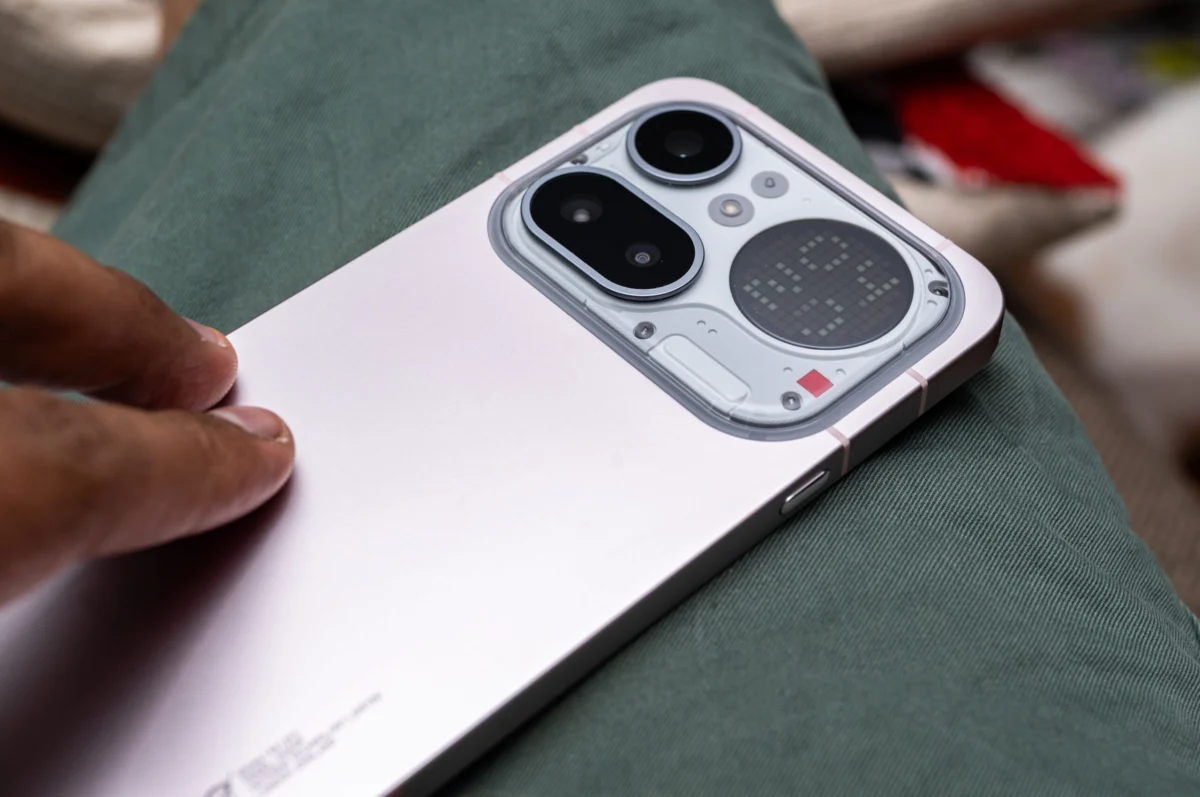
The global smartphone industry is currently navigating a complex economic landscape defined by supply chain volatility and a significant increase in component costs. This period, frequently referred to by industry analysts as the RAM crisis, has forced major manufacturers to recalibrate their pricing strategies for the 2025-2026 product cycle. Samsung has recently implemented price hikes across its Galaxy A-series and flagship S-series lineups, while Motorola’s latest Moto G Stylus has debuted at a higher MSRP than its predecessor. Even Google, a dominant force in the midrange sector, has opted for a conservative approach with the Pixel 10a, maintaining a familiar hardware profile to avoid further price escalations. Within this high-pressure environment, London-based technology firm Nothing has introduced the Nothing Phone (4a) Pro, a device that aims to balance aesthetic innovation with functional utility at a competitive $499 price point.
While the Phone (4a) Pro represents a modest price increase over the previous year’s Phone (3a) Pro, it enters a crowded market as a formidable alternative for consumers seeking a departure from the duopoly of Apple and Samsung. As the North American market faces a contraction in diverse hardware choices, Nothing’s continued presence offers a vital third-party option, despite the device’s current exclusivity to specific retail channels like Amazon.
%20Pro%20SOURCE%20Julian%20Chokkattu(3).jpg)
Background and Market Context: The Midrange Pivot
Nothing, founded by former OnePlus co-founder Carl Pei, has spent the last several years carving out a niche based on transparent design and a minimalist, "distraction-free" software experience. The Phone (4a) Pro is the latest iteration in the company’s "A-series," which serves as the more affordable entry point compared to its flagship numbered series.
The timing of this release is critical. The "premium midrange" segment—phones priced between $400 and $600—is seeing a resurgence in interest as flagship devices push toward the $1,000 mark. However, manufacturers are struggling to differentiate their offerings without cannibalizing their high-end models. Nothing’s strategy with the (4a) Pro involves doubling down on unique hardware features, such as the Glyph Matrix, and offering camera configurations usually reserved for more expensive tiers.
Chronology of Development and Design Evolution
The path to the Phone (4a) Pro reflects a refinement of Nothing’s industrial design language. The initial Phone (1) introduced the concept of the transparent back and LED "Glyphs." By the time the Phone (3a) Pro arrived, the company had experimented with a centralized camera layout that some critics found ergonomically top-heavy.
%2520Pro%2520SOURCE%2520Julian%2520Chokkattu(3).jpg)
In the development of the (4a) Pro, Nothing’s design team opted for a "Space Age" aesthetic, characterized by bulbous glass surfaces and a more balanced weight distribution. A significant addition to the Pro model this year is the Glyph Matrix, a feature migrated from the flagship Nothing Phone (3). This small, circular pixelated display on the rear of the device serves as a secondary interface, providing glanceable information without requiring the user to engage with the main screen.
Technical Specifications and Performance Data
Under the hood, the Nothing Phone (4a) Pro is powered by the Qualcomm Snapdragon 7 Gen 4 chipset. While not a flagship-tier processor, it is designed to provide high-efficiency performance for the midrange market. In standard benchmarking tests, the device consistently performs slightly below the Google Pixel 10a—which utilizes Google’s proprietary Tensor G-series chips—but remains highly capable for daily multitasking.
The device is available in several configurations, starting with a base model of 8 GB of RAM and 128 GB of storage, moving up to 12 GB of RAM and 256 GB of storage. The display is a high-refresh-rate panel capable of reaching 144 Hz, providing fluid motion for gaming and navigation. However, real-world testing has indicated that the software’s adaptive refresh rate can occasionally struggle in specific applications, such as the Facebook Marketplace, where scrolling can appear staggered.
-Pro-SOURCE-Julian-Chokkattu(4).jpg)
Screen brightness has seen a measurable improvement over the (3a) Pro, ensuring visibility in direct sunlight. However, the auto-brightness calibration remains an area for potential software optimization, as the sensor frequently requires manual intervention to reach the user’s desired luminance levels.
The Triple-Camera Advantage
Perhaps the most significant differentiator for the Phone (4a) Pro is its camera array. At the $499 price point, most competitors offer a dual-camera system consisting of a wide and an ultrawide lens. Nothing has equipped the (4a) Pro with a comprehensive triple-camera system:
- Main Sensor: 50-MP wide-angle lens.
- Ultrawide: 8-MP lens for landscapes and group shots.
- Telephoto: 50-MP lens offering a 3.5X optical zoom.
The inclusion of a dedicated telephoto lens is a rarity in this price bracket. For comparison, Apple’s recently released iPhone 17e, priced at $599, features only a single rear camera. The (4a) Pro’s telephoto lens allows for high-quality portraits and distant subjects, though the system as a whole faces challenges in low-light environments. Compared to the Pixel 10a’s industry-leading computational photography, the Nothing Phone (4a) Pro can suffer from shutter lag and reduced dynamic range in high-contrast scenes. Despite these limitations, the versatility provided by the 3.5X zoom offers a utility that many users find more valuable than incremental improvements in low-light processing.
-Pro-SOURCE-Julian-Chokkattu.jpg)
Software Innovation and the Essential Key
Nothing OS continues to be a central pillar of the brand’s identity. Based on Android, the interface utilizes a monochrome aesthetic and custom dot-matrix widgets that align with the hardware design. This year, Nothing has introduced the "Essential Key," a physical or software-mapped button designed to streamline data management.
The Essential Key allows users to capture screenshots that are automatically parsed by the "Essential Space" app. This feature uses basic AI to extract text and data from the images, making them searchable for later retrieval. Additionally, the key can be used for quick voice memos. While powerful, early user feedback suggests a steep learning curve, as these features require a conscious shift in how users interact with their mobile devices.
The Glyph Matrix also adds functional depth to the software experience. Beyond its aesthetic appeal, it can be programmed to show a countdown timer, a battery charging indicator, or specific notification icons. A particularly innovative use case is the "pixelated mirror" function, which provides a simplified outline of the user’s face on the rear display, facilitating high-quality selfies using the superior rear-facing cameras.
-Pro-SOURCE-Julian-Chokkattu(1).jpg)
Connectivity and Carrier Compatibility in the US
For US-based consumers, connectivity remains a critical consideration. The Phone (4a) Pro is technically compatible with the infrastructure of major carriers, including T-Mobile, AT&T, and Verizon. However, because Nothing does not have the same deep-rooted partnerships with US carriers as Samsung or Apple, users on AT&T or Verizon networks may encounter hurdles.
The device may require "whitelisting"—a process where the carrier manually approves the device’s IMEI on their network—to access full 5G capabilities or features like Voice over LTE (VoLTE). While the phone works seamlessly on T-Mobile and MVNOs like Google Fi, the "legwork" required for other networks remains a barrier to mainstream adoption.
Sustainability and Long-term Support
In terms of durability and longevity, the Phone (4a) Pro presents a mixed profile. The device carries an IP65 rating, which guarantees protection against dust and low-pressure water jets (such as rain). While Nothing claims the device can survive brief submersion in shallow water, it lacks the more robust IP68 rating found on the Pixel 10a and Galaxy A57, which are certified for deeper and longer submersion.

Furthermore, Nothing’s software update policy remains behind the industry leaders. The company commits to three years of Android OS upgrades and six years of security updates. In contrast, Google now offers a full seven years of both OS and security updates for its Pixel "a" series. This discrepancy may influence the purchasing decisions of consumers who intend to keep their devices for more than three or four years.
Analysis of Implications and Market Impact
The release of the Nothing Phone (4a) Pro signifies a maturing of the brand. By moving away from purely "gimmick" features and toward hardware versatility—specifically the telephoto lens—Nothing is positioning itself as a serious contender for tech-savvy users who are dissatisfied with the incremental updates of the market leaders.
However, the "RAM crisis" and subsequent price increases across the board suggest that the $400 "budget" phone is rapidly disappearing, replaced by a $500 "standard midrange" tier. Nothing’s ability to maintain its unique identity while navigating these rising costs will be the primary factor in its long-term viability in the North American market.
%2520Pro%25202X%2520camera%2520SOURCE%2520Julian%2520Chokkattu.jpg)
The Phone (4a) Pro succeeds in offering a distinct alternative. It is a device for the "prosumer" who values design and camera flexibility over the standardized, AI-heavy approach of Google and Samsung. While the Pixel 10a remains the safer recommendation for the average user due to its superior software support and carrier compatibility, the Nothing Phone (4a) Pro has established itself as a strong second choice, proving that there is still room for hardware innovation in the midrange segment.







