
 Ali Ikhwan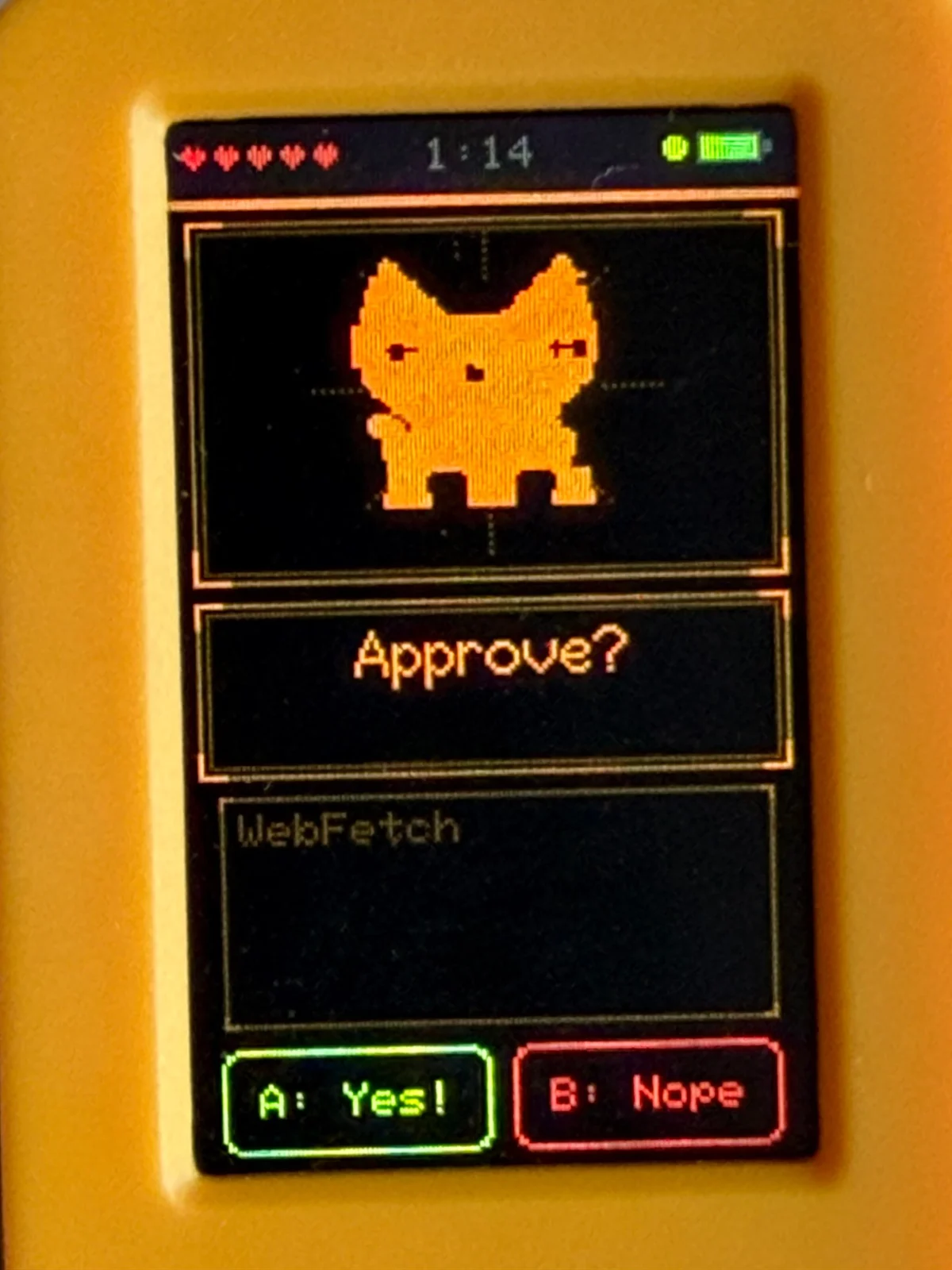
The intersection of artificial intelligence and physical engineering reached a pivotal moment when Samuel Beek, an Amsterdam-based developer, inadvertently triggered a total electrical failure in his home. The incident was caused by a custom-built electric door opener, a project Beek had undertaken using assembly and wiring instructions generated by OpenAI’s ChatGPT. The failure highlighted a fundamental limitation in general-purpose large language models (LLMs): an inability to distinguish between the nuanced requirements of wet and dry electrical connections. The resulting power surge did more than just blow fuses; it served as the catalyst for the development of Schematik, a specialized AI assistant designed to bridge the gap between abstract code and tangible hardware.
Beek, who identifies primarily as a software developer rather than a hardware engineer, recognized that the barrier to entry for physical product creation remained prohibitively high. While software development has been streamlined by sophisticated IDEs and AI coding assistants like Cursor, hardware remains tethered to complex schematics, component compatibility hurdles, and the unforgiving laws of physics. Following his initial failure, Beek transitioned his development efforts to Anthropic’s Claude, eventually refining the logic into Schematik. The platform, which recently secured $4.6 million in seed funding from Lightspeed Venture Partners, is being hailed by early adopters as "Cursor for Hardware," signaling a shift toward what industry insiders call "vibe coding" for the physical world.
The Concept of Vibe Coding in Physical Systems
In the context of software, "vibe coding" refers to a high-level approach where a developer describes the desired functionality or "vibe" of an application, allowing AI agents to handle the underlying syntax and architectural logic. Schematik applies this philosophy to electronics. Users provide a natural language description of a device they wish to build—such as a specialized audio player or a sensor-driven home automation tool—and the AI generates a comprehensive blueprint.

This blueprint includes a curated Bill of Materials (BOM) with direct links to purchase specific components, such as microcontrollers, resistors, and wiring. Beyond procurement, the AI acts as a step-by-step assembly guide, providing the technical oversight that Beek found lacking in general-purpose chatbots. By focusing specifically on hardware constraints, Schematik aims to eliminate the "hallucinations" that lead to electrical fires or short circuits, replacing them with instructions rooted in electrical engineering principles.
A Chronology of Development and Community Adoption
The trajectory of Schematik from a personal project to a venture-backed startup reflects the rapid acceleration of the AI hardware movement. In February 2024, Beek shared the initial concept on X (formerly Twitter), which immediately resonated with a global community of "tinkerers" and "makers." The response underscored a latent demand for tools that lower the technical threshold for electronics design.
Among the early adopters was Marc Vermeeren, the branding lead at the European AI firm N8N. Vermeeren utilized the platform to construct a series of increasingly complex devices, ranging from a functional MP3 player to a Tamagotchi-inspired desktop companion named "Clawy." The latter device was designed to assist Vermeeren in managing his Claude-based coding sessions, providing a physical interface for his digital workflow. The design of Clawy has since become a minor cultural phenomenon within the maker community, with users creating various iterations, including a version modeled after the character Paulie Walnuts from the television series The Sopranos.
By late 2024, the momentum surrounding AI-integrated hardware caught the attention of major industry players. On a Thursday in late October, Anthropic engineer Felix Rieseberg announced via X that the company had enabled a new Bluetooth API specifically for makers and developers. This API allows hardware devices to interact directly with the Claude LLM. Rieseberg’s announcement included a GitHub repository for a "desktop buddy" that bore a striking resemblance to Vermeeren’s Clawy. While Anthropic has not officially confirmed if Clawy served as the direct inspiration, the development highlights a growing trend of major AI labs providing the infrastructure necessary for physical AI integration.

Market Context and the Hardware Gatekeeping Problem
The emergence of Schematik comes at a time when the tech industry is pivoting toward specialized hardware. From OpenAI’s rumored collaborations with legendary designer Jony Ive to the proliferation of niche wearables like the Humane AI Pin and the Rabbit R1, there is a clear push to move AI beyond the confines of the smartphone screen. However, Beek argues that hardware development has remained "gatekept" for decades.
"The big problem in hardware is that it’s very gatekept and that very few people can do it," Beek noted in a recent interview. He pointed out that while software development has seen exponential advancements in ease and speed over the last five years, hardware design processes have remained largely static for twenty years. Designing a simple circuit board still requires navigating thousands of Stock Keeping Units (SKUs) and ensuring precise voltage compatibility—a task that is often overwhelming for hobbyists.
Kyle Wiens, the CEO of iFixit and a prominent advocate for hardware accessibility, views AI-assisted design as a necessary evolution. Wiens, whose organization focuses on the repairability and transparency of consumer electronics, notes that the sheer scale of component data makes it an ideal problem for AI to solve. "Electronics design can be very complex, often requiring sorting through many different SKUs and ensuring compatibility of all the pieces," Wiens stated. "This kind of scale is the sort of thing that AIs are good at."
Technical Safeguards and Safety Protocols
One of the primary challenges in "vibe coding" for hardware is the risk of physical harm. Unlike a software bug, which might crash a program, a hardware "bug" can lead to thermal runaway or electrical shock. To mitigate these risks, Beek has implemented strict architectural limitations within Schematik.

Currently, the service is restricted to low-voltage architectures, primarily operating within the three- to five-volt range. This voltage is sufficient for Internet of Things (IoT) devices, small robotics, and consumer gadgets like music players, but it lacks the current necessary to cause significant injury or major household damage. This safety-first approach allows users to experiment with "pure physics" in a controlled environment. Beek maintains that because electronics are governed by objective physical laws, they are in some ways easier for an AI to verify than the subjective nuances of human language or image generation.
Broader Implications and the Future of the Maker Movement
The democratization of hardware through tools like Schematik has profound implications for several sectors:
- Rapid Prototyping: Small startups and individual inventors can now move from concept to physical prototype in a fraction of the time and cost previously required. This could lead to a surge in specialized, "long-tail" hardware products that were previously deemed economically unfeasible by major manufacturers.
- Education: By lowering the barrier to entry, Schematik serves as an educational bridge. Users learn the principles of electrical engineering through hands-on application, guided by an AI that can explain the "why" behind specific wiring choices.
- The Rise of Personal Robotics: While Schematik currently focuses on low-voltage gadgets, Beek has expressed long-term ambitions for the platform to assist in the creation of humanoid robots. As AI models become more adept at understanding spatial reasoning and mechanical engineering, the leap from a Tamagotchi-style bot to a functional domestic assistant becomes smaller.
- Supply Chain Transparency: By integrating purchase links and component data, these platforms could eventually provide real-time insights into supply chain availability, helping makers pivot their designs based on part shortages or price fluctuations.
Conclusion
The transition from a blown fuse in Amsterdam to a venture-backed platform highlights a significant shift in the relationship between humans, AI, and the physical world. As software continues to "eat the world," tools like Schematik ensure that the physical world is not left behind. By translating the "vibes" of a creator into the precise schematics required by physics, the platform is dismantling the traditional barriers of the hardware industry.
For users like Marc Vermeeren, the excitement lies in the removal of creative blockers. For the broader industry, the success of Schematik and the subsequent responses from companies like Anthropic suggest that the next great frontier for AI is not just thinking or writing, but building. As the technology matures, the "maker movement" may evolve from a niche hobby into a mainstream pillar of the global innovation economy, driven by the synergy of human creativity and machine precision.







