rifanmuazin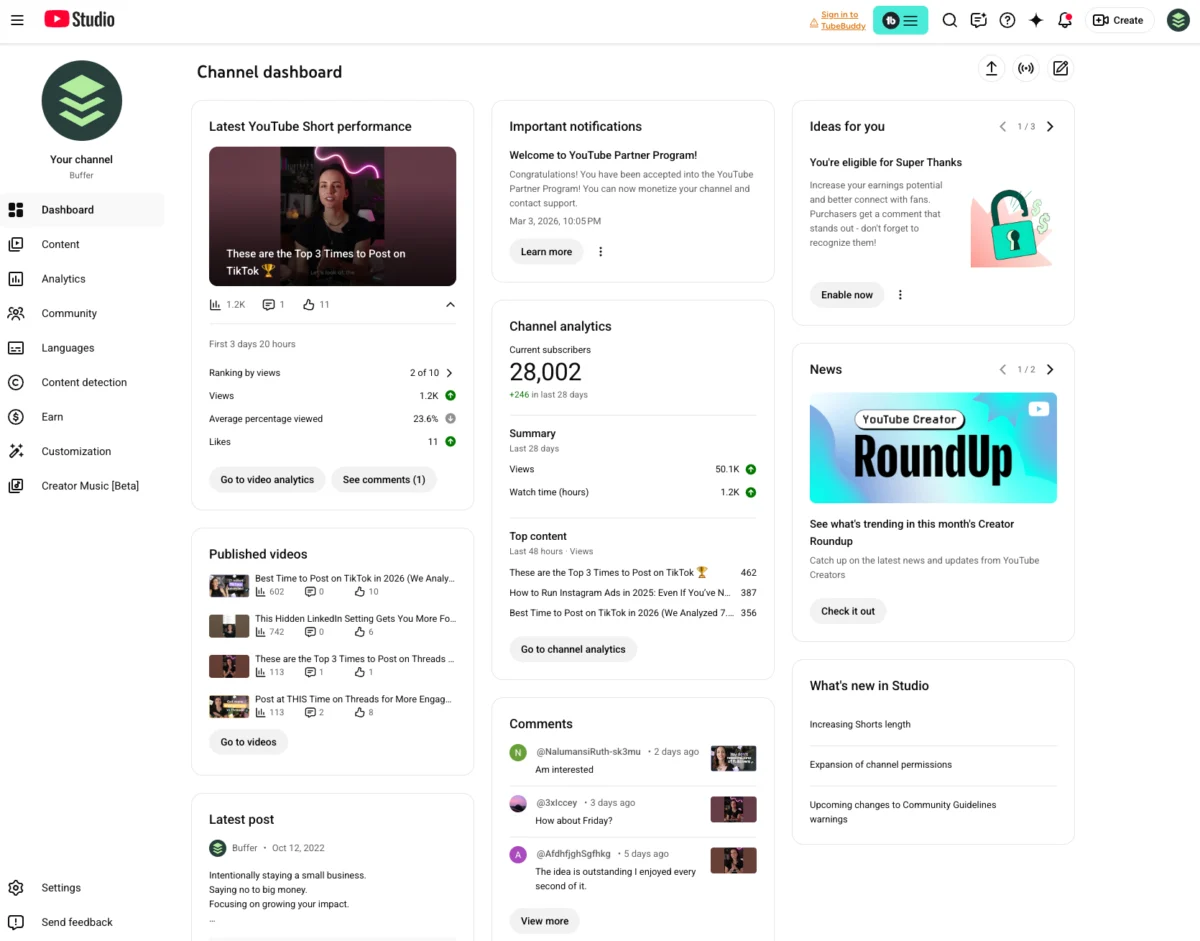
A comprehensive analysis of nearly two million YouTube videos, encompassing both traditional long-form content and the increasingly popular YouTube Shorts, has provided creators and marketers with updated, data-driven guidance on the optimal times to publish for maximum audience engagement. The study, conducted by social media management platform Buffer, highlights significant shifts in viewer behavior, particularly noting distinct peak engagement windows for different video formats and a notable move towards weekend mornings for long-form content.
The Evolving Landscape of YouTube Content Consumption
In the highly competitive digital realm, where billions of hours of video are consumed daily, understanding the nuances of audience engagement is paramount. YouTube, as the world’s second-largest search engine and a dominant force in video content, continually evolves its algorithms and user experience, leading to dynamic shifts in how and when viewers interact with content. The rise of short-form video, championed by platforms like TikTok and subsequently integrated into YouTube as Shorts, has further fragmented content consumption patterns, necessitating a more granular approach to publishing strategies. Creators, from independent vloggers to large media enterprises, grapple with numerous variables influencing video success, including content quality, compelling titles and thumbnails, effective SEO, and, crucially, timing. While content quality remains the most critical determinant, strategic posting can provide a vital initial boost, capturing early algorithmic signals and expanding reach.
Methodology Behind the Insights
Buffer’s latest research, building upon previous analyses, meticulously examined the median engagement of 1.8 million videos shared across every hour and day of the week. This large-scale dataset, a significant increase from earlier studies, allowed for a robust identification of patterns in posting times that yielded the highest engagement. A key methodological enhancement in this iteration was the separate analysis of long-form videos and YouTube Shorts, recognizing their fundamentally different consumption dynamics. This separation addresses a critical need, as previous generalized recommendations often failed to account for these format-specific behaviors.
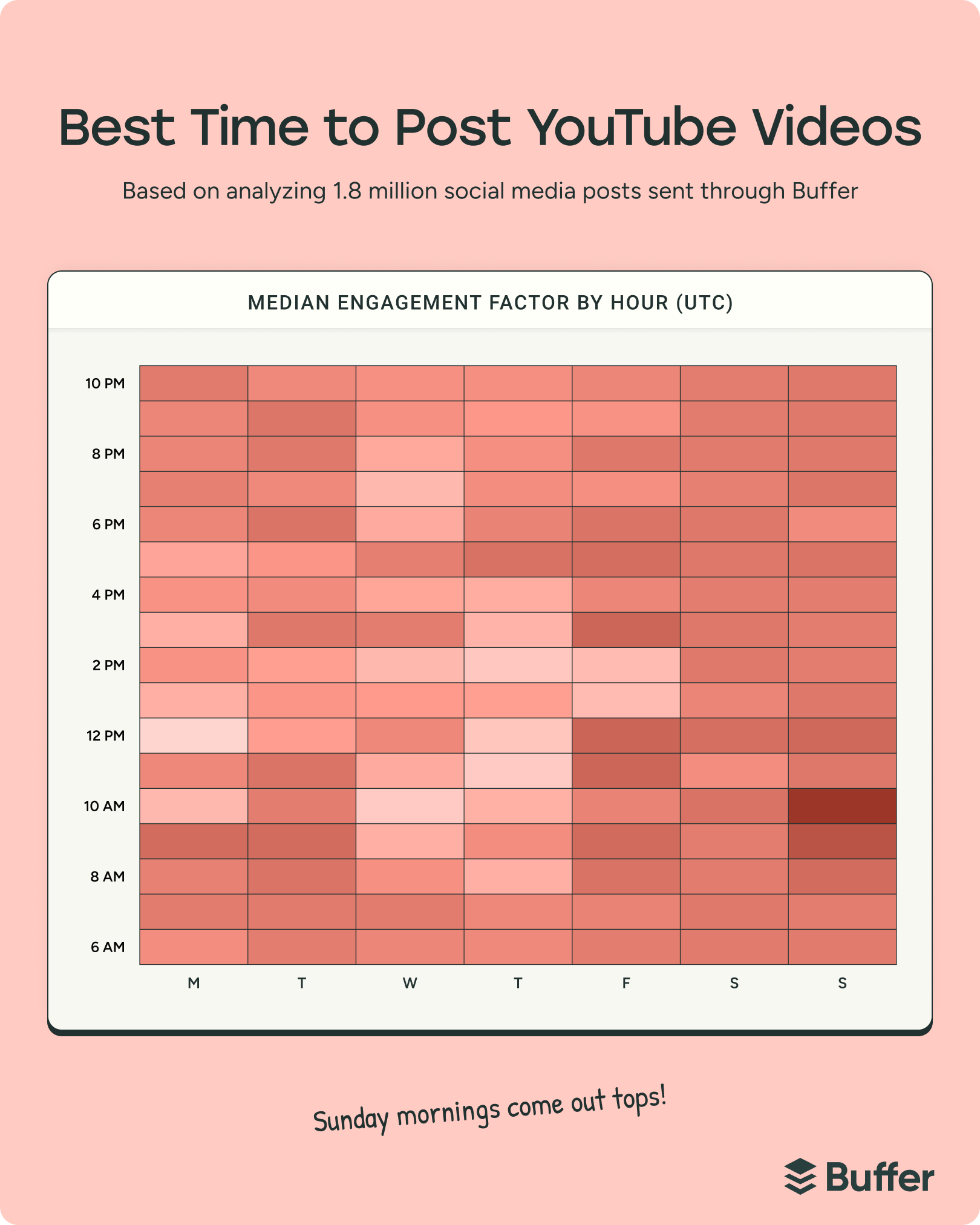
Furthermore, to ensure broad applicability, Buffer’s data scientists employed a sophisticated normalization technique, rendering the recommended posting times universally applicable regardless of the creator’s geographical location or the primary audience’s time zone. This means a recommendation of "10 a.m. Sunday" refers to 10 a.m. in the local time zone of the audience, simplifying implementation for a global creator base. This 2026 analysis also marks a distinct departure from Buffer’s 2025 findings, which previously suggested late afternoon on weekdays as prime time. The observed shift underscores the fluid nature of digital audience behavior and the imperative for creators to regularly reassess their strategies.
Decoding Long-Form Video Engagement: The Weekend Morning Advantage
For traditional long-form YouTube videos, the study unequivocally points to Sunday at 10 a.m. as the premier posting slot, exhibiting the highest engagement factor across the entire week. This specific time registered a remarkable 0.95 engagement factor, with Sunday at 9 a.m. (0.80) and 12 p.m. (0.67) also performing exceptionally well. Generally, morning hours, particularly between 8 a.m. and 11 a.m., emerged as strong performers for longer content.
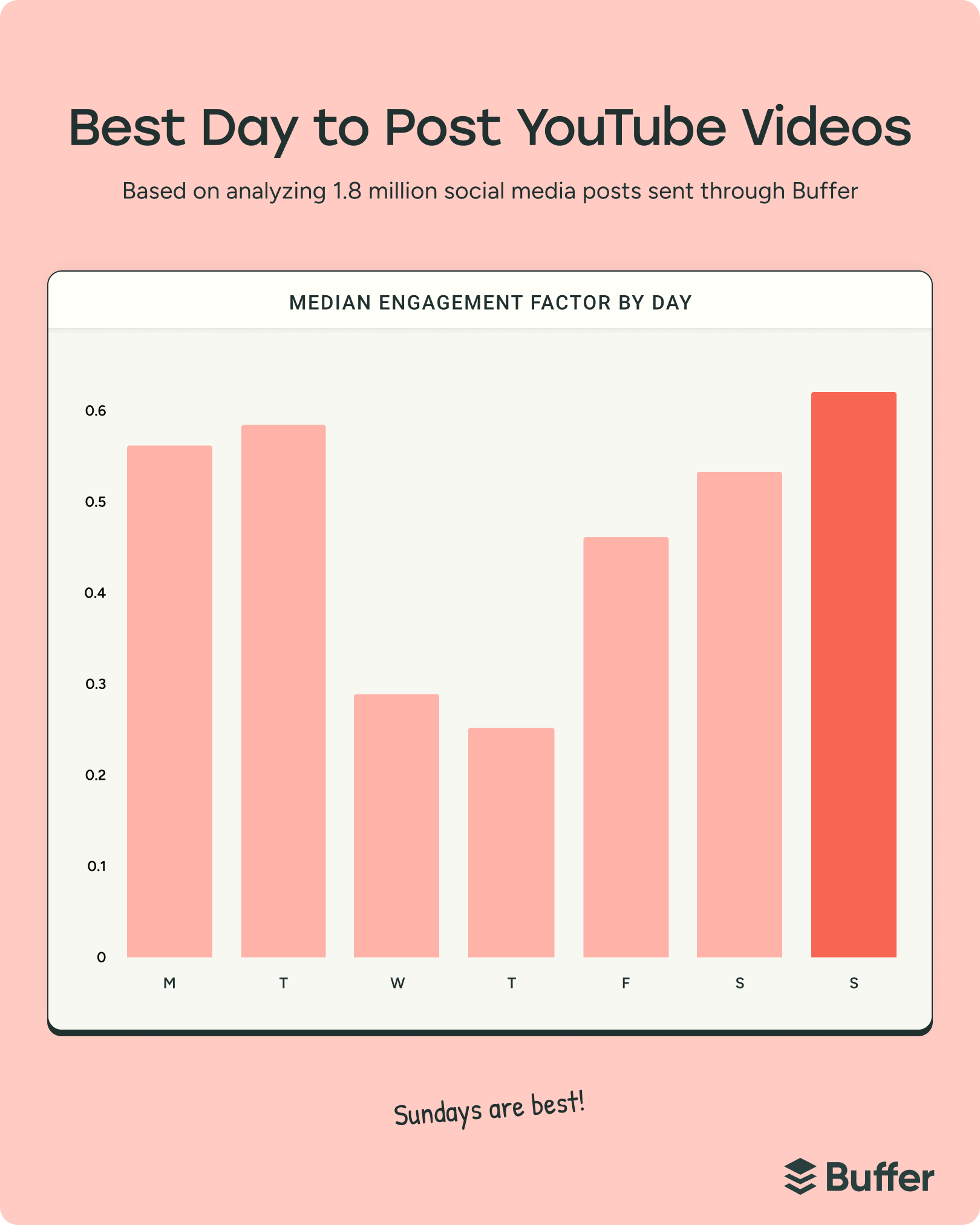
This robust weekend morning trend signifies a shift in viewer habits, suggesting that audiences are increasingly dedicating their leisure time to in-depth content consumption. Sunday mornings, often a period of relaxation and unhurried activity, appear to be ideal for viewers to engage with more substantial video offerings, away from the distractions of the workweek.
- Monday: The week kicks off strongly, with 9 a.m. being the optimal time, followed by 10 p.m. and 7 a.m. Monday mornings suggest viewers are easing into their week with content, while a late-evening slot captures post-work unwinding.
- Tuesday: Proving to be one of the week’s strongest weekdays, Tuesday’s peak occurs at 9 a.m., with 11 a.m. and 8 a.m. also showing high engagement. The morning window consistently performs well, making it a reliable weekday choice for long-form uploads.
- Wednesday: This day generally presents lower engagement for long-form videos. The best time is 7 a.m., with some moderate activity at 3 p.m. and 5 p.m. Creators posting on Wednesday should temper expectations and aim for early mornings or late afternoons.
- Thursday: Identified as the weakest day for long-form video engagement, Thursday sees its best performance in the evening, with 5 p.m., 6 p.m., and 7 a.m. being the top slots. Midday and early afternoon should largely be avoided.
- Friday: A unique outlier among weekdays, Friday’s peak engagement occurs at 12 p.m., outperforming morning slots. This midday slot on Friday registered an impressive 0.70 engagement factor, making it a strong alternative to Sunday if weekend posting isn’t feasible. Other strong times include 11 a.m. and 3 p.m.
- Saturday: Engagement remains moderate and consistent throughout Saturday, with 12 p.m., 10 a.m., and 3 p.m. being the best times. It’s a solid day for creators whose audience tends to be active during weekends but doesn’t show the dramatic peaks of Sunday.
Conversely, the study identified early to mid-afternoons on weekdays, particularly Wednesday and Thursday, as periods of noticeably low engagement. Thursday at 2 p.m., for example, recorded one of the week’s lowest engagement factors at 0.11. This data starkly contrasts with previous findings, indicating a clear reversal in weekend vs. weekday performance, with Sunday now leading the pack, followed by Tuesday and Monday, categorized as "strong" engagement days.
YouTube Shorts: Evening Dominance and the Friday Peak
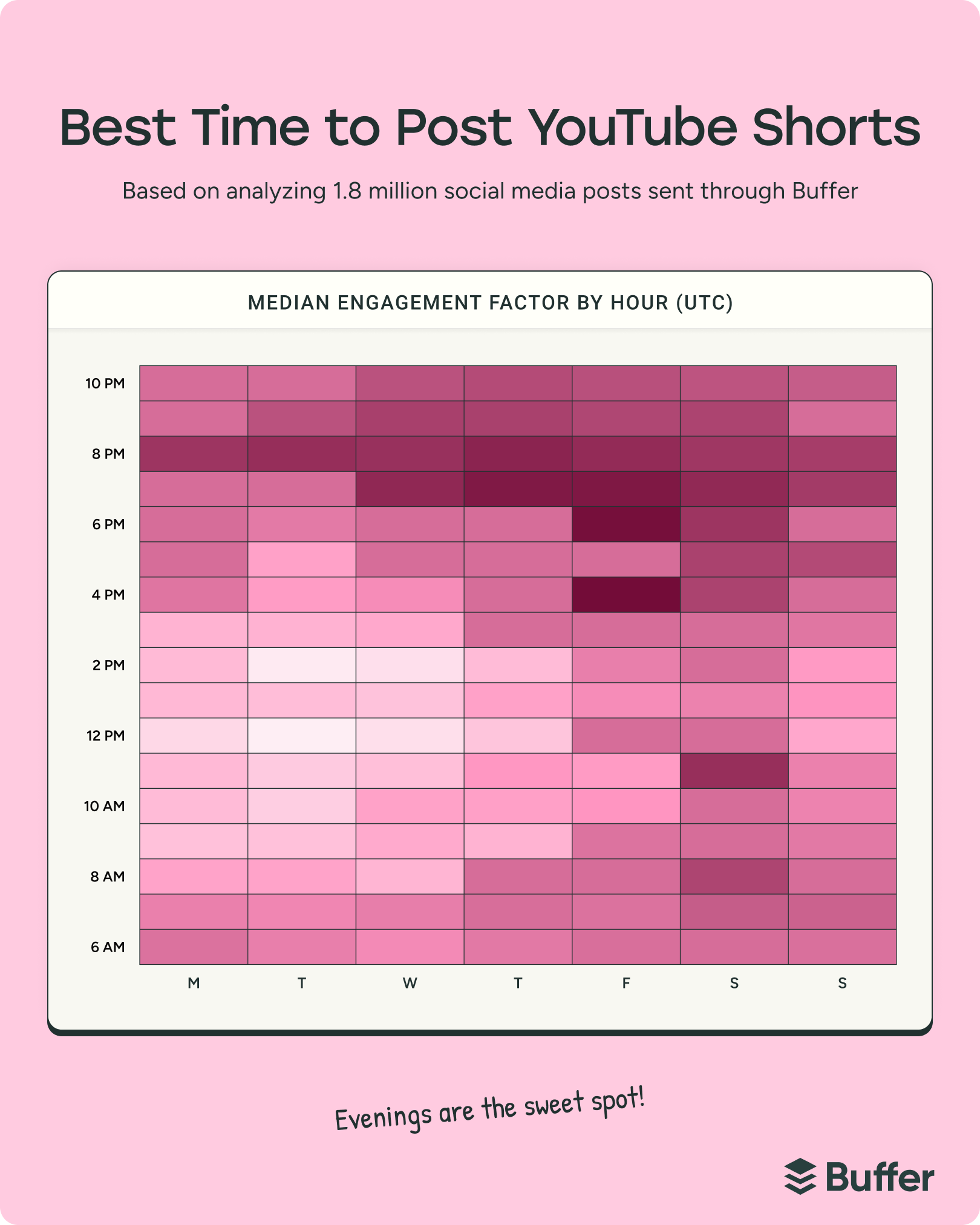
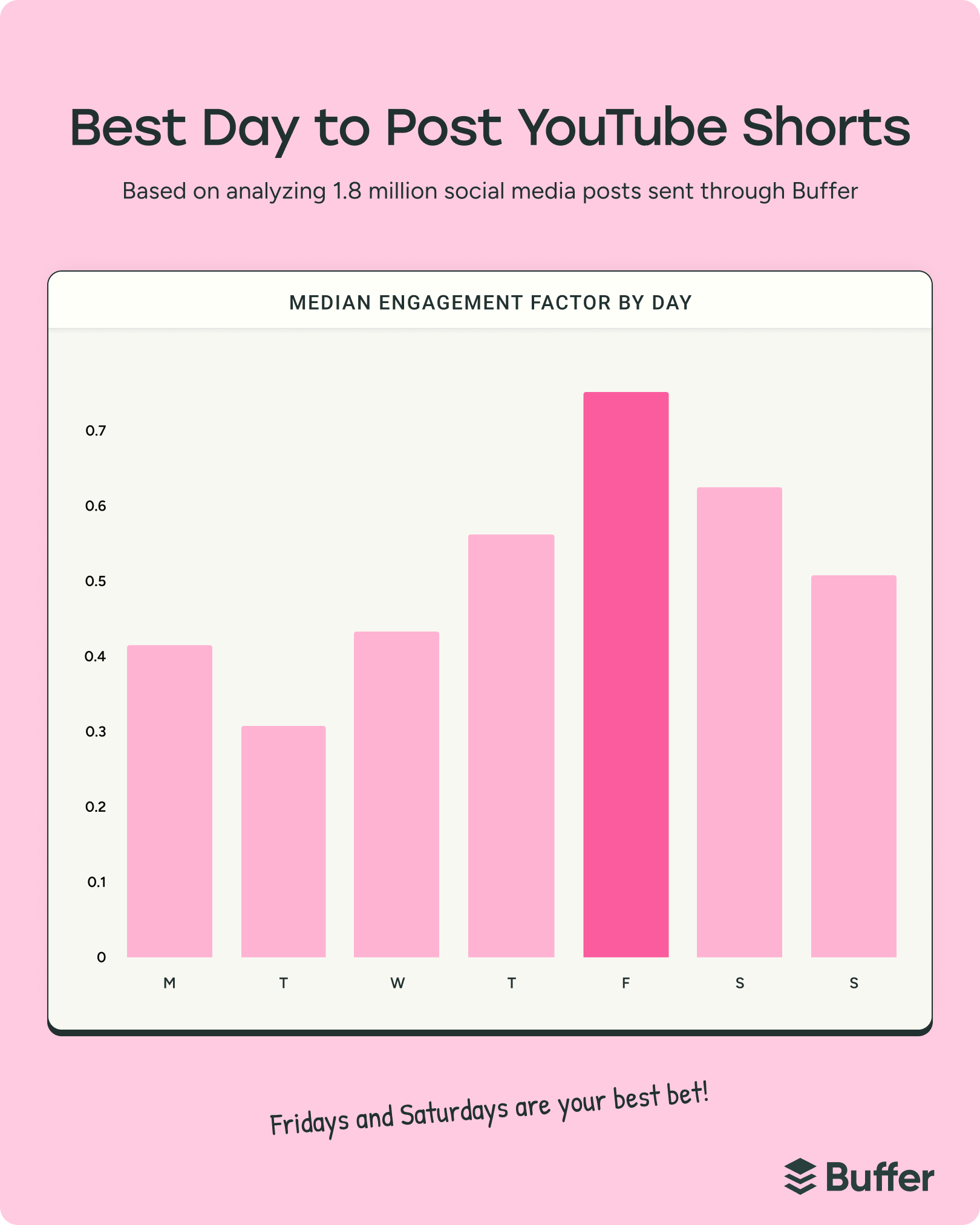
The engagement patterns for YouTube Shorts present a stark contrast to long-form videos, underscoring the necessity of a differentiated content strategy. The analysis revealed that the optimal time to post YouTube Shorts is Friday at 4 p.m., followed closely by Friday at 6 p.m. and 7 p.m. Indeed, Friday stands out as the undisputed best day for Shorts, dominating the top engagement slots.
This evening-centric trend for Shorts aligns logically with known short-form content consumption habits. Viewers often turn to "snackable" content during leisure hours, such as after work or during evening relaxation. The quick, digestible nature of Shorts makes them ideal for winding down, casual scrolling, or quick entertainment bursts before bedtime.
- Monday: Evening hours, specifically 7 p.m. and 8 p.m., are the strongest for Shorts.
- Tuesday: Similar to Monday, 6 p.m. and 7 p.m. show peak engagement.
- Wednesday: 8 p.m. and 9 p.m. are the best times, indicating a later evening peak.
- Thursday: Surprisingly strong for Shorts, with 6 p.m., 7 p.m., and 8 p.m. performing well.
- Friday: The dominant day, with 4 p.m., 6 p.m., and 7 p.m. as the top three overall slots. This late afternoon/early evening window is critical.
- Saturday: While evenings remain strong (8 p.m., 9 p.m.), Saturday is unique as it’s the only day where a morning slot (11 a.m.) also cracks the top three, suggesting a potential window for early-day Shorts.
- Sunday: Late evenings, 9 p.m. and 10 p.m., are the best for Sunday Shorts.
Conversely, the study found that afternoons between 12 p.m. and 5 p.m. generally perform poorly for Shorts, with the notable exception of Friday’s late afternoon surge. When considering overall daily performance for Shorts, Friday leads, followed by Saturday and Thursday. The weakest days for Shorts are Tuesday and Monday. This implies that a Shorts-focused strategy should prioritize the latter half of the week, with Friday as the anchor.
Strategic Implications for Creators and Marketers
The diverging engagement patterns between long-form videos and Shorts present a clear directive for content creators and marketers: a one-size-fits-all scheduling strategy is no longer viable. Channels producing both formats can leverage these insights to optimize their publishing calendar, scheduling long-form content during prime morning/weekend slots and Shorts for peak evening/late-week periods without direct competition for audience attention.
For content strategists, this data provides a powerful tool for planning. Brands might consider launching promotional long-form content on Sunday mornings to capture engaged, relaxed audiences, while deploying quick, engaging Shorts on Friday evenings to reach users winding down their week. Understanding these patterns can inform not only organic posting schedules but also paid promotion timings, ensuring that ad spend aligns with periods of maximum audience receptivity. Regular A/B testing of posting times, even within the recommended windows, can further fine-tune strategies for specific niches and target demographics.
Beyond Generalities: Leveraging YouTube Analytics for Personalized Success
While Buffer’s extensive analysis provides invaluable general recommendations, it’s crucial to acknowledge that every YouTube channel cultivates a unique audience with specific behaviors. The "best time to post" is ultimately a dynamic metric that creators must ascertain for their particular subscriber base. Fortunately, YouTube’s native analytics tools offer a robust solution for this personalization.
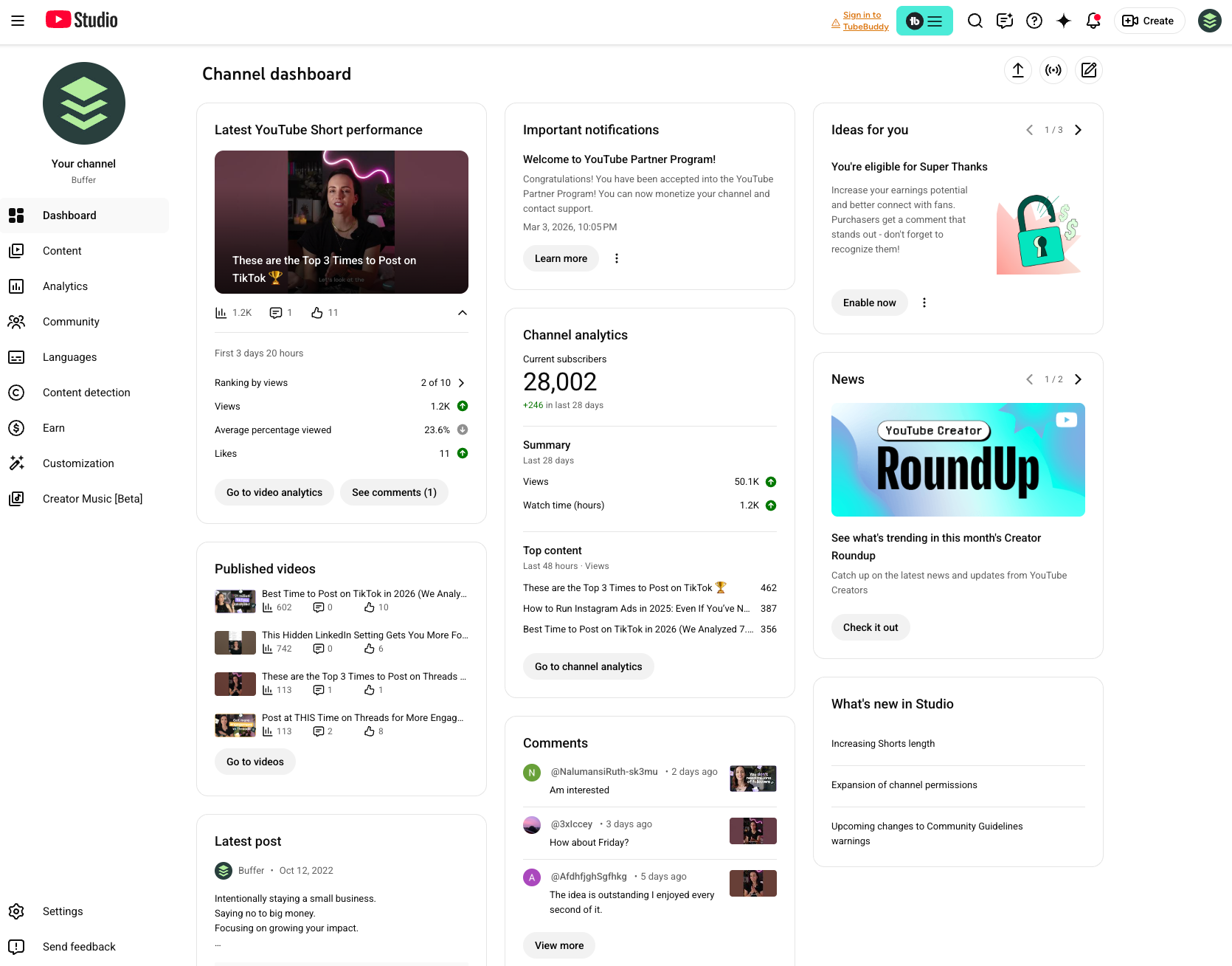
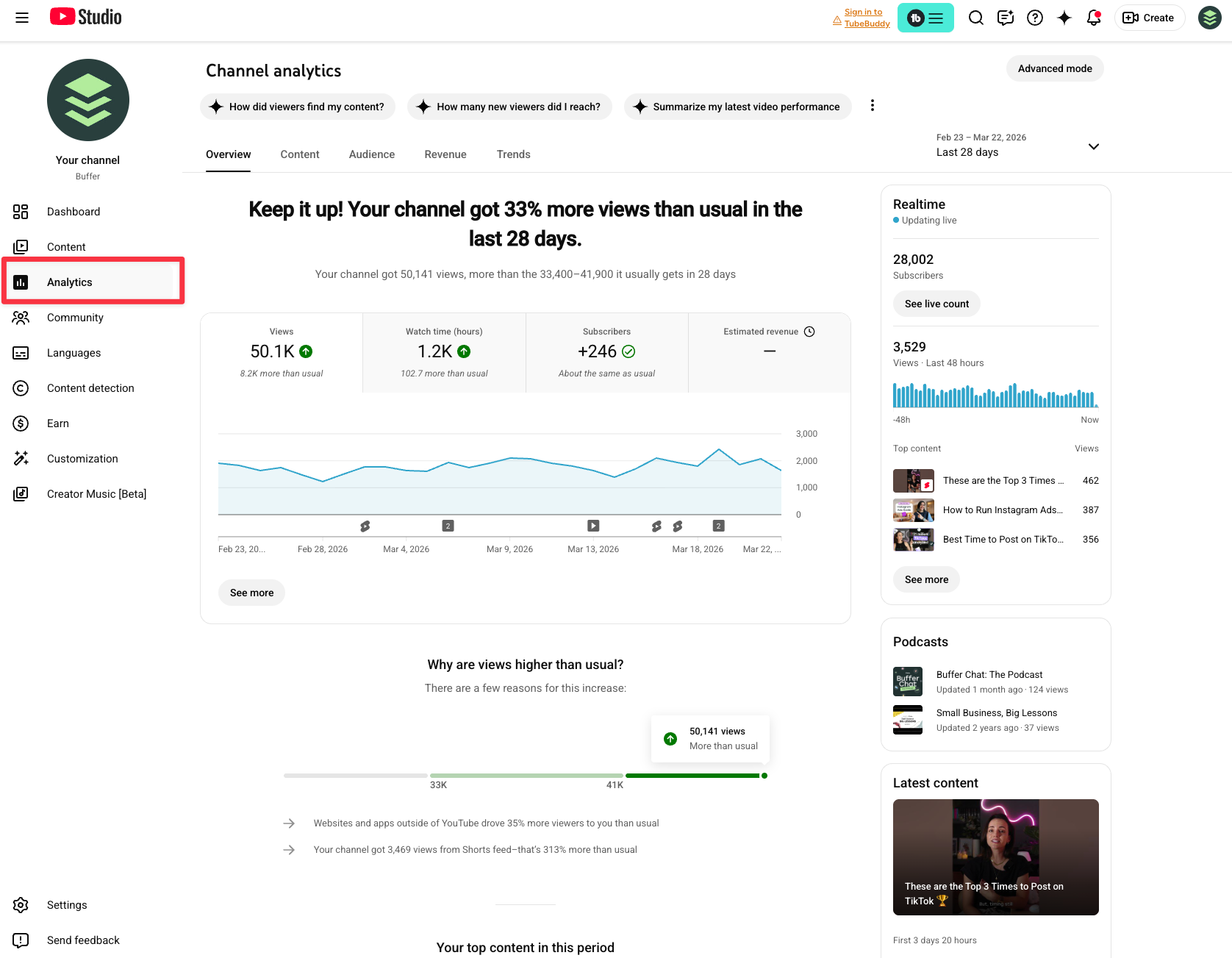
Creators can access their specific audience data through YouTube Studio. By navigating to studio.youtube.com, creators can enter their channel’s control center. From the left-hand menu, selecting the "Analytics" tab provides an overview of channel performance, including viewership, watch time, and subscriber growth. Within the Analytics section, the "Audience" tab is particularly insightful. Here, under the "When your viewers are on YouTube" graph, creators will find a unique heatmap tailored to their channel’s audience. This heatmap visually represents audience activity by hour and day in the creator’s local time zone, with darker shades indicating higher viewer activity. This real-time data, typically reflecting the last 28 days, is the most accurate indicator of when your specific audience is most active, allowing for precise optimization of publishing schedules. Regularly checking this metric ensures that posting strategies remain aligned with evolving audience habits.
A Holistic View: Timing as One Piece of the Puzzle
It is imperative to reiterate that optimal posting time, while a significant factor, is not a "magic bullet" for YouTube success. It forms one component of a multi-faceted strategy. The intrinsic quality of the content – its value, entertainment, and production – remains paramount. Equally vital are compelling video titles and descriptions optimized for search, eye-catching thumbnails that drive clicks, and consistent engagement with the audience through comments and community posts. YouTube’s algorithm rewards channels that consistently produce high-quality, engaging content that keeps viewers on the platform. Therefore, while timing can provide an initial algorithmic boost and improve discoverability, sustained growth and viewer loyalty stem from a holistic approach to content creation and channel management.
In conclusion, Buffer’s latest research offers critical, updated insights into YouTube’s evolving engagement landscape. By distinguishing between long-form videos and Shorts, and revealing new peak times for each, the study empowers creators to refine their publishing strategies for greater impact. However, the ultimate key to success lies in integrating these general findings with personalized audience data from YouTube Analytics and maintaining an unwavering commitment to high-quality content and audience engagement. Adapting to these dynamic patterns is essential for any creator aiming to thrive in the competitive world of online video.