Muhammad Hendra
The digital wellness sphere has witnessed an unprecedented surge in mindfulness and meditation applications, transforming how individuals approach mental well-being. These platforms promise to alleviate anxiety, enhance sleep quality, sharpen focus, and address a myriad of other modern stressors. The proliferation is staggering; a report by the Wall Street Journal highlighted the launch of over 2,000 new meditation apps between 2015 and 2018 alone. This growth trajectory intensified significantly during the global pandemic, with the New York Times reporting a substantial increase in mindfulness app usage in 2020, driven by heightened demand for mental health resources amidst widespread uncertainty and isolation. This exponential growth, while indicative of a rising collective consciousness around mental health, can also create an overwhelming choice for users. To distill this vast digital ocean, this article examines five particularly valuable and user-friendly meditation apps that are available free of charge, offering accessible pathways to cultivating mindfulness and inner calm.
The Digital Wellness Revolution and its Pandemic Catalyst
The rise of digital wellness tools, particularly meditation and mindfulness apps, is not merely a fleeting trend but a reflection of deeper societal shifts. In an increasingly fast-paced and interconnected world, stress, anxiety, and sleep disturbances have become pervasive issues. Before the pandemic, the global meditation app market was already projected to reach significant valuations, with estimates suggesting a multi-billion dollar industry by the mid-2020s. This growth was fueled by growing scientific evidence supporting the efficacy of mindfulness practices in improving mental and physical health, coupled with the convenience and accessibility offered by smartphone technology.
The COVID-19 pandemic acted as a powerful accelerant. Lockdowns, health anxieties, economic instability, and social isolation led to a dramatic increase in mental health challenges globally. In response, individuals sought accessible, immediate, and often solitary methods for coping. Meditation apps, available at one’s fingertips and often requiring no prior experience, emerged as a vital resource. They provided structured guidance, a sense of routine, and a virtual sanctuary for millions grappling with unprecedented levels of stress and uncertainty. This period not only boosted user numbers but also diversified the content and features offered by developers, eager to meet the varied needs of a stressed global populace. The demand for free access, in particular, underscored a broader need for equitable mental health resources.
Understanding Mindfulness and Meditation: Core Concepts
Before delving into specific applications, it is essential to clarify the foundational concepts. Mindfulness, at its core, is the practice of bringing one’s attention to the present moment without judgment. It involves observing thoughts, feelings, bodily sensations, and the surrounding environment with a gentle, non-reactive awareness. Meditation, often used interchangeably with mindfulness, encompasses a broader set of techniques designed to train attention and awareness, thereby achieving a mentally clear and emotionally calm and stable state. Both practices are rooted in ancient traditions but have been secularized and adapted for modern life, with extensive scientific research now validating their benefits, which include reduced rumination, stress reduction, improved working memory, enhanced focus, decreased emotional reactivity, and increased cognitive flexibility. The accessibility of these practices through digital platforms has democratized their reach, bringing sophisticated techniques to a global audience.

A Detailed Look at Five Free Meditation Apps
In an effort to simplify the choice for individuals seeking to embark on or sustain a mindfulness journey without financial commitment, five applications stand out for their robust free offerings, diverse features, and user-friendly interfaces.
1. Mindfulness.com: Personalized Pathways to Presence
Mindfulness.com, accessible across iOS, Android, and web platforms, positions itself as a comprehensive resource for both nascent and experienced meditators. Its core strength lies in its vast library of over 2,000 guided meditations, curated by a roster of world-leading teachers whose expertise spans various mindfulness traditions and contemporary psychological approaches. This depth ensures a rich and varied experience, catering to diverse preferences and stages of practice.
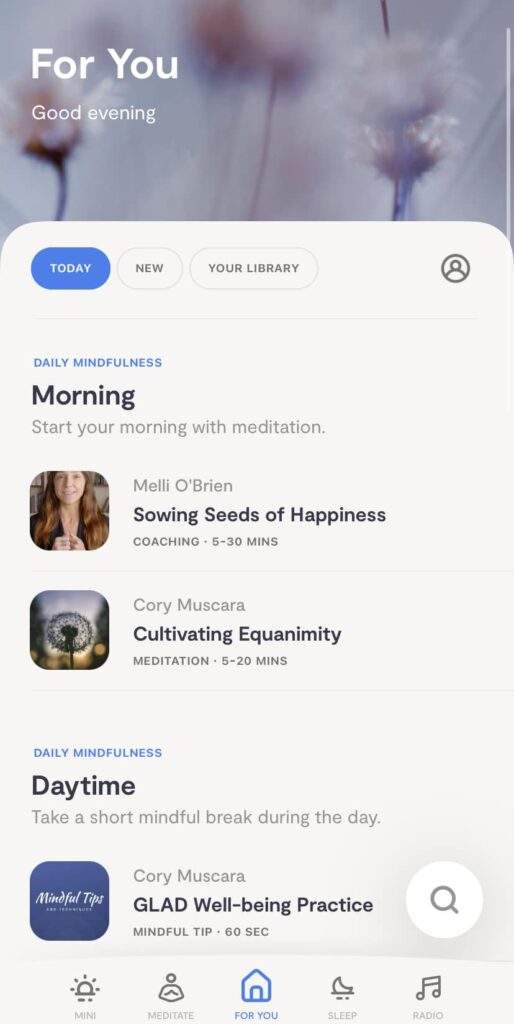
The app’s interface is intuitively designed around five distinct tabs, each serving a specific purpose. The "Mini" tab offers quick, accessible mindfulness exercises, perfect for integrating brief moments of presence into a busy day. The "Meditate" tab serves as the central repository for its extensive collection of guided sessions, allowing users to explore different themes, lengths, and styles. For those struggling with sleep, the "Sleep" tab provides a curated selection of restful and relaxing meditations aimed at promoting deeper, more restorative sleep. The "Radio" tab broadens the sensory experience, offering mindfulness music and ambient soundscapes designed to aid focus or induce calm.
However, the standout feature that truly differentiates Mindfulness.com is its "For You" tab. This personalized section leverages user input regarding preferences, goals, and desired areas of support. Through a sophisticated algorithm, the app tailors daily coaching videos and guided meditations specifically to the individual. Users can customize meditation lengths, ranging from five to thirty minutes, aligning with their schedule and current level of practice. Beyond daily sessions, the app offers opportunities for deeper engagement through meditation courses, expert Q&A sessions, breathwork exercises, and journaling prompts, facilitating a holistic approach to mental well-being.
Mindfulness.com effectively places the user at the helm of their mindfulness journey. Its multifaceted functionalities empower individuals to progress at their own pace and in directions aligned with their personal goals, whether that involves mitigating stress and anxiety or fostering overall mental resilience. While a premium "Mindfulness Plus+" option exists ($84.99/year or $169 lifetime, with a 14-day free trial and 30-day money-back guarantee), offering daily video coaching, advanced courses, and an even broader content library, the free tier provides substantial value, making it a robust starting point.
2. Insight Timer: A Global Community of Meditators
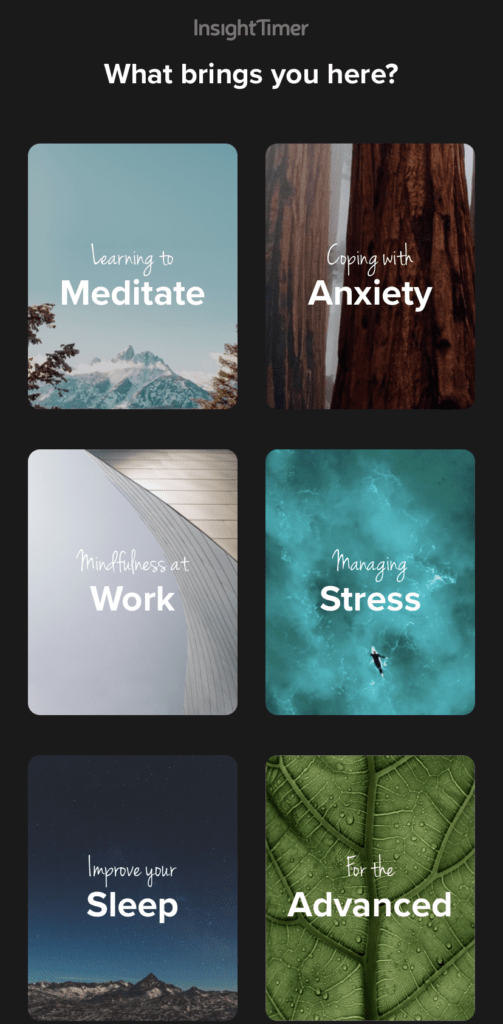
Insight Timer distinguishes itself with an extraordinarily expansive library and a strong emphasis on community. With over 80,000 free guided meditations from more than 10,000 teachers, it boasts arguably the largest free collection of content in the digital meditation space. This vastness covers an immense range of topics, from stress reduction and relationship enhancement to healing, sleep improvement, and creativity boosting, ensuring that almost any user can find relevant practices.
From the moment of entry, Insight Timer cultivates a sense of global connection. Its home screen features a dynamic world map illustrating the collective activity of its 18 million meditators, often displaying real-time statistics like "741k today, 7k now." Upon completing a meditation, users are informed of how many individuals were meditating concurrently, fostering a shared experience. Location settings further enhance this, allowing users to see nearby meditators and their chosen tracks, adding a unique, localized dimension to the global community.
The app provides unparalleled access to renowned mindfulness teachers, including luminaries such as Jack Kornfield, Tara Brach, Sharon Salzberg, and Rhonda Magee. Users can follow their preferred instructors to stay updated on new content, and the platform regularly hosts free live talks offering practical life advice and inspiration. For those seeking synchronous interaction, live events are scheduled hourly, providing opportunities to join real-time sessions spontaneously or integrate them into a planned routine. A newer feature, "Circle for Teams," facilitates group meditation, allowing friends or colleagues to connect and practice together.
For users who prefer self-directed practice, Insight Timer’s customizable timer function allows for silent meditation punctuated by intermittent bells, ambient sounds, or soothing music. The sheer volume of content, while a significant asset, can also present a challenge; some users might find the extensive choices overwhelming. However, for those who relish exploration and a diverse "buffet" of options, Insight Timer offers an unmatched breadth of experience. The optional paid subscription ($60/year with a 30-day free trial) unlocks courses by well-known teachers, offline listening, and advanced player functions, but its free offering remains remarkably comprehensive.
3. Smiling Mind: Mindfulness with a Mission
Smiling Mind, an Australian not-for-profit organization, embodies a unique ethos within the meditation app landscape. It provides an entirely free mindfulness app, unburdened by paid tiers or in-app purchases, ensuring universal accessibility. This commitment to free access is central to its mission of making mindfulness widely available to improve mental health.
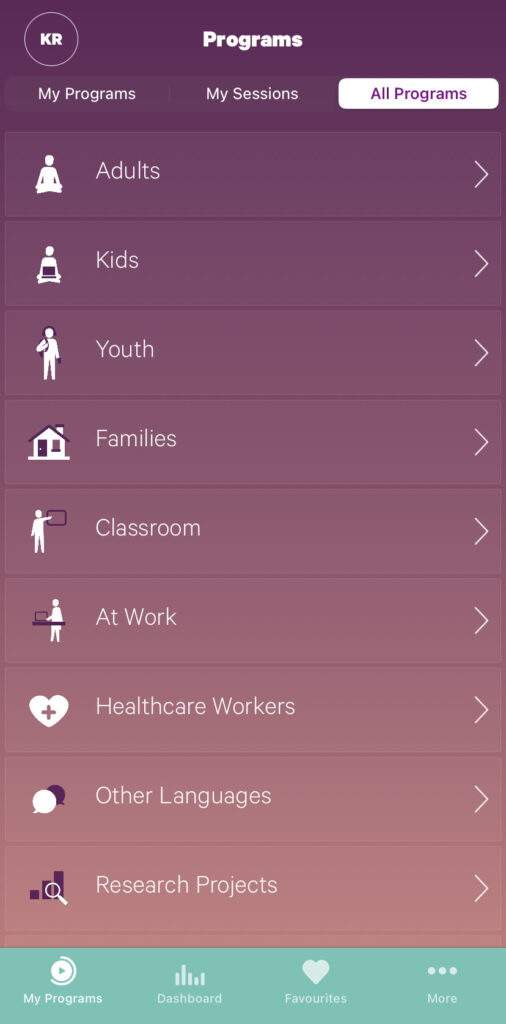
The app strikes an optimal balance between variety and manageability, featuring hundreds of meditations organized into coherent, structured programs. Examples include "Mindful Foundations" (35 sessions), "Sleep" (6 sessions), "Digital Detox" (8 sessions), and "Stress Management" (10 sessions). This programmatic approach provides a clear learning path while retaining flexibility, allowing users to jump between programs as needed. Most meditations range from five to fifteen minutes, ideal for daily integration, with a few longer practices (up to 45 minutes) available for more advanced practitioners. Crucially, it offers "bite-sized" meditations (2-5 minutes) for quick mindful pauses throughout a busy day.
With over 5.5 million downloads, Smiling Mind’s reach extends beyond individual users. It offers specialized programs tailored for specific demographics, including families, children and teenagers across various age groups, healthcare workers, and educators. These programs are developed in collaboration with psychologists and health professionals, ensuring their pedagogical soundness and age-appropriateness. Educators can even access curricula designed for classroom use, embedding mindfulness into educational settings.
A distinctive aspect of Smiling Mind is its emphasis on integrating mindfulness into daily life, beyond formal meditation sessions. Interspersed within its programs are "activities" such as Journaling Exercise, Go Offline, Where Did My Food Come From, and Count Your Senses. These exercises encourage users to bring mindful awareness to everyday experiences, extending the practice "off the cushion." For instance, the "Count Your Senses" activity guides users to systematically notice sights, sounds, smells, tastes, and tactile sensations in their immediate environment, fostering present-moment awareness. Originating with a focus on youth, Smiling Mind continues to offer a robust and age-appropriate selection of mindfulness sessions for children and adolescents, contributing significantly to early mental health education. Its non-profit model ensures that its primary goal remains user well-being, free from commercial distractions.
4. UCLA Mindful: Scientifically Grounded Practice
For individuals seeking a meditation app firmly rooted in scientific research and academic rigor, the UCLA Mindful app, developed by the Mindful Awareness Research Center (MARC) at the University of California, Los Angeles (UCLA), is an exemplary choice. This free app offers a curated selection of about a dozen meditations in both English and Spanish, making evidence-based mindfulness accessible to a broader audience.
The app’s content focuses on foundational mindfulness practices, guiding users through exercises that cultivate attention on the breath, body sensations, and auditory experiences. It also includes sessions specifically designed to navigate difficult emotions and to foster loving-kindness, a practice aimed at developing compassion and goodwill towards oneself and others. Meditation lengths vary from a concise three minutes to nineteen minutes, accommodating different schedules and attention spans.
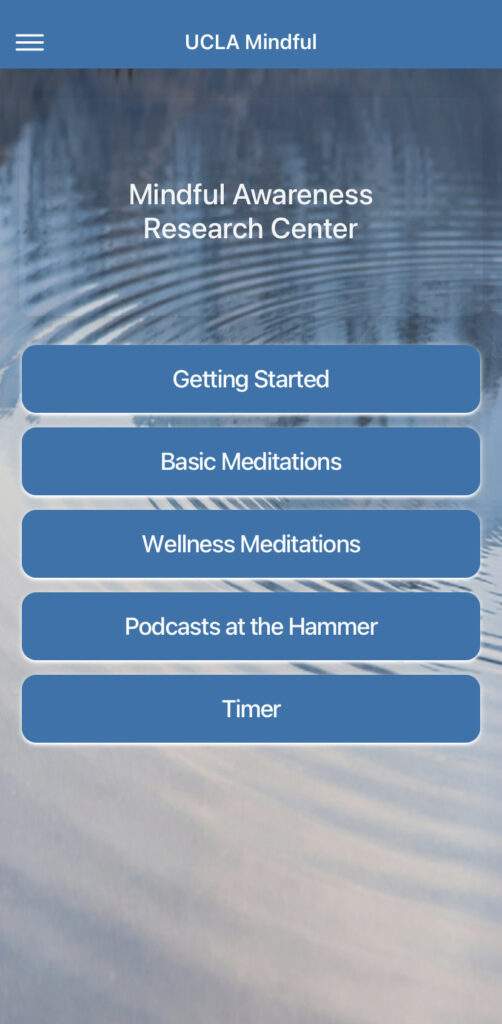
A significant feature for newcomers is the "Getting Started" section, which provides comprehensive information on the essence of mindfulness, practical advice on selecting a meditation, guidance on optimal posture for practice, and a clear overview of the research-backed benefits users can anticipate. This educational component ensures that users not only practice mindfulness but also understand the theoretical and scientific underpinnings of their engagement.
Beyond its core guided meditations, UCLA Mindful offers "podcasts" – longer audio recordings, typically around thirty minutes. These sessions often feature talks by prominent figures such as UCLA Director of Mindfulness Education Diana Winston, who provides context and insights before and after extended periods of silent practice. This format bridges the gap between structured guided meditations and more self-directed contemplative practice, allowing for deeper immersion. The app’s direct affiliation with a leading academic institution like UCLA provides an implicit guarantee of its content’s scientific validity and pedagogical soundness, making it a highly trustworthy resource for those prioritizing a research-informed approach to mindfulness. Like Smiling Mind, UCLA Mindful offers no paid option, maintaining its commitment to free, public access to mental wellness tools.
5. Healthy Minds Program: Neuroscience-Informed Skill Building
The Healthy Minds Program app, developed by HealthyMinds Innovations and deeply connected to the Center for Healthy Minds at the University of Wisconsin-Madison, offers a distinct approach to mental well-being, integrating cutting-edge neuroscience with practical meditation training. Founded by renowned neuroscientist Dr. Richard Davidson, the app’s mission is to help users develop tangible skills for a "healthy mind," focusing on enhancing mental focus, reducing stress, building resilience, cultivating compassion, and even improving immune health.
The app’s unique framework for mindfulness and well-being training is structured around four interconnected pillars: Awareness, Connection, Insight, and Purpose. Each pillar is further subdivided into three to five parts, with each part containing multiple series and individual sessions. For instance, within the "Connection" pillar, the "Innate Self-Worth" series comprises five sessions specifically designed to foster self-worth, with titles like "Practice Seeing the Good In Ourselves" and "Learn Negativity Bias." This structured, progressive approach distinguishes it from apps that offer a more free-form content library.
A notable feature is the choice between "Sitting" and "Active" practice types. While "Sitting" practices involve traditional seated meditation, "Active" practices provide guidance for integrating mindfulness into everyday activities such, as exercise or commuting. This flexibility ensures that users can weave mindfulness into various aspects of their lives, making the practice more sustainable and adaptable. Users can also customize the length of their sessions, ranging from five to thirty minutes, aligning with their available time and preference.
Beyond its core four-pillar framework, the app includes a collection of 27 standalone meditations, including "one-minute Micro Practices" designed for moments requiring a brief mental reset. While the app’s podcast-style format, which often includes extensive explanations and conceptual frameworks, may encourage more cognitive engagement than typical guided meditations, this approach is particularly beneficial for listeners who seek to understand the "why" behind the practices and to build a robust mental skill set. For individuals interested in a science-backed, skill-development approach to enhancing awareness, cognition, and overall well-being, the Healthy Minds Program app offers a comprehensive and thoughtful pathway. It, too, is entirely free, reflecting its commitment to public accessibility and the dissemination of evidence-based wellness practices.
The Broader Implications of Free Access in Digital Wellness
The availability of high-quality, free meditation apps carries significant broader implications for public health and mental well-being. Firstly, it democratizes access to mental health support, especially for individuals who cannot afford paid subscriptions, traditional therapy, or live in areas with limited access to mental health professionals. This accessibility is crucial for fostering mental resilience across diverse socioeconomic strata.
Secondly, these apps play a vital role in preventive mental health. By offering tools for stress management, emotional regulation, and improved focus, they can help individuals build coping mechanisms before mental health issues escalate, potentially reducing the burden on formal healthcare systems. The integration of science-backed approaches, particularly from apps like UCLA Mindful and Healthy Minds Program, further enhances their credibility and effectiveness as preventative tools.
However, challenges persist. While free apps remove financial barriers, user retention can be an issue. The sheer volume of choice in the market can lead to "app fatigue" or inconsistency in practice. Users must also discern the quality and scientific basis of content, although the apps reviewed here demonstrate strong foundational integrity. The future of digital wellness likely involves greater personalization, potentially through AI-driven coaching, and deeper integration with other health technologies, moving towards a more holistic and preventive model of care.
In conclusion, the proliferation of mindfulness and meditation apps, particularly those offering robust free content, represents a significant advancement in making mental well-being practices accessible to a global audience. The five apps highlighted—Mindfulness.com, Insight Timer, Smiling Mind, UCLA Mindful, and Healthy Minds Program—each offer distinct strengths, from personalized journeys and vast community libraries to research-backed curricula and neuroscience-informed skill-building. They collectively empower individuals to cultivate presence, reduce stress, and enhance overall mental health, proving that profound self-care can indeed be found at no cost.