 Muhammad Hendra
In an era defined by rapid sociopolitical shifts, economic instability, and relentless technological disruption, human resilience is increasingly tested by the inherent unpredictability of modern life. Mental health experts and behavioral specialists emphasize that true resilience is not rooted in toxic positivity—the notion that everything is perpetually fine—nor in maintaining an artificial state of unshakeable calm. Rather, contemporary mindfulness frameworks posit that effective emotional regulation requires a delicate balance of patience, mental clarity, and, ultimately, deliberate action.
Recent clinical insights into behavioral pediatrics and psychology suggest that navigating acute stress and systemic crises demands precision and compassion. As communities worldwide grapple with overlapping stressors, mental health practitioners are turning to somatic practices, such as mindful walking, to help individuals anchor themselves amid chaos. Dr. Mark Bertin, a prominent developmental pediatrician, author, and professor, has developed a structured framework integrating physical movement with meditative awareness to counteract the physiological loops of fear, anger, and reactivity.
Background Context and the Rise of Somatic Mindfulness
The integration of mindfulness into mainstream psychological care has accelerated significantly over the past decade. Historically, meditation practices were viewed primarily through a spiritual or esoteric lens. However, contemporary neuroscientific research has validated the physiological mechanisms underlying mindfulness, demonstrating its capacity to alter neural pathways associated with stress response, emotional reactivity, and cognitive flexibility.
In recent years, global disruptions—ranging from post-pandemic societal shifts to economic pressures—have driven a surge in generalized anxiety and chronic stress. According to public health data, populations globally report heightened levels of uncertainty regarding financial security, occupational stability, and future planning. Traditional cognitive-behavioral interventions have increasingly incorporated somatic practices—activities that engage the physical body to ground psychological distress. Walking meditation, in particular, has emerged as a vital clinical tool because it leverages the natural rhythm of locomotion to anchor an overactive mind, interrupting cycles of rumination without requiring prolonged periods of seated stillness.
The Mechanics of Uncertainty: A Chronological Approach to Stress Regulation
Psychological studies indicate that when individuals encounter uncertainty, the brain’s amygdala triggers a cascade of stress hormones, frequently resulting in fight-or-flight responses characterized by anger, catastrophizing, or emotional numbness. Breaking this cycle requires a deliberate, step-by-step interruption of the cognitive loop.
Behavioral specialists outline a phased approach to mitigating acute stress reactions:
- Recognition of the Stressor: Identifying the immediate onset of reactive thoughts, such as future-tripping or dwelling on past grievances.
- Somatic Grounding: Shifting focus away from abstract cognitive loops and toward immediate physical sensations, thereby lowering physiological arousal.
- Cognitive Reframing: Cultivating self-compassion and extending that empathy outward to recognize shared human struggles.
- Skillful Action: Returning to a state of equilibrium from which pragmatic, measured decisions can be made.
Dr. Mark Bertin’s Guided Walking Meditation Framework
To operationalize these psychological principles, Dr. Mark Bertin has structured a comprehensive, 13-step guided walking meditation designed to ground individuals in the physical present while fostering universal compassion. This practice translates abstract mindfulness concepts into actionable physical steps.
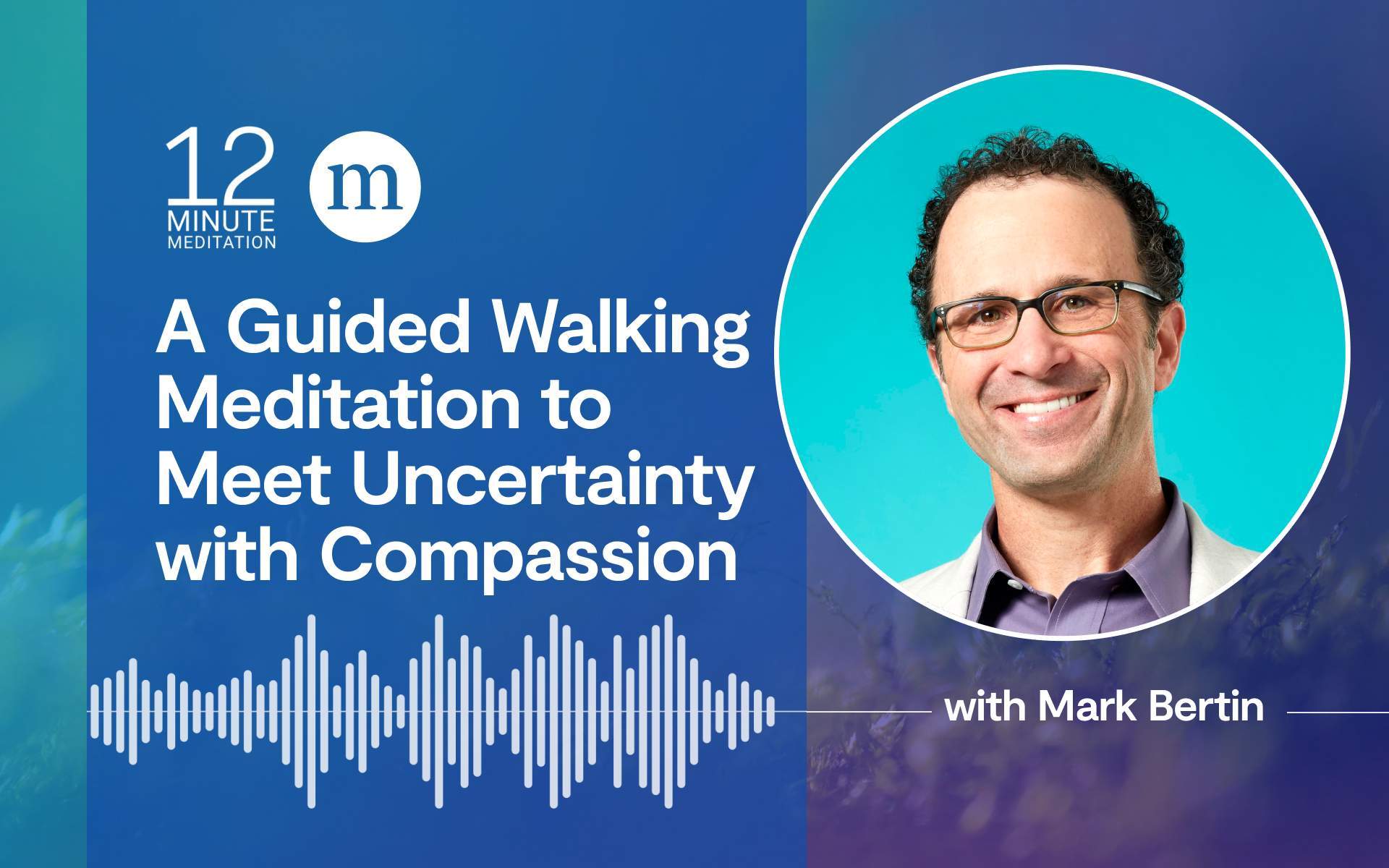
The foundational phase of the practice begins with basic somatic awareness. Practitioners are instructed to focus exclusively on the physical mechanics of walking: the lifting of the foot, the shifting of body weight, and the deliberate return of the foot to the ground. To reinforce concentration, individuals may silently label each movement as "step" or count sequential steps up to ten before resetting.
As the mind inevitably drifts—a natural cognitive tendency during times of stress—the practice emphasizes non-judgmental redirection. Rather than yielding to frustration when thoughts wander into past anxieties or future projections, the practitioner simply returns attention to the immediate physical sensation of the next step.
Once foundational focus is established, the practice expands sensorially. Without forced effort, individuals are encouraged to integrate surrounding environmental stimuli—noticing ambient sounds, visual details, and the tactile sensation of the air—thereby grounding themselves more fully in their immediate reality.
In the latter stages of the meditation, the focus shifts intentionally toward affective neuroscience and empathy. Practitioners are prompted to acknowledge a universal truth: that they are not alone in their struggles, as individuals worldwide navigate similar pressures. This realization anchors the final phases of the practice, which involve silent expressions of goodwill directed inward, toward family and friends, toward strangers encountered along the path, and ultimately toward all living beings.
Supporting Data and Psychological Implications
Clinical evaluations of mindfulness-based stress reduction (MBSR) programs consistently demonstrate measurable improvements in emotional regulation, immune function, and cognitive resilience. Longitudinal studies tracking individuals who incorporate daily somatic practices note significant reductions in cortisol levels—the primary stress hormone—as well as decreased symptoms of anxiety and depression.
From a sociological perspective, the intentional practice of extending compassion to strangers and difficult individuals yields broader community benefits. Behavioral analysts suggest that systemic resilience is reinforced when individuals cultivate empathy outside their immediate social circles, fostering social cohesion during periods of collective strain.
Expert Analysis and Future Outlook
Dr. Mark Bertin, whose work bridging developmental pediatrics and mindfulness has influenced clinical standards nationwide, maintains that the primary challenge of modern life is not the existence of uncertainty, but humanity’s reactive relationship to it. In his published works, including How Children Thrive: The Practical Science of Raising Independent, Resilient, and Happy Kids, Bertin emphasizes that emotional agility is a trainable skill rather than an innate trait.
As healthcare systems increasingly prioritize preventative mental health strategies, structured somatic interventions like guided walking meditations offer scalable, accessible tools for the general public. By anchoring psychological resilience in physical reality and compassionate awareness, individuals can better navigate complex crises with both precision and enduring grace.