
 Ali Ikhwan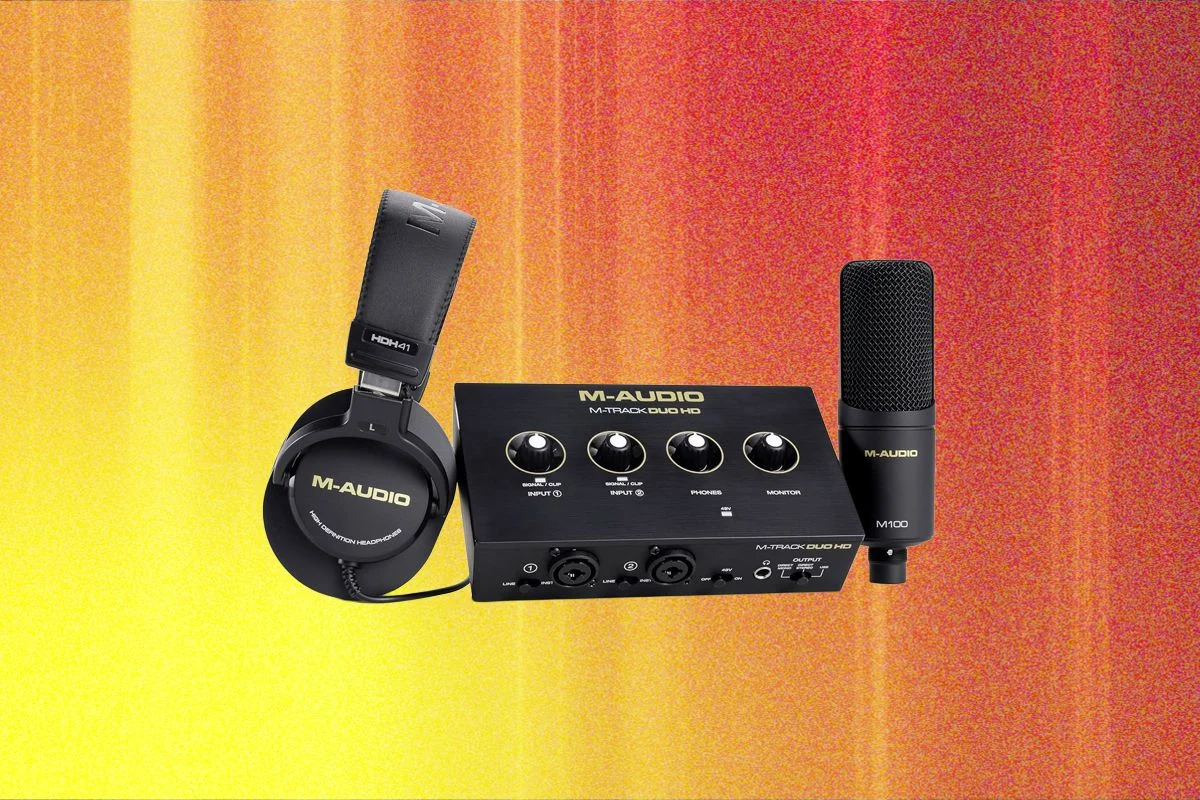
The digital media landscape has undergone a radical transformation over the last decade, characterized by the dismantling of traditional gatekeeping and the lowering of technological barriers to entry. Central to this shift is the podcasting medium, which has evolved from a niche hobby into a multi-billion-dollar global industry. As the demand for high-quality audio content grows, the hardware sector has responded with increasingly affordable and integrated solutions. The release of the M-Audio M Track Duo Producer Pack represents a significant milestone in this trajectory, offering an all-in-one ecosystem designed to transition amateur commentators into the professional digital creator space. This package, which includes a dual-channel audio interface, a condenser microphone, and monitoring headphones, underscores a broader industry trend: the commoditization of professional-grade recording technology for the mass market.
The Rise of the Creator Economy and Hardware Accessibility
The "marketplace of ideas" is no longer restricted to those with access to terrestrial radio towers or expensive recording studios. According to industry data, there are currently over 4 million active podcasts globally, with the industry projected to reach a valuation of nearly $95 billion by 2030. This growth is fueled by a demographic shift toward independent content creation, often referred to as the "creator economy."
For the modern aspiring podcaster or musician, the primary challenge has shifted from "how to record" to "what to record with." In the early 2000s, setting up a home studio required a significant capital investment, often exceeding several thousand dollars for basic equipment. Today, legacy brands like M-Audio are pivoting toward comprehensive bundles that provide all necessary components in a single purchase. The M Track Duo Producer Pack is positioned as a response to this demand, targeting users who require "class-compliant" hardware—devices that function immediately upon connection to a computer without the need for complex driver installations.
A Chronology of Home Recording Technology
To understand the significance of modern budget gear, one must examine the chronological development of the home recording sector.
- The Analog Era (Pre-1990s): Home recording was largely limited to multi-track cassette recorders, such as the Tascam Portastudio. While revolutionary, these devices suffered from high noise floors and limited editing capabilities.
- The DAW Revolution (1990s – Early 2000s): The emergence of Digital Audio Workstations (DAWs) like Pro Tools and Cubase moved recording to the computer. However, the hardware interfaces required to get sound into the computer remained prohibitively expensive.
- The M-Audio Fast Track Era (Mid-2000s): M-Audio established itself as a market leader with the Fast Track series. These interfaces were among the first to offer affordable, high-quality analog-to-digital conversion for the "bedroom artist."
- The Proliferation of Class Compliance (2010s): The industry moved toward standardized drivers, allowing interfaces to work seamlessly across Windows, macOS, and mobile operating systems. This era saw the rise of the "sub-$200 box," making recording accessible to the general public.
- The Integrated Bundle Era (2020 – Present): Following the global pandemic, which saw a 25% increase in podcast listenership, manufacturers began focusing on "Producer Packs." These bundles eliminate the research phase for consumers, providing a curated set of tools that are guaranteed to be compatible.
Technical Specifications and the Value Proposition
The M-Audio M Track Duo Producer Pack is built around the M Track Duo interface, a device featuring two Crystal Preamps. These preamps are designed to provide a transparent, low-noise signal path, which is critical for spoken-word content where clarity is paramount. The interface supports 48V phantom power, a necessity for the included condenser microphone, which requires external power to operate its sensitive internal diaphragm.
Unlike dynamic microphones, which are often used in live stage environments for their durability, condenser microphones are the standard for studio environments due to their ability to capture subtle nuances in the human voice. By including a condenser mic in a budget bundle, M-Audio is prioritizing the "studio sound" that modern audiences expect from high-tier podcasts.
The package is rounded out with a pair of closed-back headphones. In a professional recording context, closed-back designs are essential as they prevent "bleed"—the sound from the headphones leaking back into the microphone during a recording session. This technical detail, while often overlooked by beginners, is a key indicator of the kit’s design as a serious entry-level tool rather than a toy.
Comparative Market Data and Economic Impact
The democratization of recording gear has had a measurable impact on the market. In 2023, the global audio interface market was valued at approximately $500 million, with a compound annual growth rate (CAGR) of 5.4%. A significant portion of this growth is attributed to the "entry-level" segment, defined as products retailing for under $250.
| Feature | Legacy Home Studio (c. 2005) | Modern Producer Bundle (2024) |
|---|---|---|
| Average Cost | $1,200 – $2,000 | $150 – $250 |
| Setup Time | Several hours (Drivers/Config) | Minutes (Plug-and-Play) |
| Portability | Low (Rack-mounted gear) | High (Bus-powered/USB) |
| Quality | 16-bit / 44.1kHz | 24-bit / 48kHz+ |
This reduction in cost has effectively lowered the financial barrier to entry for marginalized voices and independent journalists. However, industry analysts note that the influx of cheap gear has also led to a saturated market. "The challenge is no longer about owning the tools of production," says audio engineer and industry consultant Marcus Thorne. "It is about the signal-to-noise ratio in the content itself. When everyone can record, the value shifts from the technology to the editorial quality."
Industry Reactions and Expert Analysis
The release of all-in-one packs has met with a mixed but generally positive reception from the professional audio community. While purists argue that budget components cannot match the sonic depth of high-end brands like Neve or SSL, most acknowledge that for the purposes of podcasting and digital streaming, the difference is negligible to the average listener.
M-Audio’s strategy reflects a broader shift in the "Podcast Industrial Complex." By catering to the "plebs"—as some gear enthusiasts colloquially refer to non-technical users—the company is tapping into a massive demographic that prioritizes ease of use over granular technical control. Reddit communities dedicated to home recording frequently cite M-Audio’s legacy of "class compliance" as a reason for their continued relevance. Users report that older M-Audio hardware often outlives its official support cycle, continuing to function on modern operating systems due to the brand’s adherence to universal standards.
From a sociological perspective, the availability of these tools facilitates what scholars call "participatory culture." When the cost of a high-quality broadcast setup is less than a month’s grocery bill, the diversity of perspectives in the public sphere can, in theory, expand. However, this also places the burden of "gatekeeping" on the platforms themselves (Spotify, YouTube, Apple), who must now manage a deluge of content ranging from high-level political discourse to what some critics label "brain slop."
Broader Implications for the Future of Media
The M-Audio M Track Duo Producer Pack is more than a hardware release; it is a symptom of the total digitalization of human communication. As we move further into the 2020s, several implications arise from the ubiquity of affordable recording gear:
- The Professional-Consumer Blur: The line between "pro" and "amateur" is increasingly defined by the quality of the script and the charisma of the host rather than the frequency response of the microphone.
- AI Integration: Future iterations of these budget packs are likely to include AI-driven noise reduction and "auto-leveling" software, further reducing the need for technical expertise in audio engineering.
- Sustainability Concerns: The rapid turnover of budget electronics raises questions about electronic waste. As consumers upgrade from "starter kits" to mid-tier gear, the industry must address the lifecycle of these entry-level plastic-heavy components.
- Educational Shifts: With professional tools available to teenagers, the curriculum for media and communications degrees is shifting away from "how to use a mixer" toward "how to build a brand and engage an audience."
In conclusion, the M-Audio M Track Duo Producer Pack serves as an accessible entry point into a world where everyone is a potential broadcaster. By combining legacy reliability with modern price points, it fulfills the current market’s demand for simplicity and functionality. While it may not offer the prestige of high-end studio arrays, it provides the essential bridge between an idea and a digital signal, ensuring that the marketplace of ideas remains open to anyone with a voice and a minimal investment.







