
 Ali Ikhwan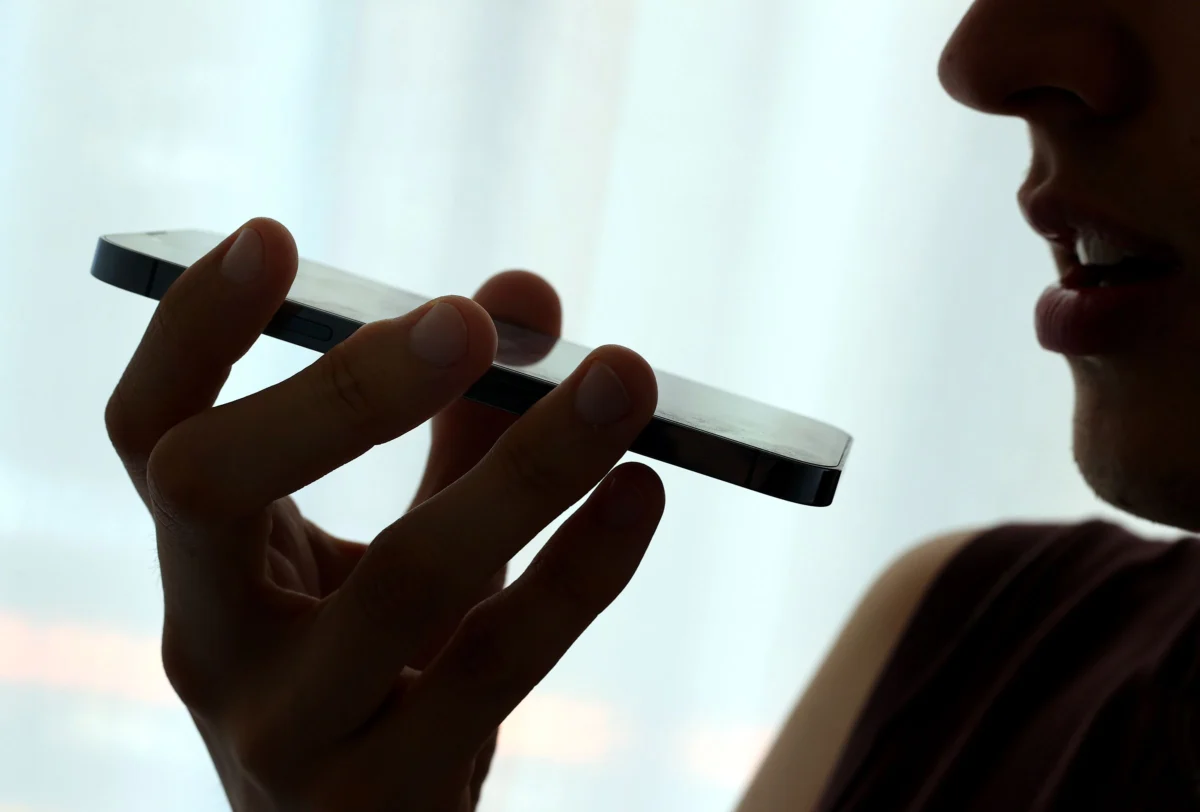
The digital productivity landscape is currently undergoing a significant shift as artificial intelligence transitions from experimental chatbots to integrated workflow tools designed to replace traditional input methods. Among the most prominent of these developments is the rise of advanced transcription software, exemplified by platforms such as Wispr Flow, which promises to revolutionize how users interact with their devices by enabling "thought-speed" writing. This new generation of software distinguishes itself from legacy dictation tools by leveraging two distinct layers of artificial intelligence: high-accuracy speech-to-text engines and large language models (LLMs) that perform sophisticated post-processing to eliminate filler words and format raw speech into professional prose.
The Value Proposition of Intelligent Transcription
Wispr Flow enters a market where efficiency is the primary currency. The software’s marketing asserts that users can write up to four times faster than they can type, a claim grounded in the biological reality that the average human speaks at approximately 130 to 150 words per minute, while the average professional typing speed hovers between 40 and 60 words per minute. For specialized users, such as journalists, researchers, and developers, this gap represents a significant bottleneck in creative and administrative output.
Unlike basic dictation features found natively in macOS or Windows, which often struggle with punctuation and the "umms" and "ahhs" of natural speech, Wispr Flow utilizes a secondary LLM layer. This second step acts as a real-time editor, transforming a rambling verbal brainstorm into structured paragraphs, bullet points, or code snippets. The tool is designed to be platform-agnostic, functioning within any text field across various operating systems, thereby positioning itself as a universal overlay for the modern computing experience.
The Cost of Convenience: Market Dynamics and Pricing
Despite its technical efficacy, the entry of Wispr Flow has sparked a broader debate regarding the "SaaS-ification" of AI tools. The software carries a subscription fee of $144 per year or $15 per month, a price point that places it in the premium tier of productivity utilities. This pricing strategy reflects the high computational costs associated with running cloud-based LLMs for every user interaction.
However, industry analysts note that the underlying technologies powering these tools—OpenAI’s Whisper and Nvidia’s Canary—are largely open-source or available via low-cost APIs. This has led to the emergence of a vibrant ecosystem of free and open-source alternatives that provide similar functionality without the recurring financial burden. For many power users, the choice between a polished, paid service and a modular, free alternative depends on their technical proficiency and their requirement for "out-of-the-box" simplicity.
A Chronology of Speech-to-Text Innovation
To understand the current state of tools like Wispr Flow, it is necessary to trace the rapid evolution of transcription technology over the last decade:
- The Legacy Era (Pre-2022): Dictation was dominated by Hidden Markov Models (HMMs). Tools like Dragon NaturallySpeaking required extensive "training" to recognize a specific user’s voice and were highly sensitive to background noise.
- The Whisper Breakthrough (September 2022): OpenAI released Whisper, an automatic speech recognition (ASR) system trained on 680,000 hours of multilingual and multitask supervised data. Whisper significantly reduced word error rates (WER) and handled diverse accents and technical jargon with unprecedented accuracy.
- The LLM Integration (2023-Present): Developers began pairing Whisper’s raw output with LLMs like GPT-4 or Claude. This allowed for "semantic transcription," where the AI understands the intent of the speaker rather than just the sounds, enabling the removal of disfluencies and the application of complex formatting.
- The Local Inference Movement (2024): With the release of specialized hardware like Apple’s M-series chips and Nvidia’s RTX GPUs, it became possible to run these complex models locally on a user’s device, bypassing the need for cloud processing and expensive subscriptions.
Evaluating Free and Open-Source Alternatives
As the technology becomes commoditized, several developers have released tools that mirror Wispr Flow’s capabilities. These alternatives are categorized by their licensing models and platform compatibility.
Spokenly: The Hybrid Model
Spokenly has emerged as a leading contender for users seeking a balance between ease of use and cost-effectiveness. Available for macOS and Windows, it offers a free tier that utilizes local models. Users who already subscribe to AI services like OpenAI or Groq can integrate their own API keys, effectively paying only for the raw compute they consume. One of Spokenly’s most significant advantages is its ability to operate entirely offline, ensuring that sensitive dictation never leaves the user’s hardware.

MacParakeet: The Open-Source Standard for Apple Users
For the macOS ecosystem, MacParakeet represents the "pure" open-source philosophy. It is entirely free, requires no account, and utilizes local versions of the Parakeet or Whisper models. By leveraging Apple Intelligence for the formatting step, MacParakeet provides a seamless experience that mimics paid alternatives while maintaining absolute user privacy.
FOSS Voquill and OpenWhispr: Windows and Linux Solutions
Windows and Linux users have historically had fewer high-quality options, but projects like FOSS Voquill and OpenWhispr are filling the gap. While Voquill focuses on robust, offline transcription without a formatting layer, OpenWhispr provides a more feature-rich environment. OpenWhispr allows users to toggle between local inference for privacy and API-based processing for higher accuracy, providing a flexible framework for different hardware capabilities.
Technical Data: Performance and Accuracy Metrics
Recent benchmarks comparing cloud-based transcription to local inference show a narrowing gap. According to data from independent AI researchers, OpenAI’s "Whisper-large-v3" achieves a Word Error Rate (WER) of less than 4% on the LibriSpeech clean dataset. In comparison, Nvidia’s Canary-1B model has demonstrated superior performance in multilingual environments, particularly in handling code-switching (mixing languages).
| Feature | Wispr Flow | Spokenly (Local) | MacParakeet |
|---|---|---|---|
| Annual Cost | $144 | $0 (Local) / $100 (Pro) | $0 |
| Privacy | Cloud-based | Local / Cloud Option | 100% Local |
| Formatting | LLM-powered | Custom Prompts | Local LLM Support |
| Platform | Windows/macOS | Windows/macOS | macOS only |
Official Responses and Industry Perspectives
While the developers of Wispr Flow have not issued a direct response to the rise of free alternatives, their marketing materials emphasize "reliability" and "user experience" as their primary differentiators. In a recent developer blog post, the team noted that "building a tool that works 100% of the time across every application requires significant engineering overhead that goes beyond just wrapping an API."
Conversely, proponents of the open-source movement argue that transcription is becoming a fundamental utility, similar to a spell-checker. "We are reaching a point where the OS will handle the heavy lifting of AI," says Marcus Thorne, a software architect specializing in local LLMs. "When Apple and Microsoft integrate these features into the kernel, the market for third-party subscription transcription tools will likely consolidate into niche professional use cases."
Broader Impact and Implications
The proliferation of these tools has profound implications for accessibility and workplace ergonomics. For individuals with motor impairments, dyslexia, or repetitive strain injuries (RSI), high-accuracy, low-cost transcription is not just a productivity hack but a necessity for digital participation.
Furthermore, the shift toward local processing addresses the growing concern over data sovereignty. In corporate and legal environments, the use of cloud-based transcription is often prohibited due to confidentiality agreements. The ability to run a "local Wispr" via tools like Spokenly or MacParakeet allows these professionals to adopt AI productivity tools without violating security protocols.
Future Outlook: Beyond the Keyboard
As we look toward 2025 and 2026, the "keyboard-first" workflow is expected to face continued pressure. The integration of AI transcription into mobile operating systems, such as the upcoming enhancements to Google’s Assistant Voice Typing and Apple Intelligence, will likely make "writing by speaking" a default behavior for the next generation of digital natives.
However, the transition is not without its critics. Some cognitive scientists suggest that the act of typing provides a "reflective delay" that aids in critical thinking. Writing, they argue, is a process of refinement that may be lost if users move toward a "stream of consciousness" input method. Despite these philosophical concerns, the economic and technical momentum behind AI transcription suggests that the barrier between thought and text will continue to thin, driven by both premium pioneers like Wispr Flow and the robust community of open-source developers democratizing the technology.







