Cintya Tara Annisa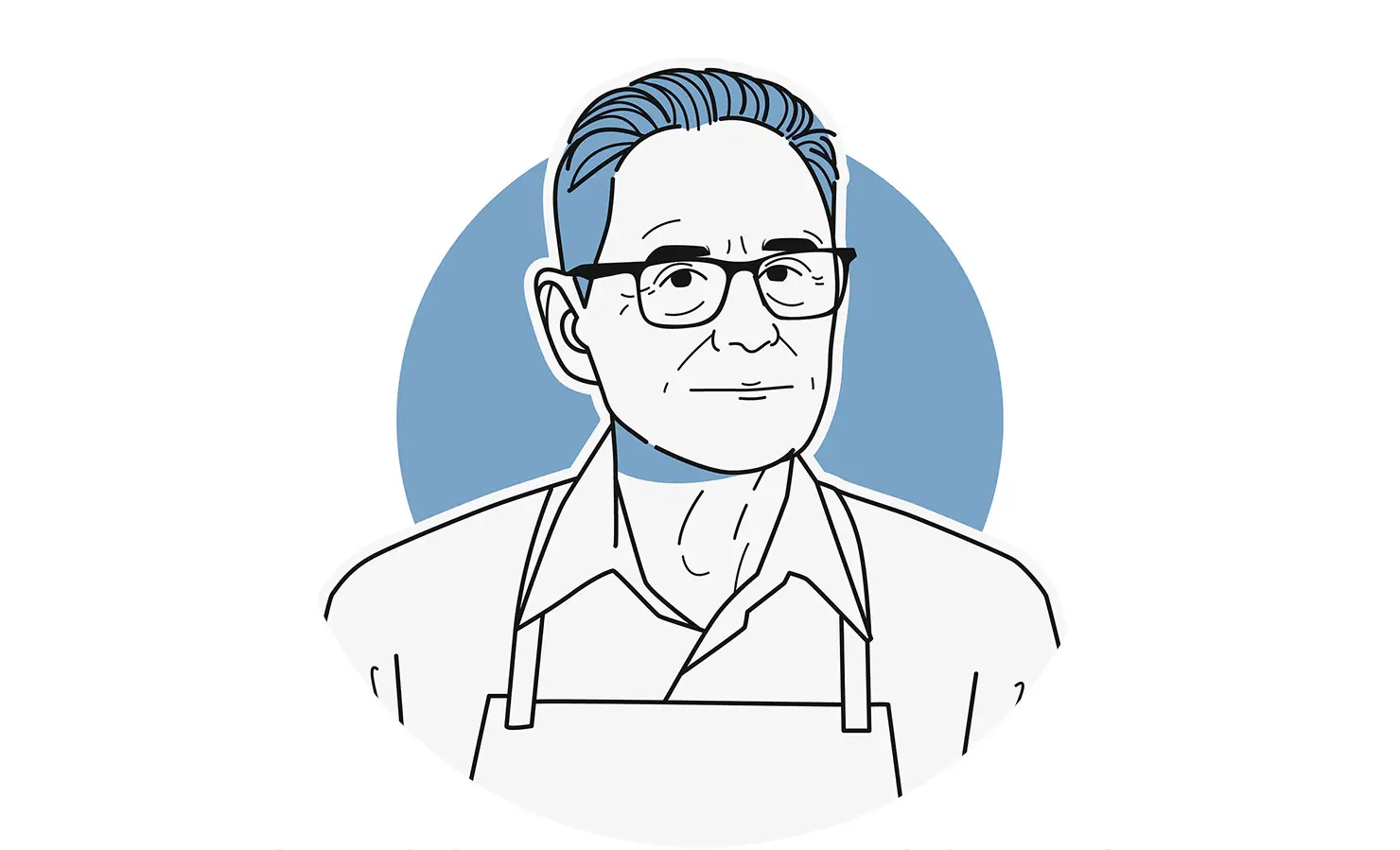
In the rapidly evolving landscape of the global specialty coffee industry, where technological trends and aesthetic shifts often dictate market dominance, few figures remain as steadfast as Luciano Repetto. As an honoree of The Sprudge Twenty—a prestigious annual initiative presented in partnership with Pacific Barista Series to recognize twenty individuals shaping the future and honoring the past of global coffee culture—Repetto stands as a sentinel of a bygone era. At 81, he represents a rare bridge between the immigrant labor traditions of the mid-20th century and the high-precision science of modern roasting.
The Sprudge Twenty, now in its latest iteration, serves as a vital record of the industry’s human capital. By highlighting voices from across the supply chain, the program emphasizes that excellence in coffee is not merely a product of beans or equipment, but of the decades of intellectual and physical labor invested by individuals like Repetto. His inclusion this year underscores a broader industry pivot: a renewed appreciation for those who pioneered the technical advancements—specifically fluid-bed roasting—that have since become staples of professional roasting facilities worldwide.
A Chronology of Craft: From Liguria to San Francisco
Luciano Repetto’s journey began in Liguria, Italy, before his family migrated to the United States. His introduction to the coffee trade was humble, characterized by the traditional apprenticeship model of the era. Starting at age sixteen, Repetto began his tenure in his father’s shop, performing the foundational tasks of a burgeoning entrepreneur: sweeping floors, cleaning machinery, and observing the rhythmic, high-volume demands of a post-war American coffee house.
By 1978, Repetto had assumed control of the family business, Graffeo. This transition marked a pivotal moment in the company’s trajectory. Rather than maintaining the status quo of traditional drum roasting, Repetto made a calculated investment in fluid-bed roasting technology. At the time, this was a radical departure from established norms. Fluid-bed roasting, which utilizes a vertical stream of hot air to suspend and heat the beans, offers a degree of thermal consistency and reduction of char that was then largely misunderstood by the broader coffee-consuming public.
Repetto’s decision to adopt this technology aligns with the work of the late Mike Sivetz, a chemical engineer who revolutionized the industry by applying thermodynamics to the coffee roasting process. Repetto credits Sivetz with providing the scientific rigor that transformed his approach from intuition-based roasting to a process of reproducible precision. This shift allowed Graffeo to maintain a singular, disciplined philosophy: a limited selection of high-quality blends roasted with extreme consistency.
Technical Precision and the Fluid-Bed Paradigm
The implications of Repetto’s early adoption of fluid-bed technology extend far beyond the walls of his San Francisco facility. In the broader coffee industry, the debate between drum roasting and fluid-bed roasting has persisted for decades. While drum roasters are lauded for their conductive heat profile—often resulting in more body—fluid-bed roasters are prized for their convective heat efficiency, which minimizes the risk of scorched beans and ensures a cleaner, more integrated flavor profile.
For Repetto, the goal was never to chase ephemeral trends or expand his catalog to satisfy the specialty market’s obsession with single-origin variety. Instead, he refined a "signature dark roast" that became a staple of Bay Area fine dining. His client list, which has included some of the region’s most decorated, Michelin-starred establishments, serves as a testament to the stability of his product. When a chef demands consistency, the chemical and physical stability of the roast becomes the primary metric of quality. Repetto’s ability to provide this reliability for over four decades has solidified his status as an industry artisan.
Industry Perspectives on the "Old Guard"
The recognition of Repetto by The Sprudge Twenty comes at a time when the industry is undergoing a significant demographic shift. As younger generations of roasters and baristas enter the workforce, the reliance on digital profiling and software-driven roasting has become the standard.
However, industry analysts note that there is a growing trend of "neo-traditionalism," where younger professionals are seeking out the wisdom of the "old guard." Repetto’s philosophy—that coffee roasting is a serious, technical discipline requiring intense study—resonates with current industry leaders who advocate for more formal, standardized training programs.
"There are many people in the industry who have never been properly trained," Repetto notes. His perspective highlights a critical friction point: the gap between the accessibility of coffee equipment and the depth of knowledge required to operate it at a high level. His call for increased rigor in vocational training mirrors recent initiatives by organizations like the Specialty Coffee Association (SCA), which continue to push for standardized certifications and technical literacy among practitioners.
The Economics of Simplicity
Graffeo’s business model remains an outlier in a modern specialty coffee market that is often defined by rapid expansion and frequent menu turnover. By adhering to a strategy of "one blend, two roasts," Repetto has avoided the pitfalls of inventory volatility. This focus on vertical depth rather than horizontal expansion has allowed the brand to maintain a loyal consumer base that values predictability.
Data from the National Coffee Association (NCA) consistently shows that while "gourmet" coffee consumption is at an all-time high, the average consumer’s loyalty to a specific, high-quality product is often tethered to the perceived consistency of that brand. Repetto’s longevity proves that a focused product line, executed with obsessive attention to technical detail, can provide a sustainable competitive advantage over brands that struggle to maintain quality control across large, diverse inventories.
Legacy and the Future of Coffee Education
Despite having sold his ownership stake in Graffeo, Repetto remains a daily presence in the roasting facility. His role, as he describes it, is to "fill in where he can," ensuring that the technical standards he established decades ago are not diluted by modern expediency. This dedication to craft, even in his ninth decade, serves as a powerful case study for the next generation of roasters.
His influence is not merely anecdotal; it is structural. By proving that a small, artisanal operation can survive and thrive in a market dominated by large-scale commercial entities, he provides a blueprint for small-batch roasters who wish to prioritize quality over volume.
The broader impact of his work is perhaps best summarized by his own philosophy on what constitutes "coffee happiness." For Repetto, the metric is simple: the consumer’s reaction. It is a feedback loop that has defined his career—a constant calibration of the roast to meet an internal, and often uncompromising, standard of excellence.
As the coffee industry moves toward an increasingly automated future, the human element—the "artisan genius" that Repetto embodies—remains a necessary component of the trade. His story serves as a reminder that the technology of coffee roasting, whether it be a fluid-bed roaster from the 1970s or a laser-guided system from 2025, is ultimately a tool. The quality of the final cup remains entirely dependent on the person at the helm, their commitment to the science of the craft, and their willingness to devote a lifetime to mastering the variables of heat, time, and bean.
In the final analysis, Luciano Repetto is more than just a veteran of the coffee industry; he is an institutional memory. His life’s work—rooted in the discipline of his father and the scientific curiosity sparked by Mike Sivetz—offers a compelling narrative of how traditional values can be successfully integrated with technical innovation. For those entering the coffee industry today, his advice remains stark and necessary: treat the trade with the seriousness it deserves, read widely, learn deeply, and recognize that in the pursuit of the "world’s finest coffee," there is no substitute for the long, quiet labor of the artisan.