Hanik Kholidah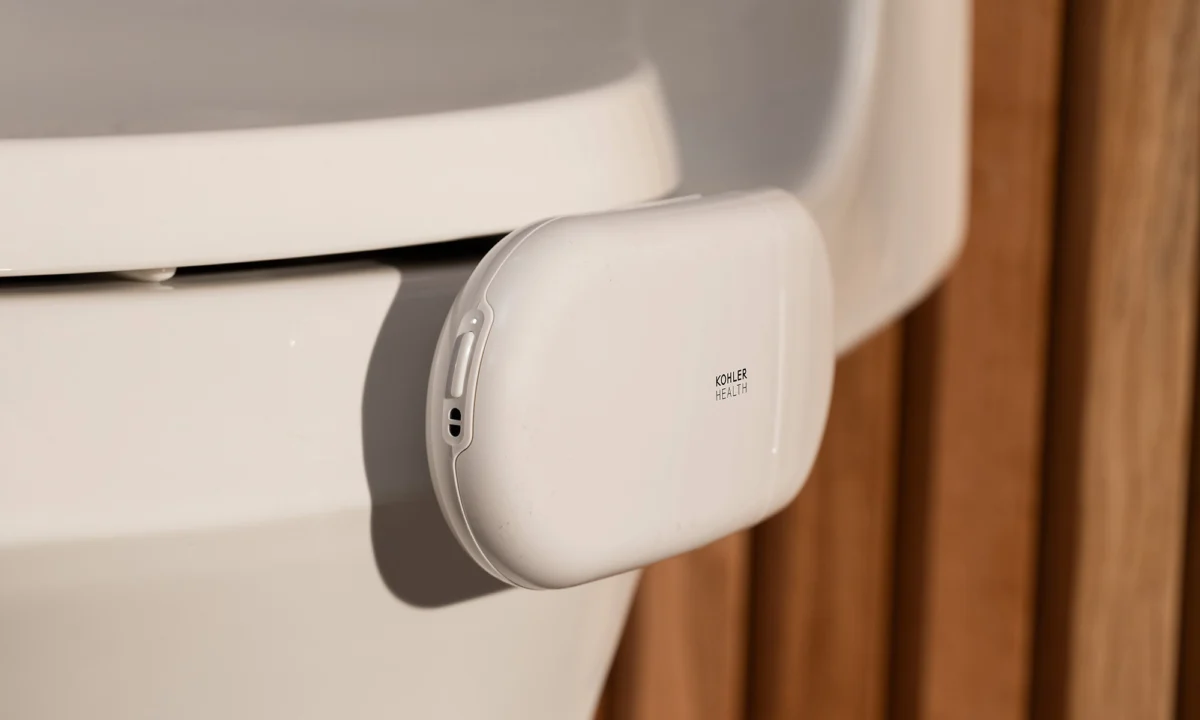
The routine medical examination often begins with a series of deceptively simple questions regarding a patient’s lifestyle and biological functions. Among these, inquiries into digestive health are perhaps the most frequent yet the least accurately answered. When a physician asks about the frequency, consistency, or changes in bowel movements, most patients are forced to rely on fragmented memories, rough estimates, and subjective interpretations. This reliance on human memory creates a significant "data gap" in clinical settings, where objective, longitudinal information is the gold standard for diagnosis and preventative care. To address this deficiency, Kohler Health has introduced Dekoda, a first-of-its-kind tracking tool designed to transform the bathroom into a sophisticated health-monitoring environment through passive data collection.
The Silent Crisis of Digestive Health in America
The necessity for objective digestive tracking is underscored by the sheer scale of gastrointestinal issues in the United States. According to research published in the journal Gastroenterology and cited by the National Institutes of Health, approximately 61% of U.S. adults experience at least one gastrointestinal symptom—such as constipation, diarrhea, bloating, or heartburn—on a weekly basis. Despite the prevalence of these symptoms, digestive health remains a secondary concern in the burgeoning field of personal health technology, which has historically prioritized cardiovascular metrics and sleep cycles.
Data from the American Gastroenterological Association (AGA) reveals an even more concerning trend: nearly 40% of Americans report that bowel symptoms have disrupted their daily activities, including work and social engagements, within the past year. However, a 2024 survey on health-tracking habits indicates that while a majority of the population now monitors at least one health metric via wearables or smartphones, only 6% of Americans actively track their bowel habits. This discrepancy suggests a cultural and technological barrier that has left one of the body’s most vital indicators of internal health largely unrecorded.
The Cognitive Barrier: Understanding Recall Bias
The primary obstacle to accurate digestive reporting is a psychological phenomenon known as recall bias. Medical researchers have long documented that human beings are unreliable historians of their own physiological patterns. Our brains are evolutionarily wired to prioritize "outliers"—unusual or painful events—while filtering out routine occurrences. In the context of the bathroom, this means a patient is likely to remember a single instance of severe discomfort but will almost certainly forget a gradual three-month shift in bowel frequency or a subtle change in hydration levels.

The Bristol Stool Scale, a diagnostic tool used by clinicians to classify the form of human feces into seven categories, illustrates the difficulty of subjective reporting. What one patient describes as "normal" might be classified as Type 1 (hard lumps) or Type 6 (mushy) by a medical professional. Without a photographic or sensor-based record, the nuances of these classifications are lost. Medicine relies on longitudinal data—information collected over a long period—to identify trends. Blood pressure is tracked over months; cholesterol is monitored over years. Kohler Health’s entry into this space suggests that digestive health must be treated with the same analytical rigor.
Dekoda: Engineering Passive Health Monitoring
The introduction of the Kohler Dekoda represents a strategic shift from active to passive health monitoring. Unlike traditional health apps that require manual entry—a process that is often abandoned after a few days—Dekoda is designed to fit discreetly within the toilet architecture. It operates in the background, requiring no change in user behavior. This "ambient sensing" technology is the hallmark of the next generation of smart home health tools.
The device is engineered to capture a variety of health signals that provide a comprehensive view of a user’s internal well-being. Its primary functions include:
- Hydration Tracking: By analyzing the characteristics of urine, the device can provide insights into a user’s daily hydration levels, offering alerts when fluid intake is insufficient.
- Bowel Movement Patterns: The tool monitors the frequency and consistency of bowel movements, mapping them against the Bristol Stool Scale to identify deviations from the user’s personal baseline.
- Advanced Detection: Crucially, the device is capable of detecting the presence of blood, a critical health marker that can indicate conditions ranging from minor hemorrhoids to more serious issues like inflammatory bowel disease (IBD) or colorectal cancer.
- App Integration: The data is encrypted and transmitted to the Kohler Health App, where it is synthesized into easy-to-read reports. These reports allow users to visualize long-term trends rather than isolated incidents.
A Chronology of Personal Health Technology
To understand the significance of Kohler’s move into the bathroom, one must look at the evolution of personal health monitoring over the last two decades. The trajectory has moved steadily from the clinic to the wrist, and now, to the environment itself.
- 2000s: The Era of Manual Tracking. Health enthusiasts relied on paper logs or early desktop software to track calories and exercise. Data was sparse and prone to human error.
- 2010s: The Wearable Revolution. The launch of the Fitbit and later the Apple Watch moved monitoring to the wrist. This allowed for the continuous tracking of steps, heart rate, and sleep. However, these devices remained "active" in the sense that they had to be charged and worn correctly to function.
- 2020s: The Rise of Ambient Sensing. The current decade is defined by "invisible" technology. From smart mattresses that track respiration to Kohler’s bathroom sensors, the goal is to gather data without the user ever having to think about it.
Kohler, a company with a 150-year history in plumbing and kitchen manufacturing, is leveraging its dominance in home infrastructure to occupy a space that tech giants like Apple or Google cannot easily reach. By integrating health diagnostics into the toilet, Kohler is effectively closing the last major data gap in the domestic environment.
Clinical Implications and the Future of Preventative Care
The potential impact of this technology on the healthcare system is profound. In the current model, patients usually seek medical advice only after a symptom becomes unbearable. By the time a person notices persistent blood or a significant change in habits, a condition may have already progressed to an advanced stage.
Passive monitoring allows for a "preventative" rather than "reactive" approach. If a user’s Dekoda data shows a gradual shift in consistency over six months, the Kohler Health App can prompt the user to consult a professional before physical symptoms become disruptive. For patients managing chronic conditions like Crohn’s disease, ulcerative colitis, or Irritable Bowel Syndrome (IBS), this data provides a level of granularity that can help doctors fine-tune medication dosages and dietary recommendations.
Furthermore, this technology could revolutionize telehealth. During a virtual consultation, a patient can share a verified data report with their gastroenterologist, providing an objective basis for the conversation. This reduces the time spent on clarifying subjective descriptions and allows the physician to move directly to diagnostic or treatment planning.
Privacy, Ethics, and the Digital Bathroom
As with any technology that collects sensitive biological data, the introduction of smart bathroom tools raises significant questions regarding privacy and data security. The bathroom is arguably the most private space in a home, and the data generated there is highly personal.
Kohler Health has addressed these concerns by emphasizing end-to-end encryption and user-controlled data sharing. In a statement regarding their health initiatives, the company noted that the insights generated are intended for the user and their chosen healthcare providers, not for third-party advertisers. However, as this sector grows, industry analysts suggest that clear regulatory frameworks will be necessary to ensure that "bio-data" is protected with the same rigor as traditional medical records under HIPAA (Health Insurance Portability and Accountability Act) standards.

Analysis of the Broader Impact
The move by Kohler Health signifies a broader trend: the "medicalization" of the home. As the global population ages and healthcare costs continue to rise, there is an increasing emphasis on aging-in-place and remote patient monitoring. Tools like Dekoda are not merely gadgets for the tech-savvy; they are early iterations of a home-based diagnostic suite that could eventually include smart mirrors that detect skin changes or floors that sense gait abnormalities to predict falls.
The bathroom, once viewed purely through the lens of hygiene and aesthetics, is being reimagined as a laboratory. For the consumer, the value proposition is clear: better health through better data, without the effort of manual tracking. For the medical community, it offers a window into the daily physiological realities of patients that was previously impossible to observe.
In conclusion, the Kohler Health Dekoda is more than a plumbing innovation; it is a response to a fundamental flaw in human biology—our inability to remember the mundane details of our own health. By bridging the gap between the bathroom and the doctor’s office, Kohler is ensuring that the body’s most consistent signals are finally being heard. As passive sensing becomes a standard feature of the modern home, the "data gap" in digestive health may soon become a relic of the past, replaced by a new era of informed, proactive, and personalized wellness.