In an era where digital commerce offers unprecedented opportunities for niche markets, a singular challenge often plagues individual sellers: the sheer scale of manual labor required to list, describe, and promote a growing inventory. This bottleneck has been notably overcome by Joe, an entrepreneur and vintage Pokémon card collector, who engineered a bespoke Mac application to automate the intricate logistics of selling collectible cards, transforming a time-consuming hobby into an efficient, scalable e-commerce operation. His innovation, which integrates artificial intelligence (AI) for card analysis and a robust API for social media promotion, offers a compelling blueprint for modern digital entrepreneurship.
The Challenge of Niche E-commerce at Scale

The market for vintage Pokémon cards has experienced a significant boom over the past decade, driven by nostalgia, investment potential, and the cultural phenomenon surrounding the franchise. Reports from industry analysts highlight a vibrant secondary market, with rare cards fetching thousands, sometimes even hundreds of thousands, of dollars. This lucrative environment, however, comes with substantial logistical hurdles for individual sellers. Joe, initially driven by the quest to complete his own collection, frequently found desired cards only available within larger bulk lots. This led to an accumulating surplus of "spare" cards, which he began selling as a side hobby.
What started as a casual endeavor soon escalated. As his inventory surpassed 1,000 cards, Joe recognized the unsustainable nature of his manual process. Each card demanded a meticulous workflow: high-quality photography, precise identification of critical details (name, set, card number, rarity, edition, language, holographic status), an accurate condition assessment, competitive pricing, crafting compelling titles and descriptions, and, crucially, effective social media promotion. This labor-intensive sequence, repeated hundreds of times, quickly consumed an inordinate amount of time, essentially becoming an unsalaried part-time job. The most neglected aspect, Joe observed, was often social media outreach, rendering many listings "invisible" to potential buyers who primarily discover collectibles through curated feeds and fan accounts rather than direct marketplace searches.
The Genesis of an Automated Empire: From Collector to Entrepreneur
Joe’s journey from avid collector to e-commerce innovator began with a simple pain point: the administrative burden of selling. While platforms like eBay offered some assistance with listing creation, suggesting titles and pre-filling item specifics, they were designed for a more passive selling model, where buyers might take days or weeks to naturally discover an item. The vintage Pokémon card market, however, operates at a much faster pace, heavily reliant on immediate engagement and visibility across social channels. Buyers are typically followers of dedicated card accounts on platforms like Threads and Instagram, clicking through from their feeds to trusted dealers. Joe quickly understood that social promotion wasn’t just an add-on; it was often the primary driver of sales, sometimes accounting for more than half of a card’s selling potential.
The prospect of manually sharing individual card listings across multiple social media platforms for an inventory exceeding a thousand items was daunting. This realization spurred Joe to seek a more integrated and automated solution. He envisioned a system that could seamlessly connect the listing process with social media promotion, eliminating the repetitive, tedious tasks that drained his time and enthusiasm. This vision perfectly aligned with the capabilities of the Buffer API, a tool he was already familiar with from his professional background, recognizing its potential to bridge the gap between product listings and strategic social outreach. The Buffer API, he noted, transformed his nascent tool from a mere listing creator into an actual sales engine, ensuring that each listing and its promotion were part of a unified, efficient workflow.
Harnessing Artificial Intelligence: Claude’s Role in Card Analysis
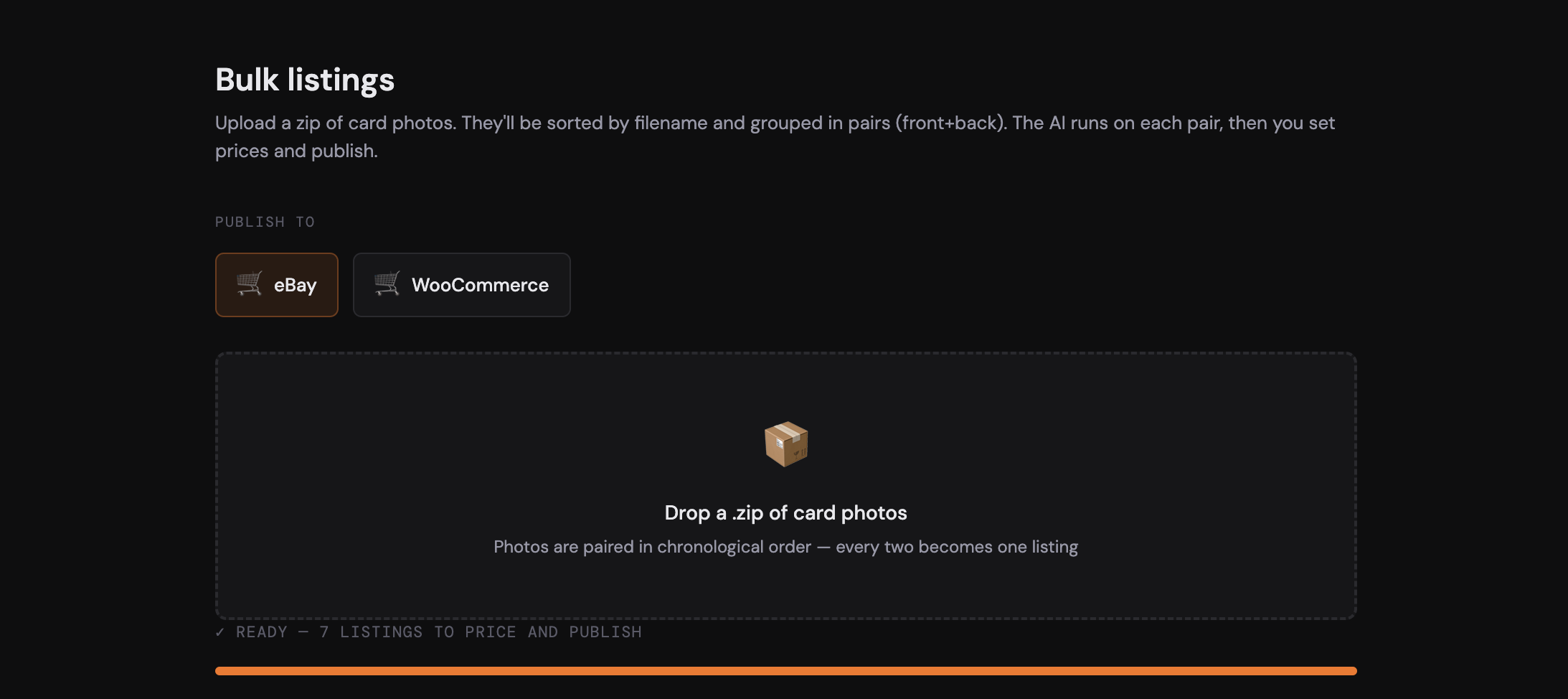
At the core of Joe’s custom Mac application, which he affectionately refers to as his "as yet nameless" app, is a sophisticated integration of AI, specifically Claude, for image analysis and data extraction. The entire workflow is designed for maximum efficiency, beginning with a simple drag-and-drop. Initially, the app handled one card at a time, requiring individual front and back photos. However, to manage larger batches, Joe wisely incorporated zip-file support. Now, he photographs batches of approximately 50 cards in a lightbox, pairs the front and back images, zips them together, and drags the archive into the application. The app automatically sorts and groups the photos by filename, streamlining the initial upload process.
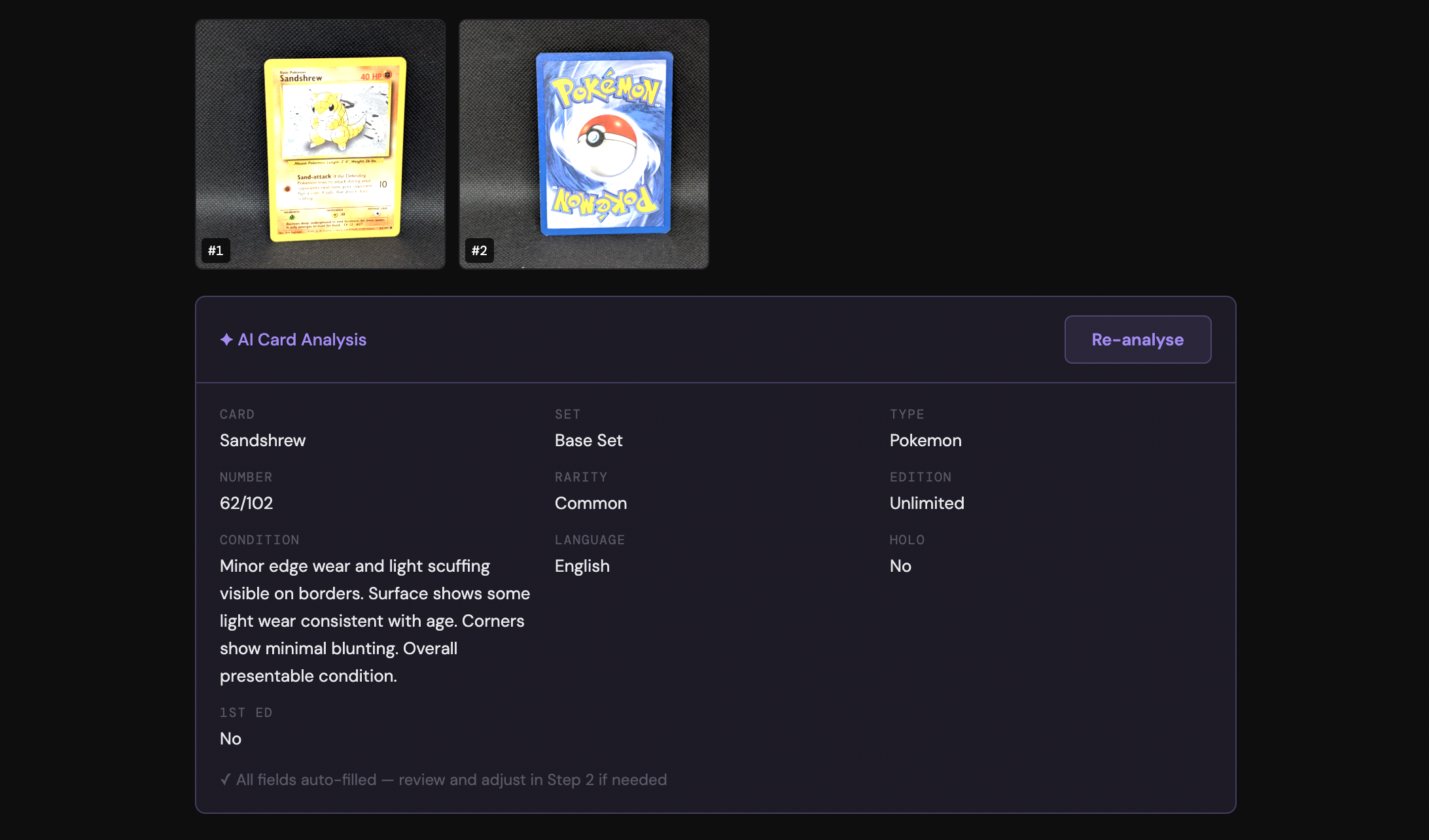
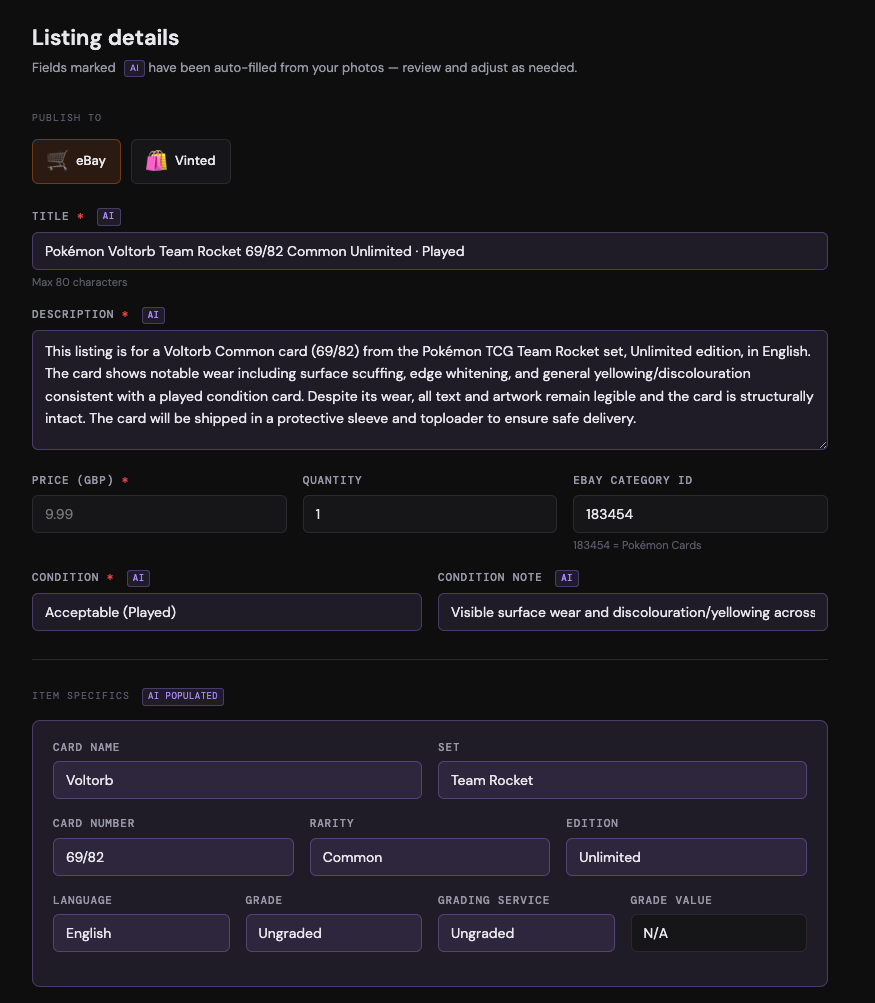
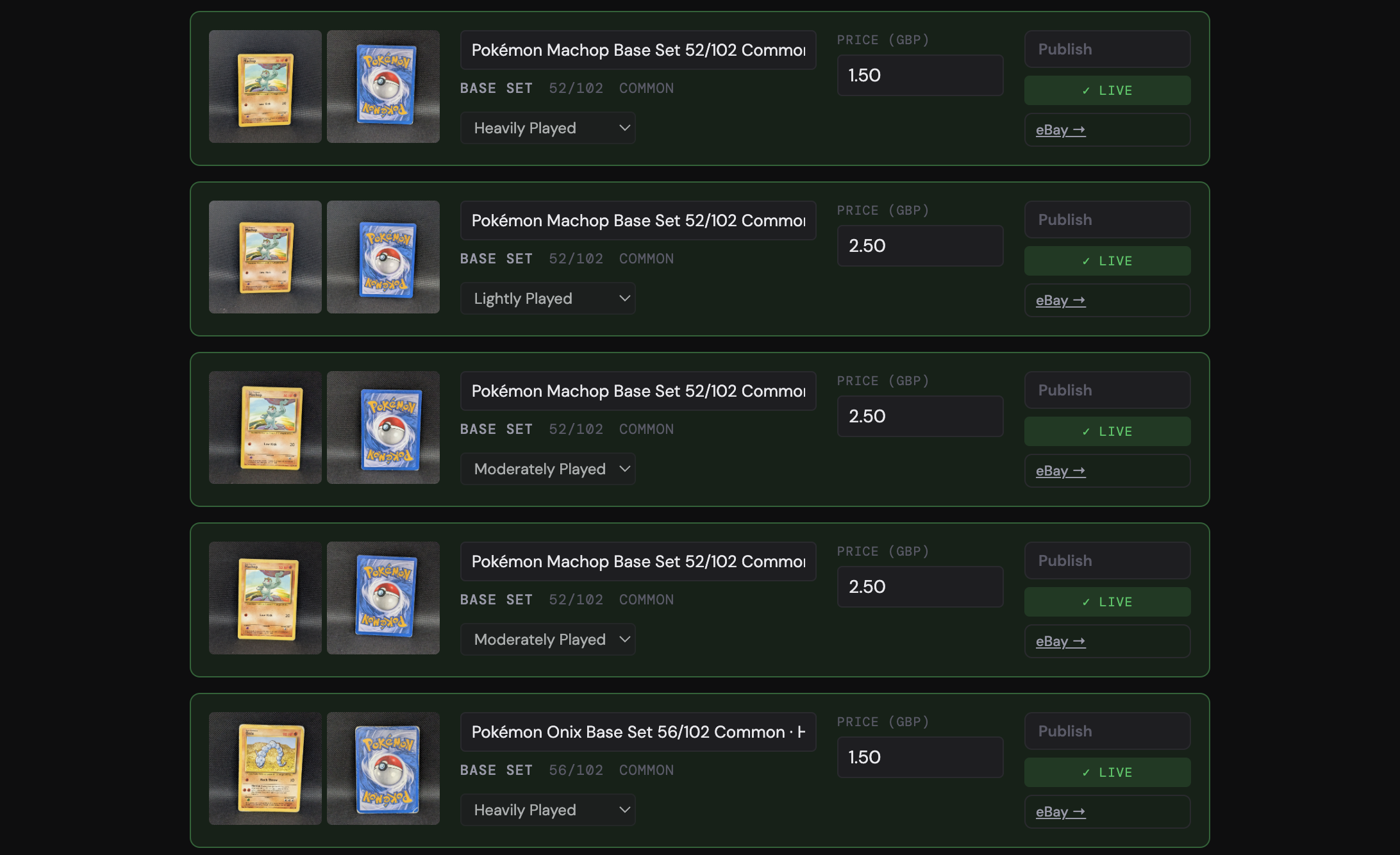
Once the photos are ingested, the AI component takes over. This phase, while the slowest, is arguably the most crucial and valuable. The app dispatches each pair of photos to Claude, which meticulously analyzes them to extract structured data essential for a comprehensive listing. This includes the card’s name, set, card number, rarity, edition, language, holographic status (holo or non-holo), and, most critically, its condition. The condition assessment, a historically subjective and time-consuming task for human sellers, is now largely automated by Claude. Joe previously spent considerable time squinting at card corners and edges to determine if a card was "Lightly Played" or "Heavily Played." With Claude, the AI makes the initial call, requiring only a quick human confirmation. While occasional adjustments are necessary due to lighting inconsistencies or photographic nuances, Claude’s accuracy is high enough that Joe no longer manually scrutinizes every field, trusting the AI for most of the "easy stuff" and focusing his attention only on areas he might otherwise second-guess.
This AI-driven data extraction populates every field on the listing form: title, description, condition notes, item specifics, set, number, rarity, and language. The only remaining manual input is the price. Joe is actively exploring card market data APIs like TCGdex to integrate real-time market data, aiming to automate even the pricing step based on recent sales and active listings, thereby eliminating the last human judgment point in the bulk flow. The cost-effectiveness of this AI integration is remarkable; despite processing over 1,310 products, Joe estimates his total expenditure on Claude image analysis to be a mere $15 to $20, underscoring the immense value of AI for small-scale operations.
Strategic Social Media Integration: The Power of the Buffer API
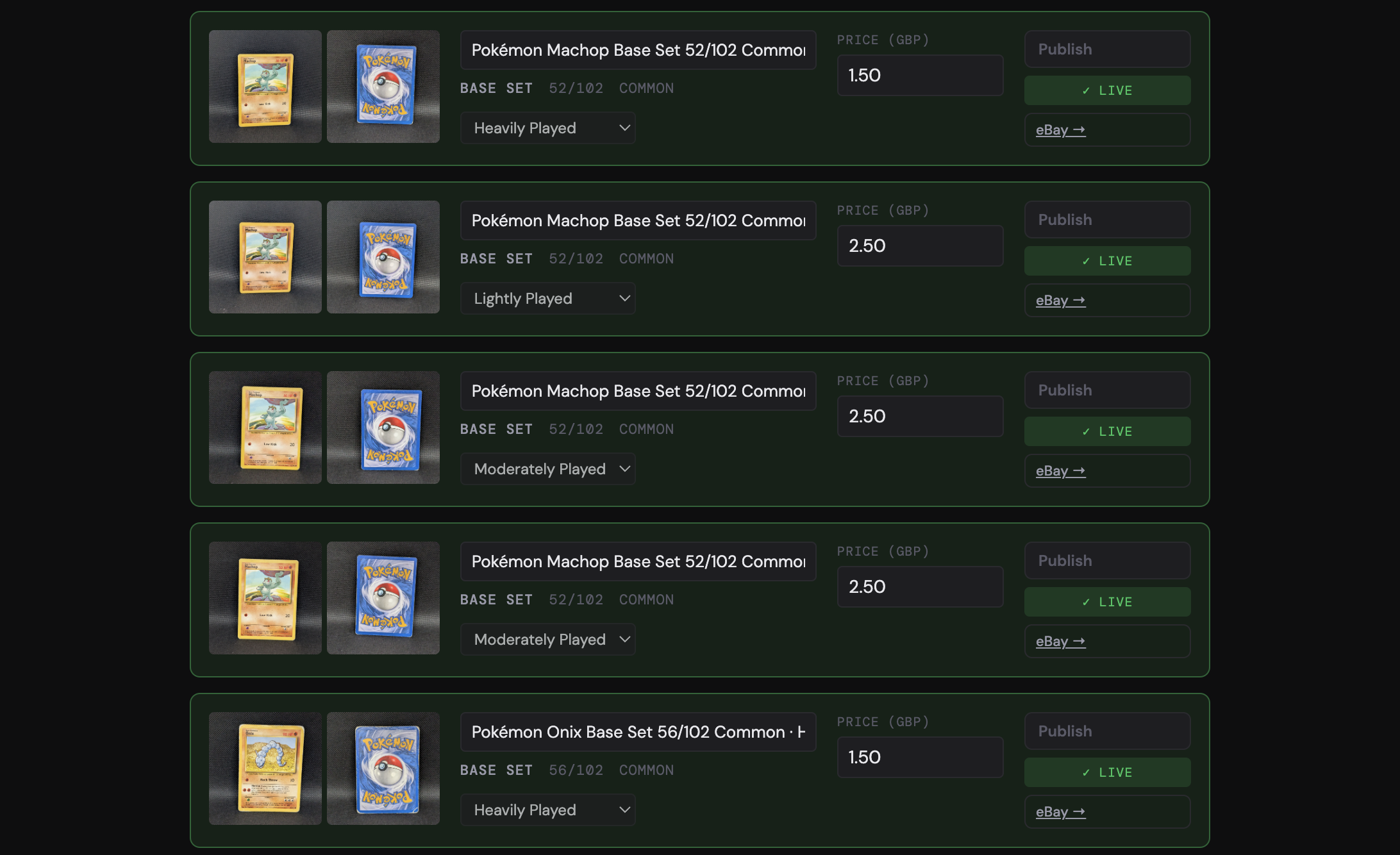
Understanding the paramount importance of social media in the vintage Pokémon card market, Joe engineered his app to integrate seamlessly with the Buffer API. This integration transformed the selling process, ensuring that social promotion was an intrinsic part of listing creation, not an afterthought. When prices are set, and Joe clicks "publish all priced ones," two sequential actions are triggered. First, the app creates the product listing on the chosen e-commerce platform (initially eBay, now primarily WooCommerce) via its respective API. This step is critical as it generates the live product URL required for the subsequent social media post.
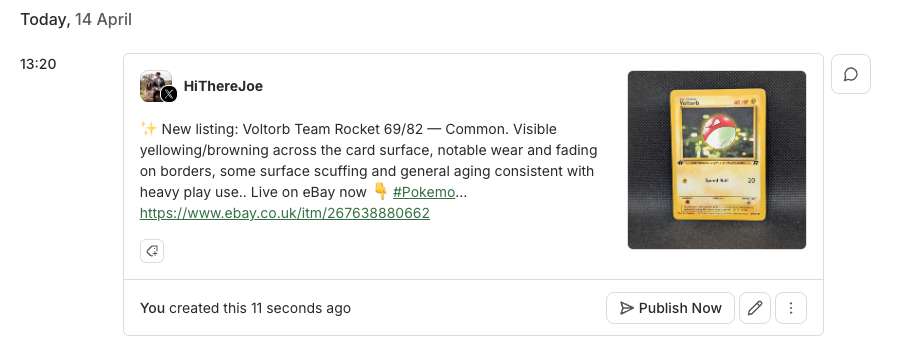
Following the listing creation, the app automatically constructs a social media post, incorporating the card’s image, title, description, and the direct link to the live product page. This post is then queued through the Buffer API to Joe’s selected social channels, predominantly Threads and Instagram. Buffer’s intelligence ensures that these posts are scheduled and published at optimal times when Joe’s audience is most active, based on proprietary "Best Time to Post" data. This contrasts sharply with manual posting, which often occurs haphazardly when a seller finishes photographing a stack of cards, potentially at off-peak hours like "11 pm on a Sunday."
The implementation is tailored for each platform: Threads posts include a direct, clickable link to the product page, often prefaced with "now on our store," while Instagram posts, which do not support clickable links in the body, direct users to the "link in bio." This streamlined workflow consolidates tasks that previously spanned three separate applications—the marketplace, a photo folder, and a mental note for social media—into a single, integrated approval process. Joe reports having over 1,000 posts currently queued in Buffer, demonstrating the sustained, automated marketing pipeline his system creates. Despite the high degree of automation, Joe wisely retained a "single-card mode" for rare or valuable items, allowing for more deliberate photo review, description refinement, and thoughtful pricing before publication, acknowledging that full automation isn’t always desirable for high-value collectibles.
Building a Brand: The Evolution to "Shadowless" and WooCommerce
While eBay served as a valuable starting point for Joe’s selling venture, providing an established marketplace and buyer base, he eventually recognized the strategic importance of building his own brand and platform. This led to the creation of "Shadowless," his proprietary WooCommerce store. The modular design of his custom application proved instrumental in this transition; adding WooCommerce support required only about half a day of development work, demonstrating the flexibility and forward-thinking architecture of his solution. Existing eBay listings remain active, with older Buffer posts still pointing to them, but new listings are primarily directed to Shadowless.
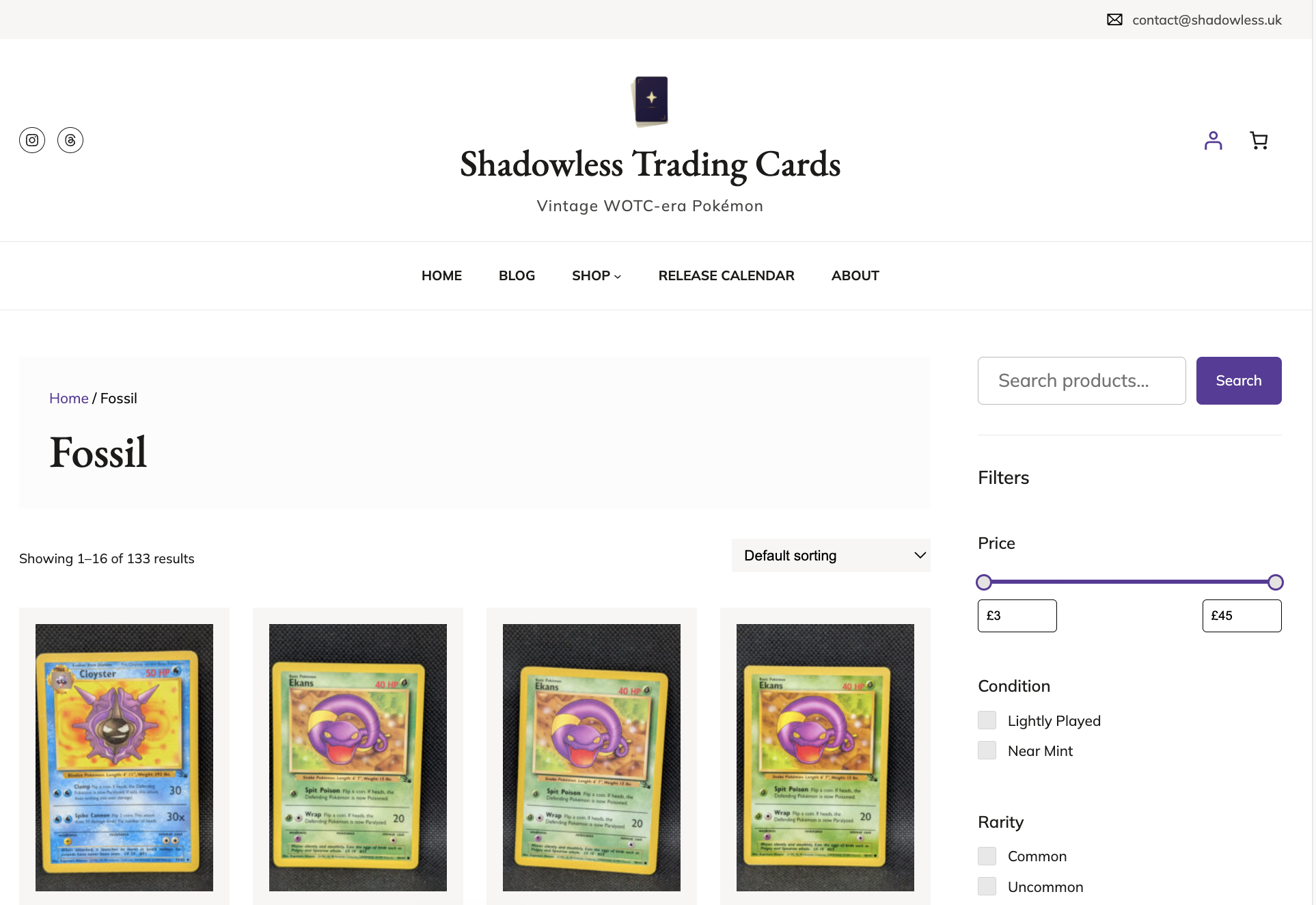
The true power of Joe’s system becomes evident in the customer experience offered by Shadowless. All the detailed information extracted by Claude AI—set, card number, rarity, edition, language—is transformed into filterable attributes on the store. This allows buyers to precisely narrow down their search, for example, to "Rare cards from the Fossil set," creating a sophisticated browsing experience akin to a specialized card shop rather than a generic online listing. These attributes, which would have been prohibitively time-consuming to input manually for thousands of cards, are now automatically generated, significantly enhancing the store’s functionality and user-friendliness.
Establishing his own store also means Joe is solely responsible for marketing and driving traffic, a "whole other project" in itself. However, the foundational processes of listing and social promotion were already in place and fully automated the day Shadowless launched, thanks to the robust app he developed. This strategic shift underscores a growing trend among niche sellers to move beyond reliance on third-party marketplaces, seeking greater control over branding, customer experience, and data.
Broader Implications for Small Businesses and E-commerce
Joe’s innovative approach to selling vintage Pokémon cards offers profound takeaways for any small business or individual entrepreneur dealing with physical inventory. His journey exemplifies how bespoke technological solutions can democratize advanced capabilities, previously the domain of larger enterprises, for individual sellers. The core principle—integrating product listing and promotion into a single, seamless workflow—is universally applicable. By wiring these processes together, the time investment per item drastically reduces, transforming stagnant inventory into active, visible products.
The synergy of AI for data extraction, robust e-commerce platforms, and intelligent social media management tools creates a powerful ecosystem. This model allows entrepreneurs to scale their operations without proportionally increasing manual labor, freeing up valuable time for strategic tasks like sourcing, market analysis, or brand building. This shift represents a significant evolution in small business e-commerce, moving beyond basic online storefronts to highly optimized, intelligent selling systems. Industry experts have increasingly highlighted the role of AI in streamlining operations for small and medium-sized enterprises (SMEs), noting that custom integrations, while initially requiring development effort, yield substantial long-term dividends in efficiency and competitive advantage. Joe’s experience, with minimal AI costs for extensive processing, serves as a testament to the accessibility and power of current AI technologies for individual developers.
The Road Ahead: Refining Automation and Addressing New Challenges
Despite the significant advancements, Joe’s work on his app is ongoing, with two primary areas targeted for future enhancement. The first, as mentioned, is the automation of pricing. The vintage card market is highly dynamic, with prices fluctuating constantly. Joe’s current manual pricing method, while careful, remains the last human-dependent step in his bulk workflow. His exploration of market data APIs like TCGdex aims to introduce data-driven pricing suggestions, ensuring competitive and fair valuations without constant manual research. This integration would eliminate the final manual judgment in the bulk process, pushing the boundaries of full automation.
The second challenge involves stock management and synchronization. Occasionally, a card might sell from the store before its corresponding scheduled social media post is published. This leads to posts promoting items that are no longer available, creating a frustrating experience for potential buyers. Joe is contemplating a script that actively monitors stock changes on his store and, if an item sells out, automatically tracks down and deletes or modifies the corresponding queued Buffer post. This task presents its own set of complexities, particularly in ensuring real-time synchronization across disparate systems, but it represents the next logical step in perfecting the end-to-end sales pipeline.
Conclusion: A Blueprint for the Modern Digital Entrepreneur

Joe’s journey from a Pokémon card collector to an innovative e-commerce entrepreneur stands as a compelling case study in leveraging technology to overcome logistical challenges in niche markets. By custom-building a Mac application that integrates AI for detailed product analysis and the Buffer API for strategic social media promotion, he has not only streamlined his own selling process but also provided a tangible blueprint for other individual sellers. The efficiency gains are undeniable: automating photography sorting, AI-driven data extraction for hundreds of specific card attributes, intelligent condition assessment, and scheduled social media outreach, all culminating in a sophisticated, filterable online store.
This initiative underscores the power of creative problem-solving and accessible technology in empowering individual creators and small businesses to compete effectively in the digital landscape. It demonstrates that with thoughtful integration of tools like AI and APIs, even a solo entrepreneur can manage a vast inventory, maintain a consistent marketing presence, and offer a professional, tailored shopping experience, ultimately redefining what’s possible in personalized e-commerce. Joe’s evolving system highlights a future where smart automation is not just an advantage but a fundamental component of successful niche online ventures.