
 Indra Kusuma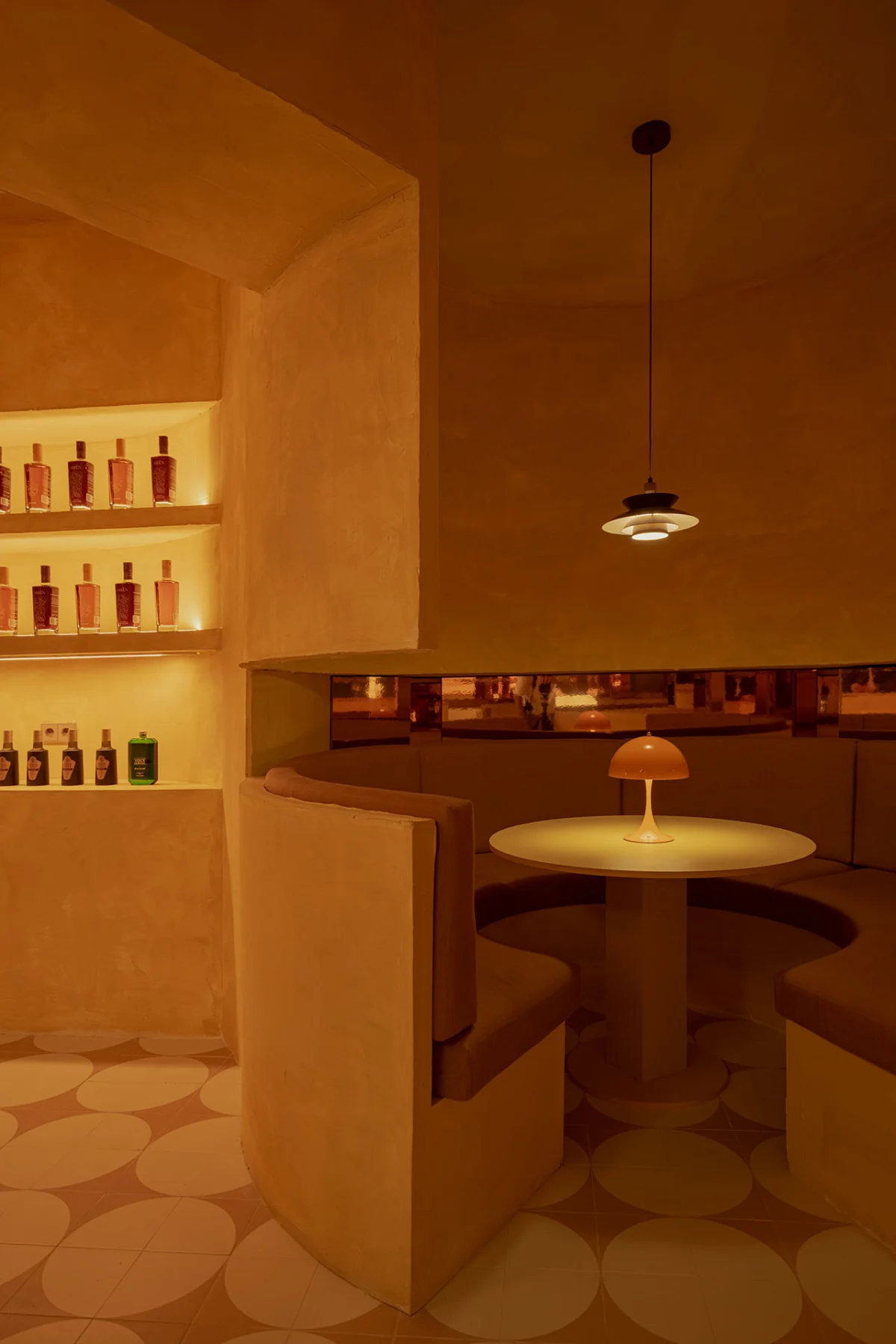
Souvenirs, often relegated to the realm of novelties or even dismissed as mere clutter—postcards, magnets, snow globes—are the small, ephemeral artifacts that compress a place into something portable. However, at their most potent, souvenirs transcend this superficiality, performing a more profound function: they preserve the elusive feeling of a destination long after the immediate moments have faded. They encapsulate atmosphere, embody exaggeration, fuel fantasy, and distill longing into a tangible object. Cateto Club, an experimental hospitality space nestled on Spain’s sun-drenched Costa del Sol, boldly extends this logic, embedding it directly into its architectural fabric. Far from being a mere replica or a purely nostalgic revival, it stands as a spatial memento, meticulously crafted from collective memory, hedonistic pleasure, and the rich vernacular imagination of a coast that once instinctively understood leisure as a distinct architectural language.
Historical Tapestry: The Golden Age of Costa del Sol Design
To fully appreciate the innovative spirit of Cateto Club, one must delve into an especially vibrant and charged chapter of Spanish design history. The 1960s marked a pivotal era for the Costa del Sol, transforming it into an international stage for burgeoning tourism, idyllic escapism, and a meticulously curated sense of freedom. Following decades of post-Civil War isolation and economic hardship, Spain, under the Franco regime, strategically opened its doors to mass tourism as a means of economic development and international re-engagement. The Costa del Sol, with its abundant sunshine and picturesque coastline, quickly became a prime destination, attracting millions of visitors from Northern Europe seeking sun, sea, and a taste of the exotic.
This tourism boom fueled an unprecedented explosion of construction and architectural innovation. Clubs, hotels, and distinctive roadside landmarks, strategically positioned along the N-340 highway, were conceived not merely as functional structures but as theatrical backdrops. Their designs were inherently performative, intended to be seen, photographed, remembered, and subsequently mythologized by an eager international audience. Facades often flirted with overt spectacle, employing bold forms, vibrant colors, and playful motifs to capture attention. Simultaneously, their interiors offered a sanctuary, a vibrant refuge from the more restrictive social and political realities prevalent in other parts of Spain and indeed, Europe. Each establishment meticulously crafted small, immersive spaces infused with sensuality, evocative color palettes, pulsating music, and a palpable sense of release, fostering an atmosphere of uninhibited enjoyment and modern leisure. This period, often characterized by a blend of international modernism and local vernacular, created a unique architectural lexicon that was both glamorous and deeply rooted in its context. The economic impact of this period was immense, with tourism becoming a cornerstone of the Spanish economy, driving infrastructural development and shaping the region’s identity. By the late 1960s, visitor numbers to the Costa del Sol had skyrocketed, transforming once sleepy fishing villages into bustling international resorts.
A Dialogue of Influences: High Design Meets Vernacular
Cateto Club, rather than offering a simplistic pastiche of this bygone era, engages with it in a nuanced and sophisticated manner. Designer Alejandro Cateto’s approach is a deliberate and thoughtful reinterpretation, elevating what might traditionally be dismissed as "souvenir architecture" to a position of equal cultural dignity alongside more academically sanctioned design movements. The project openly acknowledges a diverse array of influences, creating a compelling dialogue between globally recognized high design and cherished local vernacular forms.
Among its international inspirations, Cateto Club cites the visionary works of design luminaries such as Mario Bellini and Verner Panton, whose radical approaches to form, color, and modularity defined a significant part of 20th-century design. The influence of pop futurism, with its optimistic embrace of technological advancement and bold, often whimsical aesthetics, is also evident, alongside the broader tenets of radical Italian design, which challenged conventional notions of function and beauty. These movements, characterized by their experimental nature and rejection of rigid orthodoxies, provide a theoretical framework for Cateto Club’s own adventurous spirit.
Crucially, Cateto Club does not merely adopt these international references; it places them in a robust and respectful dialogue with the specific, beloved leisure architecture of its immediate surroundings. This includes local landmarks such as the Aqua-Tec diving club in Fuengirola, a testament to the region’s embrace of modern leisure facilities; the imposing, yet evocative brutalist Three Towers of Torremolinos, which once symbolized a daring modernity; and the Ciudad Sindical de Vacaciones Tiempo Libre in Marbella, a large-scale holiday complex that encapsulated the era’s vision of organized leisure. Furthermore, the project draws inspiration from the simpler, rough-hewn, whitewashed aesthetic found in iconic establishments like the Marbella Club and Hotel Miami, which, despite their luxury or humble origins, profoundly shaped the coastal identity.
This deliberate juxtaposition challenges the conventional hierarchies within architectural history, which frequently reserves its serious academic attention for the works of renowned "starchitects," collectible design objects, and neatly defined, polished movements. Historically, the architecture of tourism, nightlife, and local pleasure—often seen as transient, commercial, or even kitsch—has been relegated to the periphery, serving merely as a backdrop rather than a subject worthy of scholarly analysis. Cateto Club firmly rejects this distinction, asserting that the buildings most vividly etched into collective memory are not always those validated by academic institutions. Instead, they might be the peculiar door of a forgotten club, a strange roadside entrance glimpsed from a passing car, the distinct texture of a patio wall, or the neon-lit threshold that once marked the exhilarating boundary between mundane everyday life and temporary abandon. By bringing these local, often overlooked structures into conversation with celebrated international design, Cateto Club pioneers a more inclusive and emotionally resonant understanding of architectural heritage, affirming that these "excessive, specific, and emotionally legible" spaces are vital shapers of collective experience.
The Cylindrical Language: Form, Function, and Feeling
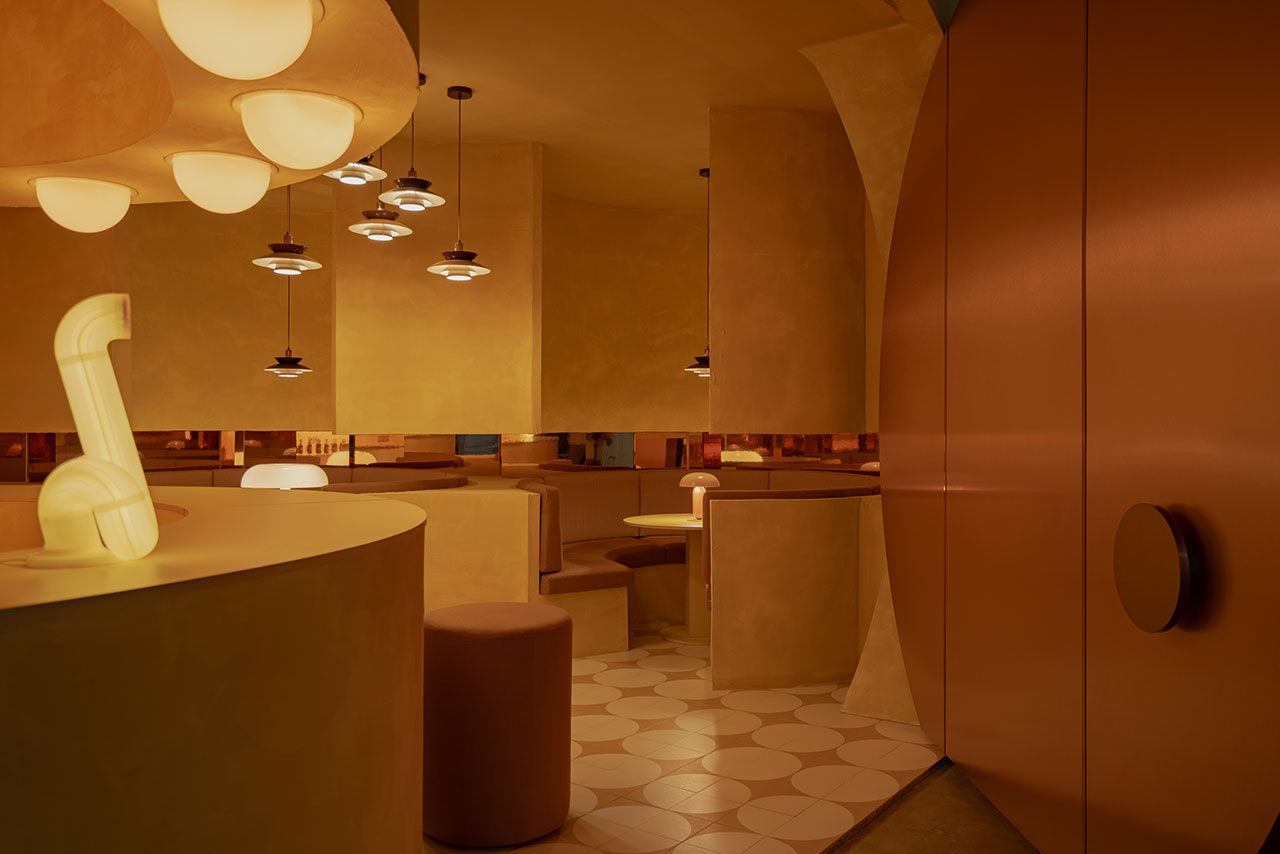
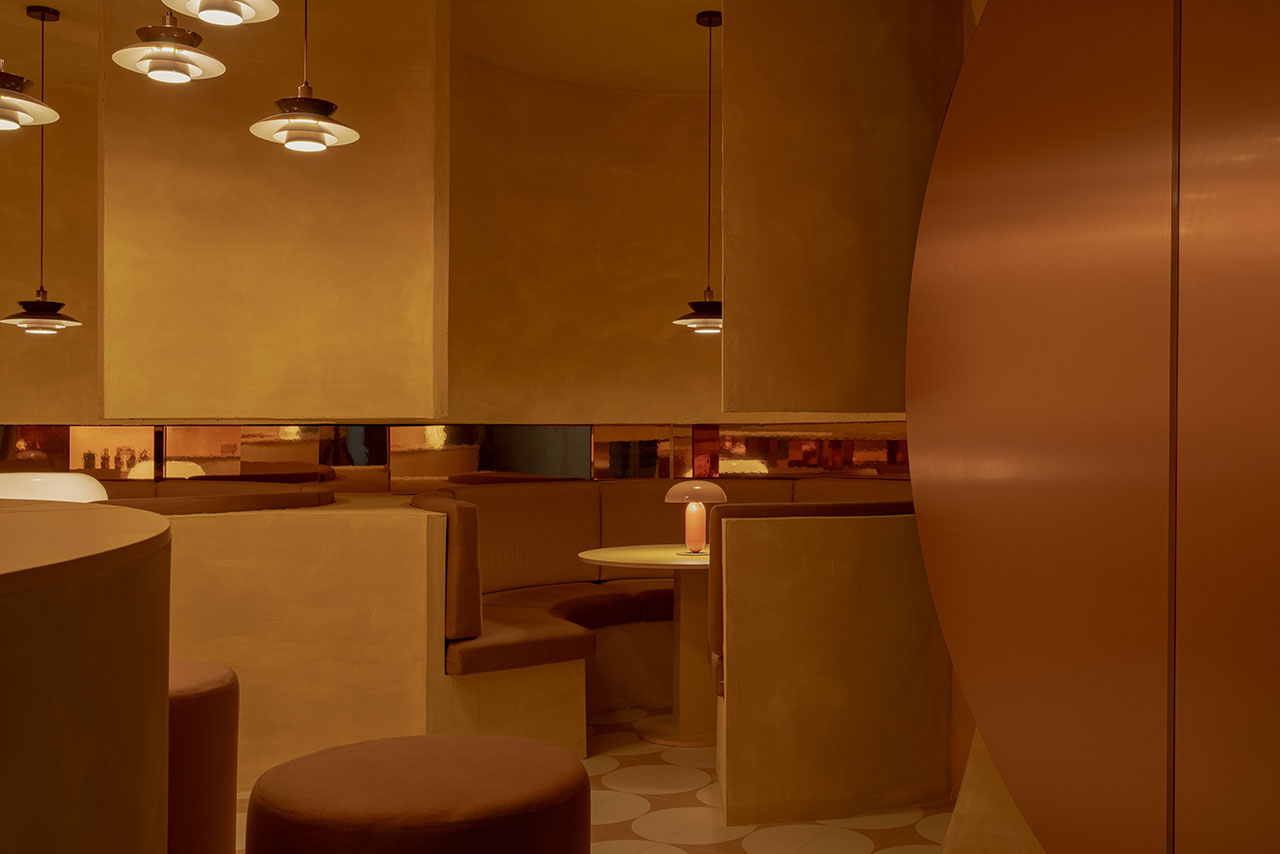
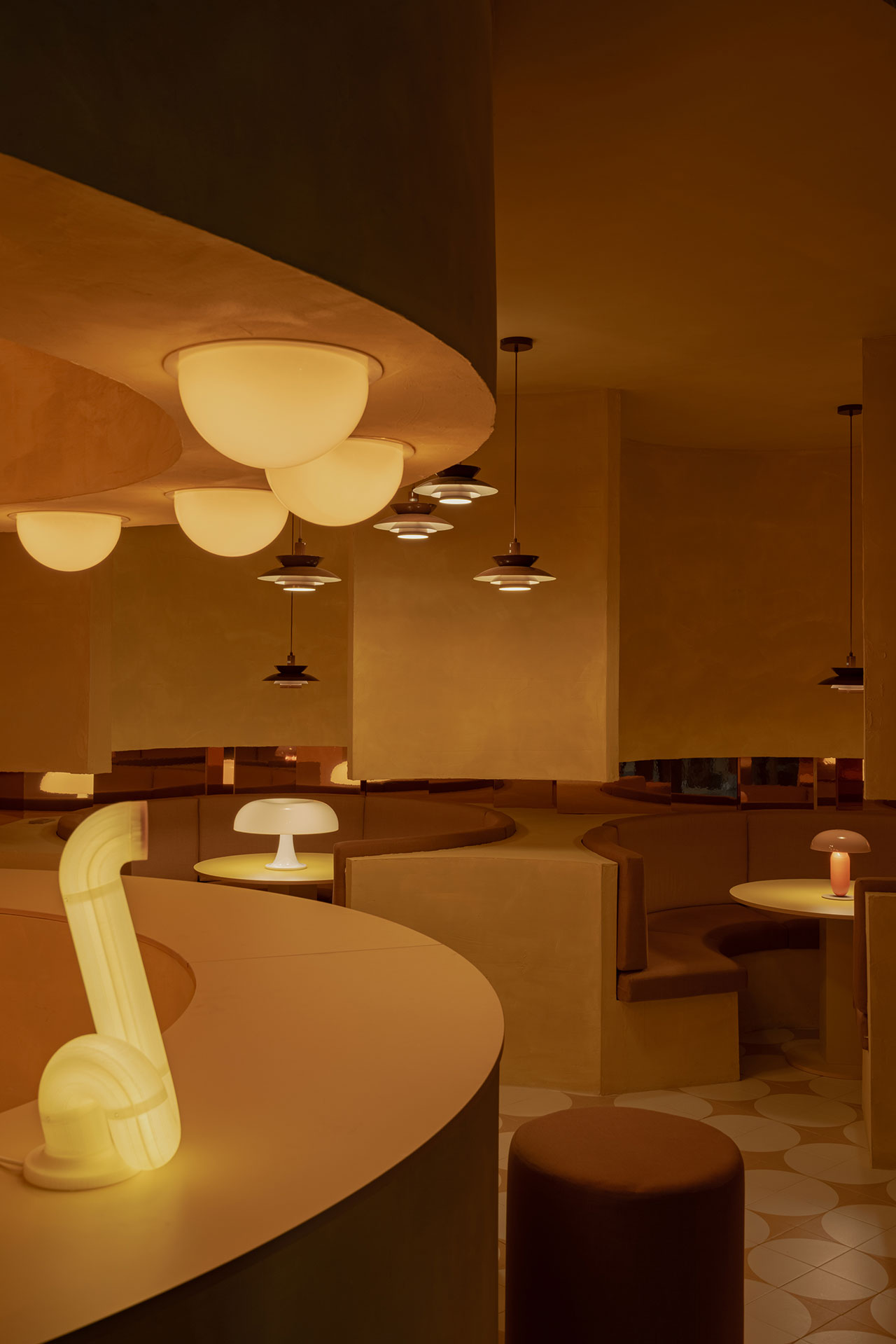
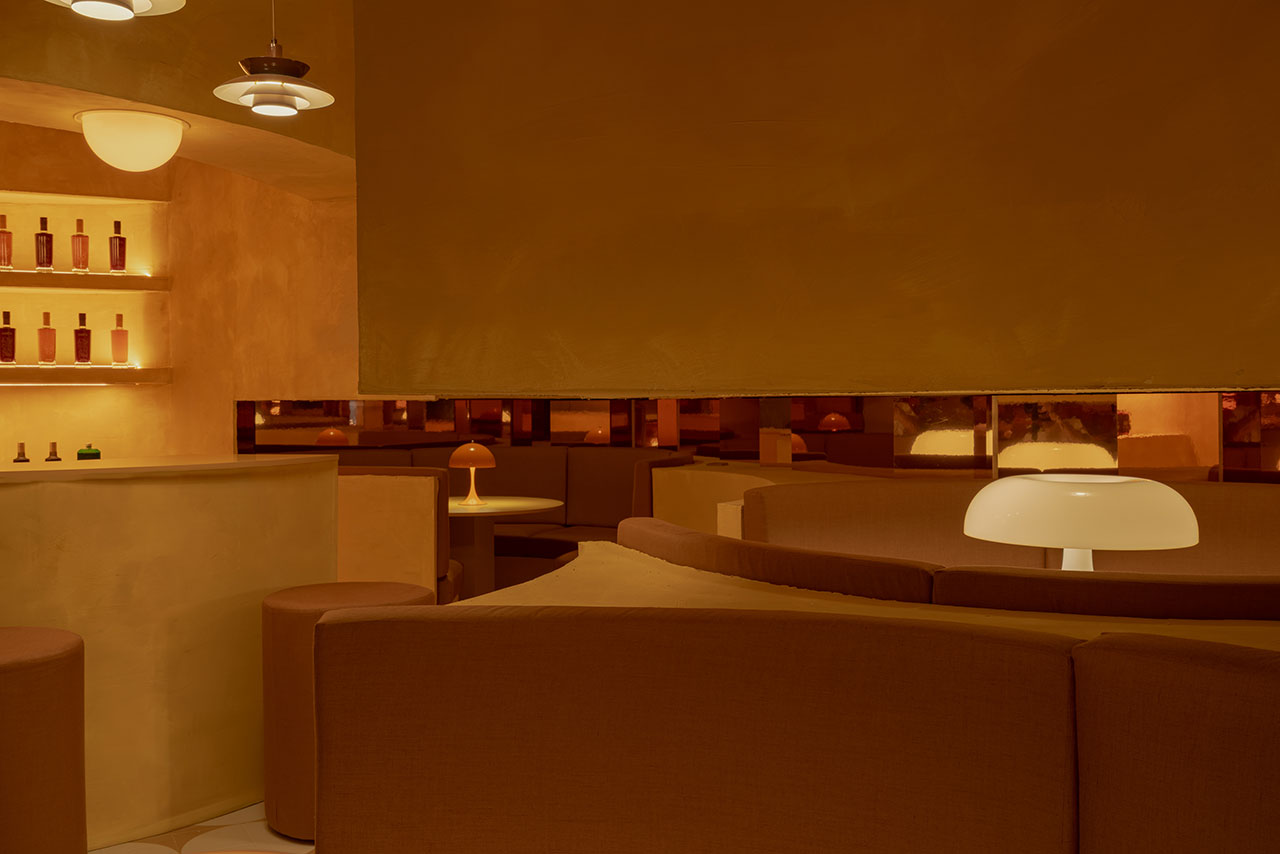
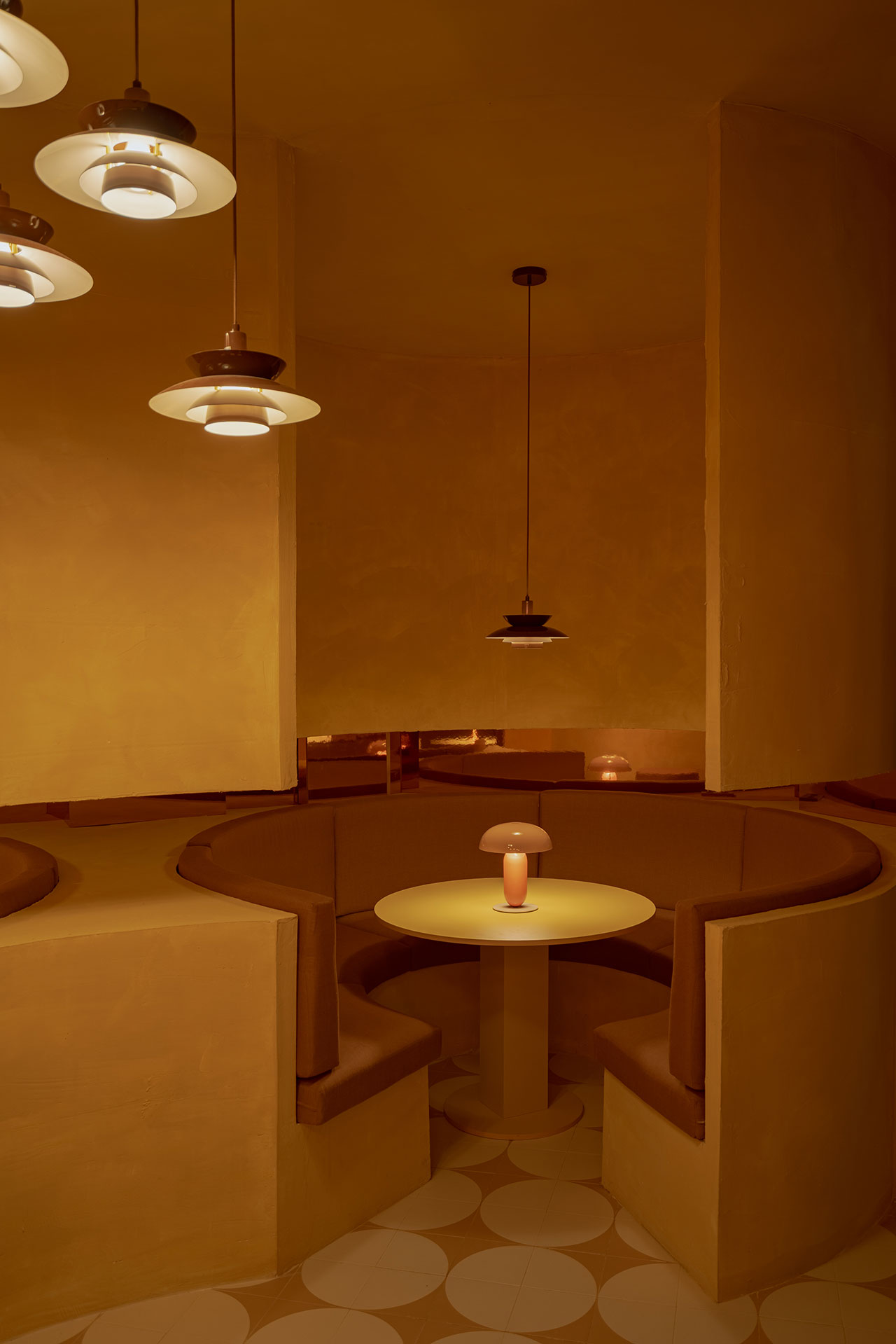
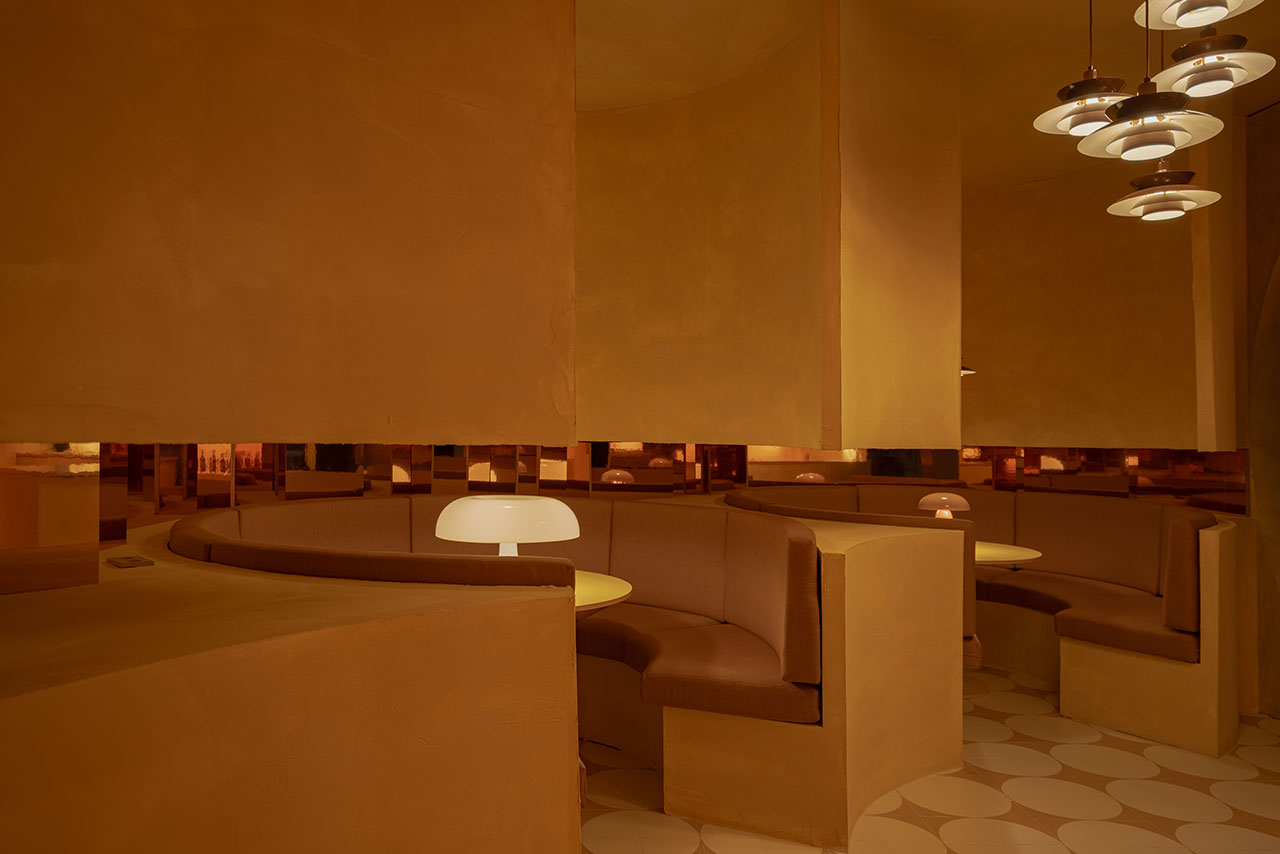
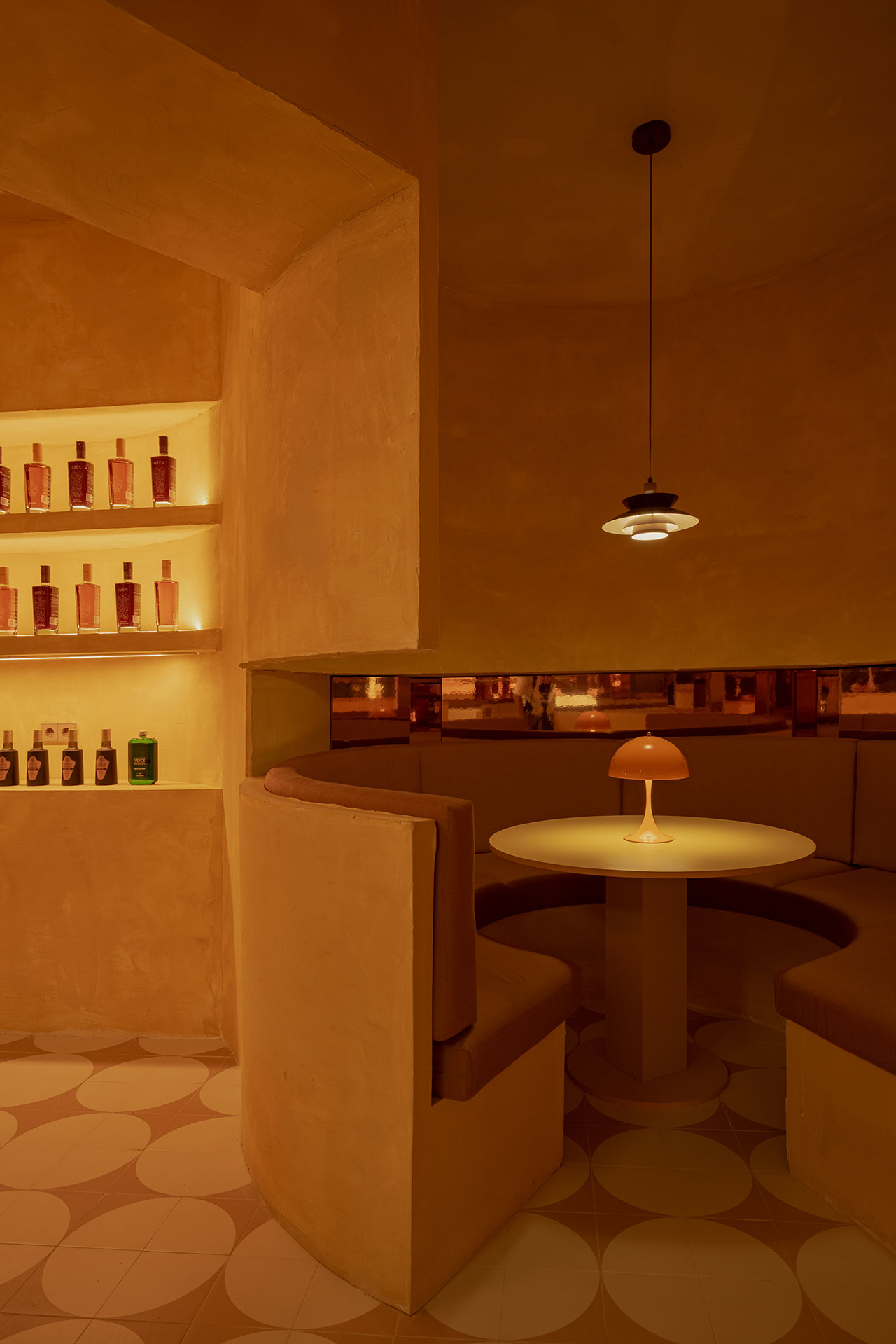
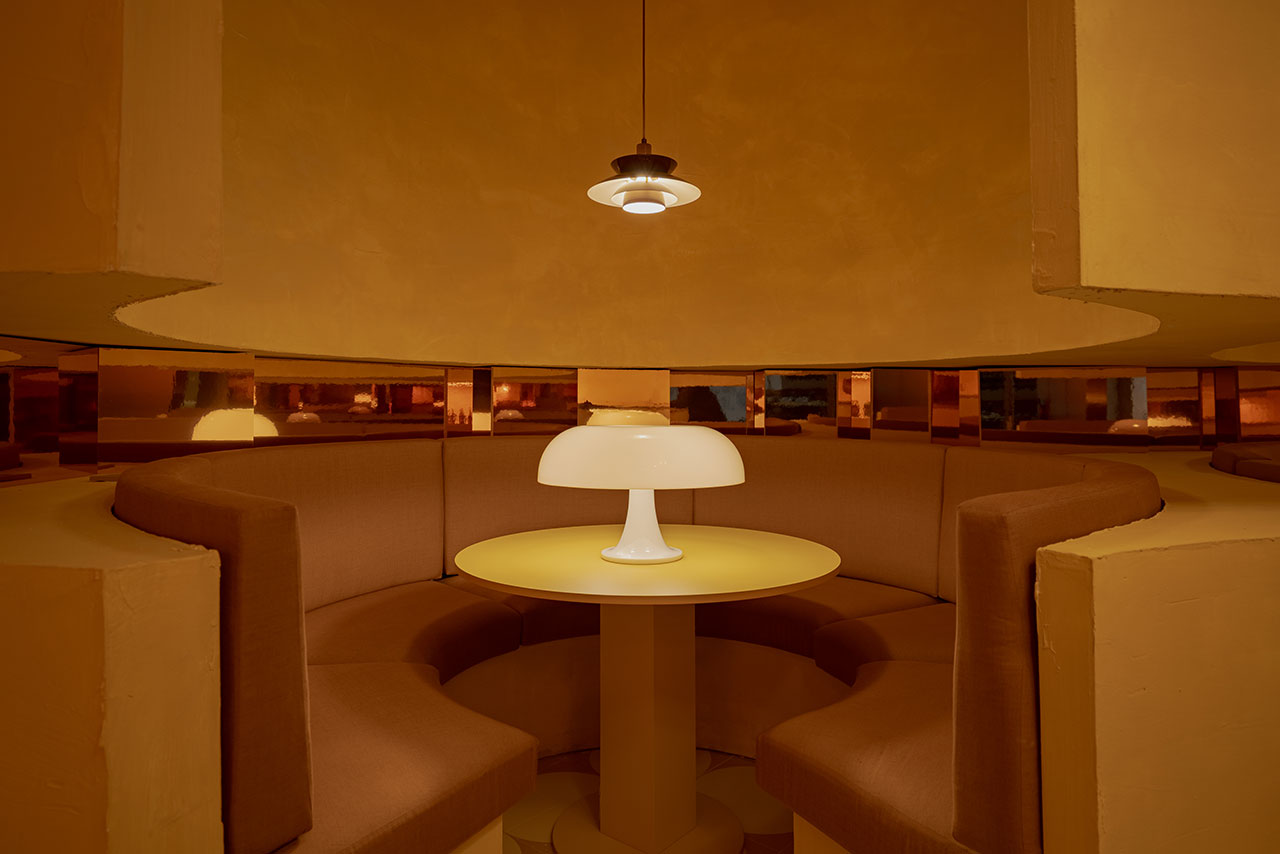
At the heart of Cateto Club’s compelling design lies a singular, organizing gesture: the cylinder. This fundamental geometric form is explored with a near-obsessive focus throughout the space, becoming a pervasive spatial language rather than a mere decorative motif. Its presence is multifaceted and deliberate, appearing as a void in the inviting curves of seating alcoves, providing structural mass in the solid forms of the bar and its accompanying stools, and defining thresholds in the sculptural lines of doors and openings. The cylinder even informs the intricate patterns across the ceramic floor, grounding the entire design in a cohesive visual rhythm. Furthermore, it manifests as sculptural lighting, exemplified by the elegant Sentry Sculpture Light designed by Ewan Lamm for Ultramar Studio, which radiates a warm, inviting glow.
The choice of the cylinder is far from arbitrary. It embodies a fascinating duality, feeling both primitive in its elemental simplicity and strikingly futuristic in its smooth, continuous lines. It manages to be soft and inviting in its curved forms, yet monumental and imposing in its scale and repetition. This versatility allows it to transition seamlessly between domestic comfort and theatrical grandeur, imbuing the space with a rich, layered character. Critically, this deeply integrated geometric approach enables the project to circumvent the pitfalls of superficial theming. Instead of merely applying retro references as decorative elements, Cateto Club transforms geometry itself into a potent spatial language. This language fluidly articulates the relationships between furniture, architecture, ornament, and the overarching atmosphere, creating an immersive environment that is both intellectually rigorous and sensually engaging. The consistent application of this motif contributes to a sense of unity and timelessness, distinguishing it from fleeting trends and creating a memorable, singular identity for the club.
The Grand Entrance: A Statement in Audacity
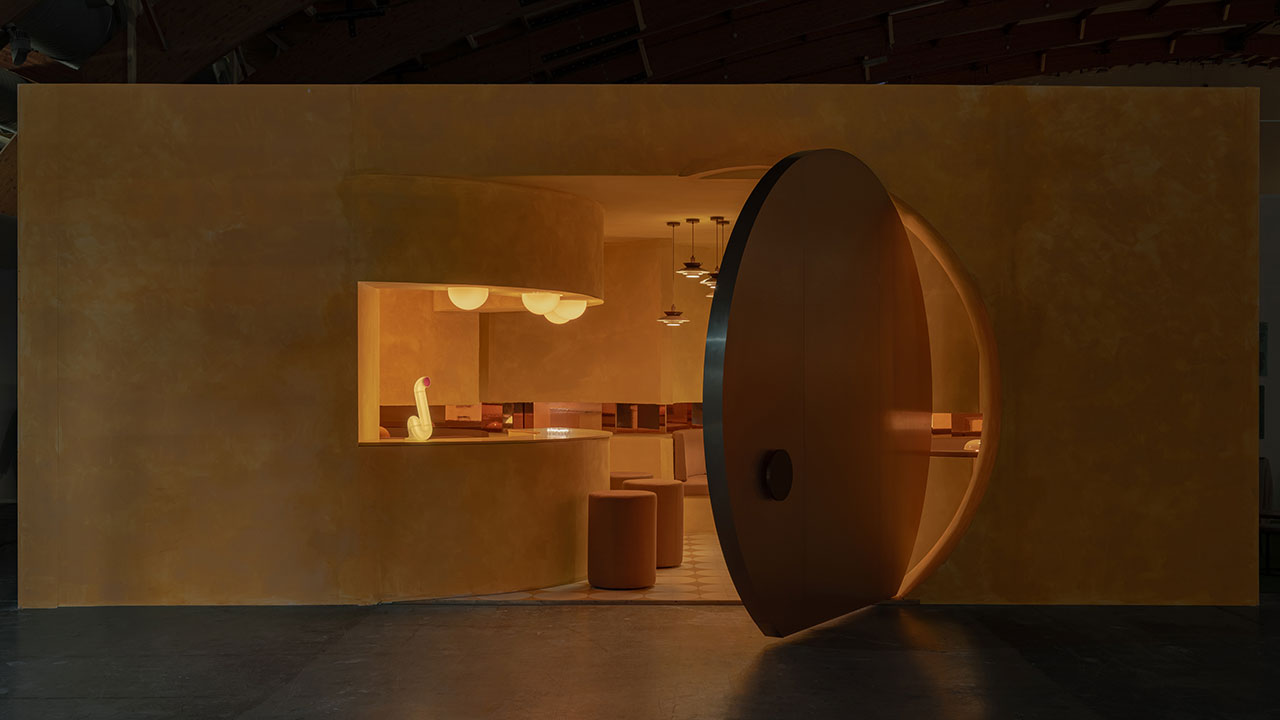
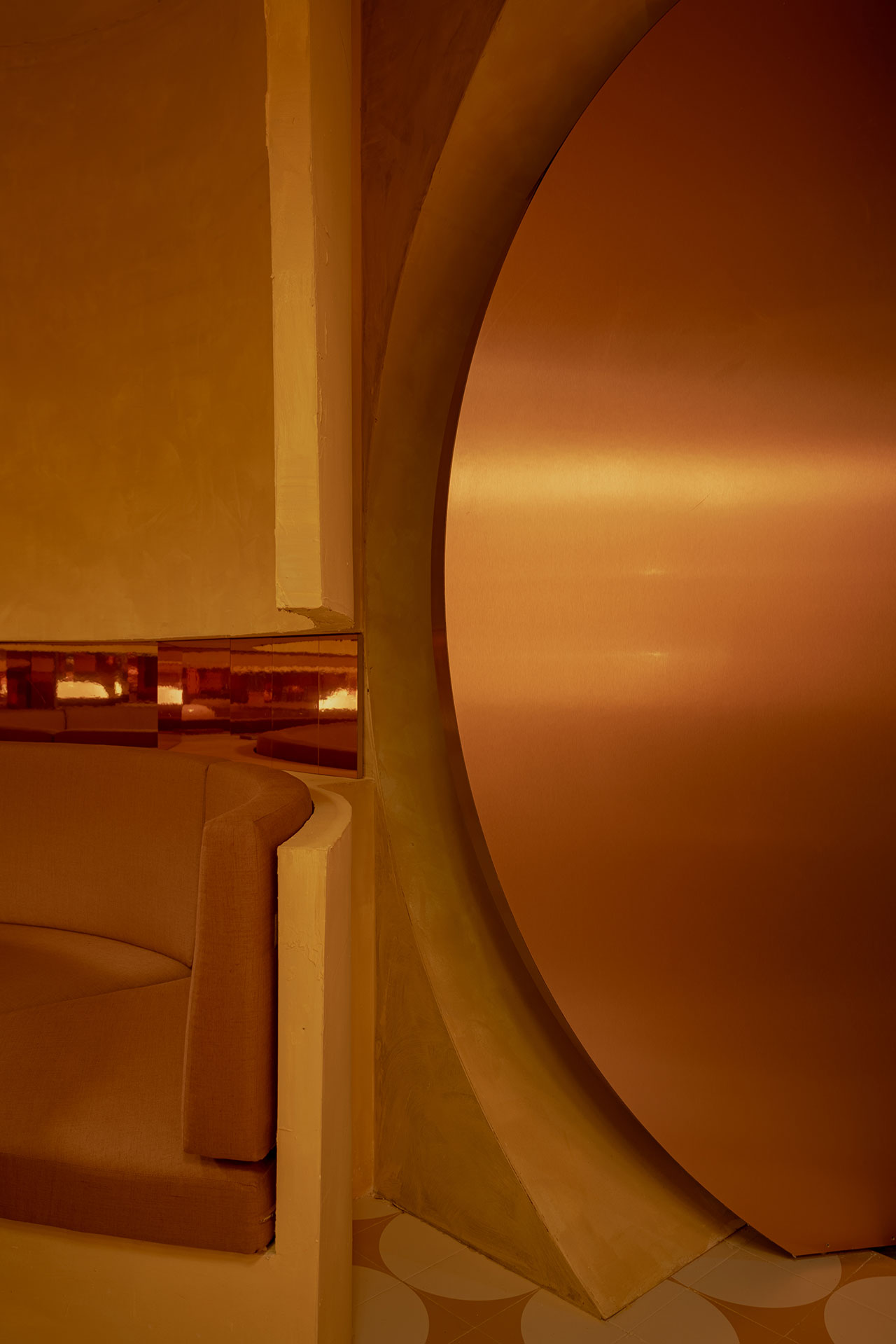
Perhaps the most emphatic declaration of Cateto Club’s unique architectural language is its extraordinary circular entrance door. Measuring an imposing three meters in diameter, this threshold is impossible to ignore, serving as a knowing piece of architectural theater. Its sheer scale and frontal force are almost cinematic, immediately signaling that one is entering a space designed for spectacle and experience. Yet, despite its monumentality, the door avoids feeling heavy or institutional. Instead, it exudes a playful, almost flirtatious quality, beckoning visitors inward with an inviting intrigue.
This audacious entrance is a direct, yet reinterpreted, nod to the flamboyant nightclub facades that once dotted the coastal towns of Montemar and Torremolinos during their heyday. In those vibrant decades, architecture often functioned as a form of roadside theater, its exaggerated forms and eye-catching designs strategically engineered to lure passing drivers and curious tourists. These facades were not subtle; they were bold, expressive, and unapologetically designed to create an immediate impact and a sense of anticipation.
In today’s global hospitality landscape, where a pervasive trend sees many interiors optimized primarily for algorithmic recognition—designed to be aesthetically pleasing in social media feeds—the unfortunate consequence is often a visual interchangeability. Many establishments, despite their aspirations for uniqueness, ultimately blend into a homogenized aesthetic, sacrificing genuine character for digital shareability. In this context, the kind of unbridled audacity exhibited by Cateto Club’s grand entrance feels not just refreshing, but newly radical. It challenges the prevailing norms by prioritizing an immediate, visceral, and unforgettable physical experience over mere digital appeal, asserting the enduring power of architecture to surprise, delight, and define a sense of place.
Designer’s Vision and Architectural Philosophy
Alejandro Cateto’s vision for Cateto Club is clearly articulated through its design, embodying a philosophy that challenges conventional architectural canons and champions a more inclusive appreciation of built environments. His work implicitly argues for the cultural significance of spaces typically overlooked by mainstream architectural discourse. By meticulously crafting a space that draws from both revered international design principles and the often-dismissed vernacular architecture of local leisure, Cateto elevates the "architecture of tourism, nightlife, and local pleasure" from the realm of mere kitsch or background scenery to a position of profound cultural dignity.
Cateto’s intent appears to be rooted in the belief that the most memorable and impactful buildings are not necessarily those that adhere to strict academic guidelines or minimalist austerity. Instead, they are often the ones that are emotionally legible, infused with a distinct personality, and capable of evoking strong feelings. He seems to prioritize the creation of immersive experiences that tap into collective memory and desire, rather than merely producing functional or aesthetically "correct" spaces. This approach reflects a desire to reconnect with a time when leisure architecture was bold, expressive, and integral to the vacation experience, acting as a direct counterpoint to the bland standardization seen in much contemporary hospitality design. Through Cateto Club, the designer asserts that architecture can, and should, be excessive, specific, and deeply resonant, reflecting the joy, fantasy, and longing that define travel and escapism.
Implications for Contemporary Hospitality and Design Discourse
Cateto Club’s innovative approach carries significant implications for both contemporary hospitality design and broader architectural discourse.
Redefining Architectural Value
The project acts as a powerful catalyst for redefining what constitutes valuable architecture. By consciously blurring the lines between "high design" and local, popular vernacular, Cateto Club prompts architectural historians and critics to re-evaluate their traditional frameworks. It argues that the emotional resonance, cultural memory, and social function of a building—particularly in the context of leisure and entertainment—are as critical as its formal innovation or adherence to established stylistic movements. This could lead to a more holistic and inclusive appreciation of built heritage, moving beyond purely academic criteria.
Future of Experiential Design
In an era where many hospitality spaces struggle for differentiation amidst a sea of similar offerings, Cateto Club provides a compelling model for truly experiential design. Its commitment to a unique spatial narrative, an audacious aesthetic, and a deep connection to local history offers a blueprint for creating destinations that are not only visually striking but also deeply memorable and emotionally engaging. This emphasis on crafting a distinct "afterglow" for visitors, rather than just a transient stay, could inspire a new wave of hospitality projects that prioritize authentic character and immersive storytelling. It suggests that success in the future hospitality market may lie in creating spaces that defy easy categorization and instead offer singular, unforgettable experiences that resist algorithmic homogenization.
Cultural Preservation through Innovation
Cateto Club demonstrates a powerful method of cultural preservation that avoids mere replication or superficial nostalgia. Instead, it preserves the spirit and memory of a specific architectural epoch—the 1960s Costa del Sol—through imaginative reinterpretation. By drawing inspiration from both the grand gestures and the humble details of that era, and synthesizing them with contemporary design sensibilities, the project keeps a vital piece of regional history alive and relevant. This innovative approach ensures that architectural memory is not static but a dynamic source for future creativity, allowing past aesthetics to inform new experiences without being confined to literal imitation.
Economic Impact and Regional Identity
While not explicitly stated, the creation of such a distinctive establishment is poised to attract a discerning clientele—those who value unique design, cultural depth, and authentic experiences. This could have a positive economic impact on the local area, drawing tourism that seeks more than just generic sun-and-sand holidays. Furthermore, by celebrating and reinterpreting its own unique architectural heritage, Cateto Club reinforces and elevates the Costa del Sol’s identity as a place of design innovation and cultural richness, moving beyond its reputation as solely a mass-market tourist destination.
In conclusion, Cateto Club transcends the conventional understanding of a hospitality venue. It stands as a testament to the idea that architecture can be a profound vessel for memory, pleasure, and the imaginative spirit of a place. By asserting the cultural dignity of "souvenir architecture" and engaging in a robust dialogue between global design trends and local vernacular traditions, Alejandro Cateto’s project not only creates a uniquely immersive experience but also offers a timely and radical challenge to established architectural norms, shaping a new vision for the future of hospitality design.







