rifanmuazin
A recent in-depth analysis of nine prominent AI image generation models highlights their increasing sophistication and crucial role in democratizing visual content creation, particularly for individuals without traditional artistic skills. The evaluation, which moved beyond conventional photorealism, focused on the tools’ efficacy in producing custom illustrations, stylized graphics, and accurately rendered typography, identifying a significant shift in how these technologies augment creative processes rather than merely replacing existing methods. Key findings indicate that while all tools demonstrate capabilities, performance varies substantially across specific use cases, with some models excelling in detail adherence and others in artistic interpretation.
The Rapid Evolution of Generative AI in Visual Content
The landscape of AI image generation has undergone a transformative period, marked by exponential advancements since the introduction of foundational models like DALL-E and the subsequent rise of diffusion models such as Stable Diffusion and Midjourney. This rapid evolution has made sophisticated image creation accessible to a broader audience, extending beyond professional designers and artists to marketers, educators, and independent content creators. Industry projections underscore this trend, with the generative AI market, including image generation, anticipated to grow from an estimated $11.3 billion in 2023 to over $51.8 billion by 2028, reflecting widespread adoption and integration into diverse workflows. This growth is fueled by the demand for unique, scalable, and cost-effective visual assets across digital platforms.
Historically, the initial perception of AI image generators often defaulted to their capacity for photorealistic outputs. However, as the technology matured, its potential to produce highly stylized, non-photographic visuals has emerged as a significant advantage. For many content creators, the bottleneck was never a lack of ideas, but rather the absence of the technical skill or resources to translate those ideas into compelling custom illustrations or unique graphic designs. This evaluation specifically targeted this gap, demonstrating how AI tools can bridge the divide, enabling the creation of bespoke visuals that were previously unattainable without extensive artistic training or significant investment in human design talent.
Mastering Prompt Engineering: A Foundational Skill
The efficacy of AI image generators is intrinsically linked to the quality and precision of the input prompts. Extensive testing across various models revealed consistent patterns in what constitutes an effective prompt, moving beyond generic descriptors to highly structured and specific language. This process, often termed "prompt engineering," is becoming a critical skill for maximizing the utility of these tools.
-
Prioritizing Subject Over Style: A consistent observation was that AI models respond most effectively when the prompt begins with a clear description of the subject matter. Leading with "what’s in the image" (e.g., "A woman sitting at a desk with a laptop open") before detailing the "how it should look" (e.g., "editorial lifestyle photography, warm natural light") yielded superior results. When the order was reversed, models frequently prioritized the style, often at the expense of content accuracy and focus. This suggests an internal weighting mechanism where the initial tokens carry more influence on the core composition.
-
Harnessing Camera-Specific Terminology for Photorealism: For generating photorealistic images, the use of precise photographic vocabulary proved to be exceptionally effective. Terms like "shallow depth of field," "shot from a slight angle," "soft golden hour lighting," and "35mm film photography" consistently produced more convincing and nuanced results than vague adjectives such as "beautiful" or "high quality." This is attributed to the fact that many AI models are trained on vast datasets containing image captions and professional photography descriptions, enabling them to interpret camera language natively.
-
Descriptive Color Naming vs. Hex Codes: While some design-focused tools like Recraft demonstrated better handling of hex codes for brand-accurate colors, plain descriptive color names (e.g., "light blue," "butter yellow") generally led to more accurate interpretations across the majority of tested models. This nuance suggests that for broader application, natural language descriptions are often more reliably processed, though designers working within specific brand guidelines might find hex codes advantageous in specialized platforms.
-
Anchoring Illustration Styles with Specific Techniques: A crucial distinction emerged when generating illustrations. Unlike photorealism, where models have a general understanding, illustration prompts required explicit style anchors. Without specifying the kind of illustration (e.g., "hand-drawn doodle, light blue ink, single color, simple line art with slightly wobbly quality, outlines only"), tools often defaulted to generic or outdated clip art aesthetics. Leveraging precise technique language, such as "ink hatching," "gouache blocks," "flat vector shapes," "stipple shading," or "gestural linework," significantly improved the alignment between the envisioned and generated output.
-
Strategic Use of Negative Prompts: The strategic inclusion of negative prompts, which instruct the AI on what not to include, proved invaluable for refining outputs. Phrases like "no watermark," "no text," or "no photorealism" noticeably cleaned up generated images. However, their effectiveness was contingent on an already solid core prompt; negative prompts served to subtract unwanted elements from a strong starting point, rather than building a good image from a vague one. Placement also mattered, with important exclusions positioned early in the negative prompt yielding better results.
A consistently effective prompt structure identified was: [Subject and what they’re doing] + [setting or context] + [2 or more specific details] + [style]. This template served as the foundation for the standardized test prompts used in the evaluation:
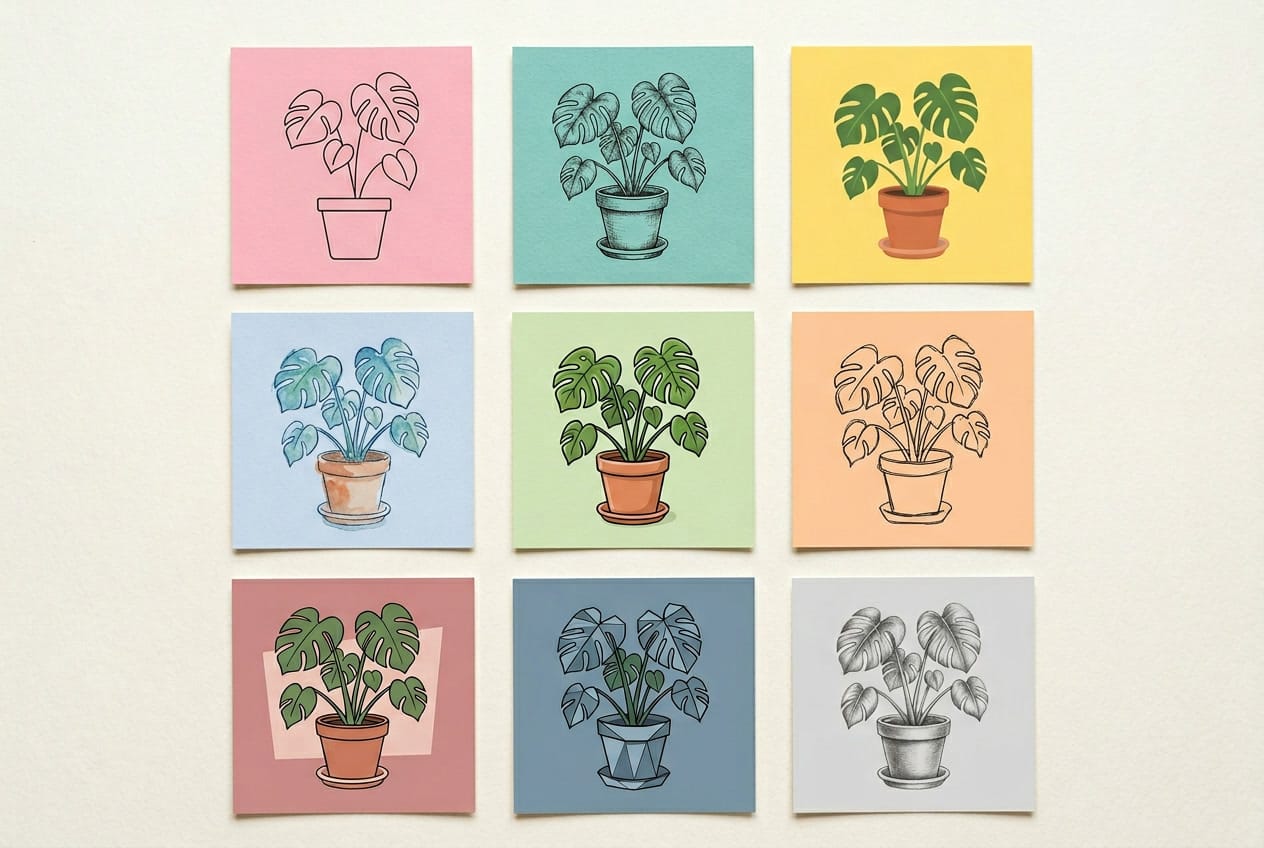
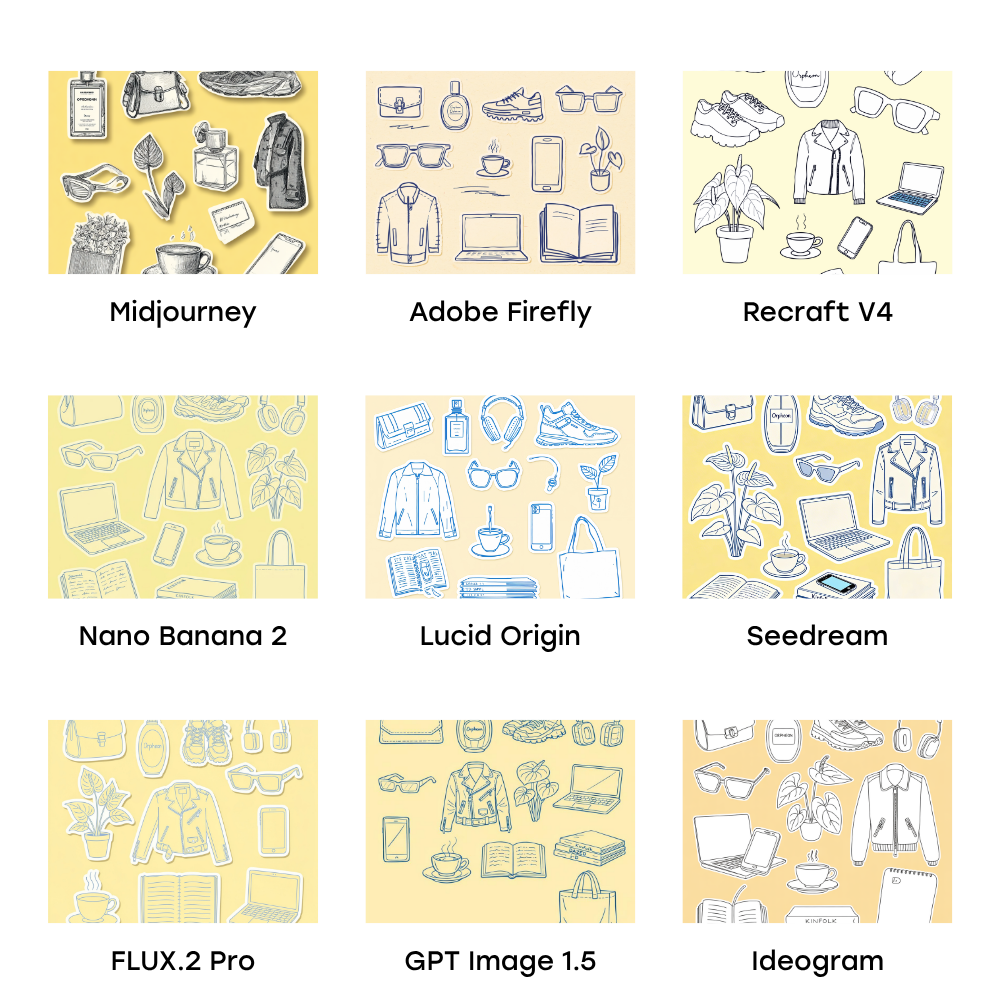
- Illustration Prompt: A detailed sticker sheet of hand-drawn doodle illustrations, featuring 13 specific objects with precise characteristics and a light blue line art on a butter yellow background, with zero shading or fill.
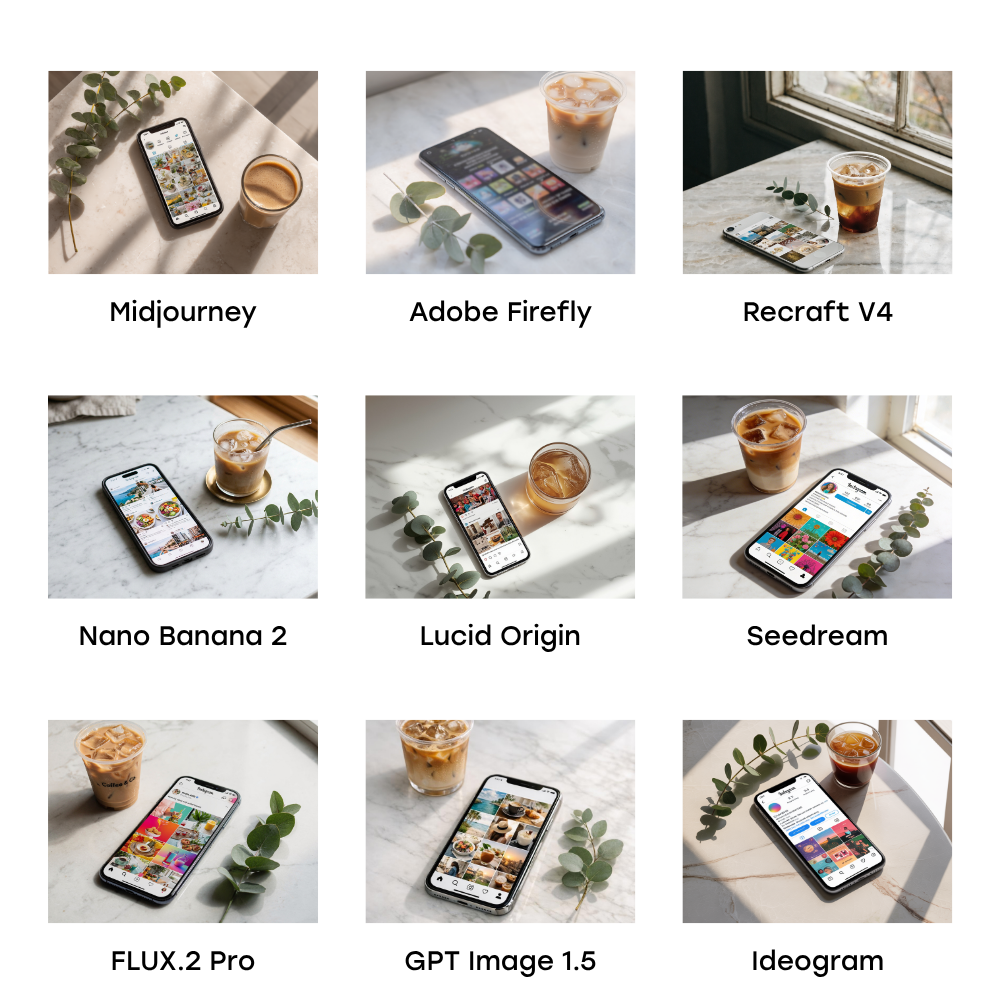
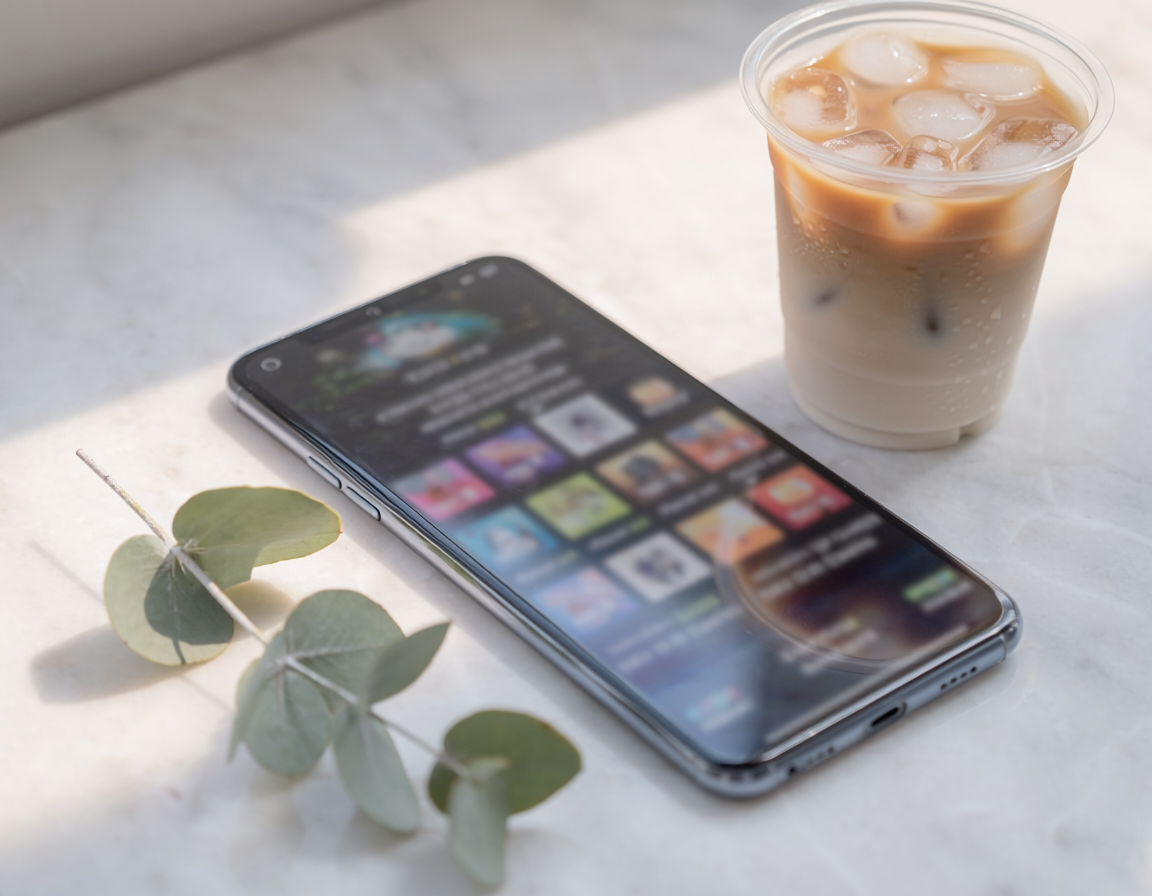
- Photorealism Prompt: A photorealistic image of an iPhone on a light marble surface, screen up with an Instagram feed, accompanied by an iced coffee and eucalyptus sprig, captured from a three-quarter overhead angle with soft natural light.
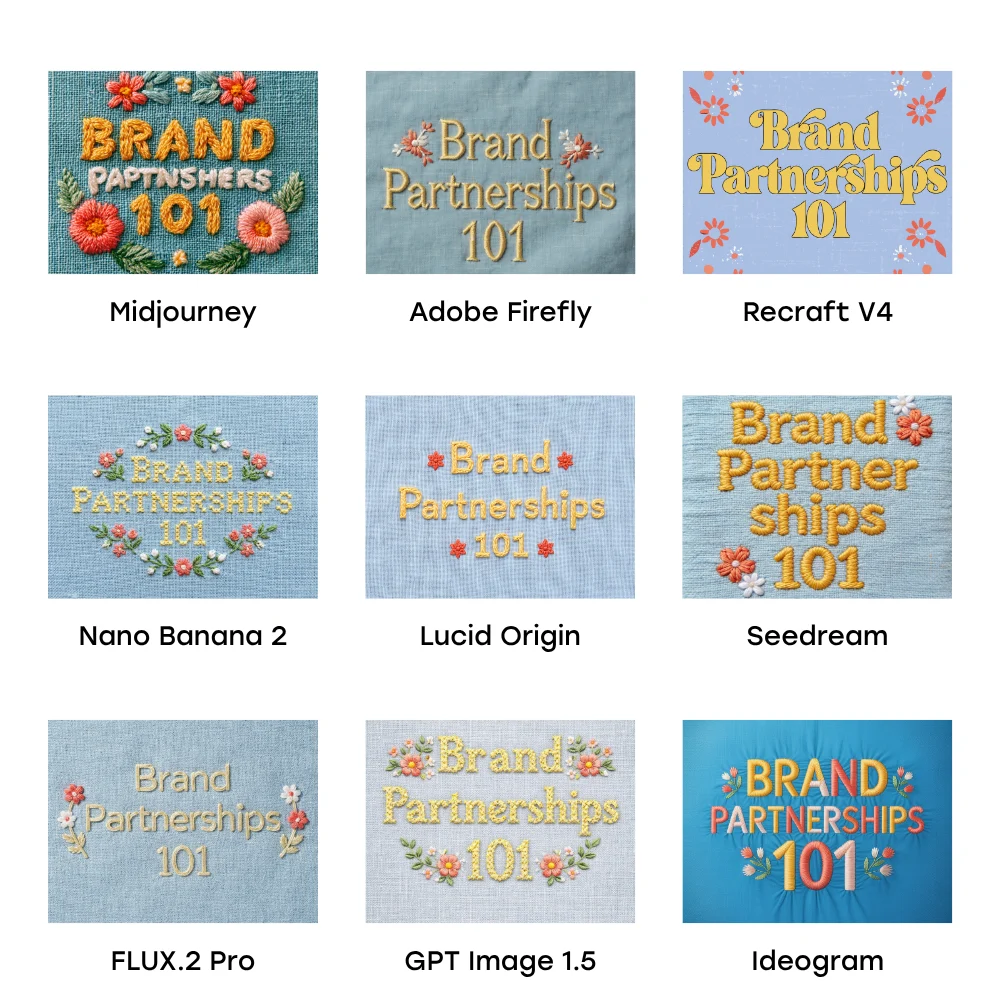
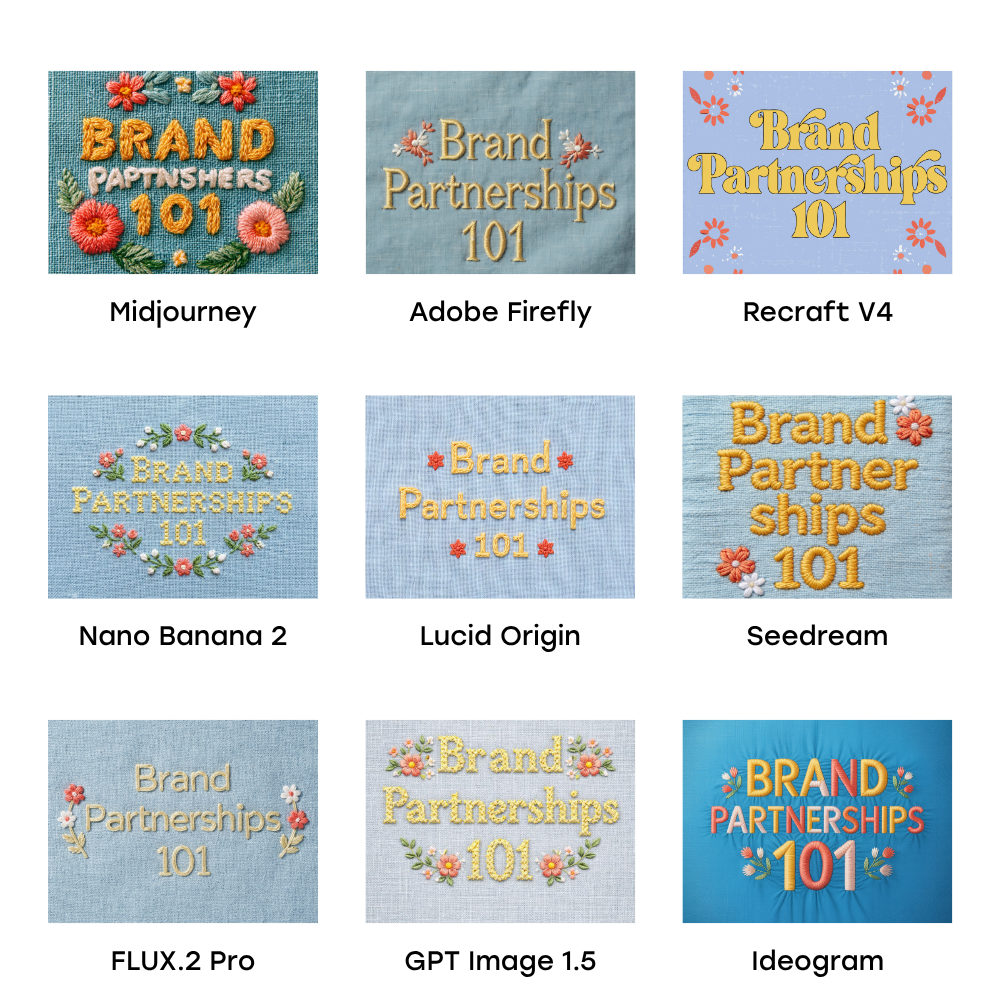
- Typography Prompt: A square graphic with the phrase ‘Brand Partnerships 101’ rendered as colorful embroidery stitching on a light blue linen fabric background, with specific thread colors and decorative floral accents.
Comprehensive Model Performance Evaluation
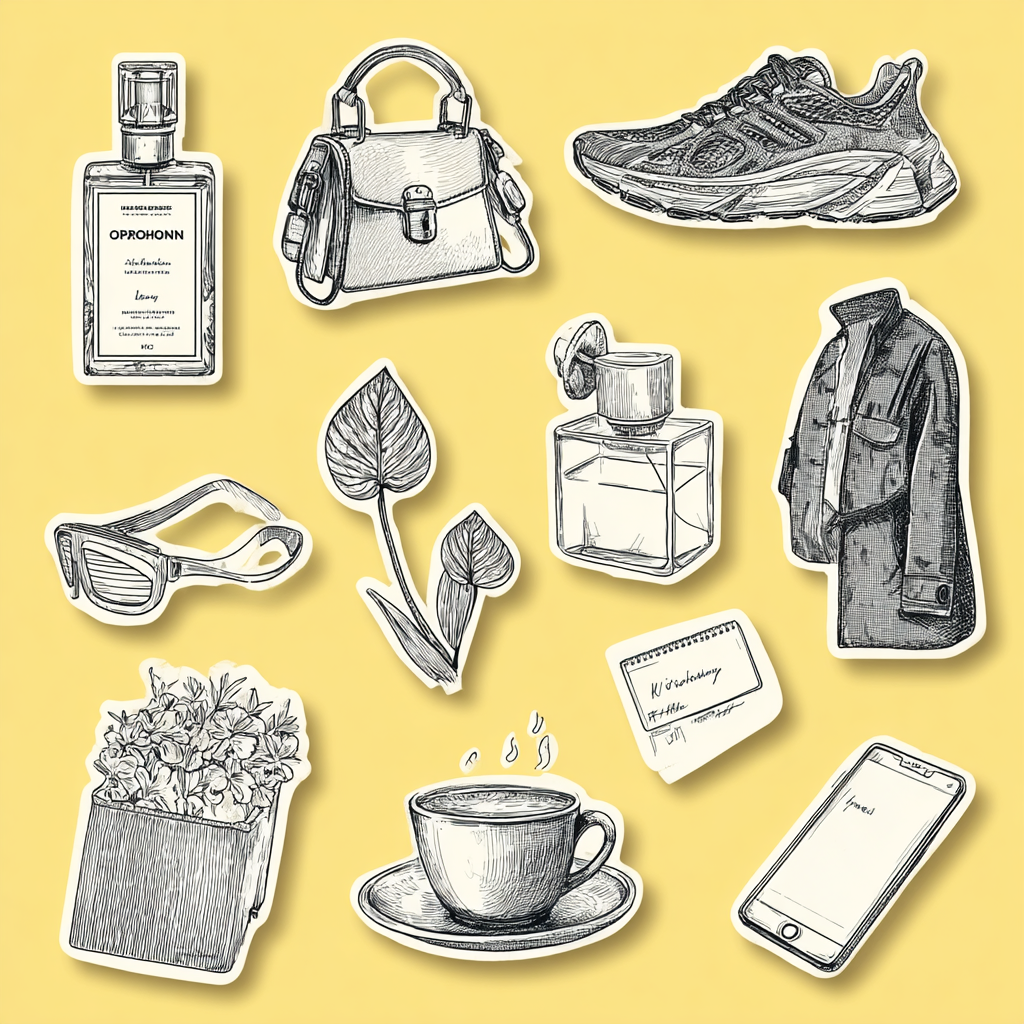
Nine leading AI image generation models were rigorously tested against these three distinct prompt categories, revealing their strengths, weaknesses, and unique characteristics. The evaluation utilized Leonardo.ai as a central hub for several models, alongside standalone platforms like Midjourney, Recraft, and Adobe Firefly.
-
Midjourney: Renowned for its artistic and mood-driven visuals, Midjourney consistently produced visually rich outputs. However, it struggled significantly with highly specific object rendering and accurate text generation, often garbling words like "partnerships." Its strength lies in generating evocative scenes where precise detail adherence is less critical.

-
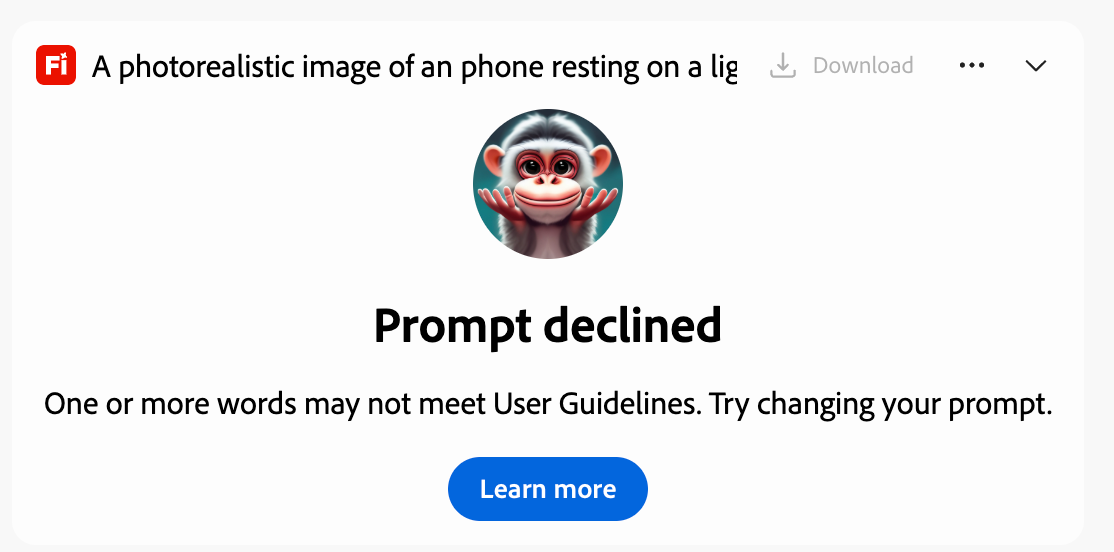
Adobe Firefly 5: Positioned for integration within the Adobe Creative Cloud ecosystem, Firefly offers clean commercial licensing, backed by IP indemnification for enterprise users, due to its training on licensed Adobe Stock content and public domain material. It demonstrated a whimsical hand-drawn quality for illustrations but exhibited accuracy issues with specific object details and a notable reluctance to process brand names (e.g., "iPhone," "Instagram") in prompts, aligning with Adobe’s cautious approach to trademark issues. Its typography generation, however, was highly realistic, producing genuine depth in stitching and aged fabric textures.
-
Recraft V4 Pro: This standalone platform provides extensive control over visual style, a vast library of reference designs, and an agentic chat for iterative refinement. While its initial illustration outputs sometimes introduced inconsistencies (e.g., unrequested colors), its potential for achieving polished results with further refinement, leveraging its style layering and reference features, is significant. For photorealism, Recraft achieved realistic shadows and condensation but faltered on fine details like phone dimensions and screen content. Its typography often prioritized aesthetic vision over literal prompt adherence, sometimes delivering more creative, usable results than requested.

-
GPT Image 1.5 (OpenAI): Accessible via ChatGPT and integrated platforms like Leonardo.ai, GPT Image 1.5 offered varying performance. Its illustration outputs often appeared compressed and suffered from a recognizable "AI yellowish tinge." While closer on photorealism, it missed crucial branding cues. Its typography was technically accurate in rendering cross-stitch, but the aesthetic often lacked publication-ready quality.
-
Nano Banana 2 (Google): Emerging as the most consistent and accurate performer across all three test categories, Nano Banana 2 (a Google model) excelled in rendering specific real-world objects and styles. Its presumed access to Google’s vast indexed visual data (image search, Google Shopping) is theorized to contribute to its ability to accurately interpret complex object descriptions (e.g., "Diptyque Orphéon perfume bottle," "chunky trail running sneakers"). It delivered the most complete and accurate sticker sheet, convincing photorealism (even adding contextually appropriate elements like earbuds), and whimsical yet textured typography.

-
Seedream (ByteDance): ByteDance’s model, also available via CapCut Pro, demonstrated a strong capability for generating sticker-like effects in illustrations and remarkable accuracy in text generation for labels and spellings. It correctly rendered specific plant types like anthurium, which challenged other models. Its photorealism was decent, though phone devices often appeared unrealistic. For typography, Seedream produced realistic fabric textures and mostly accurate text, despite minor formatting quirks.
-
Ideogram 3.0: Marketed for its text generation capabilities, Ideogram 3.0 achieved approximately 75% accuracy in text-heavy prompts. Its illustration outputs deviated in color and lacked the requested hand-drawn personality, often defaulting to generic interpretations of objects. Photorealistic images exhibited an "uncanny valley" quality, appearing "almost real" but still identifiable as AI-generated. Its typography leaned towards a cartoonish, stylized interpretation of embroidery, lacking the tactile realism of other tools.
-
FLUX.2 Pro: This model, available on Leonardo.ai, often took creative liberties, producing unique outputs. For illustrations, it generated a distinct effect of physically arranged, printed stickers rather than flat digital illustrations, showcasing a unique blend of styles. While object details could be inaccurate, its overall creative approach was notable. Its photorealism was strong in shadows and even incorporated unsolicited branding on coffee cups, though phones remained somewhat unrealistic. The typography featured impressive stitching texture but the text sometimes appeared "glued on" rather than integrated.
-
Lucid Origin: Offering both fast and ultra generation modes, Lucid Origin delivered a distinctive dimensional quality to its outputs. Its illustration stickers had an embossed, almost 3D effect. While its text generation and object adherence for illustrations were weaker, its interpretation of "flat lay" for photorealism was uniquely accurate, rendering a full top-down perspective. However, details like ice in coffee and phone screen content remained deeply unrealistic. For typography, it produced an appealing "inspired by embroidery" aesthetic with raised letters, though it missed specific accent details.
The Technical Underpinnings: Diffusion vs. Autoregressive Architectures
The varied performance across models can often be attributed to their underlying architectural designs. Broadly, AI image generators primarily leverage two distinct approaches:

-
Diffusion Models: These models, employed by tools like FLUX, Stable Diffusion, and Midjourney, initiate with random visual noise (akin to TV static) and iteratively refine it. At each step, the model consults the prompt, gradually transforming the noise into a coherent image. This iterative, holistic approach often results in images with a painterly or textured quality, excelling in artistic styles where the overall mood and aesthetic are paramount. They build the entire image simultaneously, refining it from chaos.
-
Autoregressive Models: Used by Google’s Imagen (behind Nano Banana 2) and OpenAI’s GPT Image, these models operate more sequentially, akin to writing a sentence. They generate the image piece by piece, predicting and adding elements based on what has already been created. This sequential processing often makes them more adept at adhering to complex, detailed prompts, as they build the image in a more structured, part-by-part fashion.

While this distinction provides a foundational understanding, the lines are increasingly blurring, with newer models like Seedream and Ideogram incorporating hybrid architectures. Regardless of the specific technical approach, a common thread remains: these models learn from vast datasets of images paired with their descriptive captions. This explains why precise photography terms resonate so well (abundant in training data) and why specific illustration vocabulary (e.g., "ink hatching") yields better results than generic artistic requests.
Navigating Legal, Ethical, and Commercial Implications

The widespread adoption of AI image generators brings forth a complex array of legal, ethical, and commercial considerations that creators must navigate.
-
Copyrightability: A significant legal precedent established by the U.S. Copyright Office, and reaffirmed by the U.S. Supreme Court’s decision in March 2026, is that merely inputting a text prompt does not grant copyright ownership to the resulting AI-generated image. This means that if another party generates a similar image, the original prompt author cannot claim exclusive legal ownership as they would with a traditionally created photograph or artwork. While this may not impact day-to-day use for social media or blog headers, creators are encouraged to significantly modify and integrate AI-generated elements into their own unique design work to strengthen their claim to originality.

-
Training Data and Ongoing Litigation: The vast majority of AI image generation models are trained on immense datasets of images scraped from the internet, often without explicit consent or compensation to the original creators. This practice has sparked considerable controversy and led to over 70 ongoing copyright lawsuits. A landmark case, Andersen v. Stability AI, which also names Midjourney, is slated for trial in September 2026, with potentially far-reaching implications for the industry. Adobe Firefly stands as a notable exception, explicitly training its model on licensed Adobe Stock content and public domain materials, and offering IP indemnification for enterprise plans, providing a more legally secure option for commercial use.
-
Ethical Considerations with Human Subjects: The generation of human subjects by AI models introduces significant ethical and legal complexities. These tools can produce highly convincing images of non-existent individuals and, in some cases, images that bear a resemblance to real people. This raises concerns regarding rights of publicity, potential for deepfakes, and the ethical responsibility of creators to avoid misrepresentation or harm. The evaluation deliberately avoided generating human subjects to sidestep these intricate issues, underscoring the need for careful consideration when incorporating AI-generated people into content.

-
Commercial Use and Accessibility: While most AI image generators permit commercial use under their terms of service, the aforementioned legal and ethical caveats remain pertinent. The accessibility of these tools varies, with many offering free tiers or daily credits. Leonardo.ai provides daily tokens, allowing users to experiment with multiple models without immediate subscription. Recraft, Ideogram, and Meta AI also offer free access. Midjourney requires a paid subscription starting at $10/month, and Adobe Firefly is included with most Creative Cloud plans, with limited free generation available via its website. ChatGPT’s free plan includes image generation, with paid plans offering enhanced speed and limits. For initial exploration, multi-model platforms like Leonardo.ai offer a cost-effective starting point.
Future Outlook: Bridging the Gap in AI-Generated Visuals

The current state of AI image generation demonstrates a clear proficiency in producing stylized and illustrative graphics that are highly usable in diverse content without obvious "AI tells." For photorealism, while significant strides have been made, subtle imperfections in fine details—such as warped phone screens, ambiguous text within images, or minor product inaccuracies—often remain discernible upon close inspection. However, the pace of development is accelerating, with continuous improvements in accuracy, detail control, and sophisticated text rendering.
As these tools become increasingly integrated into existing creative workflows and design platforms like Canva and Figma, their role as powerful augmentation tools will only expand. They are not merely replacing human creativity but are democratizing visual production, enabling a broader spectrum of creators to realize their ideas without being constrained by traditional artistic barriers. The ongoing evolution of AI image generators promises even more precise control, nuanced stylistic options, and a continued blurring of the line between human-made and machine-generated visuals, ultimately reshaping the landscape of digital content creation.