Cintya Tara Annisa
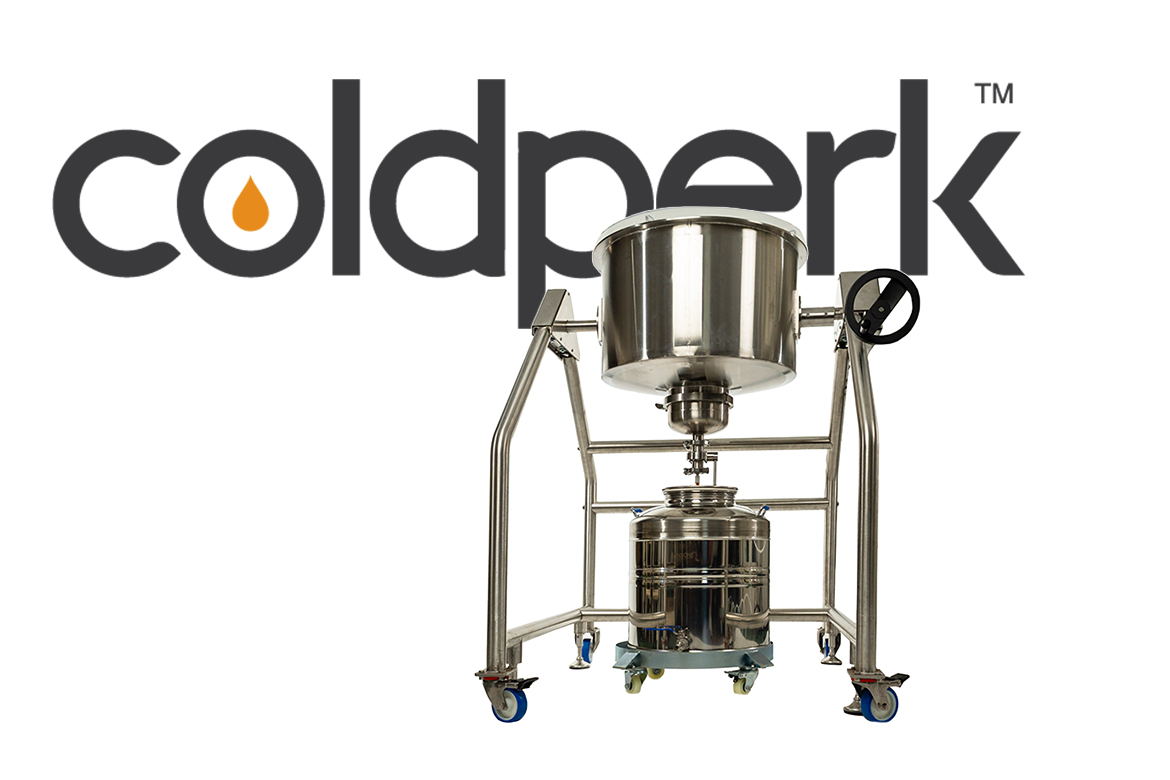
The landscape of industrial coffee production underwent a significant shift this April 2026 as ColdPerk, a prominent developer of precision extraction technology based in Carmel, Indiana, officially unveiled the Commissary 70. This high-capacity system is engineered specifically for coffee roasters, centralized commissaries, and beverage production facilities that require a scalable solution for coffee concentrate without the prohibitive costs or infrastructure demands typically associated with industrial-grade equipment. As the global demand for cold brew and ready-to-drink (RTD) coffee continues its upward trajectory, the Commissary 70 enters the market as a bridge between boutique batch brewing and massive factory-scale operations.
The introduction of the Commissary 70 marks a strategic expansion for ColdPerk, which has previously gained acclaim for its Café 2 Series, a system designed for individual retail environments. The new platform translates the company’s proprietary extraction philosophy into a larger format, allowing operators to produce espresso-strength coffee concentrate at volumes that support wholesale distribution and multi-location retail programs. By focusing on speed, consistency, and a reduced physical footprint, ColdPerk aims to democratize high-volume concentrate production for mid-sized enterprises that have historically been underserved by the equipment market.
Technical Innovation: The DWIP Manifold™ System
At the heart of the Commissary 70 is ColdPerk’s patent-pending DWIP Manifold™ technology. While traditional cold brew methods often rely on immersion techniques that can take anywhere from 12 to 24 hours to reach desired concentrations, the DWIP (Dynamic Water Infusion Pressure) system utilizes a sophisticated manifold design to optimize water distribution through the coffee bed. This technology ensures that every particle of coffee is evenly saturated, preventing the channeling and uneven extraction that often plague large-format brewing.
According to technical specifications released by the company, the Commissary 70 is capable of producing up to 28 gallons of high-intensity coffee concentrate in less than two hours. This represents a drastic reduction in production time compared to industry standards. By compressing the extraction window, the system not only increases throughput but also offers greater control over the flavor profile. Shorter contact times can often mitigate the development of oxidized or "woody" notes that sometimes occur during prolonged immersion cycles, resulting in a cleaner, more vibrant concentrate that mimics the complexity of a traditional espresso or a flash-chilled brew.
Strategic Context and Market Evolution
The launch of the Commissary 70 arrives at a critical juncture for the global coffee industry. Market data from late 2025 and early 2026 indicates that the cold coffee segment now accounts for over 50% of total beverage sales in many North American specialty coffee chains. Furthermore, the RTD coffee market is projected to reach a valuation of over $42 billion globally by 2027, driven by consumer preferences for convenience and functional beverages.
For many specialty roasters, the transition from selling whole-bean coffee to providing liquid solutions has been hindered by the "production gap." Smaller systems do not provide the volume necessary for wholesale accounts, while industrial extractors require massive capital expenditure (CAPEX) and specialized plumbing, electrical, and HVAC upgrades. ColdPerk has positioned the Commissary 70 to fill this gap. Its design emphasizes "plug-and-play" functionality, allowing roasters to scale their liquid programs without moving to a dedicated factory space.
Operational Efficiency and Workflow Integration
The design philosophy of the Commissary 70 extends beyond the extraction chamber. ColdPerk has focused on the holistic workflow of the production environment, identifying labor and waste as the two primary pain points for modern commissaries. The system features an ergonomic loading and unloading process, significantly reducing the physical strain on operators compared to lifting heavy bags of wet coffee grounds from traditional immersion vats.
Key operational highlights of the system include:
- Consistent Yield Management: The DWIP Manifold™ ensures repeatable results, allowing businesses to maintain a strict "Gold Cup" standard across every batch, which is essential for brand consistency in wholesale environments.
- Reduced Labor Demands: The automated aspects of the infusion cycle allow a single operator to manage multiple units or focus on other tasks during the two-hour brew cycle.
- Waste Mitigation: The high-efficiency extraction process maximizes the yield per pound of dry coffee, reducing the "sludge" and lost liquid often retained in traditional cloth or paper filters.
By transitioning from traditional batch brewing to this scalable concentrate model, businesses can effectively increase their yield-per-square-foot. This is particularly relevant for urban roasteries where space is at a premium and every inch of the facility must contribute to the bottom line.
Chronology of Development
The journey to the Commissary 70 began shortly after the successful rollout of the Café 2 Series in 2023. ColdPerk’s engineering team spent nearly three years in research and development, consulting with high-volume roasters to identify the limitations of existing technology.
- Phase 1 (2023-2024): Initial prototyping focused on scaling the DWIP technology from a 2-gallon capacity to a 30-gallon capacity. The primary challenge was maintaining thermal stability and pressure consistency across a larger surface area.
- Phase 2 (2025): Beta testing was conducted with three mid-sized roasters in the Midwest. These partners utilized the system to supply kegged cold brew to local grocery chains and university campuses. Feedback from this phase led to refinements in the manifold’s spray pattern and the integration of a more robust filtration assembly.
- Phase 3 (Early 2026): Final certification and manufacturing setup in Carmel, Indiana. The company focused on sourcing domestic components to ensure a stable supply chain and easier servicing for North American clients.
Industry Reactions and Expert Analysis
While ColdPerk has not released a list of its launch partners, industry analysts suggest that the Commissary 70 could disrupt the third-party co-packing industry. Currently, many roasters outsource their RTD production to large-scale co-packers, which often requires high minimum order quantities and results in a loss of control over the final product quality.
"The ability to bring concentrate production in-house at a 28-gallon-per-cycle scale is a game changer for the ‘missing middle’ of the coffee industry," says Marcus Thorne, a consultant specializing in coffee supply chains. "We are seeing a trend where roasters want to own the entire value chain. By controlling the extraction process, they can ensure that the nuances of their specific roast profiles are preserved in the liquid format. Systems like the Commissary 70 provide the technical means to do that without the seven-figure investment of a full-scale bottling plant."
Internally, the sentiment at ColdPerk is one of focused ambition. A spokesperson for the company noted that the Commissary 70 was designed to be "infrastructure-light." The goal was to create a machine that could be unboxed and operational within a single workday, provided the facility has standard utility connections. This focus on accessibility is expected to drive adoption among regional coffee chains that are looking to centralize their cold brew production to ensure uniformity across 10 to 50 locations.
Broader Economic and Environmental Implications
Beyond the immediate benefits to coffee quality and production speed, the Commissary 70 addresses several broader industry challenges. From an environmental perspective, the increased extraction efficiency means less coffee waste. As coffee prices remain volatile due to climate-related supply chain disruptions, the ability to extract more flavor from fewer beans is an economic necessity.
Furthermore, the shift toward concentrate production has significant logistical benefits. Shipping liquid concentrate is more weight-efficient than shipping ready-to-drink diluted coffee. By producing a high-strength concentrate, a commissary can ship a single five-gallon BIB (bag-in-box) that can be diluted at the point of service to create 20 or 30 gallons of beverage. This drastically reduces the carbon footprint associated with transportation and reduces the amount of packaging material required.
The Commissary 70 also supports the growing "kegged" beverage market. As more bars, restaurants, and offices install nitro cold brew taps, the demand for high-quality, stable concentrate has skyrocketed. ColdPerk’s system allows roasters to meet this demand with a product that remains shelf-stable longer due to the precision and cleanliness of the extraction process.
Conclusion and Future Outlook
As ColdPerk begins taking reservations for the Commissary 70, the company is positioning itself as a leader in the next generation of coffee technology. The Carmel-based manufacturer has signaled that this is just the beginning of their high-capacity lineup, with rumors of even larger modular systems in the conceptual phase.
For now, the Commissary 70 stands as a testament to the evolution of the specialty coffee industry—a move away from manual, time-consuming traditions toward a future defined by precision, efficiency, and scalability. For roasters and beverage producers looking to capture a larger share of the cold coffee market in 2026 and beyond, the arrival of this system offers a timely solution to some of the industry’s most persistent operational hurdles.
Interested parties are encouraged to visit the ColdPerk website or engage with their sales team to discuss specific integration requirements. With the first units expected to ship in the third quarter of 2026, the race to modernize coffee extraction is officially underway.