
 Indra Kusuma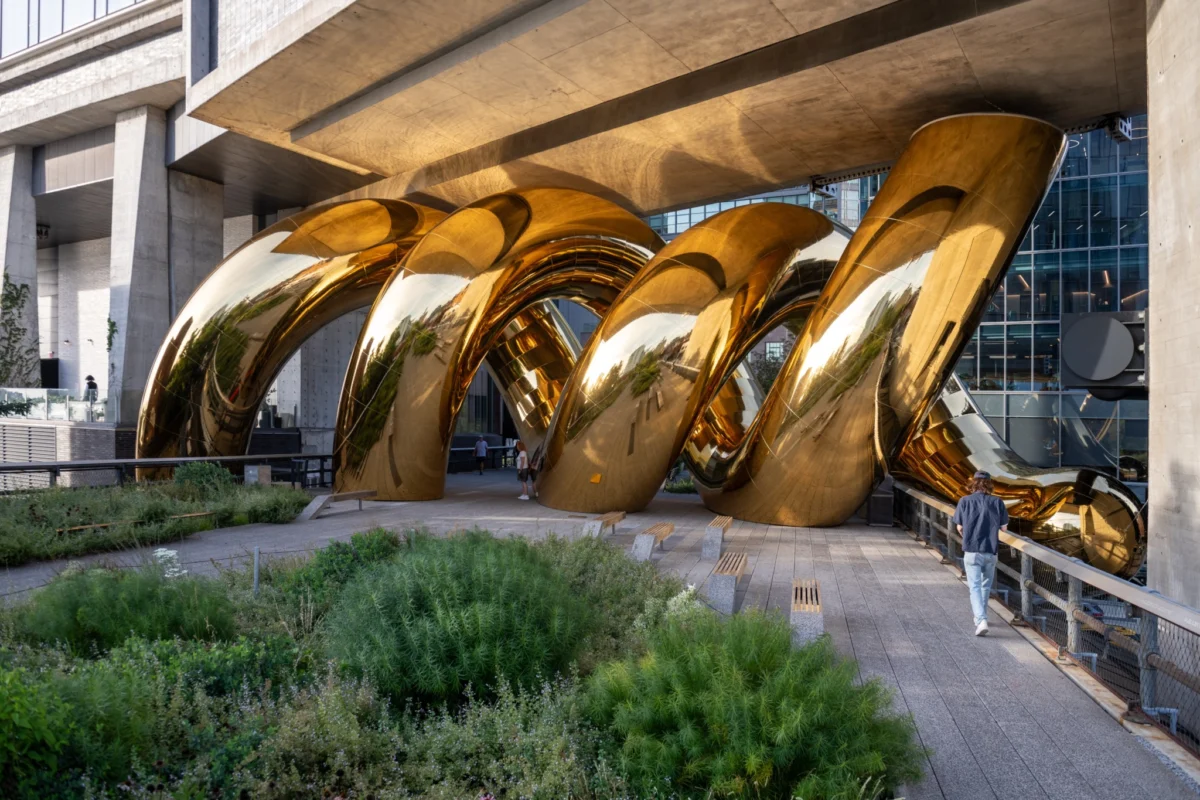
For decades, the Bvlgari serpent—the storied Serpenti motif—has been a fixture of high jewelry, coiling around the wrists, fingers, and necks of the global elite. Now, that storied design has transcended the jeweler’s atelier, manifesting as a monumental public art installation that snakes through the industrial landscape of New York City. Beginning September 10, the High Line plays host to auruBOROS – Urban Memory and Collective Dream, the Italian luxury house’s first-ever large-scale public art installation in the United States.
Commissioned as the latest centerpiece of the brand’s ambitious Serpenti Infinito project, the installation is a collaborative effort between Bvlgari and the Berlin-based artistic duo Marco Canevacci and Yena Young, the creative forces behind the design collective Plastique Fantastique. The work marks a significant departure from traditional luxury marketing, signaling a shift toward immersive, experiential branding that seeks to occupy the physical space of one of the world’s most frequented urban public parks.
A Fusion of Pneumatic Art and Industrial Architecture
Canevacci and Young have built their reputation on "pneumatic" art—structures that rely on internal air pressure to maintain form, creating ephemeral, surreal additions to existing urban environments. For this New York commission, the duo has crafted a series of gargantuan golden coils that appear to surge from the ground beneath The Standard hotel, winding their way into the elevated walkways of the High Line.
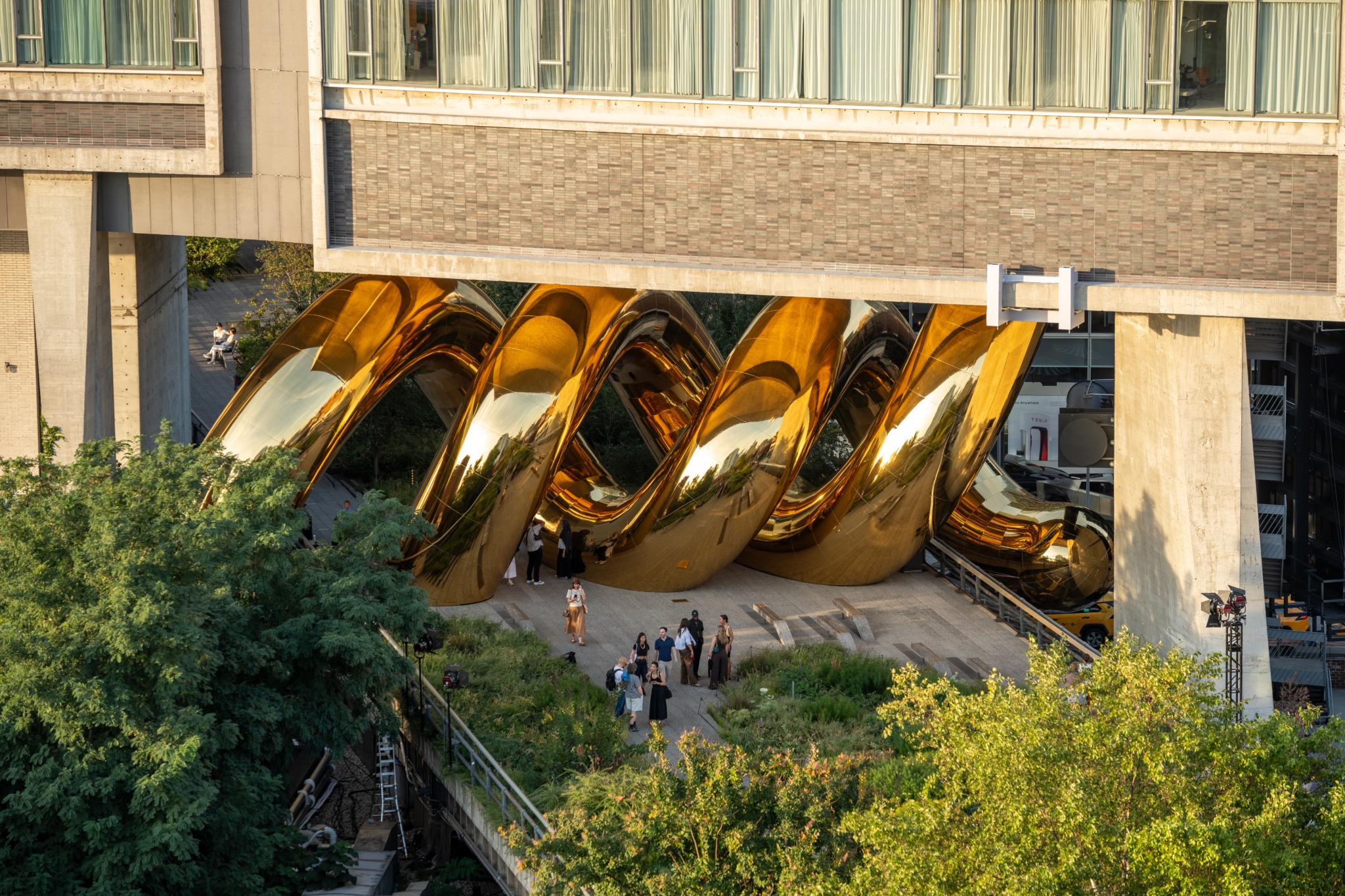
The installation functions as a paradox of materiality. While the surface is rendered in a gleaming, reflective gold finish designed to mimic the precious metal of a high-end bracelet, the underlying structure is essentially a vast, lightweight, and temporary balloon. By inserting this "foreign object" into the familiar, concrete-and-steel infrastructure of Manhattan, the artists aim to create a dialogue between the permanence of historical architecture and the fleeting nature of modern design.
The Evolution of the Serpenti Infinito Project
The Serpenti motif dates back to the late 1940s, when Bvlgari first introduced its iconic Tubogas technique, allowing for a flexible, wrap-around design that mimicked the suppleness of a snake. Over the last 75 years, the serpent has evolved from a stylized timepiece into a symbol of transformation and eternal renewal.
The Serpenti Infinito project represents the latest chapter in this legacy. It serves as a global campaign designed to recontextualize the snake motif across various mediums, including digital art, cinematography, and now, large-scale urban sculpture. By moving the serpent from the confined, controlled environment of a display case to the unpredictable climate of the High Line, Bvlgari is leveraging its heritage to engage with a broader public audience. The project serves as an experimental bridge between traditional luxury craft and contemporary public art, testing the boundaries of how a brand known for exclusivity can participate in the democratization of the urban art experience.
Technical and Aesthetic Specifications
The choice of the High Line as a venue is far from incidental. Elevated 30 feet above street level, the park provides a unique vantage point that allows viewers to interact with the sculpture from multiple elevations. The reflective surface of the auruBOROS coils acts as a "visual sponge," capturing the shifting light of the city, the movement of the Hudson River, the greenery of the park’s landscaping, and the faces of the pedestrians passing by.

"The concept was derived from the ancient image of the ouroboros, the snake eating its own tail, symbolizing infinite cycles," Canevacci and Young stated in a recent briefing. "By opening the circle, we allowed the serpent to enter the city, effectively turning it into a mirror for the collective memory of the urban environment. Its surface is not static; it changes with the weather, the time of day, and the presence of the public."
From an engineering perspective, the installation requires constant monitoring. Because the sculpture relies on pneumatic pressure, the artists have implemented a sophisticated system to maintain the integrity of the gold-hued exterior against the gusty conditions of the Manhattan waterfront. Despite its imposing visual presence, the work is strikingly fragile, serving as a commentary on the transience of "monumental" luxury.
Chronology of the Exhibition
The installation is scheduled for a limited engagement, reinforcing the theme of impermanence:
- September 1–8: Site preparation and the inflation process at the Little West 12th Street section of the High Line.
- September 10: Official public unveiling and opening ceremony.
- September 10–20: The exhibition period, during which public tours and educational programming regarding the sculpture’s pneumatic design take place.
- September 21: De-installation and restoration of the site.
The short 11-day window is a deliberate artistic choice. By limiting the viewing period, Bvlgari creates a sense of urgency, transforming the visit into an "event" rather than a permanent fixture of the park.

Commercial and Cultural Implications
Bvlgari’s foray into public art is accompanied by a concurrent retail strategy. To coincide with the installation, the house is launching a new collection of three Serpenti Tubogas high-jewelry pieces, as well as a limited-edition minaudière inspired by the industrial aesthetic of New York City’s history.
From an economic standpoint, such installations serve as high-visibility "brand activations." By aligning itself with the High Line—a globally recognized landmark of urban renewal—Bvlgari is positioning its brand at the intersection of culture and commerce. According to market analysts tracking luxury retail trends, these experiential installations are increasingly replacing traditional billboards and print advertisements. They offer a "halo effect," where the prestige of the public art project reflects directly onto the products available in boutiques.
Furthermore, the collaboration with Plastique Fantastique demonstrates a trend toward "interdisciplinary luxury." Bvlgari is no longer just selling jewelry; it is curating an atmosphere. This strategy is particularly effective in a post-pandemic retail landscape, where consumers—particularly younger demographics—prioritize unique, sharable, and "Instagrammable" experiences over traditional brand messaging.
The Broader Impact on Public Space
The presence of the auruBOROS sculpture on the High Line raises questions about the role of private corporations in public spaces. In recent years, the High Line has become a popular venue for art commissions, though these are typically managed by the High Line Art program. Bvlgari’s direct involvement represents a growing reliance on private funding to sustain public cultural initiatives.

Supporters argue that such partnerships allow for more ambitious, large-scale projects that might otherwise be cost-prohibitive for municipal budgets. Critics, however, often warn of the "corporatization" of public parks. Yet, in the case of auruBOROS, the feedback from the initial days of the installation suggests a positive reception. The sculpture’s ability to reflect the surroundings rather than dominate them has been praised for its subtlety, avoiding the heavy-handed branding that often characterizes corporate public art.
Conclusion
As the sun sets on the High Line during these 11 days, the golden coils of the auruBOROS sculpture will shift in hue, mirroring the city’s transition from day to night. For Bvlgari, this is more than an art project; it is a masterclass in modern brand storytelling. By anchoring its heritage in a transient, pneumatic, and deeply reflective structure, the company has managed to honor its history while simultaneously looking toward an ephemeral, future-focused vision of luxury.
As the installation concludes on September 20, it will leave behind no physical footprint—a testament to the "collective dream" that the artists sought to capture. For the visitors who witnessed the serpent winding through the city, the experience serves as a reminder that even the most enduring symbols of luxury must constantly find new ways to adapt to the changing landscape of the modern world.







