Indra Kusuma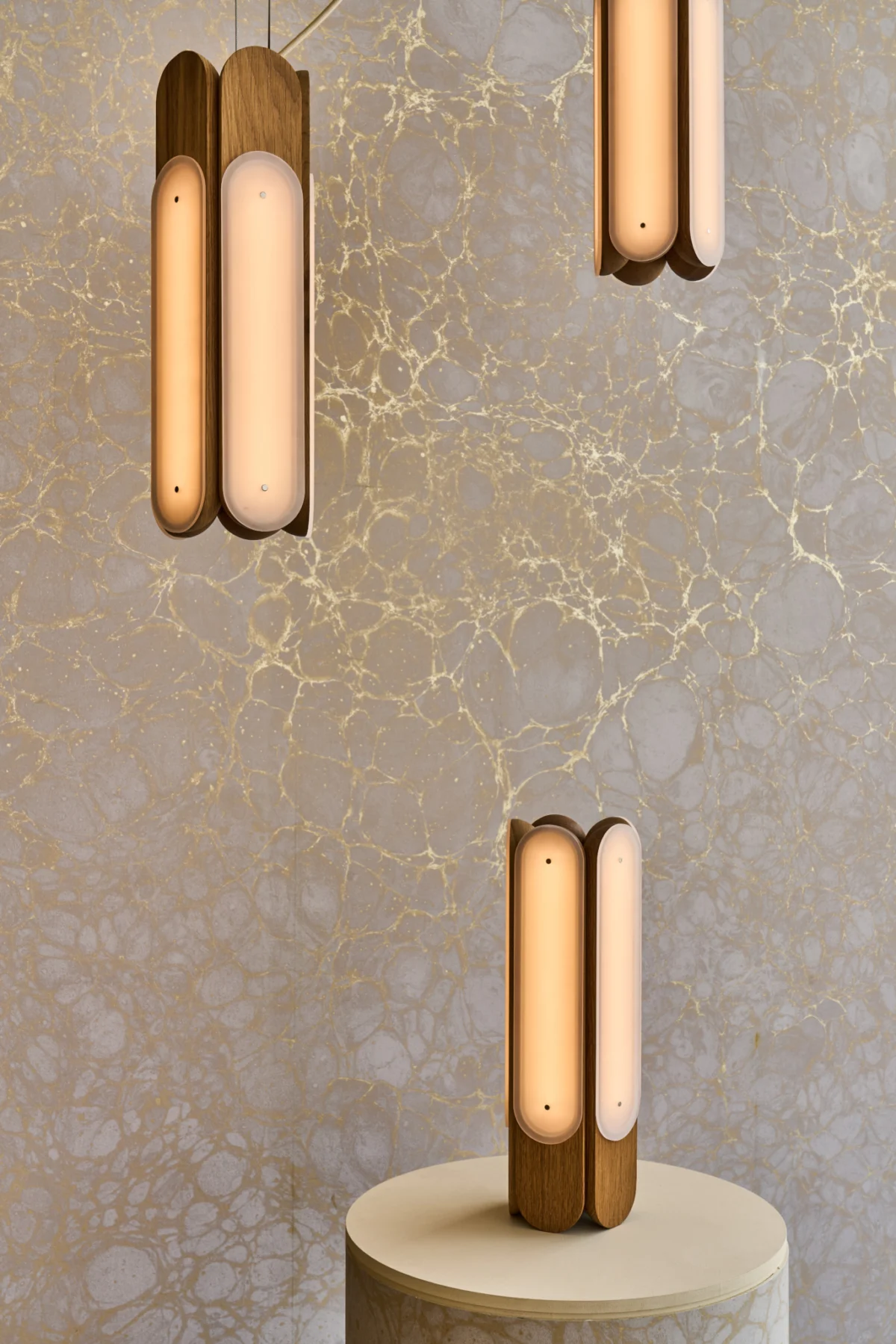
The genesis of the Beaufort lighting collection by Hollis+Morris traces its origins to an unlikely environment: the pressurized cabin of a commercial aircraft traversing the Atlantic Ocean. Following his attendance at the 3daysofdesign festival in Copenhagen, Mischa Couvrette, the founder and lead designer of the Toronto-based studio, found himself reflecting on the intersection of industrial aesthetics and natural phenomena. Conversations during the flight regarding the accelerating rate of climate change and the physical properties of polar ice shifted the design focus toward the concepts of depth, opacity, and the geological formation of ice sheets. This intellectual inquiry culminated in the Beaufort collection, a series of lighting fixtures that serve as a study in material tension and light diffusion.
The Design Philosophy and Conceptual Origins
The 3daysofdesign festival, held annually in Denmark, has long served as a global nexus for designers, architects, and manufacturers to examine the future of Nordic and international aesthetics. For Couvrette, the experience underscored a desire to move beyond literal representations of nature. Instead of replicating the topography of an iceberg, the Beaufort collection utilizes architectural geometry to evoke the sensation of peering into a frozen body of water.
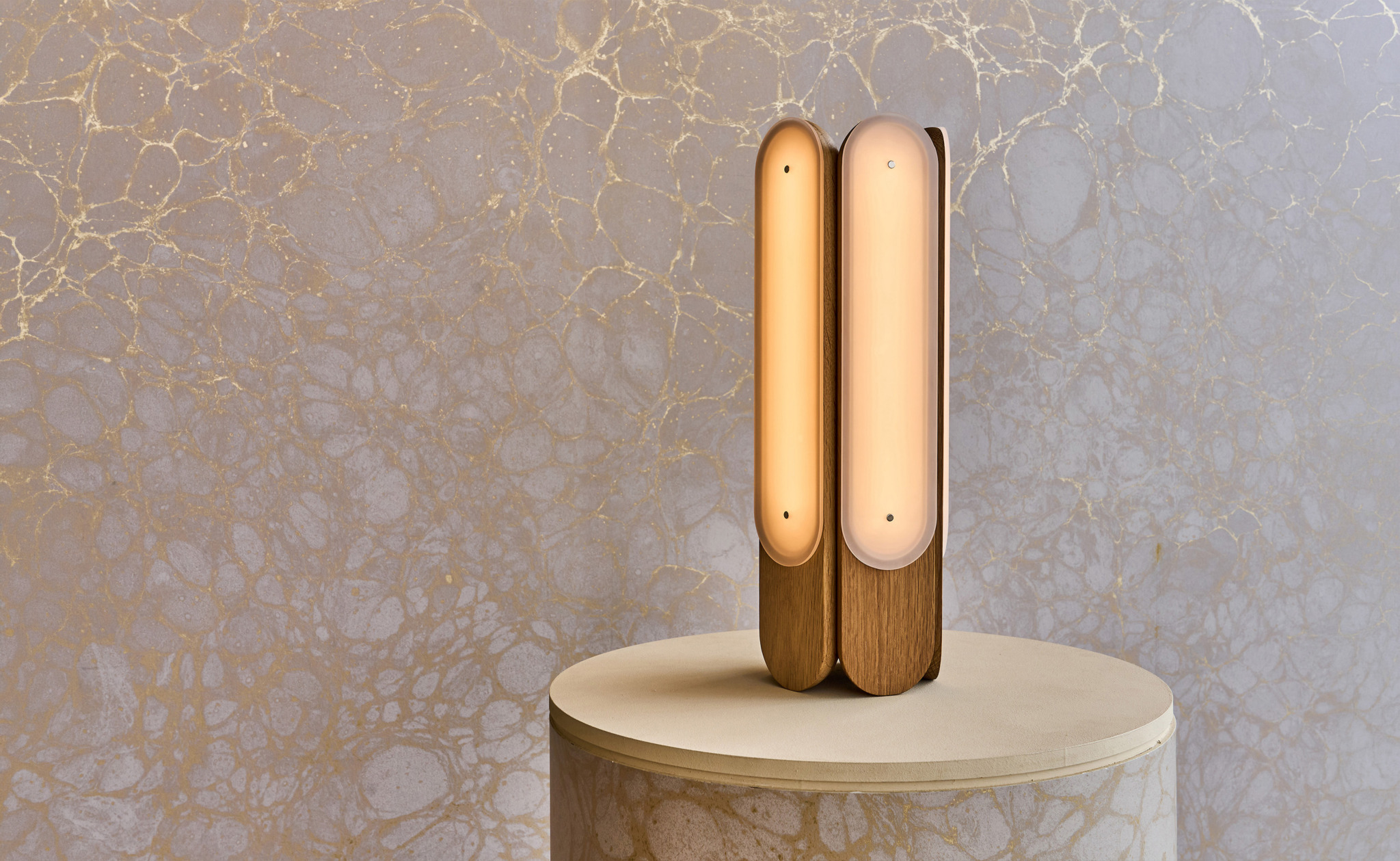
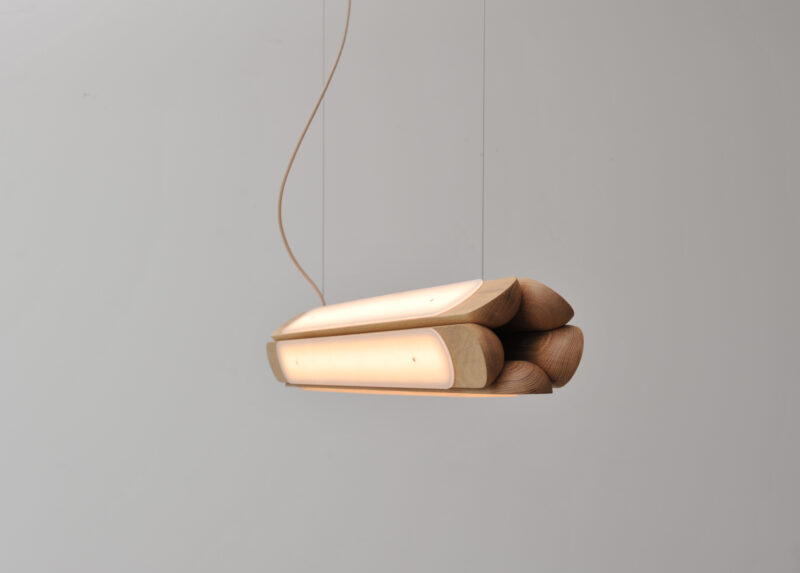
Couvrette’s design process is predicated on the psychological impact of light as it interacts with physical barriers. By utilizing solid oak and walnut—materials traditionally associated with warmth and permanence—alongside industrial, sandblasted acrylic, the collection mimics the layered gradients found in glacial formations. The wood is precision-carved to function as a housing unit, effectively concealing the technical lighting components while directing the output through a faceted acrylic medium.
Chronology of Development
The trajectory from the initial conceptualization to the commercial release of the Beaufort collection spans several months of iterative prototyping.
- June 2026: Initial conceptualization occurs during transit following the 3daysofdesign conference.
- July–August 2026: Engineering and material testing phases focus on the integration of LED technology within the carved-wood cavities.
- Late August 2026: Official market launch of the Beaufort series, featuring a range of pendant, sconce, and table lamp configurations.
Throughout this period, the Hollis+Morris team prioritized the "mirroring" technique—a design methodology that allows for the scalability of a single component. By repeating, rotating, and stacking a singular building block, the studio maintained structural consistency across a diverse range of products.
Material Composition and Technical Specification
The Beaufort collection is defined by the juxtaposition of organic timber and synthetic diffusion materials. The technical execution involves:
- Substrate Selection: The fixtures utilize rough-sawn solid oak or walnut, chosen for their durability and grain variance.
- Structural Carving: Each fixture is shaped into a half-cylinder with rounded endpoints, a form factor that maximizes internal light reflection.
- Light Diffusion: The sandblasted acrylic components are engineered with stepped shoulders and precise facets. This creates a multi-planar effect, ensuring that the light emitted is not uniform, but rather displays the soft, shifting gradients characteristic of light refracting through density-variable ice.
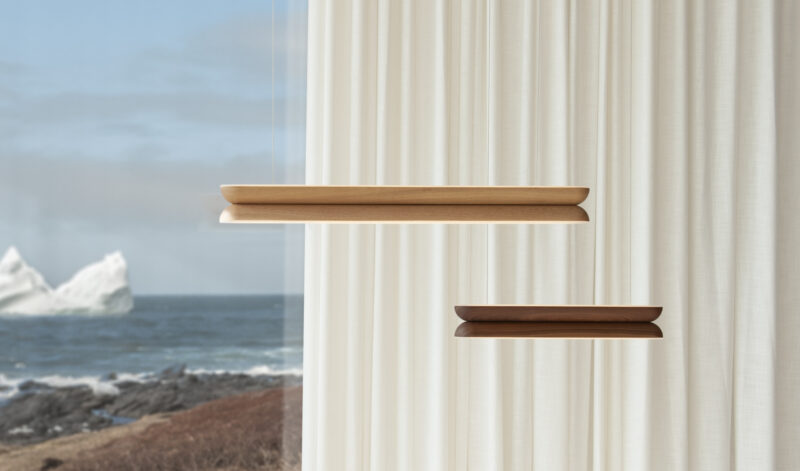
The M2 Horizontal Pendant, the centerpiece of the collection, exemplifies this technical complexity. Available in four distinct lengths—ranging from 13 to 60 inches—the fixture mirrors two primary components, creating a balanced, bi-directional light source that can be deployed in both residential and commercial architectural settings.
Market Positioning and Architectural Integration
The release of the Beaufort collection arrives at a time when interior design trends are shifting toward "biophilic minimalism." This movement emphasizes clean, geometric lines while maintaining a tactile connection to natural materials.
Industry analysts observe that lighting design has become a focal point for high-end furniture manufacturers, as consumers increasingly prioritize "atmospherics" over mere illumination. The versatility of the Beaufort collection—which ranges from the wall-mounted Beaufort Sconce to the R5 Horizontal Pendant—allows designers to maintain a consistent visual language throughout a space. The R5 model, in particular, offers a unique degree of modularity; it can be suspended as an orbital horizontal pendant or reoriented as a vertical, lantern-style fixture.
Economic and Environmental Considerations
Hollis+Morris has historically operated with a focus on sustainable sourcing and localized manufacturing. The decision to use solid hardwoods, while aesthetic, also aligns with the industry-wide move toward long-lifecycle products. By designing for longevity—both in terms of physical durability and timeless style—the studio seeks to mitigate the "fast furniture" cycle that has dominated interior design segments in recent years.
The integration of high-efficiency LED technology within the Beaufort collection is not merely an aesthetic choice but a practical response to current building energy codes. As jurisdictions across North America and Europe tighten requirements for energy-efficient lighting, the use of custom-controlled light chambers allows for lower wattage output without sacrificing the intensity of the desired visual effect.
Expert Perspectives on Modern Lighting Trends
Design critics have noted that the Beaufort collection’s reliance on "hidden technology" represents a broader shift in modern product design. According to independent design consultants, the removal of visible hardware and the integration of light sources within the material itself are markers of advanced industrial craftsmanship.
"The success of a piece like the Beaufort Sconce lies in its ability to behave like a sculpture when dormant and a light source when active," noted an industry analyst. "The challenge for manufacturers today is to conceal the ‘machinery’ of lighting so completely that the user forgets the object is an electronic device. Hollis+Morris has achieved this by treating the acrylic as an optical instrument rather than a diffuser."
Implications for Future Collections
The Beaufort series sets a precedent for the future design direction of Hollis+Morris. By focusing on the "tension" between materials—in this case, the rigid, opaque wood versus the permeable, translucent acrylic—the studio has established a framework that can be adapted for future collections.
The emphasis on atmospheric storytelling—where each piece is tied to a specific observation of the natural world—is likely to resonate with a demographic of buyers who view interior design as an extension of their personal narrative. As global design continues to prioritize pieces that offer both utility and intellectual depth, the Beaufort collection is positioned to become a staple in high-end commercial office design, hospitality projects, and bespoke residential developments.

Final Assessment
The Beaufort lighting collection is a testament to the influence of travel and environmental observation on the creative process. By translating the abstract qualities of ice—transparency, layering, and depth—into a functional, modular system of wood and acrylic, Hollis+Morris has bridged the gap between industrial product design and environmental art.
As the studio continues to iterate on these forms, the focus will likely remain on the refinement of the "basic component" model, which allows for immense scalability. Whether utilized as a singular wall-mounted element or a large-scale pendant installation, the collection maintains a consistent dialogue between the viewer and the material. With its emphasis on structural integrity, high-quality finishes, and an evocative, nature-inspired design language, the Beaufort collection reinforces the studio’s position within the contemporary design landscape.
The broader implications for the lighting industry are clear: the future of high-end illumination lies in the synthesis of architectural geometry and sensory experience. By prioritizing the quality of light over the simplicity of the fixture’s profile, Hollis+Morris has provided a blueprint for how modern manufacturers can address the dual demands of sustainable construction and aesthetic sophistication. As these fixtures move from the design studio to public and private spaces, they will continue to serve as reminders of the natural landscapes that inspired them, reshaped by the light they cast.