Indra Kusuma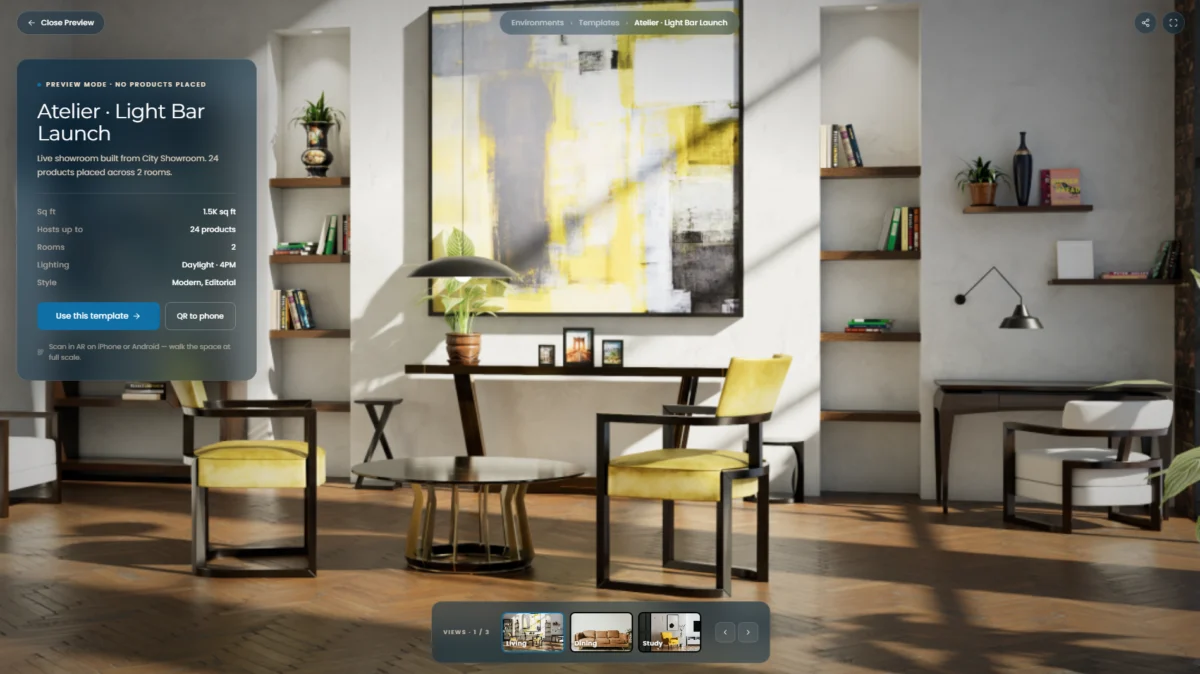
The professional landscape of architecture and interior design is currently undergoing a significant technological pivot, moving away from fragmented, manual information retrieval toward centralized, artificial intelligence-driven ecosystems. At the forefront of this shift is Bitreel, which recently launched its AI Knowledge Agents—a sophisticated suite of digital tools engineered to eliminate the administrative bottlenecks that frequently stifle the creative process. By integrating directly with existing enterprise workflows and leveraging the robust cloud infrastructure of Amazon Web Services (AWS), Bitreel aims to solve the persistent industry challenge of information latency, where designers lose critical hours to searching through scattered email threads, outdated spec sheets, and disconnected product databases.
The Problem of Fragmented Design Workflows
In a typical architecture or design firm, the creative process is often interrupted by the logistics of specification. Research indicates that senior designers and project managers spend approximately 20% to 30% of their billable hours navigating administrative tasks unrelated to design, such as verifying pricing, checking material availability, or tracking down specific product data across disparate vendor platforms. This "context switching"—the act of moving between creative ideation and mundane data retrieval—is widely recognized as a primary driver of burnout and inefficiency.
Bitreel’s solution addresses this by creating a unified layer of intelligence. Rather than forcing firms to adopt a rigid new operating system, the company focuses on building infrastructure that acts as a digital librarian. The AI Knowledge Agents function as an intuitive interface, capable of surfacing technical documentation and product specifications within seconds. This capability allows designers to maintain their cognitive momentum, ensuring that the transition from a concept sketch to a fully realized specification is fluid and unimpeded.
Chronology and Development of the Ecosystem
The launch of the AI Knowledge Agents represents the latest milestone in Bitreel’s multi-year strategy to digitize the interior design and architecture sector. The company’s trajectory began with a focus on visualization tools, recognizing early on that high-fidelity representation was only half the battle.

- Initial Phase (2022–2023): Bitreel focused on establishing its core visualization platform, emphasizing high-fidelity, photorealistic rendering capabilities to assist designers in client communication.
- Expansion Phase (2024): The introduction of the 3D Configurator marked a shift toward utility. By providing spec-ready, exact product configurations, the platform began to bridge the gap between aesthetic visualization and technical reality.
- Integration Phase (2025): The company initiated a strategic partnership with Amazon Web Services to build a secure, scalable data architecture, which served as the foundation for the current AI Knowledge Agents.
- Deployment Phase (Late 2026): The official rollout of the AI Knowledge Agents provides a cohesive interface for the entire Bitreel ecosystem, allowing for the synthesis of visualization, configuration, and data management.
Technical Architecture and Data Integrity
The effectiveness of the AI Knowledge Agents lies in their ability to handle "unstructured" data. In the architectural world, information exists in various formats—PDFs, CAD files, email chains, and proprietary vendor portals. Bitreel’s integration with AWS allows for the ingestion and indexing of this data, transforming it into a structured, searchable knowledge base.
Cosmo Kramer, CEO of Bitreel, emphasizes that the goal is invisibility. "The best infrastructure is the kind nobody has to think about," Kramer notes. "If someone is paying attention to the system instead of the work, we haven’t done our job yet." This philosophy guides the technical design of the agents: they are intended to function as a seamless extension of the designer’s thought process.
Furthermore, the system employs what the company refers to as "Bitreel Connect." This acts as a logical guardrail. Unlike general-purpose generative AI tools, which can sometimes produce "hallucinations" or non-feasible design suggestions, Bitreel’s agents are anchored by the underlying technical constraints of the products in their database. If a designer uses the AI to generate a virtual space, every element included in that space is checked for physical and commercial viability, ensuring that what the designer sees on their screen is something that can actually be procured and constructed.
Industry Adoption and Scalability
The platform has already seen significant uptake across a diverse client roster, including industry leaders such as HBF, 3form, and Hellman-Chang, as well as institutional clients like the U.S. General Services Administration. The adoption by such high-stakes organizations highlights the necessity of the platform’s security and reliability.
For large-scale organizations, the benefit of the AI Knowledge Agents extends beyond the individual designer. It provides a level of organizational consistency that was previously difficult to achieve. When every designer in a large firm has access to the same, real-time, verified information, the risk of error in specifications is significantly reduced. This minimizes the likelihood of costly change orders, shipping delays, and mismatched material orders, which are common pain points in complex commercial projects.

Analysis: Implications for the Future of Design
The implications of this technology for the broader design industry are profound. As AI-driven tools become more prevalent, the definition of a "designer" is shifting to include the role of a "systems orchestrator." The value of a designer in the future will be less about their ability to manually locate a spec sheet and more about their ability to synthesize complex project requirements using these advanced digital tools.
The competitive advantage for firms will likely hinge on their ability to integrate these technologies into their existing workflows. Bitreel’s approach—tailoring its system to the specific, existing practices of a firm rather than enforcing a standardized, "one-size-fits-all" workflow—is a significant differentiator. By spending time at the outset to understand a firm’s unique methodologies, Bitreel ensures that the AI agents become a permanent, reliable fixture of the firm’s infrastructure rather than a transient piece of software.
Data-Driven Design Efficiency
While the aesthetic quality of design remains subjective, the efficiency of the delivery process is quantifiable. Early feedback from firms using the integrated Bitreel suite suggests a measurable reduction in the time required for the specification phase of projects. By automating the retrieval of technical data, designers report that they are able to iterate more frequently. This rapid iteration cycle allows for better design outcomes, as designers can experiment with more options in the same amount of time they would have previously spent searching for data for a single solution.
Moreover, the collaborative nature of the AI Knowledge Agents allows for a more synchronous workflow between internal teams and external vendors. Because the data is live and updated, the "back-and-forth" communication—often involving multiple emails and phone calls—is minimized. This reduction in administrative friction is essential as project timelines in architecture and construction continue to tighten.
The Role of AI in Sustainable and Ethical Design
Looking forward, the integration of AI into design infrastructure also holds potential for sustainability. By making it easier to track material data, such as EPDs (Environmental Product Declarations) or sourcing information, designers can more easily prioritize sustainable options. When this information is readily available via the AI Knowledge Agents, it ceases to be an "extra step" and becomes a standard part of the selection process.

As Bitreel continues to refine its ecosystem, the focus remains on the synthesis of three pillars: visual representation, exact configuration, and intelligent information management. By grounding these digital capabilities in the realities of enterprise-level architecture, Bitreel is establishing a new standard for how firms manage the complex, information-heavy process of designing the built environment.
In conclusion, the launch of Bitreel’s AI Knowledge Agents marks a critical step toward the modernization of the architecture and design profession. By shifting the focus from manual data retrieval to intelligent, AI-assisted decision-making, the firm is providing the necessary tools to keep pace with an increasingly demanding industry. As more firms adopt these integrated infrastructures, the "creative flow" of design is likely to become more consistent, more efficient, and ultimately more impactful. For professionals interested in the intersection of technology and design, the evolution of the Bitreel platform will remain a key development to monitor in the coming fiscal years.