Cintya Tara Annisa
The San Antonio-based design studio Art of Caffeination has officially announced the launch of Taste-to-Ace: Cards About Coffee, a comprehensive 56-card deck designed to bridge the gap between casual coffee consumption and professional sensory analysis. Released on the Kickstarter crowdfunding platform on June 2, 2026, the project represents the culmination of three years of rigorous design, testing, and refinement. The initiative aims to provide an accessible entry point for everyday drinkers to identify complex flavor profiles, build vocabulary, and foster a deeper connection with specialty coffee without the steep learning curve traditionally associated with professional cupping protocols.
The launch of Taste-to-Ace follows the commercial and critical success of the studio’s inaugural product, Sip-to-Suit, which focused on brewing ratios and methods. While the first deck addressed the "how" of coffee preparation, Taste-to-Ace addresses the "what" and "why" of the tasting experience. By translating abstract sensory concepts into tangible visual cues, the deck seeks to demystify the Specialty Coffee Association (SCA) flavor wheel, which, while comprehensive, is often cited by newcomers as being overly technical or intimidating.
The Evolution of Coffee Education and the Taste-to-Ace System
The specialty coffee industry has seen exponential growth over the last decade, with the "Third Wave" of coffee emphasizing transparency, origin, and nuanced flavor profiles. However, as the industry has matured, the language used to describe coffee has become increasingly specialized. For many consumers, the jump from "tasting like coffee" to identifying "notes of stone fruit, bergamot, or toasted hazelnut" feels insurmountable.
Taste-to-Ace utilizes a proprietary system known as the "Flavor Trail" to solve this problem. This unique 3×3 card sequence functions as an intuitive map, guiding the user through a logical progression of sensory discovery. Instead of asking a user to immediately identify a specific fruit, the system encourages a broader identification of categories—such as acidity, body, or sweetness—before narrowing down to precise observations. This structured approach mirrors the methodology used by professional Q-Graders but packages it in a format that rewards curiosity rather than requiring prior certification.
Each of the 56 cards in the deck provides bite-sized insights and guided tasting cues. The visual design is central to the tool’s effectiveness; rather than relying solely on text, the cards use color theory and iconography to stimulate sensory memory. For example, cards associated with high-acidity coffees may use brighter, sharper visual elements, while those describing earthy or chocolatey notes utilize deeper, more grounded tones.
Industrial Design Meets Sensory Science: The Vincent Lam Approach
The development of Taste-to-Ace was led by Vincent Lam, an industrial designer with over 25 years of experience in creating consumer and medical products. Lam’s background in medical design—a field where clarity and user-centered interfaces can be a matter of safety—has been directly applied to the architecture of the coffee cards.
"Taste-to-Ace isn’t just about identifying flavor notes," Lam stated during the launch. "It’s about building confidence, enjoying the process of discovery, and giving people a clearer way to engage with what they taste without intimidation."
Lam’s design philosophy focuses on "purposeful visual learning." In the context of coffee, this means breaking down the complex chemical reactions that occur during roasting and brewing into understandable visual modules. The three-year development cycle involved extensive feedback from both professional baristas and home enthusiasts to ensure the deck remained a versatile tool. It is designed to function equally well as a study aid for those preparing for sensory exams, a reference tool for cafe staff, or a casual "gamified" experience for friends sharing a pot of coffee.
Technical Specifications and Edition Details
Recognizing that coffee education often happens in environments where spills are a constant risk, Art of Caffeination has released the deck in two distinct formats:
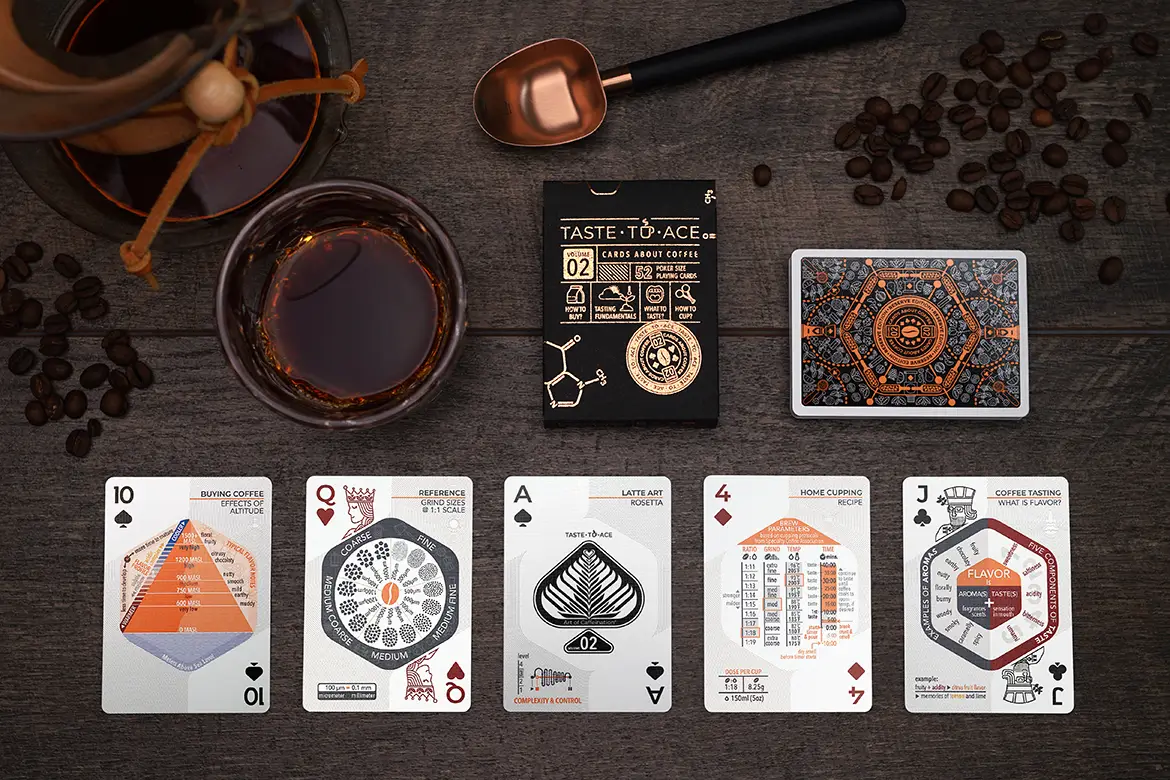
- The Reserve Edition: This version is printed on premium, casino-grade paper stock. It is designed for those who appreciate the tactile feel of traditional playing cards. This edition is being positioned as a "Kickstarter Exclusive," meaning it will be produced in a single print run and will not be available through traditional retail channels once the campaign concludes. This strategy targets collectors and early adopters within the specialty coffee community.
- The Waterproof Edition: Produced on durable PVC, this edition is specifically engineered for hands-on brewing environments. Whether it is used on a crowded cupping table or next to a home espresso machine, the cards are resistant to water and coffee stains. Unlike the Reserve Edition, the Waterproof Edition is slated for ongoing retail availability following the fulfillment of the Kickstarter campaign.
The decision to offer a PVC version reflects a growing trend in the "utility card" market, where enthusiasts require tools that can withstand the rigors of the hobby they are documenting.
Chronology of Development: From Sip-to-Suit to Taste-to-Ace
The journey to the June 2026 launch of Taste-to-Ace began shortly after the release of Sip-to-Suit in the early 2020s.
- 2023: Art of Caffeination began the initial conceptualization of a sensory-focused deck. The goal was to move beyond the "recipe" format and into the "tasting" format.
- 2024: Prototype testing began in San Antonio. Lam collaborated with local roasters to test the "Flavor Trail" logic against a wide variety of coffee origins, from high-altitude Ethiopians to low-acid Brazilians.
- 2025: The design underwent a significant overhaul to improve the hierarchy of information. Feedback indicated that the initial versions were still too text-heavy, leading to the current icon-forward design.
- Q1 2026: Final manufacturing samples were approved for both the casino-grade paper and the PVC stock.
- June 2, 2026: The Kickstarter campaign officially goes live, reaching its initial funding goal within the first few hours of launch (based on early campaign data).
Market Analysis and Broader Implications for the Coffee Industry
The release of Taste-to-Ace comes at a time when the "prosumer" market—home users who invest in professional-grade equipment and education—is at an all-time high. Data from the National Coffee Association (NCA) suggests that specialty coffee consumption has increased by over 20% among younger demographics in the last five years. This cohort values transparency and "the story" behind the bean, but they often lack the formal training to articulate why they prefer one roast over another.
Market analysts suggest that products like Taste-to-Ace serve as a vital "on-ramp" for the industry. By lowering the barrier to entry for sensory analysis, Art of Caffeination is effectively expanding the market for high-end specialty roasters. When a consumer can articulate that they enjoy the "citrus acidity and floral aroma" of a specific Gesha variety, they are more likely to continue investing in premium coffee products.
Furthermore, the deck addresses a long-standing critique of the specialty coffee world: its perceived "snobbery." By providing a physical tool that anyone can hold and use, the project shifts the power dynamic from the "expert" to the "drinker." This democratization of knowledge is a key trend in modern gastronomy, mirroring similar movements in the worlds of craft beer, wine, and spirits.
Institutional and Community Response
Initial reactions from the coffee community have been largely positive. Educators have noted that the deck could serve as a valuable supplementary tool for the "Introduction to Coffee" modules offered by various training academies. While not a replacement for the official SCA curriculum, it serves as a "pre-education" tool that makes the official standards feel more attainable.
Café owners have also expressed interest in the Waterproof Edition for staff training. Training new baristas to describe flavors to customers is a notoriously difficult task; the 3×3 Flavor Trail provides a standardized language that a team can use to ensure consistency in how they communicate with patrons.
About Art of Caffeination
Art of Caffeination is a Texas-based design studio dedicated to the intersection of industrial design and coffee culture. Founded by Vincent Lam, the studio operates on the principle that complex information should be beautiful and accessible. By leveraging decades of experience in high-stakes product design, Art of Caffeination continues to develop tools that empower coffee drinkers to explore their palate with confidence.
As the Kickstarter campaign progresses, the studio plans to release additional educational content and video tutorials demonstrating how to integrate the Taste-to-Ace deck into daily brewing routines. With the success of this launch, Art of Caffeination solidifies its position as a leader in the niche but growing field of tactile coffee education tools.