 Ali Ikhwan
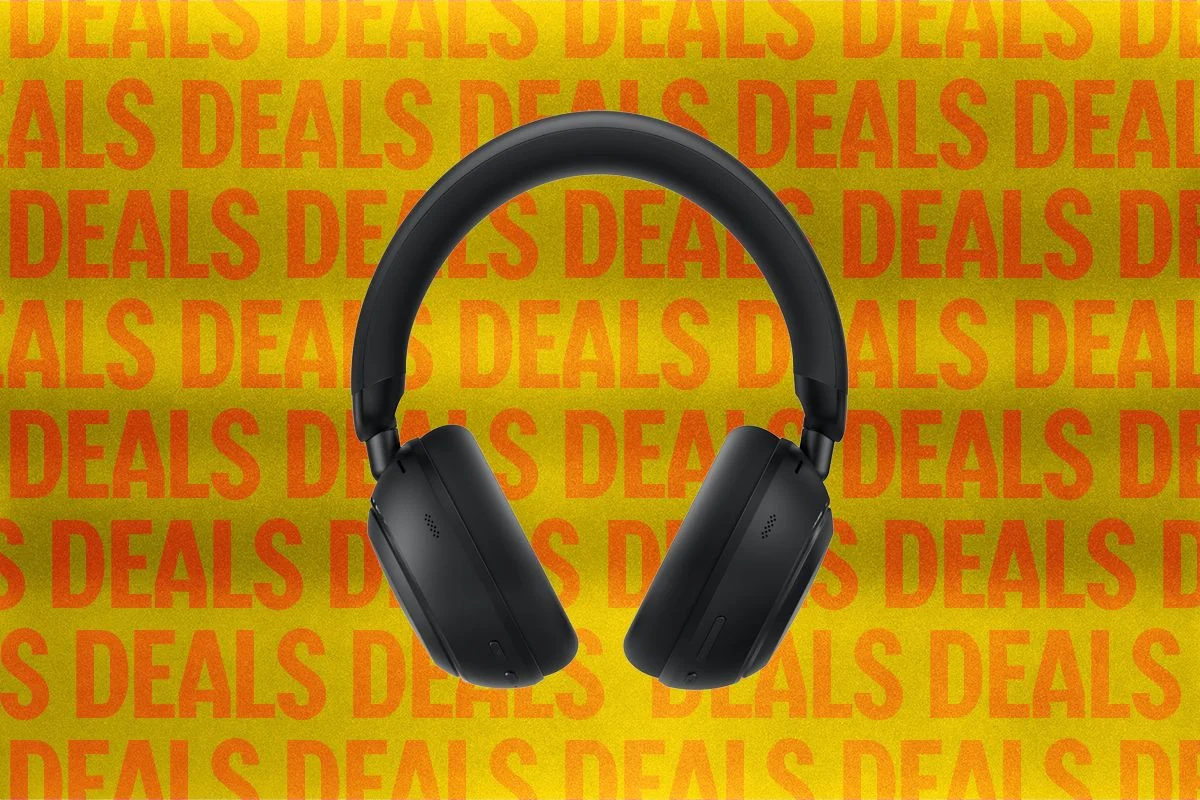
The Soundcore Space 2, the company’s latest iteration in its over-ear series, has currently reached its lowest price point since its market introduction in April. While early adopters saw moderate discounts during various seasonal sales, the current retail valuation—dropping to $106—marks a significant milestone for consumer electronics in the mid-range segment. This development provides an opportune moment to analyze why this specific model has become a benchmark for value-oriented audio engineering.
A Chronology of the Space Series
The evolution of the Soundcore Space series mirrors the broader trend of democratizing active noise cancellation (ANC) technology. When the original Soundcore headphones debuted, the industry standard for effective ANC was almost exclusively locked behind price points exceeding $300. The initial Space models were designed to challenge this barrier, utilizing proprietary algorithmic noise suppression that, while not matching the industry-leading depth of flagship models from Bose or Sony, provided sufficient isolation for the average commuter.
The Space 2, launched in April 2026, represented a refinement of these principles. By integrating updated Bluetooth protocols and more efficient battery management systems, Soundcore sought to address the common criticisms of the original lineup, specifically regarding long-term comfort and mechanical durability. Since its launch, the product has undergone several price fluctuations, beginning at a launch MSRP of $130, followed by incremental discounts during mid-year promotional events. The current price drop to $106, available across major retailers including Amazon and Best Buy, represents the most aggressive pricing strategy yet, signaling a clear push to capture market share ahead of the end-of-year shopping cycle.
Technical Specifications and Performance Data
The competitive edge of the Soundcore Space 2 lies in its synthesis of features that typically carry a premium surcharge. At its core, the device features a driver configuration optimized for clarity in the mid-to-high frequencies, complemented by an active noise cancellation suite that utilizes a hybrid feed-forward and feed-back microphone array.
Data gathered from laboratory-style testing indicates that the Space 2’s ANC capability is highly effective at attenuating low-frequency ambient drone, such as the hum of an airplane engine or the ambient noise of an office environment. Furthermore, the device boasts an impressive power efficiency rating. With ANC enabled, users can expect up to 50 hours of continuous playback. When the ANC is disengaged, this figure increases to 70 hours. In comparison, flagship models from primary competitors often struggle to exceed 30 to 40 hours of battery life under similar conditions, placing Soundcore in a leading position regarding power-to-weight efficiency.
The hardware design focuses on pragmatic ergonomics. The device utilizes physical tactile buttons rather than the capacitive touch sensors that have become standard in the industry. While touch sensors are often marketed as a premium feature, user data suggests that physical buttons remain superior for preventing accidental inputs and ensuring functionality in cold weather or while wearing gloves. The folding hinge mechanism has also been reinforced with industrial-grade polymers, addressing the mechanical failure points commonly seen in entry-level over-ear hardware.
Broader Market Implications for Budget Audio
The success of the Space 2, and the subsequent price adjustment, reflects a broader shift in the consumer electronics landscape. Manufacturers are increasingly realizing that the "budget" consumer is no longer willing to compromise on core features like noise cancellation or high-resolution codec support. Soundcore’s strategy of aggressive pricing combined with iterative, hardware-based improvements has forced other manufacturers to reconsider their own entry-level portfolios.

Analysts from the Consumer Technology Association have noted that the "value segment" is currently the fastest-growing sector in personal audio. As inflationary pressures impact discretionary spending, consumers are looking for "prosumer" capabilities at accessible price points. Soundcore’s model serves as a case study in supply chain efficiency; by utilizing Anker’s existing infrastructure for lithium-ion battery production and logistics, they are able to achieve economies of scale that smaller audio startups simply cannot match.
Other Notable Soundcore Developments
Beyond the over-ear Space 2, the broader Soundcore ecosystem has seen similar pricing adjustments that cater to diverse listening preferences. The Liberty 5, an earbud-based solution, is currently available at a reduced price point of $82. While these earbuds lack the advanced microphone arrays found in the high-end "Pro" series, they are notable for their slim form factor and integration with Soundcore’s proprietary application, which offers extensive EQ customization.
Additionally, the company has pivoted toward the open-ear design trend with the AeroFit 2. Priced at $80, this device is designed for users who prioritize situational awareness, such as runners or cyclists who need to remain cognizant of their surroundings. The adoption of open-ear technology in the budget tier represents a significant shift from a niche form factor to a mainstream option. By offering these alternatives, Soundcore is positioning itself as a comprehensive audio provider rather than a singular-product manufacturer.
Official Stance and Consumer Feedback
While Soundcore has not issued a formal press release regarding the current pricing of the Space 2, the alignment across major retail channels—Amazon, Best Buy, and independent electronics retailers—suggests a coordinated promotional strategy. User feedback on third-party forums and consumer review platforms has been largely positive, with particular emphasis on the balance between build quality and the "Soundcore signature" sound profile, which tends to favor a slightly boosted bass response that appeals to the general consumer market.
However, industry experts caution that the longevity of such products is often the trade-off for their lower cost. Unlike premium headsets, which are often modular and allow for the replacement of ear pads or batteries, the Space 2 is largely a sealed unit. Once the internal battery reaches its maximum charge cycle limit, the device’s utility will inherently decline. Consumers are advised to weigh this factor against the upfront cost savings.
Future Outlook
Looking toward the next fiscal quarter, the audio industry is expected to continue its focus on AI-integrated noise cancellation and spatial audio support. Whether Soundcore will integrate these features into the next iteration of the Space series remains a subject of speculation. For now, the current generation represents a mature product that has reached an optimal intersection of performance and price.
The downward pressure on the price of the Space 2 is an indicator of a highly competitive market environment. As we approach the final months of the year, consumers should expect continued volatility in the pricing of personal audio hardware. For those in the market for a reliable, long-lasting, and feature-rich over-ear headphone, the current offering provides a rare opportunity to acquire high-end functionality without the premium markup that has traditionally defined the category. The data confirms that the value proposition of budget-tier audio has fundamentally evolved, and devices like the Soundcore Space 2 are at the forefront of this transformation, proving that high-quality sound is no longer an exclusive luxury.