rifanmuazin
In the rapidly evolving landscape of digital communication, where brands and creators navigate a multitude of social platforms, the most astute among them are adopting a sophisticated, yet efficient, strategy: crossposting. This practice, far from being a mere shortcut, has emerged as a cornerstone of modern content distribution, allowing a single, well-crafted piece of content to resonate with diverse audiences across Instagram Reels, TikTok, X, Threads, LinkedIn, and beyond. As we look towards 2026, understanding the mechanics, strategic advantages, and nuanced application of crossposting is no longer optional but essential for maintaining a competitive and impactful online presence.
The Evolving Digital Ecosystem and the Rise of Multi-Platform Presence
The past decade has witnessed an explosion in social media platforms, each carving out its niche with unique formats, user demographics, and cultural norms. From the visual dominance of Instagram and TikTok to the professional networking prowess of LinkedIn, and the rapid-fire discourse of X and Threads, creators and businesses are faced with the daunting task of cultivating an active presence across multiple channels. This proliferation, while offering unprecedented reach, has simultaneously introduced significant challenges in terms of resource allocation, content production demands, and the ever-present threat of creator burnout.
Historically, the conventional wisdom dictated that each platform required bespoke content, meticulously tailored from scratch to fit its specific ethos. While this approach guaranteed authenticity, it proved unsustainable for many, particularly small businesses and individual creators with limited budgets and time. The sheer volume of content needed to maintain consistent engagement across three, four, or even five active channels could quickly overwhelm even dedicated teams. This growing pressure created a fertile ground for the strategic adoption of crossposting – a method designed to maximize content utility without compromising audience connection.
Defining Crossposting: Efficiency Meets Expanded Reach
At its core, crossposting is the strategic practice of sharing the same – or slightly adapted – piece of content across multiple social media accounts owned by the same entity. This allows a single creative asset to reach audiences on different platforms, eliminating the need to generate each version from the ground up. For instance, a musician like Ren, known for engaging video performances, seamlessly shares his captivating clips on both Instagram Reels and TikTok. The core content remains identical, yet it garners significant engagement across both platforms, effectively doubling his reach with a single creative effort.
It is crucial to differentiate crossposting from related, yet distinct, content strategies:
- Crossposting: Sharing your own content, with minor adjustments, across your owned multiple platforms (e.g., posting the same short video to Instagram Reels, TikTok, and YouTube Shorts). The emphasis is on efficiency and broader distribution of original work.
- Reposting: Sharing someone else’s content on your own account, typically with attribution, often using a platform’s built-in share feature (e.g., retweeting a customer’s testimonial on X). This is about amplifying external content or user-generated content.
- Repurposing: Significantly reworking existing content into a new format for a different platform (e.g., transforming a 30-minute YouTube video into six distinct 60-second TikTok clips, or converting a blog post into a LinkedIn carousel). This involves a higher creative lift and transforms the content into something substantially different.
While repurposing involves a heavier creative investment, crossposting offers a low-effort, high-impact solution for consistent multi-platform presence. Whether utilizing a platform’s native integration, such as Meta’s seamless sharing between Instagram, Facebook, and Threads, or leveraging advanced social media management tools like Buffer, the process is streamlined to just a few clicks, liberating creators to focus on content quality rather than repetitive distribution tasks.
The Strategic Imperatives: Why Crossposting is Indispensable
The widespread adoption of crossposting is driven by several compelling strategic advantages for brands and creators alike:

-
Time and Resource Optimization: This is arguably the most immediate and tangible benefit. In an era where content creation is relentless, crossposting can dramatically cut down on content production and distribution time. Industry reports suggest that strategic crossposting can reduce the time spent on content distribution by as much as 30-50%, allowing creators to channel their energy into crafting higher-quality primary content. Instead of logging into multiple apps, uploading, writing unique captions, and applying specific hashtags for each, a single piece of content can be deployed across several channels with only minor adjustments. For example, a single teaser video for a product launch can be effortlessly distributed across Instagram Reels, TikTok, and YouTube Shorts, with only slight caption and hashtag modifications required for each.
-
Expanded Audience Reach and Engagement: Social media audiences are fragmented. A user who actively engages with content on TikTok might rarely visit X, and vice-versa. Crossposting ensures that your content reaches a broader spectrum of your target demographic, increasing the likelihood of engagement. Even followers who exist on multiple platforms might miss a post on one channel but catch it on another, reinforcing brand recall and message penetration. Furthermore, different platforms attract distinct user bases; for instance, a brand’s Facebook Page might appeal to an older demographic than its Instagram account. Crossposting enables the same message to resonate with these varied groups, maximizing the return on a single content piece. Studies indicate that brands employing a multi-platform strategy through crossposting can see an average increase of 20-25% in overall content impressions compared to single-platform distribution.
-
Risk Mitigation and Platform Agility: Relying solely on one social media platform is a fragile strategy in 2026. Algorithms are constantly changing, platform policies can shift without warning, and accounts can face suspension. A diversified presence across two or three platforms acts as a crucial risk management strategy, protecting your reach and audience should any single platform experience a major disruption. By having your content distributed broadly, you build resilience and ensure your brand’s voice is not silenced by unforeseen platform-specific events. This agility is vital for long-term digital sustainability.
-
Efficient Platform Experimentation: Crossposting provides a low-stakes method for exploring new platforms without committing significant resources to entirely new content streams. Creators and brands can leverage existing, high-performing content to test the waters on emerging platforms or those where their presence is nascent. By observing engagement metrics on these new channels over a few weeks, data-driven decisions can be made about where to invest further creative effort. This iterative approach to platform expansion is highly cost-effective and helps identify new growth opportunities.
Navigating the Nuances: When and How to Crosspost Effectively
While the benefits are clear, effective crossposting requires careful consideration of platform specificities. A blanket "post everywhere" approach without adaptation can lead to content that feels out of place or performs poorly.
When NOT to Crosspost:
Platform-native formats or features that are deeply integrated into a specific platform’s user experience rarely translate well. Examples include LinkedIn carousels designed as multi-page PDFs, X polls, Instagram Stories with interactive stickers, or TikToks heavily reliant on platform-specific trending sounds and filters with on-screen text in a distinct font. These elements are inherently tied to their original environment and attempting to force them onto another platform often results in a disjointed or ineffective user experience.
Key Principles for Successful Crossposting:
-
Focus on Compatible Content Types: The easiest and most effective crossposting occurs between platforms that support similar content formats.
- Short-form Video (under 90s): TikTok, Instagram Reels, YouTube Shorts, Facebook Reels. Keep clips under 60 seconds for optimal cross-platform compatibility. Captions, trending audio (where permitted), and hashtags should be tailored.
- Long-form Text: LinkedIn, Threads, Facebook. LinkedIn supports up to 3,000 characters, while Threads has a 500-character limit. Content must be trimmed and optimized accordingly.
- Microblog/Short Text: X, Threads, Bluesky, Mastodon. X’s free tier caps posts at 280 characters, necessitating conciseness or expansion into threads. Threads offers more room, but brevity often performs best.
- Static Image + Caption: Instagram Feed, Facebook, Pinterest, LinkedIn. Images may need resizing (e.g., vertical 2:3 for Pinterest) and captions adjusted for length and call-to-action placement.
- Carousel/Multi-image: Instagram, LinkedIn, Facebook. Instagram allows up to 10 slides. LinkedIn’s native PDF carousels often outperform single images for professional content.
-
Match Content to Each Platform’s Audience and Culture: Every social platform cultivates a distinct culture and user expectation. Content must align with these norms to resonate. For instance, TikTok thrives on spontaneity and authenticity, making overly polished content feel out of place. Conversely, LinkedIn demands a more professional, value-driven tone. As social media strategists often highlight, "Content that flops with the wrong audience looks worse to that platform’s algorithm than the act of crossposting itself." Understanding your audience on each platform is paramount.
-
Customize Captions, Hashtags, and Dimensions: This is where the "lightly adapted" aspect of crossposting becomes critical.
- Character Limits: Adhere to platform-specific limits (e.g., X’s 280 characters for free users, Threads’ 500 characters, LinkedIn’s 3,000 characters).
- Video Lengths: Ensure videos fit maximum durations (e.g., Instagram Reels up to 90 seconds, TikTok generally up to 10 minutes but shorter videos often perform better, YouTube Shorts up to 60 seconds).
- Image Sizes: Optimize images and videos for recommended dimensions and aspect ratios (e.g., vertical 9:16 for short-form video, various ratios for static images).
- Platform-Specific Mentions: Avoid generic phrases like "link in bio" on platforms where direct links are supported. Update calls to action to be native to each platform (e.g., "See more on our website" with a direct link on Facebook, versus "Link in bio" on Instagram).
- Optimal Posting Times: Leverage analytics to schedule content when your audience is most active on each specific platform, as engagement peaks can vary significantly across networks.
Technological Facilitation: Tools for Seamless Crossposting
The feasibility of efficient crossposting in 2026 is largely due to advancements in platform integrations and third-party management tools.
-
Meta’s Built-in Crossposting: For content within the Meta ecosystem (Instagram, Facebook, Threads), native features allow for simultaneous publication. Users with connected Instagram professional accounts can easily share posts or Reels to a linked Facebook Page and Threads profile with a single tap. This functionality streamlines sharing for spontaneous content or updates intended for these closely related audiences.
-
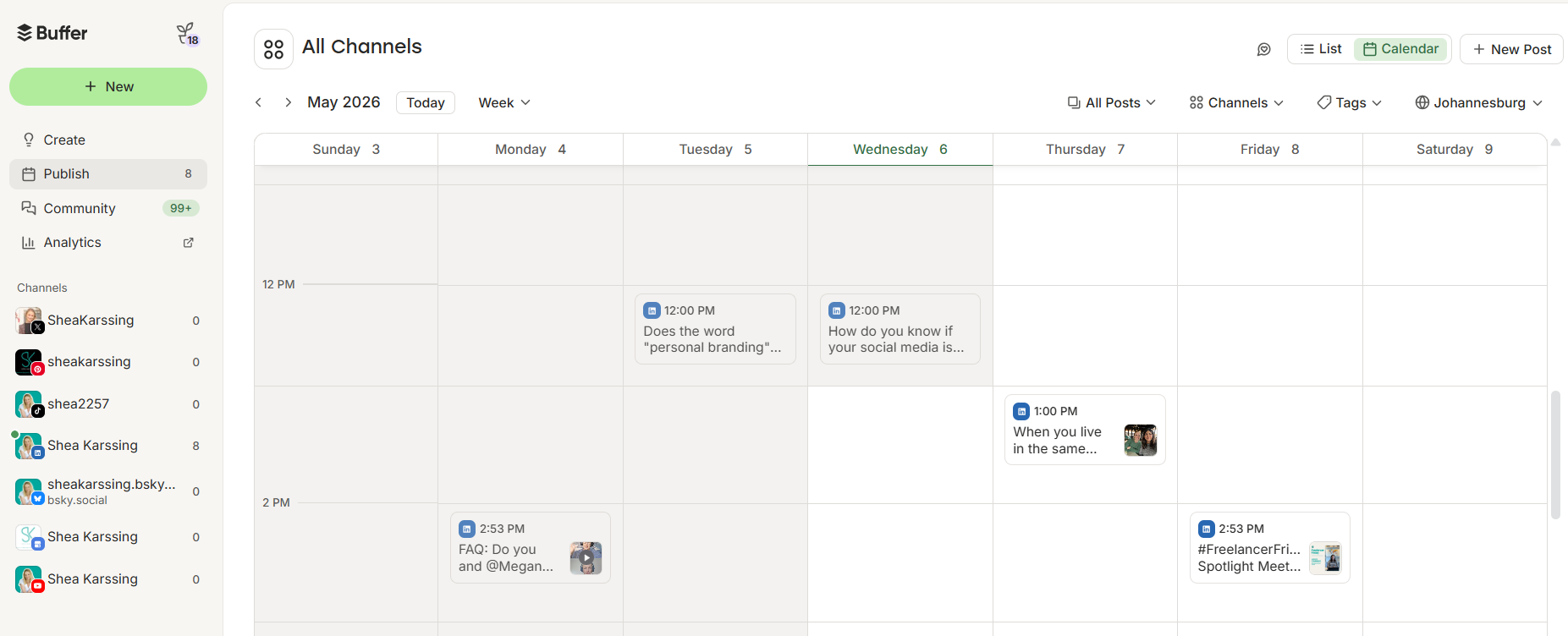
Third-Party Social Media Management Tools: For managing a broader multi-platform presence across X, LinkedIn, TikTok, YouTube, Pinterest, Bluesky, Mastodon, and other networks, dedicated social media management platforms are indispensable. Tools like Buffer offer a centralized dashboard where creators can:
- Draft a single piece of content and customize it for multiple selected channels.
- Adjust captions, hashtags, and media dimensions for each platform within the same interface.
- Schedule posts for optimal times across different networks.
- Leverage AI assistants to automatically adapt caption length, tone, and style for various platforms, significantly reducing manual effort.
- Duplicate existing posts for future crossposting, saving time on recurring content.
These tools transform what would otherwise be a tedious, manual process into a streamlined workflow, empowering creators to maintain consistency and reach without the risk of burnout. Buffer’s free plan, supporting up to three channels, provides an excellent entry point for creators looking to test the waters of strategic crossposting.
Broader Implications for Digital Strategy
The widespread adoption of crossposting signifies a fundamental shift in digital content strategy. It moves away from a resource-intensive, platform-centric creation model towards a more agile, content-centric approach. The focus is now on producing high-quality, adaptable core content that can be efficiently distributed and optimized for various digital touchpoints.
This shift also places a greater emphasis on sophisticated analytics. Brands and creators must diligently track the performance of crossposted content across all channels to understand which adaptations yield the best results on each platform. This data-driven feedback loop is crucial for refining crossposting strategies and maximizing overall ROI.
As AI and automation continue to advance, the capabilities for intelligent content adaptation and distribution will only grow. Future tools are expected to offer even more granular customization, predictive analytics for optimal timing, and perhaps even dynamic content generation based on platform-specific trends, making crossposting an even more potent force in the digital marketing landscape of tomorrow.
In conclusion, crossposting in 2026 is no longer a niche tactic but a foundational element of a robust digital presence. It embodies efficiency, expands reach, mitigates risk, and facilitates strategic growth. For brands and creators aiming to thrive in an increasingly complex social media ecosystem, mastering the art and science of intelligent crossposting is an unequivocal strategic imperative.