
 Ali Ikhwan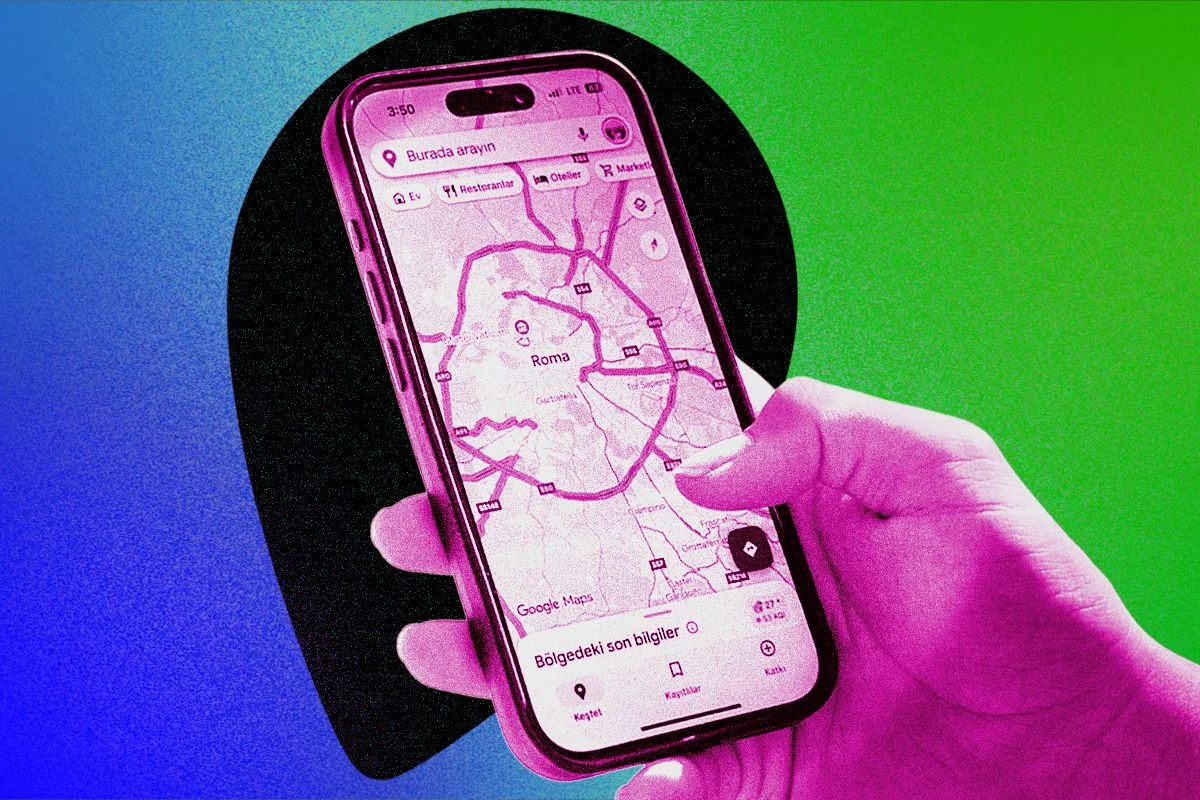
The integration of Global Navigation Satellite Systems (GNSS) into consumer hardware has fundamentally altered the landscape of personal logistics, safety, and social interaction. As of mid-2026, location-sharing technology has evolved from a novel luxury into a critical utility, utilized by billions of users worldwide to navigate urban environments, coordinate social gatherings, and provide a digital safety net for vulnerable individuals. Whether the objective is a routine meet-up in a crowded metropolitan center or an essential safety precaution during solo travel, modern smartphones offer a sophisticated suite of tools designed to broadcast real-time coordinates with high precision.

The shift toward "always-on" or "on-demand" location sharing reflects a broader societal acceptance of geospatial data as a currency for convenience. However, this convenience is balanced by increasingly granular privacy controls, allowing users to dictate exactly who sees their position and for how long. Understanding the mechanics of these tools—ranging from platform-agnostic applications like Google Maps to ecosystem-specific features like Apple’s Find My—is essential for any user navigating the modern digital ecosystem.
The Evolution of Geospatial Connectivity: A Chronology
The journey to real-time location sharing began in earnest in the late 2000s. In 2009, Google launched "Google Latitude," an early attempt at social positioning that was eventually integrated into Google Maps. Apple followed suit in 2011 with the "Find My Friends" application, which established the framework for the current "Find My" ecosystem.

By 2017, major messaging platforms, including WhatsApp and Facebook Messenger, recognized the demand for ephemeral location sharing, introducing "Live Location" features that allowed users to share their movement for durations ranging from fifteen minutes to eight hours. The period between 2020 and 2024 saw a significant pivot toward safety-centric features, such as Apple’s "Check In" and Google’s "Safety Check," which utilize automated triggers to notify emergency contacts if a user fails to reach a destination. By 2026, the refinement of Ultra-Wideband (UWB) technology and satellite-based SOS services has made location sharing possible even in environments lacking traditional cellular or Wi-Fi coverage.
Google Maps: The Universal Standard for Cross-Platform Sharing
Google Maps remains the most ubiquitous mapping service globally, boasting over one billion monthly active users. Its primary advantage lies in its cross-platform compatibility, functioning seamlessly across both Android and iOS devices. This makes it the preferred tool for groups utilizing a diverse range of hardware.

To initiate location sharing via Google Maps, a user must first ensure that their Google account is active and that location permissions are set to "Always" within the device settings. The process is initiated by tapping the profile icon located in the top-right corner of the search bar. Upon selecting "Location sharing," the user is presented with a "New share" option.
Google provides two primary modes of sharing: time-limited (adjustable by the hour) or "Until you turn this off." Once the duration is selected, the user can choose recipients from their contact list. If the recipient does not have a Google account, a unique URL can be generated and sent via SMS or third-party messaging apps. This link allows the recipient to view the sender’s real-time position on a web browser or within their own Google Maps app. The interface also provides ancillary data, such as the sender’s remaining battery percentage, which offers critical context during long-distance travel or emergency situations.

Apple’s Find My: Ecosystem Integration and Security
For users within the Apple ecosystem, the "Find My" application represents the pinnacle of integrated location services. Unlike third-party apps, Find My is baked into the operating system (iOS, iPadOS, and macOS), utilizing a proprietary mesh network of hundreds of millions of Apple devices to locate hardware and individuals even when they are offline.
Sharing a location with a contact via Find My requires the user to open the app and navigate to the "People" tab. By selecting "Start Sharing Location" (or the "+" icon), the user can enter the name or phone number of the recipient. Apple offers three temporal options: "Share for One Hour," "Share Until End of Day," or "Share Indefinitely."

A significant update in recent years is the "Check In" feature, which is nested within the Messages app. This allows a user to notify a family member or friend when they arrive at a specific location. If the user’s progress is diverted or stops unexpectedly, and they do not respond to prompts, the device automatically shares critical data—including the most recent location, battery level, and cellular signal strength—with the designated contact. This proactive approach to safety has been praised by personal safety advocates as a major advancement in mobile security.
Social Integration: WhatsApp and Facebook Messenger
Meta-owned platforms, WhatsApp and Facebook Messenger, have successfully integrated location sharing into the flow of conversation. This is particularly useful for "last-mile" coordination, such as finding a friend at a music festival or a busy transit hub.

In WhatsApp, the feature is accessed via the attachment icon (the paperclip on Android or the "+" on iOS) within a chat. Selecting "Location" provides two choices: "Send Your Current Location" (a static pin) or "Share Live Location." The latter is dynamic and updates as the user moves. Users can choose durations of 15 minutes, 1 hour, or 8 hours.
Facebook Messenger operates on a similar logic. By tapping the four-dot icon or the "+" icon in the composer bar and selecting "Location," users can start sharing their live coordinates for a 60-minute window. A notable feature in Messenger is the ability to see a "live" ETA if the person is moving toward a destination, a feature that utilizes Meta’s integration with various mapping APIs.

Emergency SOS and Personal Safety Protocols
The most critical application of location-sharing technology is in emergency response. Both Apple and Google have developed robust "Emergency SOS" frameworks that bypass standard UI hurdles to provide immediate assistance.
On an iPhone, Emergency SOS is triggered by holding the side button and one of the volume buttons simultaneously, or by rapidly pressing the side button five times. Once the countdown concludes, the device contacts local emergency services and, importantly, sends a text message to the user’s emergency contacts with their current location. If the user is in an area without cellular or Wi-Fi, iPhone models from 14 and later utilize "Emergency SOS via Satellite," connecting to low-earth orbit satellites to transmit location data and a brief medical ID to responders.

Android’s "Personal Safety" app provides a comparable service. Users can set up "Emergency Sharing," which is activated by a specific gesture (often five presses of the power button). This initiates a broadcast of the user’s real-time location to all emergency contacts. On Google Pixel devices, this feature also includes "Safety Check," which requires the user to check in after a set duration. If the user fails to respond, emergency sharing is automatically initiated.
Supporting Data and Market Impact
The widespread adoption of these features is supported by significant market data. According to a 2025 report on digital behavior, approximately 64% of smartphone users in North America and Europe utilize location-sharing features at least once a month. Among parents of teenagers, that number rises to 82%.

Emergency services have also noted the impact of this technology. Data from the National Emergency Number Association (NENA) indicates that the integration of precise GPS data into 911 calls has reduced response times in rural areas by an average of 15%. Furthermore, the "Find My" network’s expansion to include third-party devices has created a multibillion-dollar industry for tracking peripherals, highlighting the economic scale of the geospatial market.
Privacy Implications and Ethical Analysis
Despite the clear benefits, the rise of persistent location tracking has sparked intense debate regarding digital privacy and "surveillance capitalism." While the features described are opt-in, critics argue that the normalization of location sharing can lead to "interpersonal surveillance," where social pressure compels individuals to share their coordinates against their better judgment.

From a technical perspective, the risk of data interception is mitigated by end-to-end encryption (as seen in WhatsApp and Apple’s iMessage). However, the metadata generated by these services remains a valuable asset for tech conglomerates. Industry analysts suggest that the next frontier of location sharing will involve "obfuscated positioning," where users can share their general vicinity (e.g., "in the neighborhood") rather than their exact GPS coordinates, providing a middle ground between utility and anonymity.
Future Outlook: AI and 6G Connectivity
As the industry moves toward the 2030s, the integration of Artificial Intelligence (AI) and the rollout of 6G networks are expected to further refine location services. AI-driven predictive sharing will likely anticipate a user’s need to share their location based on calendar events or transit patterns. Meanwhile, 6G is projected to offer centimeter-level accuracy and enhanced indoor positioning, solving the current limitations of GPS in "urban canyons" and high-rise structures.

The evolution of these tools reflects a broader trend in mobile technology: the transition from the smartphone as a communication device to the smartphone as a contextual awareness engine. By mastering the various methods of location sharing, users can navigate the complexities of the modern world with greater efficiency and, most importantly, a heightened sense of security. Whether through the universal reach of Google Maps, the secure enclave of Apple’s Find My, or the social immediacy of Meta’s messaging apps, the ability to signal "I am here" has become an indispensable facet of the human experience in the digital age.







