
 Ali Ikhwan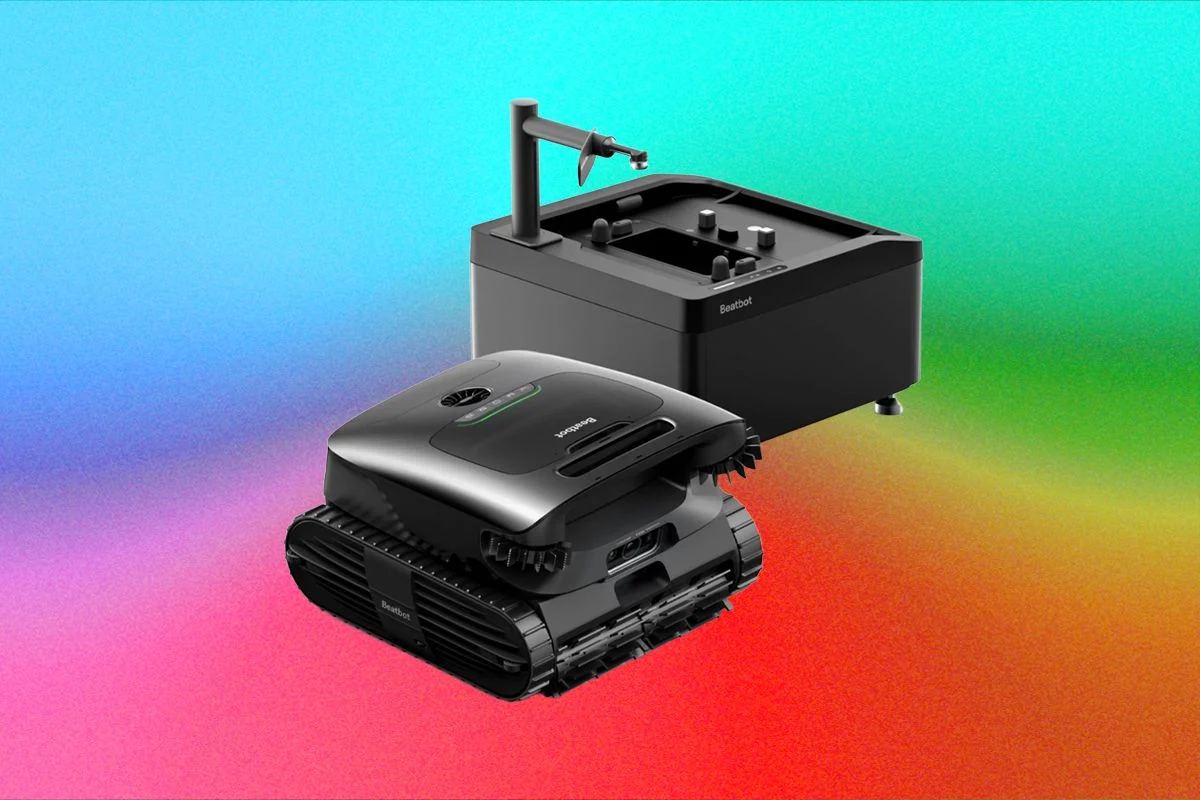
The landscape of residential pool maintenance is undergoing a significant technological shift as Beatbot introduces the AquaSense X, a robotic cleaner paired with the AstroRinse docking station. This system represents one of the first comprehensive attempts to automate not only the underwater scrubbing of pool surfaces but also the post-cleaning maintenance of the robot itself. By integrating a high-pressure rinsing system directly into the charging dock, the AquaSense X aims to eliminate the manual task of cleaning filter baskets, a chore that has long been the primary pain point for owners of traditional robotic pool cleaners.
The AquaSense X is a sophisticated, cordless robotic unit designed to handle floors, walls, waterlines, and the pool surface. It is accompanied by the AstroRinse station, a multi-functional dock that serves as a charging hub and a self-cleaning terminal. While the concept of self-emptying docks has become a standard feature in the indoor robot vacuum market—popularized by brands like iRobot and Roborock—the application of this technology to the aquatic environment presents unique engineering challenges, including the management of water pressure, drainage, and outdoor electrical safety.
Technical Specifications and Hardware Architecture
The Beatbot AquaSense X shares much of its internal architecture with the previously released AquaSense 2 Ultra, yet it introduces refined hardware meant to interface specifically with the AstroRinse dock. The robot is powered by a high-capacity 13,400 mAh lithium-ion battery, which provides a maximum runtime of approximately 4.5 hours when dedicated to floor cleaning. This battery capacity is essential for covering large residential pools, which can range from 800 to 1,200 square feet, ensuring the device can complete multiple passes without requiring a mid-cycle recharge.
Physically, the AquaSense X is a robust machine, weighing 29 pounds when dry. This weight increases significantly when the unit is saturated with water, a factor that users must consider regarding the ergonomics of retrieving the device from the pool. The internal filtration system has been modified from a two-piece basket design to a single-piece unit, specifically optimized to allow the AstroRinse’s high-pressure water jets to penetrate and clear debris more effectively.
The AstroRinse station itself is a complex piece of outdoor hardware. Unlike standard charging cradles, the AstroRinse requires three distinct environmental connections: a standard electrical outlet for power, a connection to a garden hose for water supply, and a suitable area for drainage. The station features adjustable feet and an integrated spirit level, as the high-pressure rinsing arm requires the unit to be perfectly level to ensure the water stream aligns precisely with the robot’s filter intake.

The Evolution of Robotic Pool Maintenance
To understand the significance of the AquaSense X, one must look at the chronology of pool cleaning technology. For decades, pool owners relied on suction-side or pressure-side cleaners that were tethered to the pool’s main pump and filter system. These "dumb" cleaners moved randomly and often missed spots, while placing additional strain on the pool’s plumbing.
The second generation of cleaners introduced independent robotic units. These were powered by low-voltage cables and contained their own internal filters. While more efficient, they still required users to manually haul a heavy, wet robot to a patio and spray out the filter bags or baskets with a hose. The third generation, which includes the AquaSense X, focuses on "cordless" operation and "autonomous maintenance."
Beatbot’s entry into this space follows a trend of increasing autonomy. The company has moved from basic navigation to the inclusion of onboard cameras and AI-driven path planning. The AquaSense X utilizes what the company calls "AI Quick Mode," which leverages an onboard camera to scan the pool floor for visible clusters of debris. Rather than following a pre-set pattern, the robot can prioritize areas that require the most attention, a feature that mirrors the "spot cleaning" capabilities of high-end indoor vacuum robots.
Installation and Connectivity Requirements
The setup process for the AquaSense X and the AstroRinse station is more involved than that of a standard plug-and-play robot. Users must first identify a permanent or semi-permanent location for the AstroRinse dock. This location must be within reach of a hose spigot and an outdoor-rated GFCI (Ground Fault Circuit Interrupter) outlet. Because the system utilizes high-pressure water to blast debris out of the robot, the resulting wastewater and sludge must be directed to a drain or a garden area that can handle the runoff.
Connectivity is handled through the Beatbot mobile application, which requires both Bluetooth for initial setup and a 2.4 GHz or 5 GHz Wi-Fi connection for ongoing management. The pairing process involves a specific sequence of physical button presses on both the robot and the dock to establish a secure wireless link. This link allows the dock to "know" when the robot has been docked and to initiate the cleaning cycle automatically.
During initial field testing, it was noted that firmware updates are a frequent occurrence for these smart devices. In some instances, a firmware update to either the robot or the dock may require the user to re-pair the devices to ensure seamless communication. This highlights the "software-defined" nature of modern pool maintenance, where performance improvements are delivered via the cloud rather than hardware changes.

Performance Analysis: Floor, Wall, and Surface Cleaning
The AquaSense X demonstrated high efficiency in submerged cleaning tasks. In controlled testing involving both organic debris (leaves, acorns) and synthetic test materials (sand, small plastic beads), the robot captured an average of 97 percent of floor debris. Its ability to navigate vertical walls and clean along the waterline remains a standout feature, utilizing specialized scrubbers to remove the "scum line" that often forms at the water’s edge.
However, the performance of the surface skimming function remains a point of contention. While the AquaSense X is equipped with spinning side brushes designed to pull floating leaves into its path, it captured less than 50 percent of floating debris in real-world scenarios. The unit’s movement speed on the surface is often too slow to create the necessary suction for effective skimming, leading to a situation where the robot occasionally sinks floating debris rather than collecting it. For pools located under heavy tree canopies, users may find that a dedicated surface skimmer or manual netting is still required.
The AstroRinse Mechanism: A Deep Dive into Self-Cleaning
The "main event" of the AquaSense X system is the AstroRinse cycle. Once the robot has completed its cleaning mission, it parks itself at the waterline for retrieval. The user must then carry the unit to the AstroRinse station. Once seated, the dock’s mechanical arm swings into position over the robot’s skimming mouth.
The system then initiates a three-minute high-pressure rinse. The sound is comparable to a small pressure washer, as water is forced through the filter basket from the top down. The debris is flushed out of the robot and into a secondary collection basket located within the base of the AstroRinse dock. This secondary basket is covered with a fine mesh net, which the user can eventually empty much less frequently than the robot’s internal filter.
The AstroRinse offers two modes:
- Standard Rinse: A three-minute cycle for heavy debris loads.
- Quick Rinse: A one-minute cycle for maintenance cleans.
This process ensures that the robot’s internal filters remain clear, maintaining optimal suction power for the next cleaning cycle without the user ever having to touch the dirty filter basket inside the robot.

Market Implications and Consumer Considerations
The introduction of the Beatbot AquaSense X marks a move toward the "premiumization" of the pool supply market. With a higher price point than standard robotic cleaners, the value proposition rests entirely on the time saved through automation.
Industry analysts suggest that the demand for such devices is driven by an aging demographic of pool owners and a general trend toward "smart home" integration. However, the logistical requirements of the AstroRinse station—specifically the need for power, water, and drainage in close proximity—may limit its adoption in older homes where outdoor utilities are not as accessible.
Furthermore, the weight of the unit remains a hurdle for universal accessibility. At 29 pounds, the AquaSense X is one of the heavier units on the market. While the AstroRinse eliminates the need to clean the filter, it does not yet eliminate the need for the user to manually move the robot from the pool to the dock. Future iterations of this technology may focus on "auto-docking" capabilities, where the robot climbs out of the water autonomously, though such technology is currently in its infancy and faces significant mechanical hurdles.
Final Summary of Impact
The Beatbot AquaSense X and the AstroRinse station represent a significant milestone in the journey toward a fully autonomous backyard. By successfully migrating the self-cleaning dock concept from the living room to the pool deck, Beatbot has addressed one of the most tedious aspects of pool ownership.
While the system is not without its limitations—most notably the mediocre surface skimming performance and the specific site requirements for the dock—it sets a new benchmark for what consumers can expect from high-end pool maintenance technology. As AI-driven navigation continues to improve and hardware becomes more integrated, the "set it and forget it" dream of pool maintenance is becoming an attainable reality for the modern homeowner. The AquaSense X is a testament to the fact that the future of home maintenance is not just about doing the work, but about the machine taking care of itself after the work is done.







