
 Indra Kusuma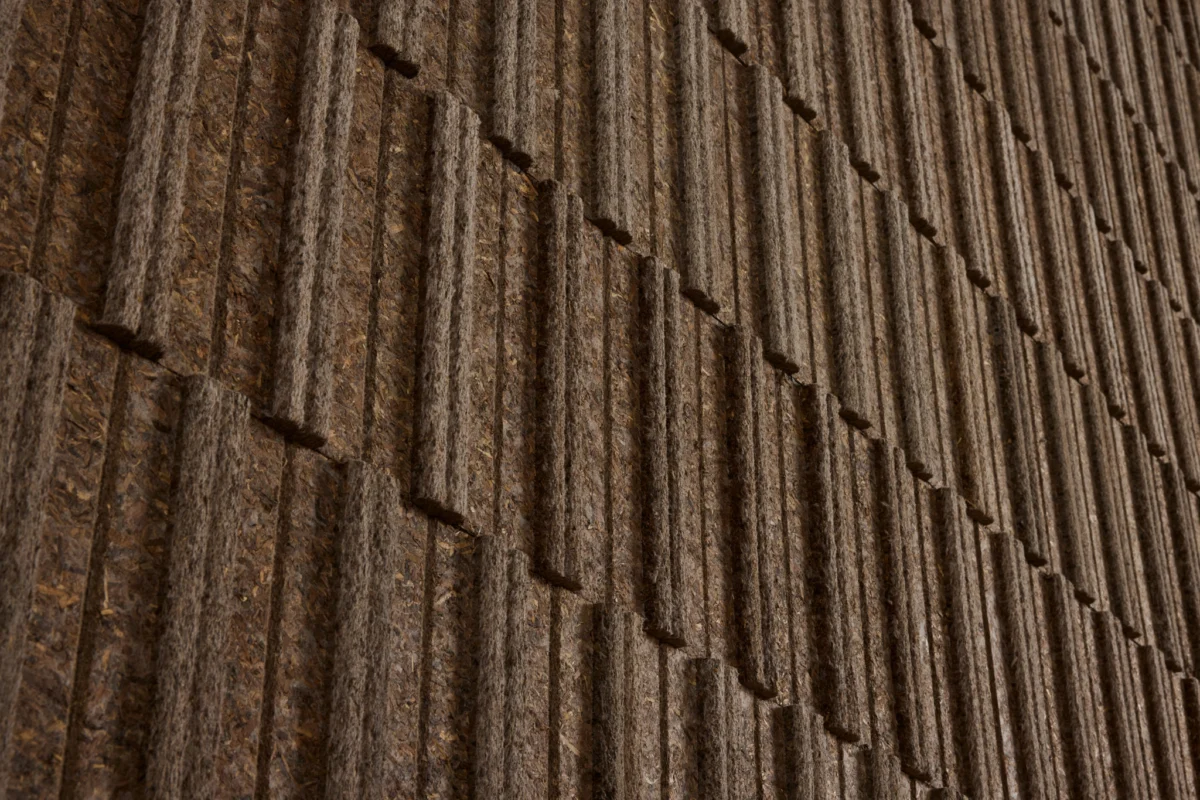
The critical role of acoustic treatments in shaping the comfort and functionality of interior spaces is often underestimated, yet poorly managed acoustics can render a room loud, uncomfortable, and visually discordant if integrated without aesthetic consideration. In response to this prevalent challenge, and with a keen eye on environmental stewardship, Spinneybeck, in collaboration with Danish material manufacturer Sould, has introduced Sould Fragments, a groundbreaking modular acoustic tile line. This innovative collection not only addresses the need for effective sound dampening but also pioneers a sustainable approach by giving new life to eelgrass, a natural, carbon-storing marine plant. Sould Fragments stands as a testament to the potential for design to merge high performance with profound ecological responsibility, transforming what might otherwise be considered waste into a product of compelling aesthetic and functional value. The line expands upon Spinneybeck’s existing Sould Eelgrass collection, further cementing the partnership’s commitment to circular economy principles by ingeniously utilizing material offcuts.
Beyond Aesthetics: The Science of Sound in Architecture
Modern architectural trends, particularly the proliferation of open-plan offices, expansive hospitality venues, and minimalist residential designs, frequently prioritize visual openness and sleek aesthetics. While these designs offer many advantages, they often inadvertently create acoustic nightmares. Hard surfaces, high ceilings, and minimal soft furnishings contribute to excessive reverberation, making conversations difficult, increasing stress levels, and diminishing overall comfort. In workplaces, poor acoustics can significantly reduce productivity and concentration. In restaurants and hotels, it can detract from the customer experience, leading to negative perceptions and reduced patronage. Even in residential settings, unwanted noise can disrupt relaxation and privacy.
Traditional acoustic solutions, such as mineral wool, fiberglass panels, or synthetic foams, have long been employed to mitigate these issues. While effective, many of these materials come with their own set of environmental considerations, including energy-intensive production, reliance on non-renewable resources, and challenges in end-of-life disposal. The growing global awareness of climate change and resource depletion has spurred a significant demand for building materials that are not only high-performing but also sustainable, non-toxic, and circular in their lifecycle. Architects, designers, and developers are increasingly seeking alternatives that align with green building certifications and broader corporate social responsibility objectives. This evolving landscape has created a fertile ground for innovations like Sould Fragments, which offers a compelling alternative to conventional sound absorption methods by leveraging the inherent properties of natural, renewable resources.
From Marine Ecosystems to Modern Interiors: The Journey of Eelgrass
The core material behind the Sould collection, including the new Fragments line, is eelgrass (scientifically known as Zostera marina), a fascinating marine flowering plant. Often mistaken for seaweed, which is algae, eelgrass plays a vital role in coastal ecosystems worldwide. It forms vast underwater meadows, particularly in shallow, protected coastal waters, acting as a critical habitat and nursery ground for numerous marine species, including fish, crustaceans, and shellfish. Beyond its role in biodiversity, eelgrass is a powerful natural carbon sink, efficiently sequestering carbon dioxide from the atmosphere and storing it in its leaves and root systems, making it a crucial component of "blue carbon" ecosystems. Its capacity to store carbon is estimated to be significantly higher per square meter than terrestrial forests, highlighting its immense ecological value in combating climate change.
The eelgrass utilized in Spinneybeck’s Sould products is harvested from the Danish coastline. This harvesting process is carefully managed and adheres to principles of ecological sustainability. Rather than actively dredging or cultivating, the material is collected after it has completed its natural life cycle and washed ashore. This ensures that the living eelgrass meadows remain undisturbed, preserving their ecological functions. Once collected, the leafy green material undergoes a meticulous drying and processing procedure. This transformation prepares the eelgrass for its new purpose: to be recomposed into acoustic products that bring not only sound-dampening capabilities but also a unique warmth and natural texture to indoor environments. The inherent properties of eelgrass – its fibrous structure, natural salinity (which provides fire resistance), and durability – make it an ideal candidate for architectural applications, particularly where sustainability and natural aesthetics are paramount.
Historical Precedent: The Seaweed Houses of Læsø
While its application in contemporary acoustic tiles is innovative, the use of eelgrass as a building material is far from new. The Danish island of Læsø, nestled in the Kattegat Sea, holds a remarkable historical precedent for this practice. Beginning in the 17th century, settlers on Læsø developed a unique architectural tradition, constructing homes with thick, insulated thatched roofs made almost entirely from dried eelgrass. These structures, affectionately known as "seaweed houses" (tanghuse in Danish), were born out of necessity and ingenuity. The island lacked forests for timber and traditional thatch materials, but had an abundance of washed-ashore eelgrass.
The construction of these roofs was an elaborate and labor-intensive process. Large quantities of eelgrass were gathered, dried, and then meticulously braided into thick ropes. These ropes were then laid onto the roof structure, sometimes reaching depths of up to two meters. The density of the eelgrass provided exceptional insulation, keeping homes warm in winter and cool in summer, a natural form of climate control long before modern HVAC systems. Furthermore, the high salt content of the eelgrass rendered the roofs naturally fire-resistant, a significant advantage in an era prone to devastating fires. The extreme durability of these roofs is legendary; many original seaweed roofs on Læsø lasted for over two centuries, some even three, with minimal maintenance.
The practice of building seaweed houses began to decline in the early 20th century, primarily due to a devastating fungal disease that decimated eelgrass beds and the increasing availability of cheaper, mass-produced roofing materials. However, a concerted effort has been made in recent decades to preserve and restore these unique cultural heritage sites. This historical context provides a powerful narrative for Spinneybeck’s Sould collection, demonstrating the enduring utility and resilience of eelgrass as a building material. It connects contemporary design with a rich past, underscoring the timeless wisdom of utilizing local, natural resources in construction.
A Partnership Forged in Sustainability
The collaboration between Spinneybeck and Sould represents a strategic alignment of values and expertise. Spinneybeck, a venerable name in architectural materials, particularly renowned for its high-quality leather products, has increasingly diversified its portfolio to include innovative, sustainable solutions. This expansion reflects a broader industry shift towards environmentally conscious sourcing and manufacturing. Sould, on the other hand, is a Danish material manufacturer deeply committed to exploring and transforming natural, often overlooked, resources into functional and beautiful products. Their foundational ethos revolves around circularity and honoring the intrinsic properties of natural materials.
Tobias Øhrstrøm, founder of Sould, articulated this philosophy, stating, "We believe that the end-use must be considered to honor the story of eelgrass fully. That is why we are making products that can have a long life, be recycled, and be part of systems designed for repair, disassembly, and reuse." This statement encapsulates the rigorous approach Sould takes to product development, emphasizing not just the immediate aesthetic and functional benefits, but the entire lifecycle and ecological footprint of their materials. For Spinneybeck, partnering with Sould allows them to offer cutting-edge, environmentally responsible acoustic solutions that meet the stringent demands of modern architectural projects, while also tapping into a unique material story. This partnership exemplifies how established industry players can leverage specialized material innovators to push the boundaries of sustainable design.
Innovation in Design: The Modular Advantage of Sould Fragments
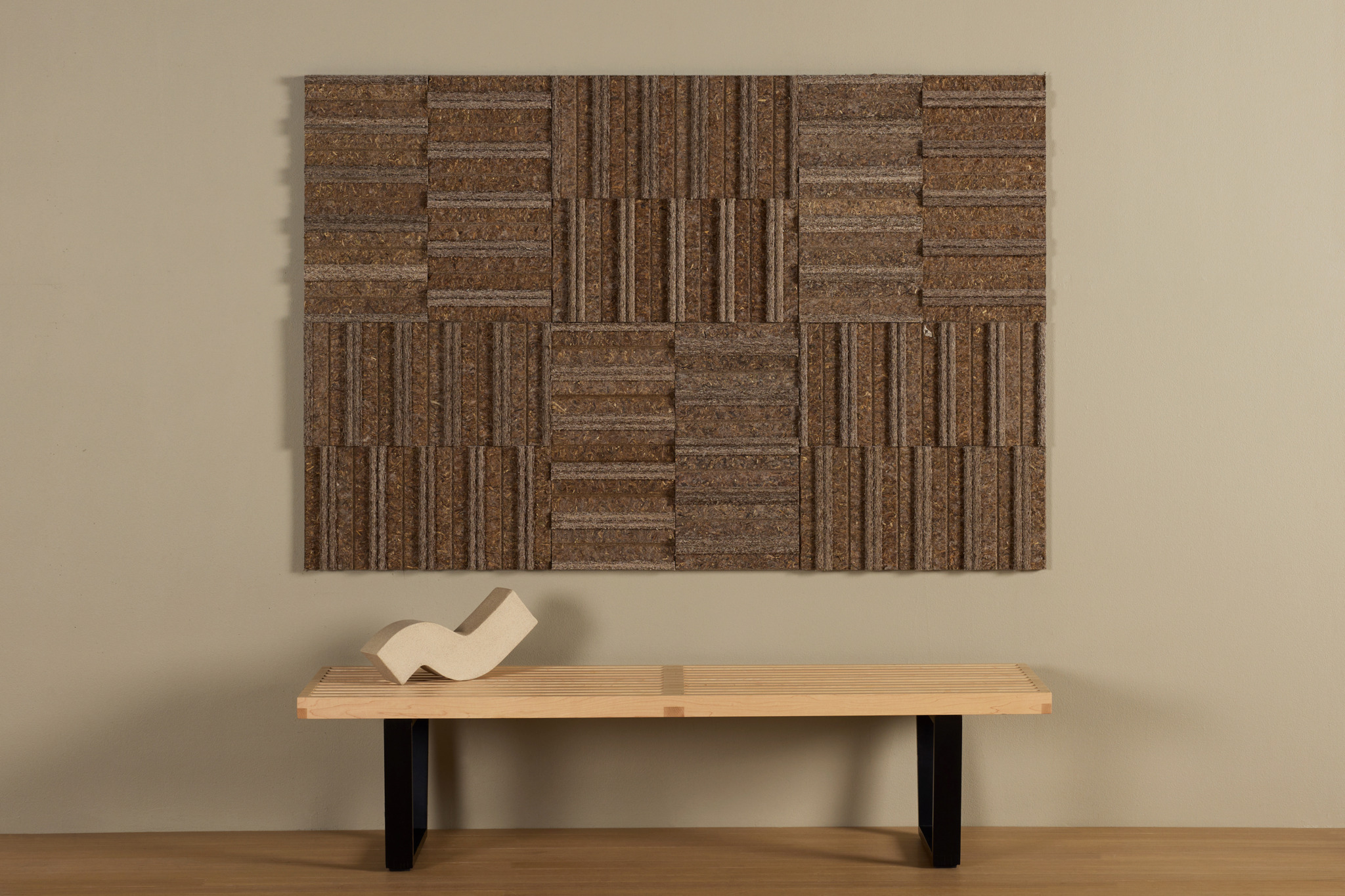
The Sould Fragments collection builds upon the success of the initial Sould Eelgrass line by introducing a modular design approach, addressing both aesthetic versatility and resource efficiency. As its name suggests, Sould Fragments is ingeniously crafted from the offcuts generated during the production of larger eelgrass mats and boards. This "waste-to-resource" methodology is a cornerstone of circular economy principles, transforming what would traditionally be discarded into valuable new products. By recomposing these leftover materials, the Fragments line not only minimizes waste but also inherently creates a product with enhanced variation and texture. Each tile becomes a small, unique canvas of compressed eelgrass fibers, offering a subtle yet distinct visual character that is difficult to replicate with virgin materials.
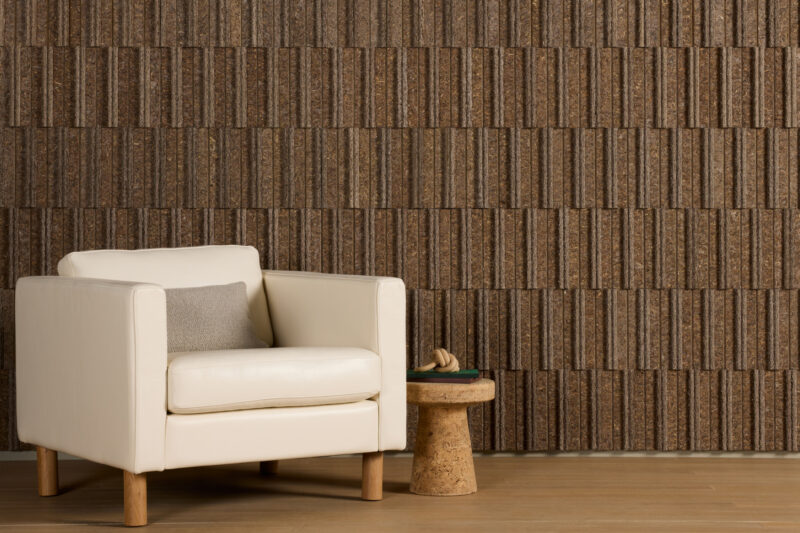
The modular nature of Sould Fragments provides designers with unparalleled flexibility. The tiles feature soft, rounded edges with precise chamfer detailing, allowing for seamless and aesthetically pleasing application. They are also available in two coordinating variations, which can be combined to create a myriad of installation patterns and scales. This allows for a high degree of customization, enabling designers to craft bespoke acoustic treatments that are perfectly tailored to the specific dimensions, aesthetic goals, and functional requirements of any given space. Whether the objective is to create a subtle background texture, a dynamic geometric pattern, or a focal point of natural elegance, Sould Fragments offers the tools to achieve it. The visual rhythm and subtle dimension created by these tiles inherently celebrate the natural character of the eelgrass, introducing an organic, biophilic element into interiors that resonates with a growing demand for connection to nature.
Performance Meets Sustainability: The 0.70 NRC Rating
Beyond its striking aesthetic and profound sustainable credentials, the Sould Fragments collection delivers exceptional acoustic performance. The new line achieves a Noise Reduction Coefficient (NRC) rating of 0.70. The NRC is a single-number rating system that quantifies how much sound energy a material absorbs when sound waves strike it, on a scale from 0 (perfectly reflective) to 1 (perfectly absorptive). An NRC of 0.70 indicates that the material absorbs 70% of the sound energy it encounters. This is a highly respectable rating, signifying that Sould Fragments is as effective as many traditional, often synthetic, acoustic solutions.
This performance metric is crucial for its adoption in professional settings. For architects and interior designers working on commercial projects—such as corporate offices, educational institutions, healthcare facilities, and hospitality venues—acoustic performance is not merely a luxury but a fundamental requirement for creating functional and comfortable environments. An NRC of 0.70 means that Sould Fragments can significantly soften sound in these diverse settings, improving speech intelligibility, reducing background noise, and contributing to a more pleasant atmosphere. For residential interiors, this translates to greater tranquility and comfort, reducing echoes in open-plan living areas or enhancing the peacefulness of bedrooms and studies. The ability to achieve such high performance using a sustainable, natural material like eelgrass positions Sould Fragments as a leading choice for projects aiming to balance environmental responsibility with uncompromising functionality.
Embracing Circularity: The Upcycling of Offcuts
The design and manufacturing process of Sould Fragments is a prime example of circular economy principles in action. In traditional linear manufacturing models, offcuts and production scraps are often considered waste, destined for landfills or incineration. The creation of Sould Fragments directly challenges this paradigm by viewing these "leftover materials" not as waste, but as a valuable resource. By taking the eelgrass offcuts generated from the production of larger Sould mats and boards and recomposing them into modular tiles, Sould and Spinneybeck demonstrate a closed-loop system where material inputs are maximized and waste outputs are minimized.
This approach offers multiple environmental benefits. Firstly, it reduces the overall demand for virgin materials by ensuring that every usable piece of harvested eelgrass is incorporated into a product. Secondly, it diverts waste from landfills, reducing the environmental burden associated with disposal. Thirdly, the process of recomposing offcuts often requires less energy than processing raw materials from scratch, contributing to a lower carbon footprint for the final product. Tobias Øhrstrøm’s emphasis on products having a "long life, being recycled, and being part of systems designed for repair, disassembly, and reuse" underscores this commitment. This philosophy extends beyond the initial production, encouraging a holistic view of the product’s entire existence, from its marine origins to its potential for future reincarnation.
The Growing Demand for Biophilic and Circular Materials
The launch of Sould Fragments aligns perfectly with several powerful trends sweeping the architecture and design industries. There is a surging interest in biophilic design, which seeks to connect building occupants more closely with nature through direct natural elements, indirect natural elements, and spatial and place conditions. Materials like eelgrass, with their organic textures, earthy tones, and natural origins, are ideal for achieving biophilic environments that promote well-being, reduce stress, and enhance creativity. The visual and tactile qualities of Sould Fragments, with its subtle dimension and natural character, offer a tangible connection to the marine environment, fostering a sense of calm and authenticity within an interior space.
Furthermore, the imperative for sustainable and circular materials is no longer a niche concern but a mainstream expectation. Companies are increasingly scrutinized for their environmental, social, and governance (ESG) performance, and architects and designers are tasked with specifying materials that contribute to healthier buildings and a healthier planet. Sould Fragments provides a compelling answer to this demand, offering a product that boasts a transparent and positive environmental story: carbon-storing material, waste upcycling, and a commitment to longevity and recyclability. This positions the collection not just as an acoustic solution, but as a statement of environmental responsibility.
Setting a New Standard for Architectural Acoustics
Whether installed in a sprawling, open-concept corporate headquarters, a bustling urban café, or a serene residential living area, Sould Fragments offers a unique blend of functionality and aesthetic appeal. The product’s versatility allows for creative expression while delivering critical acoustic comfort. Its ability to introduce subtle dimension and visual rhythm ensures that acoustic treatment becomes an integral, beautiful part of the design narrative, rather than a utilitarian afterthought.
In an era where the environmental impact of every design decision is under scrutiny, Spinneybeck’s Sould Fragments sets a new benchmark for sustainable acoustic solutions. By reviving an ancient material, embracing circular manufacturing, and delivering high-performance sound absorption, this collection not only addresses a critical need in modern architecture but also champions a future where design innovation and ecological responsibility are inextricably linked. It serves as a powerful reminder that the solutions to contemporary challenges can often be found by looking to nature’s wisdom and our historical ingenuity.







