
 Indra Kusuma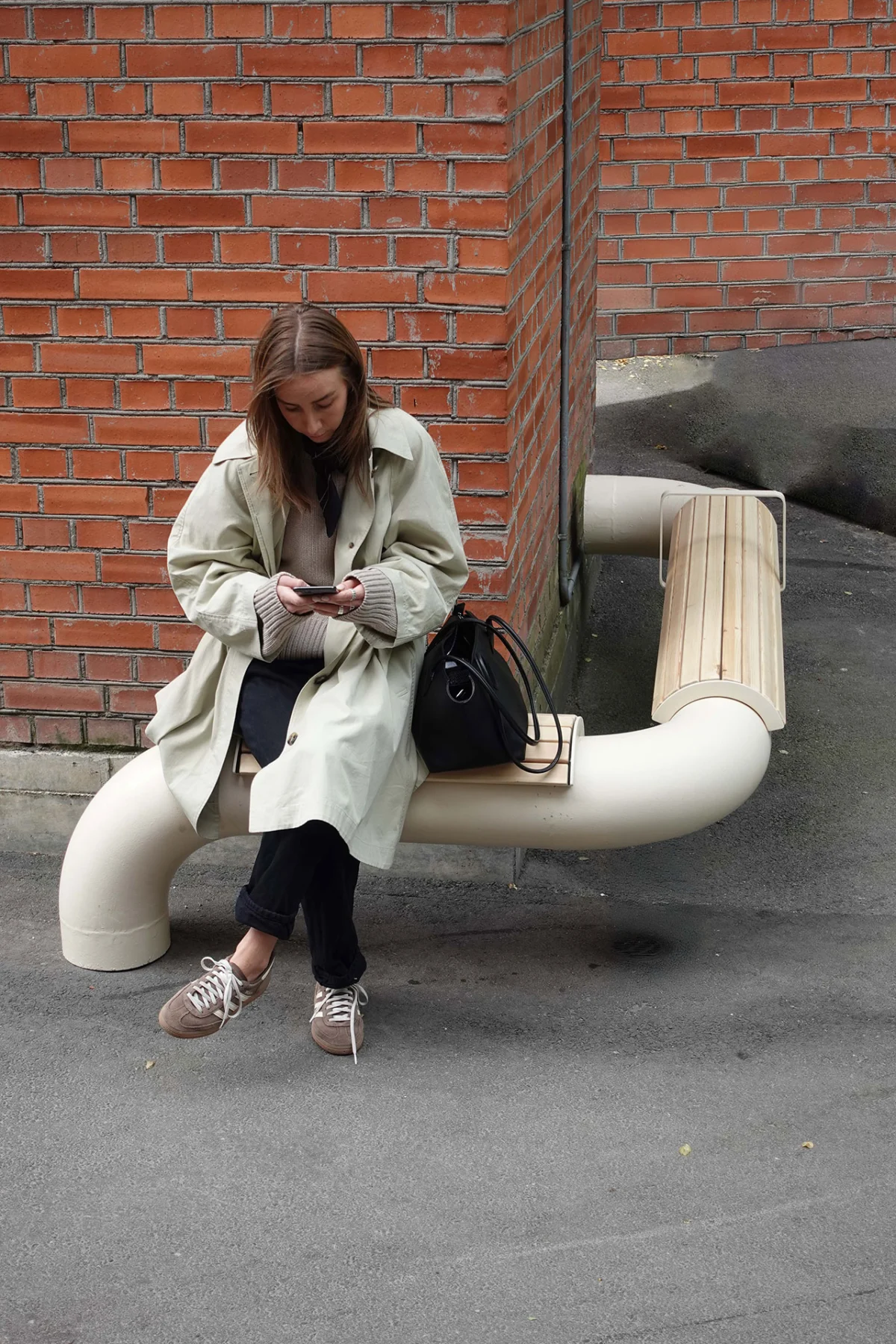
Modern societies often operate under the assumption of having mastered the intricacies of urban living, continuously striving for efficiency and convenience through technological advancements. From the printing press, which once sparked fears among philosophers that knowledge would become mired in pages, to the ubiquitous smartphone, each technological leap has undeniably optimized aspects of daily life. Yet, a fundamental question persists in the realm of thoughtful design: just because innovation allows for something, does it inherently mean it should be pursued? This critical inquiry forms the bedrock of OUTSIDERS, an exhibition born from the collaborative vision of lije studio and Amorf Praxis. The exhibition deliberately confronts the evolving dynamic between individuals and their shared environments, particularly in public, by re-envisioning the design and utility of "third spaces" – those crucial informal gathering places that are increasingly threatened in contemporary urban landscapes.
The Erosion of Third Spaces: A Modern Urban Challenge

The concept of "third spaces," coined by sociologist Ray Oldenburg in his 1989 book The Great Good Place, refers to environments distinct from home (first place) and work (second place) that foster informal social interaction and community building. These can be cafes, parks, community centers, or even well-designed street corners. Oldenburg argued that these spaces are vital for civic life, promoting social cohesion, a sense of belonging, and offering an escape from the stresses of private and professional life. Historically, such spaces have been central to urban living, from the ancient Greek agora to the bustling European piazzas. However, in recent decades, urban planners and sociologists have observed a worrying trend: the gradual disappearance of these essential communal areas. Factors contributing to this erosion include the rise of digital connectivity, which often substitutes physical interaction; increasing privatization of public areas; and the proliferation of "hostile architecture" or "defensive design," which deliberately discourages loitering or comfortable seating to manage perceived social problems like homelessness or crime.
The advent of the internet and subsequent mobile technologies has further accelerated this shift. While smartphones offer unparalleled convenience and access to information, they can also paradoxically isolate individuals in public settings, transforming shared physical spaces into zones of individual digital engagement. This creates a tension where people are physically present but socially absent, diminishing the spontaneous interactions that characterize vibrant third spaces. OUTSIDERS directly addresses this contemporary dilemma, positing that thoughtful design can reclaim and reinvigorate these vital communal zones.
A New Paradigm for Public Seating: Feasibility and Materiality

The OUTSIDERS exhibition transcends mere aesthetic display, functioning simultaneously as a rigorous feasibility study and a profound material exploration. Its central medium is public seating, utilized to provoke a re-evaluation of how individuals inhabit and interact within shared environments, and what societal values are implicitly prioritized in their design. Conventional outdoor furniture often serves as static, immutable infrastructure, primarily focused on durability and minimal maintenance. In stark contrast, lije studio and Amorf Praxis advocate for adaptable systems that fundamentally challenge these long-held conventions. Their proposed designs are rooted in principles of modularity, reusability, and an acute sensitivity to the unique characteristics of each place they inhabit. This approach not only aims to enhance user experience but also to address pressing environmental concerns through a commitment to circular design principles.
Venture by lije studio: Cultivating Connection and Reflection
Lije studio’s contribution, Venture, is an intricate exploration into the very essence of how urban dwellers perceive and utilize public spaces, particularly in an era where moments of quiet reflection and genuine connection are increasingly rare. The underlying premise is both simple and profound: the absence of adequate, inviting seating can directly translate to an absence of opportunities for thought, rest, and social engagement. Often, this scarcity is not accidental but a deliberate design choice, reflecting priorities that can inadvertently discourage public lingering and interaction.

Drawing heavily from the principles of proxemics—the scientific study of the measurable distances between people as they interact, and how these distances vary across cultures and situations—Venture is conceived as a place-sensitive system. It aims to respond dynamically to both the inherent spatial characteristics of a location and the diverse social needs of its users. Developed through an iterative dialogue with landscape architects, the Venture bench prioritizes flexibility as a core tenet. Its structural and aesthetic identity is defined by the fluid interplay of curved and straight steel tubes, transforming industrial materials into a "funky form" that organically flows and adapts to its unique urban surroundings. This organic integration challenges the rigid, often uninviting nature of traditional urban furniture.
The design takes inspiration from the informal ways people adapt to urban environments, such as leaning against lampposts or staircases – common practices, especially in North America. Lije studio formalizes this natural human inclination by reimagining industrial piping, typically associated with robust infrastructure like oil pipelines, into a soft, continuous gesture. This elegant transformation creates curved seating elements that subtly invite passersby to pause and commit to a moment of repose. A key feature of Venture is the absence of fixed backs or prescribed directions, granting users unprecedented freedom to choose how they sit. This flexibility encourages various modes of engagement: individuals can seek solitude, face inward for private contemplation, or orient themselves outward to observe the urban panorama. Cleverly integrated L-shapes within the modular system further promote privacy when desired, while simultaneously allowing for easy reconfiguration to facilitate socialization and group interaction when preferred. This adaptability acknowledges the multifaceted needs of public space users, fostering a sense of agency and comfort.
Klopp by Amorf Praxis: Adaptability in Overlooked Spaces

Amorf Praxis approaches the challenge of public seating from a complementary yet distinct angle with their project, Klopp. This design asks how and where individuals can find a moment of personal respite within the often-overlooked, interstitial spaces of everyday urban environments. Here, the emphasis is firmly placed on ease of installation and profound adaptability, ensuring that the project is deeply grounded in its specific context and can be deployed with minimal disruption.
The name "Klopp" itself offers insight into its philosophy. It refers to a "bog bridge" – a simple, two-planked wooden structure traditionally used to span wetlands, protecting the fragile ecosystem beneath while providing passage. Mirroring this functionality, Klopp acts as both a connector, linking disparate elements of a site, and a gentle intervention, inviting interaction. Its ingenious modular system comprises varying bench lengths, axes of rotation, and adjustable heights. This allows Klopp to seamlessly respond to a diverse range of environmental conditions, from uneven terrain and winding pedestrian paths to the often-challenging edge conditions of a site. This inherent flexibility makes it suitable for deployment in a multitude of urban niches that are typically deemed unsuitable for conventional, rigid seating solutions.
Constructed primarily from pipe connectors and short-stock materials, Klopp exemplifies a commitment to sustainable and pragmatic design. Its components are engineered for easy transport, assembly, disassembly, and crucially, reuse. This facilitates a truly circular design lifecycle, minimizing waste and maximizing resource efficiency. Klopp’s design allows it to "slip into forgotten, liminal, and residual spaces," transforming these often-neglected areas into quiet invitations for pause and contemplation. Imagine a forgotten alleyway, a narrow strip of land beside a river, or an awkward corner of a plaza – Klopp offers a deliberate, yet unobtrusive, prompt for people to slow down, sit, and reclaim these moments for themselves.

The Genesis of Innovation: The Oslo School of Architecture and Design
Both Venture and Klopp are not merely speculative designs but concrete responses to a specific, intellectually stimulating brief posed at the prestigious Oslo School of Architecture and Design (AHO). This academic foundation underscores the projects’ theoretical rigor and practical applicability. The brief centered on the critical intersection of proxemics and public seating – a challenge that directly reflects contemporary urban planning debates. By tasking future designers with such a complex problem, AHO demonstrates a commitment to fostering innovative solutions for real-world societal issues.
The academic context provided a fertile ground for interdisciplinary thinking, pushing students and studios to consider not only aesthetic form but also social function, environmental impact, and long-term viability. The emphasis on proxemics encouraged a deep understanding of human behavior in space, influencing the design decisions that promote comfort, privacy, and social interaction. The institutional backing from AHO lends significant credibility to the designs, signaling their potential for impactful implementation in urban environments globally.

Broader Implications and the Future of Public Space Design
The OUTSIDERS exhibition arrives at a crucial juncture in urban development. As global urbanization continues unabated, with over 55% of the world’s population now residing in urban areas (projected to reach 68% by 2050, according to the UN), the demand for effective, inclusive, and sustainable public spaces intensifies. In this context, questions of usability, adaptability, and genuine circular design are no longer theoretical academic exercises but urgent imperatives for city planners, designers, and policymakers.
The implications of projects like Venture and Klopp extend far beyond mere furniture design. They represent a paradigm shift in how we conceptualize and build our cities. Societally, these adaptable seating systems can combat urban loneliness and isolation, fostering incidental encounters and strengthening community bonds. By creating inviting spaces for rest and interaction, they can improve mental well-being and promote a greater sense of civic engagement. In an increasingly digital world, these physical interventions serve as crucial anchors for human connection.

Environmentally, the commitment to modularity, reusability, and sustainable materials inherent in both designs offers a viable pathway toward more eco-conscious urban infrastructure. The construction industry is a significant contributor to global waste and carbon emissions. By designing products that can be easily repaired, reconfigured, and ultimately recycled or repurposed, OUTSIDERS exemplifies the principles of a circular economy. This approach minimizes the extraction of virgin resources, reduces landfill waste, and lowers the carbon footprint associated with urban development. The ability to adapt to diverse terrains and evolving urban needs also means less frequent replacement, further enhancing their sustainability credentials.
From an urban planning perspective, these designs offer unprecedented flexibility. Cities are dynamic entities, constantly changing. Static infrastructure can quickly become obsolete or inappropriate. Modular and adaptable seating allows urban spaces to evolve with the needs of their communities, whether it’s temporarily reconfiguring a plaza for an event, creating quiet zones in bustling areas, or providing accessible seating on challenging inclines. This flexibility reduces the need for costly and resource-intensive overhauls, promoting a more agile and responsive approach to urban design.
While OUTSIDERS may not present a single, definitive solution to the multifaceted challenges facing our public spaces, it undeniably creates the necessary conditions for critical reflection. By offering tangible, innovative design proposals, the exhibition compels us to pause and consider the profound impact of our shared environments on our collective well-being. It champions a future where public spaces are not merely functional but truly nurturing, adaptable, and sustainable, inviting everyone to partake in the vibrant tapestry of urban life.

To delve deeper into the innovative spirit of OUTSIDERS and explore the creative methodologies of the studios behind these visionary projects, further information can be found at lijestudio.com and amorfpraxis.com.
Photography courtesy of lije studio and Amorf Praxis.







