
 Ali Ikhwan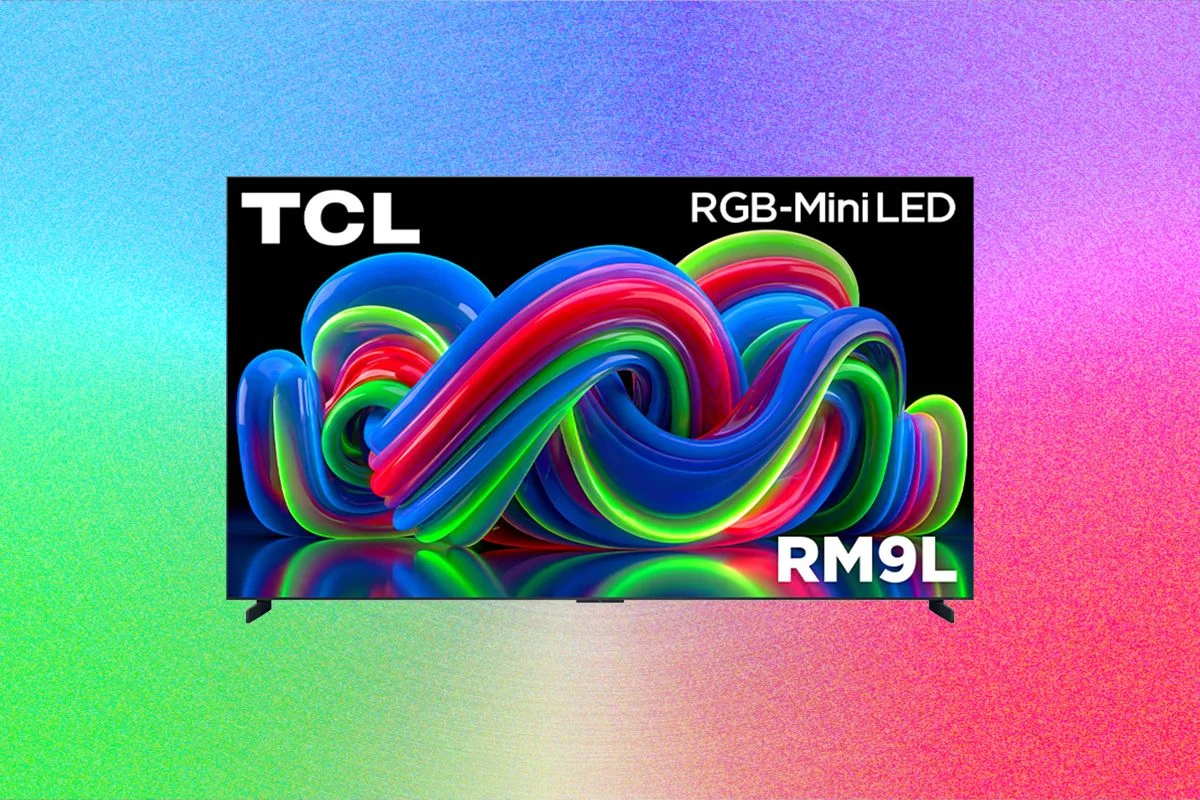
The global television market has witnessed a significant shift toward Mini-LED technology, and the release of the TCL RM9L RGB-Mini represents a strategic move by the manufacturer to dominate the premium display segment. By integrating a sophisticated array of hardware specifications with high-performance gaming features, TCL aims to bridge the gap between enthusiast-grade monitors and home cinema displays. The RM9L is not merely an incremental update; it is a hardware-heavy proposition designed to challenge the dominance of established OLED players by leveraging the inherent brightness and longevity advantages of Mini-LED architecture.
Advanced Connectivity and the Gaming Ecosystem
A primary pillar of the RM9L’s design philosophy is its uncompromising approach to connectivity. In an era where modern gaming consoles and high-end PCs demand maximum bandwidth, TCL has equipped the RM9L with four dedicated HDMI 2.1 ports. Unlike many competitors that offer a mix of HDMI 2.0 and 2.1, the RM9L ensures that every input is capable of supporting a 144Hz refresh rate. This specific refresh rate is a critical benchmark for PC gamers who utilize technologies such as NVIDIA G-Sync or AMD FreeSync to achieve tear-free, low-latency gameplay.
The inclusion of these ports allows for a multi-device setup without the need for manual cable swapping. One of these HDMI 2.1 ports is specifically designated for Enhanced Audio Return Channel (eARC) passthrough. This functionality is essential for high-fidelity audio enthusiasts, as it allows the transmission of uncompressed 7.1 surround sound and object-based audio formats, such as Dolby Atmos and DTS:X, to external soundbars or AV receivers. During technical evaluations, the system demonstrated seamless integration with high-end audio hardware, such as the Klipsch The Nines II powered speakers, maintaining synchronization and tonal clarity.
Beyond HDMI, the RM9L features a robust array of secondary ports. It includes two USB ports, one of which utilizes a coaxial configuration, alongside a standard Ethernet port for users who prioritize the stability of a wired internet connection over wireless alternatives. However, for those opting for a cable-free environment, the TV is equipped with Wi-Fi 6. This standard provides the necessary throughput for 4K HDR streaming and low-ping cloud gaming, ensuring the device remains future-proof as residential internet speeds continue to climb.
Ergonomics and Interface Design
The user interface of a high-end television is often defined by the utility of its remote control, and TCL has introduced several ergonomic innovations with the RM9L. The remote is notably backlit, a feature often omitted in lower-priced models but considered essential for dedicated home theater environments where lighting is kept at a minimum.
One of the most praised design choices is the placement of brightness controls on the right-hand side of the remote. This allows for tactile, rapid adjustments without the need to navigate through complex on-screen display (OSD) menus. This is particularly beneficial for users who transition between dark-room gaming and daytime viewing in sunlit environments. Furthermore, the remote features physical notches on the volume and channel rockers, allowing for "blind" operation. While some critics have noted that the "Home" button is slightly off-center and that the inclusion of dedicated buttons for free-to-air television may feel redundant in a streaming-centric market, the overall build quality and functional layout align with premium industry standards.
Real-World Visual Performance and Contrast Challenges
The true test of any Mini-LED display lies in its ability to manage local dimming and maintain black levels without sacrificing shadow detail. To evaluate the RM9L, technicians utilized high-bitrate streams of Awake (Netflix) and The Creator (Fandango at Home). These films are industry benchmarks for testing low-light performance due to their reliance on "crushed blacks" and predawn color palettes.
In the film Awake, a specific sequence involving a nighttime cycling scene serves as a stress test for contrast. While many OLED displays excel here due to their per-pixel dimming capabilities, Mini-LEDs can sometimes struggle with "blooming" or a "washed-out" appearance. The RM9L required the activation of "Vivid" mode to properly distinguish the actors from the background, suggesting that the default "Cinema" or "Standard" modes may be tuned too conservatively for complex, low-light cinematography.
Similarly, in The Creator, early scenes set against an oceanic backdrop revealed some limitations in the RM9L’s out-of-the-box calibration. Despite the use of Dolby Vision IQ—a technology designed to adjust picture settings based on ambient light—the deep blues and blacks of the ocean occasionally took on a grayish hue. This indicates that while the RM9L possesses immense peak brightness, its "black floor" (the lowest level of black the TV can produce) may not yet rival the absolute darkness found in LG’s upper-tier OLED or Micro RGB Evo models.
Comparative Benchmarking: TCL vs. The Industry
When placed in a controlled benchmarking environment against its primary competitors, the TCL RM9L occupies a distinct middle ground. In skin tone reproduction tests, the RM9L showed a slight lack of tonal variation compared to the LG Micro RGB Evo. The LG model, which utilizes a more mature pixel-level control system, provided a more naturalistic rendering of human complexions.
However, the RM9L proved to be highly competitive when measured against the Sony Bravia 7 Mark II and the Hisense UR9. All three models utilize variants of Mini-LED technology, and the TCL matched the Sony in terms of overall color accuracy and motion handling. In a specific "mist over mountains" demo reel—a test designed to reveal how well a TV handles subtle gradients of white and gray—the RM9L performed admirably. While it could not match the optical precision of a high-end projector like the Leica Cine Play 1, it surpassed the Hisense UR9 in rendering the textures of green grass and winter landscapes.
During a segment featuring buffalo in a field, the RM9L demonstrated an impressive ability to distinguish between various shades of brown and earth tones, proving that its color volume is more than sufficient for high-quality nature documentaries and bright, vibrant content.
The Evolution of Mini-LED Technology: Context and Timeline
The development of the RM9L is part of a broader chronological trend in the display industry. Over the last three years, the timeline of TV tech has shifted from a focus on sheer resolution (8K) back to a focus on panel quality (Mini-LED and QD-OLED).
- 2021-2022: TCL and other manufacturers began scaling Mini-LED production, significantly increasing the number of local dimming zones to compete with OLED’s contrast.
- 2023: The introduction of high-refresh-rate panels (144Hz) became a standard for premium models to capture the growing "living room PC gaming" market.
- 2024: The RM9L arrives at a time when software-driven picture enhancement, such as AI-based upscaling and Dolby Vision IQ, has become the primary differentiator between mid-range and flagship models.
Industry analysts suggest that TCL’s strategy with the RM9L is to provide "80% of the performance of a flagship OLED at 60% of the cost." By focusing on connectivity and brightness, TCL is targeting a demographic that values versatility—users who use their TV as a monitor, a gaming hub, and a movie screen.
Implications for the Consumer Market
The release of the TCL RM9L has significant implications for the competitive landscape. For years, Sony and LG have held a duopoly on the high-end market. However, the RM9L’s performance suggests that the gap is closing. TCL’s ability to offer four HDMI 2.1 ports at this price point puts pressure on other manufacturers to stop "gimping" their mid-range models with only two high-bandwidth ports.
Furthermore, the RM9L highlights the ongoing debate between OLED and Mini-LED. While OLED remains the king of contrast, the RM9L’s performance in bright rooms and its resistance to "burn-in" make it a more practical choice for many households. The "Vivid" mode requirement noted in testing suggests that while the hardware is capable, TCL’s software processing still has room for refinement to better handle the "graying" effect in dark scenes.
In conclusion, the TCL RM9L RGB-Mini is a powerhouse of connectivity and a testament to the rapid maturation of Mini-LED technology. It offers a compelling alternative for gamers and viewers who prioritize brightness and high-frame-rate performance. While it may require some manual calibration to achieve the perfect cinematic balance, its robust feature set and competitive positioning make it a significant contender in the 2024 television lineup. As TCL continues to iterate on its RGB-Mini tech, the industry can expect even tighter competition in the battle for the center of the modern smart home.







