
 Ali Ikhwan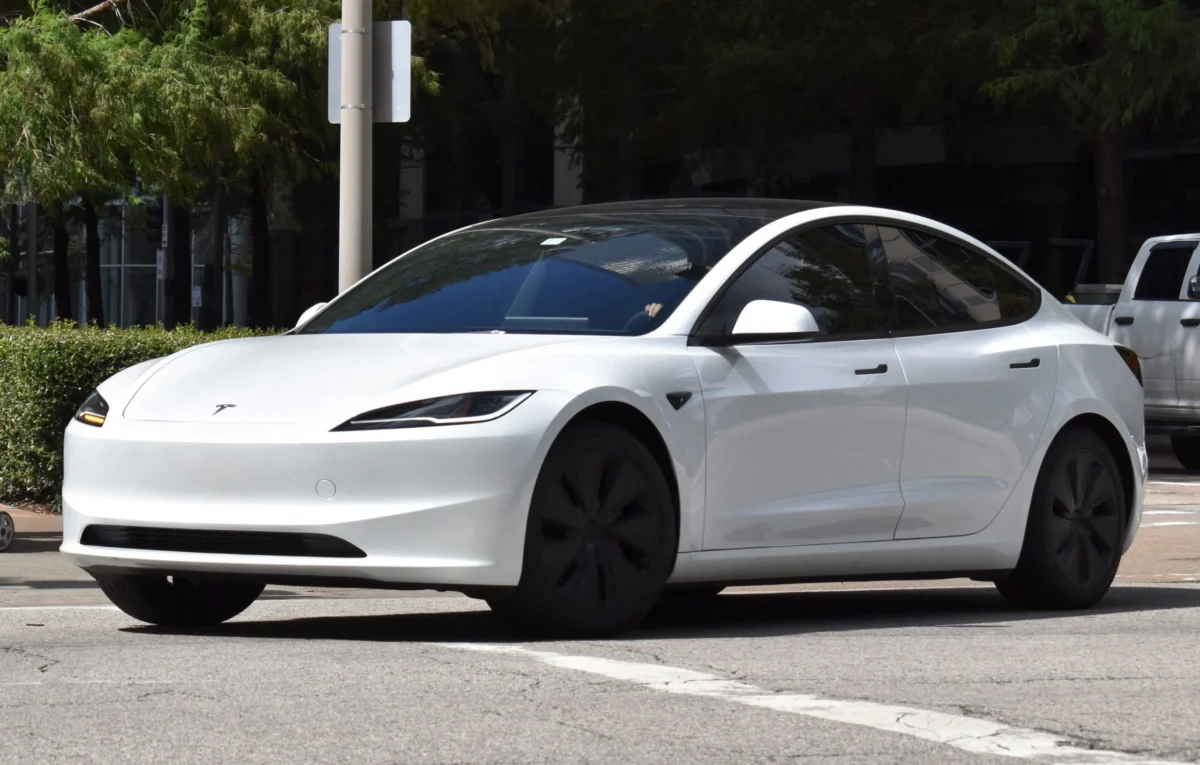
The quiet of a Texas evening was shattered last week when a Tesla Model 3, traveling at speeds reportedly exceeding 70 miles per hour, veered off a residential roadway and careened into a suburban home. The impact was catastrophic, claiming the life of 76-year-old Martha Avila, a grandmother who was standing in her front room at the moment of the collision. While the physical destruction of the brick residence was immense, the legal and regulatory fallout from the incident is poised to be even more significant.
The driver of the vehicle, 44-year-old Michael Butler, survived the crash and subsequently informed investigators that Tesla’s "Full Self-Driving (Supervised)" software was engaged at the time of the incident. In the immediate aftermath, the Harris County Sheriff’s Office conducted a preliminary investigation, noting in their official report that Butler exhibited no signs of intoxication. Following the tragedy, Avila’s family filed a wrongful death lawsuit in Harris County District Court, naming both the driver and Tesla as defendants. The suit alleges that the electric automaker’s driver-assistance technology was "defective in design and unreasonably dangerous," contributing directly to the fatal outcome.
The Harris County Incident: A Chronology of Events
The events leading to the death of Martha Avila began on a standard weekday evening in a suburban neighborhood of Harris County, Texas. According to witness statements and preliminary law enforcement data, the Tesla Model 3 was traveling at a high rate of speed through a residential area where the speed limit was significantly lower than the 70 mph recorded at the time of impact.
The vehicle failed to navigate the roadway, jumping the curb and striking the Avila residence with enough force to penetrate the exterior brick walls and enter the living quarters. Inside, Martha Avila was fatally struck. Her son-in-law, Justin Barbour, was also present in the home and sustained injuries during the crash. Emergency responders arrived shortly after the collision, but Avila was pronounced dead at the scene.
On Tuesday, legal counsel representing Avila’s daughter and son-in-law formally initiated litigation. The lawsuit contends that Tesla’s Full Self-Driving (FSD) system failed to perform safely in a residential environment—a setting where the software is explicitly marketed to operate. The plaintiffs argue that the system’s inability to prevent a high-speed collision into a stationary structure constitutes a fundamental failure of the vehicle’s safety protocols.
Tesla’s Defense: The Accelerator Override Argument
In the wake of the incident, Tesla’s executive leadership and engineering team have moved quickly to defend the company’s technology. While the company did not issue a formal press statement, high-ranking officials utilized social media to provide a counter-narrative based on the vehicle’s logged telemetric data.
Ashok Elluswamy, Tesla’s Vice President of AI Software, stated on X (formerly Twitter) that the company’s internal data logs indicate a manual override by the driver. According to Elluswamy, Butler "manually overrode self-driving by pressing the accelerator all the way to 100 percent" and continued to hold the pedal down even after the initial impact. This assertion suggests that the vehicle was responding to direct human input rather than an autonomous software error.
Elon Musk, Tesla’s CEO, echoed these sentiments, dismissing claims that the FSD technology was at fault. Musk characterized the speculation surrounding the software’s role as "making no sense," reinforcing the company’s long-standing position that its driver-assistance features are designed to be "supervised" and that the human operator remains the final authority and responsible party for the vehicle’s movements.
Legal Precedent and the Question of Liability
The Texas lawsuit is not the first time Tesla has faced legal challenges regarding its semi-autonomous systems. The outcome of this case may be influenced by a landmark decision reached last year in Florida. In that instance, a jury weighed the responsibility of a Tesla driver against the responsibility of the manufacturer following a fatal 2019 crash involving the "Autopilot" system.
In the Florida case, the driver of a Tesla Model S failed to notice a T-intersection, resulting in a crash that killed 22-year-old Naibel Benavides Leon. While the jury found the driver primarily responsible, they also assigned one-third of the liability to Tesla. The jury determined that Tesla’s marketing and the design of the Autopilot system contributed to the driver’s lack of situational awareness. This resulted in a staggering verdict of $200 million in punitive damages and $43 million in compensatory damages.
Legal experts suggest that even if Michael Butler is found to have pressed the accelerator, Tesla could still face liability if the plaintiffs can prove "automation complacency." Matthew Wansley, a professor at Yeshiva University’s Cardozo School of Law, notes that if a product is designed in a way that leaves drivers vulnerable to losing situational awareness, the manufacturer may be held responsible for the resulting accidents. The core of the legal argument often rests on whether the system’s design encourages a false sense of security, leading to delayed or incorrect human intervention.
The Automation Paradox and Driver Inattention
Critics and safety advocates have long pointed to the "Automation Paradox" as a primary concern for Tesla’s FSD and Autopilot systems. The paradox suggests that as automated systems become more capable, the human operators become less proficient at monitoring them. Because FSD (Supervised) can handle many miles of driving without error, drivers may become "lullled" into a state of inattention, making them unable to react with the necessary speed when the system eventually encounters a situation it cannot handle.
Tesla’s FSD system is classified as Level 2 autonomy by the Society of Automotive Engineers (SAE). This means that while the car can control steering, acceleration, and braking, the human driver must remain fully engaged at all times. However, the naming convention—"Full Self-Driving"—has been a point of contention for regulators and consumer advocates who argue it implies a higher level of capability than the system actually possesses.
The National Highway Traffic Safety Administration (NHTSA) has expressed similar concerns. In 2023, following a multi-year investigation into crashes involving emergency vehicles, the NHTSA compelled Tesla to issue a massive over-the-air software recall for over two million vehicles. The agency found that the Autopilot system’s "prominence and scope of its controls may not be sufficient to prevent commonly foreseeable driver misuse."
Federal Investigations and Regulatory Scrutiny
The Texas crash has triggered immediate action from federal oversight bodies. The National Transportation Safety Board (NTSB) announced a joint investigation with the Harris County Sheriff’s Office to determine the technical factors involved in the collision. Unlike the NHTSA, which has the power to order recalls, the NTSB is an independent agency that focuses on finding the "probable cause" of accidents to issue safety recommendations.
Simultaneously, the NHTSA’s Office of Defects Investigation (ODI) has opened its own probe into the incident. This investigation adds to an ongoing review opened last fall, which focuses on more than 40 reported incidents where FSD failed to adhere to traffic laws or caused collisions. The agency is specifically looking at whether the FSD system provides "prior warning or adequate time" for a driver to respond to unexpected behaviors.
The data provided by Tesla will be central to these investigations. In previous cases, the recovery of data has been a point of friction. During the Florida litigation, Tesla initially claimed it could not recover critical data from the crashed vehicle. However, lawyers for the victim’s family eventually accessed the data with the assistance of a third-party hacker, a revelation that significantly impacted the trial’s trajectory.
Broader Implications for the Automotive Industry
The outcome of the Avila family’s lawsuit could have far-reaching implications for the entire automotive industry as it moves toward higher levels of automation. If Tesla is held liable for a crash where the driver allegedly depressed the accelerator, it would set a precedent that manufacturers must design systems that can override or mitigate human error even when the driver is technically "in control."
This shift in liability is a major hurdle for the commercialization of autonomous vehicles. While companies like Waymo and Zoox operate fully driverless "Level 4" vehicles where the company assumes all liability, Tesla’s "Level 2" approach keeps the legal burden on the consumer. If courts continue to shift that burden back to the manufacturer, the cost of insurance and legal defense for ADAS (Advanced Driver Assistance Systems) could skyrocket.
Furthermore, the public perception of autonomous technology is at a crossroads. While Tesla data often suggests that miles driven with Autopilot or FSD engaged have lower accident rates than human-only driving, high-profile "edge case" accidents like the one in Harris County generate significant public distrust.
Statement from the Plaintiffs
Ryan Zehl, the attorney representing the Avila family, emphasized that the lawsuit is about more than just financial compensation; it is about corporate accountability. "The family is understandably devastated," Zehl said in a statement. "We are committed to determining exactly what happened to prevent similar tragedies from occurring in the future. A car traveling at 70 miles per hour into a home is a failure of every safety system that vehicle was supposed to have."
As the legal proceedings move forward in Harris County, the discovery phase will likely reveal more about the specific telemetry of the Model 3 and whether any software anomalies preceded the driver’s alleged override. For now, the case stands as a stark reminder of the complexities involved when human intent and machine logic collide on suburban streets.
The intersection of advanced software and traditional liability laws remains one of the most unsettled areas of modern jurisprudence. With two federal agencies and a district court now focused on the death of Martha Avila, the findings of this case will likely serve as a benchmark for the safety standards of the next generation of transportation.







