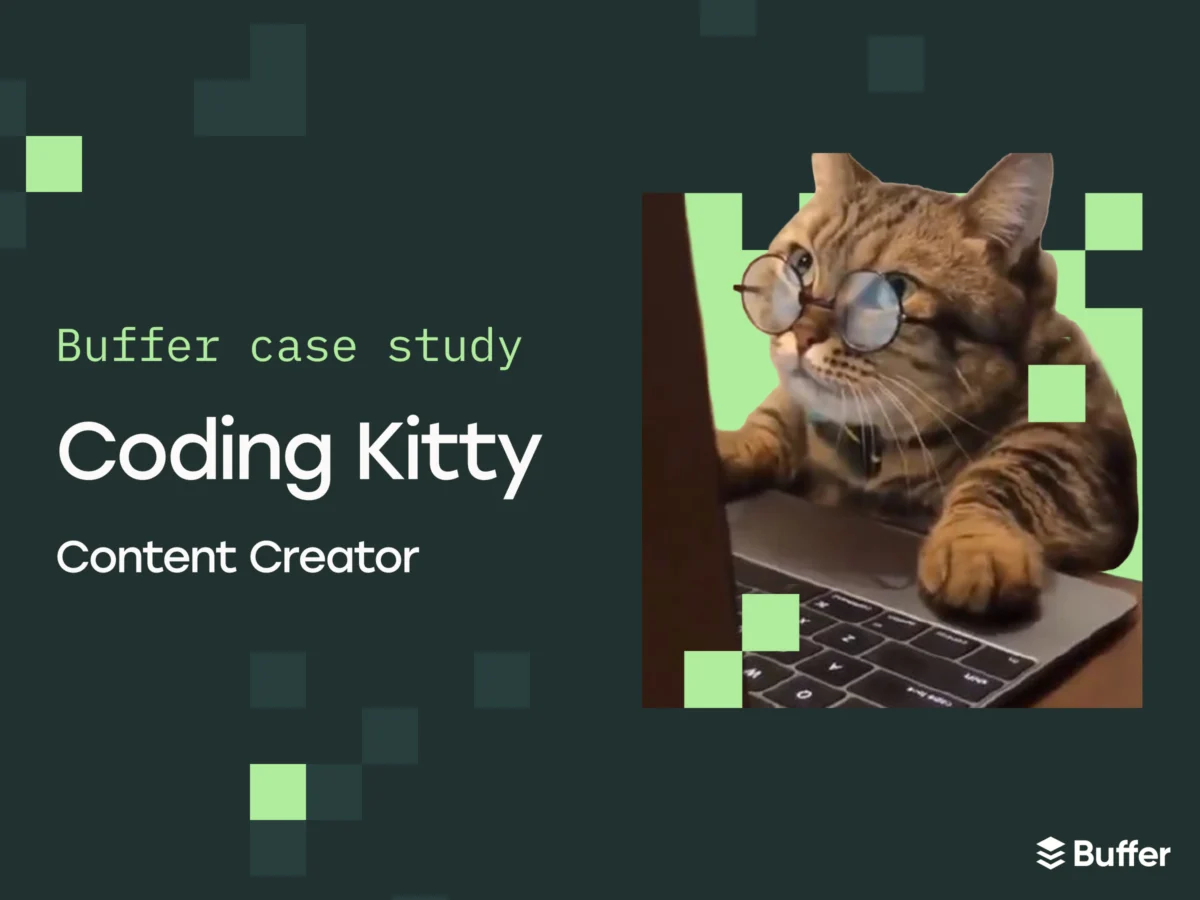
In an era defined by the burgeoning creator economy and the relentless demand for multi-platform content, software developer Sameer Ali has engineered a groundbreaking solution to a pervasive challenge: the administrative burden of social media publishing. Ali, widely recognized for his coding content across Instagram, TikTok, and YouTube under the moniker coding.kitty, has developed a custom desktop application, aptly named the coding.kitty engine, which, in conjunction with Buffer’s robust API, has dramatically streamlined his content production pipeline. This innovative integration has reduced the extensive administrative tasks associated with video publishing from a laborious 15-20 minutes per video to a mere two minutes, setting a new benchmark for efficiency in the creator space.
The Administrative Bottleneck in the Creator Economy
The digital landscape has fostered an unprecedented boom in content creation, transforming individuals into media moguls operating across a multitude of platforms. The global creator economy, estimated to be worth over $250 billion in 2023 and projected to exceed $480 billion by 2027, relies heavily on consistent, high-quality output. However, this growth has brought with it a significant operational overhead. Content creators, particularly those leveraging video across platforms like YouTube, Instagram Reels, and TikTok, often find themselves mired in repetitive, non-creative tasks. These include downloading final edits, re-uploading to each platform, tailoring captions for specific audience demographics and character limits, configuring metadata, meticulous scheduling, and manually updating project management boards.
Before the advent of the coding.kitty engine, Sameer Ali faced this exact dilemma. Each finished video, a testament to his creative and technical expertise, was followed by a tedious gauntlet of administrative "busywork." This process not only consumed valuable time—up to 20 minutes per video—but also diverted his energy from the core creative process, a common frustration voiced by countless creators. Studies indicate that content creators can spend upwards of 30% of their total work hours on administrative tasks, highlighting a critical area ripe for automation and optimization. Ali’s experience underscores a broader industry trend: the increasing need for sophisticated tools that empower creators to scale their operations without sacrificing their creative focus or succumbing to burnout.
The Genesis of coding.kitty engine: A Developer’s Solution to a Creator’s Problem
Sameer Ali’s journey to developing the coding.kitty engine is a quintessential example of a developer identifying a personal pain point and leveraging technical prowess to solve it. As a full-stack engineer, Ali possesses the unique ability to not only consume but also construct the very tools that define the digital experience. His philosophy is simple yet powerful: when confronted with a repetitive task, build an application to fix it. This proactive approach is what led to the conceptualization and development of his eponymous desktop application.
The coding.kitty engine was envisioned as a comprehensive solution to manage the entire content production pipeline, from initial ideation and script development through to the complex processes of subtitling, scheduling, and performance analytics. It represents a significant investment in developer time and expertise, designed to abstract away the complexities of multi-platform publishing and project management. The engine’s core functionality addresses several critical stages: it monitors for videos marked "ready to schedule" within Jira, a project management tool often used by development teams, automatically downloads subtitled video files, and intelligently resizes them to conform to platform-specific requirements, such as Instagram Reels’ vertical format. This initial automation dramatically reduces manual handling and preparation time. The processed videos are then uploaded to cloud storage, making them accessible via public URLs, a crucial step for subsequent publishing.
Strategic Integration: The Prudence of Choosing Buffer’s API
While Sameer Ali possesses the full-stack capabilities to build nearly any component of his system, a pivotal decision in the development of the coding.kitty engine was to forgo building the direct publishing integrations himself. Instead, he strategically opted to integrate with Buffer’s API. This decision, seemingly counterintuitive for an engineer of Ali’s caliber, reveals a profound understanding of technical debt, maintenance overheads, and the strategic value of specialized third-party services.
The alternative to using Buffer would have involved interacting directly with the native APIs of Instagram, TikTok, and YouTube. This path, while technically feasible, presented a formidable array of challenges. It would have necessitated managing three distinct OAuth authentication flows, developing and maintaining three separate upload mechanisms tailored to each platform’s unique specifications, navigating varying rate limits imposed by each API provider, and building a custom scheduler service robust enough to ensure timely content delivery across all platforms. As Ali himself articulated, this would have amounted to "building a whole product on top of the product he was already building," an unnecessary duplication of effort and a significant diversion of resources from his core application’s development.
Buffer’s API offered a streamlined, consolidated solution to these complexities. By leveraging a single GraphQL API endpoint and a unified authentication flow, Ali could achieve comprehensive multi-platform publishing. This allowed him to pass all necessary metadata—YouTube titles, privacy settings, categories; Instagram Reel versus standard post types, first comments; and TikTok titles—through a single mutation request. The efficiency gain was immediate and substantial; the full integration was operational within a matter of days, a testament to the clarity and robustness of Buffer’s API design.
Ali emphasized the critical importance of reliability in scheduling. "I want a guarantee that my posts will be posted at the specified time," he stated, highlighting a core value proposition of Buffer. "Buffer handles the scheduling part reliably, and I can see everything in a calendar view." This reliability is paramount for creators whose audience engagement and monetization often depend on consistent posting schedules. Furthermore, the comprehensive nature of Buffer’s GraphQL schema was a significant advantage, covering all necessary operations—creating, deleting, fetching posts, and fetching channels—within a single, well-structured interface, eliminating the need to stitch together disparate endpoints.
A Seamless Workflow: From Ideation to Multi-Platform Publishing in Two Minutes
The combined power of the coding.kitty engine and Buffer’s API has transformed Sameer Ali’s content publishing workflow into an exemplar of efficiency. The process kicks off automatically once a video is marked "ready to schedule" in Jira. The engine springs into action, downloading the subtitled video and intelligently resizing it for Instagram Reels’ vertical format. After uploading to cloud storage, making it publicly accessible, Ali then orchestrates the final publishing details within his application.
This involves selecting the target platforms and leveraging the engine’s built-in AI, which is pre-programmed with character limits and stylistic conventions for each platform. This AI agent generates platform-specific captions, eliminating the need for manual rewriting and ensuring optimal engagement for diverse audiences. Ali then scrubs through the video to pinpoint the perfect thumbnail frame, a crucial element for attracting viewer attention.
The culmination of this streamlined process is a single CreatePost GraphQL mutation call to Buffer’s API. This mutation encapsulates all necessary data: the video URL, the platform-optimized caption, the selected thumbnail, and all platform-specific metadata. Buffer then takes over, fetching the video from Ali’s cloud storage (R2 in this instance), queuing it for publishing, and providing the reliable scheduling guarantee Ali values. Simultaneously, the Jira ticket automatically transitions to the next stage, providing seamless project management. This entire sequence, from the video being marked ready to its queuing for multi-platform distribution, is completed in an astonishing two minutes, a stark contrast to the prior 15-20 minute manual ordeal.
Beyond Publishing: Advanced Scheduling and AI-Driven Decision Making
Sameer Ali’s ingenuity extends beyond mere publishing automation. He has integrated several advanced features into the coding.kitty engine that further enhance his content strategy and operational efficiency. A crucial addition is his custom calendar view, which dynamically pulls scheduled posts directly from Buffer. This integrated view allows Ali to visually identify gaps in his content schedule, proactively avoid potential posting conflicts, and flexibly reschedule content by simply dragging and dropping posts within his application, all without ever leaving his centralized workflow. This level of control and visualization is invaluable for maintaining a consistent and optimized content calendar.
Perhaps the most innovative feature is the integration of an AI agent tasked with making publishing decisions. Given the coding.kitty engine‘s access to both recent posting history and the complete queue of videos awaiting publication, Ali has empowered this AI agent to autonomously determine optimal publishing strategies. The agent analyzes what content has been posted recently, intelligently selects the most appropriate video, platform, and timing, and then schedules it through Buffer’s API. This AI-driven optimization moves beyond simple automation to intelligent decision-making, ensuring content is distributed for maximum impact and audience engagement, a significant leap in sophisticated content management. This exemplifies the growing trend of leveraging artificial intelligence to personalize and optimize digital strategies, moving from reactive management to proactive, data-informed deployment.
Buffer’s API: Empowering Developer-Led Innovation and the Creator Economy
The success story of Sameer Ali and the coding.kitty engine serves as a powerful testament to the utility and strategic importance of robust, developer-friendly APIs. For companies like Buffer, providing a comprehensive and well-documented API is not merely a technical offering but a strategic imperative that fuels innovation within their ecosystem. By abstracting away the complexities of interacting with multiple social media platforms, Buffer empowers developers like Ali to focus on building unique value-added features on top of a reliable publishing backbone.
This approach democratizes access to sophisticated publishing tools. While Ali built a desktop application, Buffer’s API can facilitate diverse implementations, from CLI tools and Slack bots to n8n workflows or other custom integrations. This flexibility allows creators and businesses of all sizes to tailor solutions to their specific needs, without requiring them to become experts in the intricacies of dozens of platform-specific APIs. The availability of such APIs is fostering a new wave of bespoke automation solutions, particularly crucial for the fast-evolving creator economy where individual entrepreneurs often lack the resources of large media organizations.
From Buffer’s perspective, supporting developer-led innovation through their API translates into increased usage, broader market penetration, and a stronger ecosystem. It positions them not just as a social media management tool, but as a foundational platform for content distribution infrastructure. Industry analysts suggest that companies with strong API strategies are better positioned to integrate into the broader digital economy, fostering partnerships and enabling novel applications that extend their reach beyond their immediate user base.
Broader Impact and Future Outlook
The implications of solutions like the coding.kitty engine extend far beyond Sameer Ali’s personal workflow. They highlight a significant shift in how creators manage their digital presence and how technology is evolving to support them.
Firstly, for individual creators, this model offers a pathway to unprecedented productivity and scalability. By minimizing administrative overhead, creators can dedicate more time to their core craft—ideation, content production, and audience engagement—thereby enhancing content quality and potentially increasing output. This directly combats creator burnout, a growing concern in an industry that demands constant engagement.
Secondly, it underscores the growing sophistication of "pro-code" solutions within the creator economy, contrasting with the more common "no-code" or "low-code" tools. While no-code platforms offer accessibility, developer-built solutions, when strategically integrated with powerful APIs, can unlock a deeper level of customization, control, and intelligent automation, providing a distinct competitive advantage.
Finally, the integration of AI for optimized scheduling points towards the future of content strategy. As AI capabilities advance, we can expect more sophisticated agents capable of not just scheduling but also content ideation, performance prediction, and even dynamic content adaptation based on real-time audience engagement data. The coding.kitty engine is an early, yet powerful, example of how AI can be leveraged to transform manual tasks into intelligent, autonomous processes.
Sameer Ali’s coding.kitty engine is more than just a personal productivity tool; it is a blueprint for the future of creator operations, demonstrating how strategic API integration and intelligent automation can redefine efficiency, empower creativity, and set new standards for success in the dynamic world of digital content. With Buffer’s API now widely available, developers and creators are encouraged to explore similar innovative solutions, fostering an ecosystem where the publishing piece is, indeed, already solved.