
 Ali Ikhwan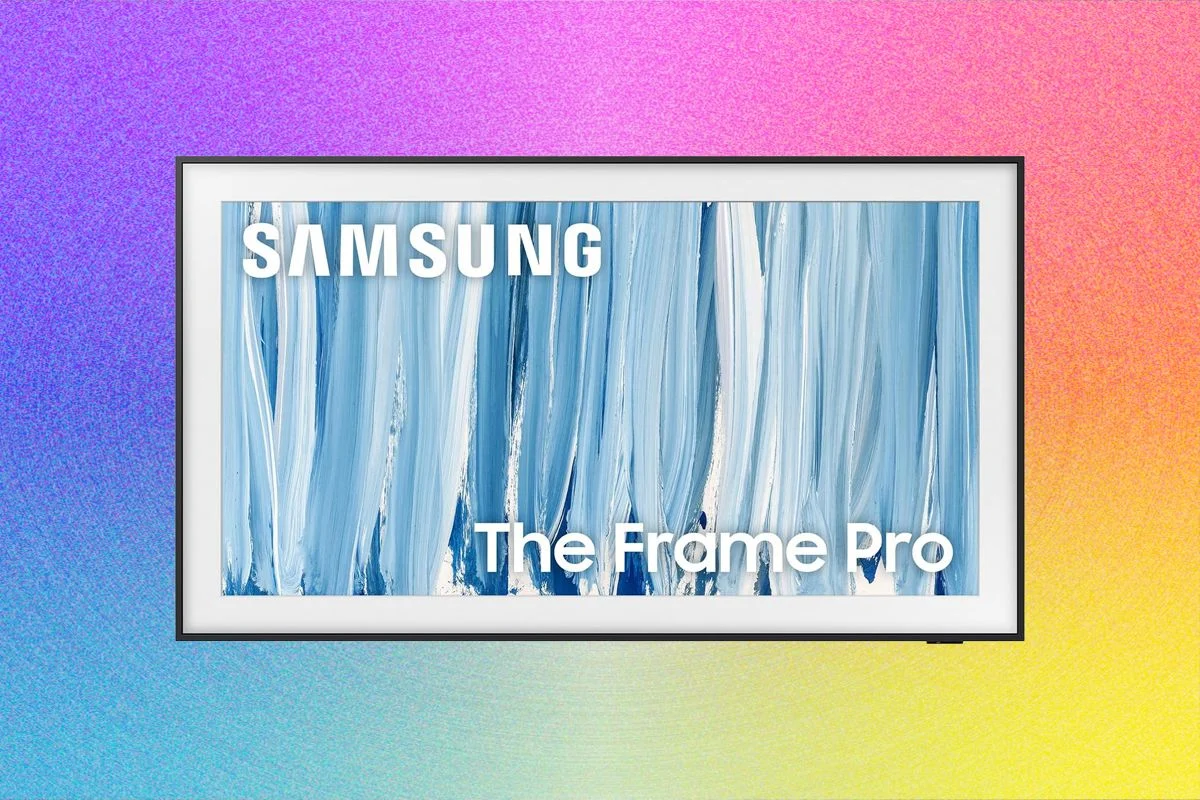
The global market for lifestyle televisions has undergone a dramatic transformation over the last decade, evolving from a niche segment into a primary battlefield for major electronics manufacturers. At the forefront of this movement is Samsung Electronics, which recently unveiled its 2026 iteration of The Frame Pro. This latest model represents a significant hardware and software update to what is widely considered the industry benchmark for art-centric televisions. While the 2026 version maintains the iconic aesthetic of its predecessors, it introduces several meaningful upgrades, including a revamped operating system, advanced artificial intelligence processing for audio and video, and a refined anti-glare coating designed to bridge the gap between digital displays and physical canvases. However, these advancements come at a premium, as the 2026 model enters the market with a retail price of $2,000, representing a $500 increase over the previous year’s pricing structure.
The Evolution of the Lifestyle Television Market
The concept of the "art television" was pioneered by Samsung in 2017 with the original launch of The Frame. The goal was to solve a long-standing interior design dilemma: the "black box" problem, where a large, powered-off television disrupts the aesthetic of a carefully curated living space. By utilizing a low-power "Art Mode" and a matte display, Samsung successfully turned the television into a digital gallery.

In the years following, the success of The Frame spurred a wave of competition. By 2025 and 2026, the landscape had shifted significantly. Amazon entered the fray with the Ember Artline, a 65-inch model priced aggressively at $1,100. Meanwhile, budget-friendly manufacturers like Hisense and TCL introduced their own iterations, such as the TCL NXTVISION, offering similar aesthetic goals at lower price points. Samsung’s response with the 2026 The Frame Pro is a clear attempt to re-establish dominance in the high-end sector, prioritizing superior display technology and sophisticated integration features over raw affordability.
Technical Specifications and Hardware Architecture
The 2026 The Frame Pro is built upon Samsung’s Neo QLED technology, which utilizes Quantum Mini LEDs to provide more precise backlight control compared to standard LED or QLED panels. This choice of panel technology is critical for an art television, as it allows for deeper blacks and higher contrast ratios, which are essential for replicating the textures of oil paintings and the nuances of high-resolution photography.
A defining feature of the 2026 model is the continuation and refinement of the Wireless One Connect box. While most competitors require an array of cables to be routed through or behind a wall, Samsung utilizes a discrete breakout box. This unit houses all essential ports, including four HDMI 2.1 inputs (one supporting eARC), an Ethernet port, an optical audio output, and a coaxial connection. The box communicates with the television via Wi-Fi 7, though the television itself maintains Wi-Fi 5 compatibility for internal application stability. This architecture allows the display to sit perfectly flush against the wall, supported by a two-bracket mounting system that can be installed in approximately 35 minutes using provided templates.

For the "Pro" designation, Samsung has partnered with high-end frame manufacturers to offer premium bezel options. While standard magnetic bezels are available for $199 in various colors, the 2026 launch highlights the Deco Burlwood frames. These $699 additions are significantly thicker and more ornate than standard options, designed to mimic the appearance of gallery-grade framing.
The Art Mode Experience and Subscription Economy
The primary draw of The Frame Pro remains its Art Mode, which has seen several technical enhancements for the 2026 cycle. The new anti-glare matte coating is specifically engineered to diffuse light without sacrificing color vibrancy. In testing, this coating proved highly effective at maintaining image realism even in rooms with significant ambient light or direct sunlight. The television also features Pantone color calibration out of the box, ensuring that digital reproductions of famous works—such as Van Gogh’s Starry Night or Andrew Wyeth’s Christina’s World—remain faithful to the original color palettes.
However, the software ecosystem surrounding the artwork remains a point of contention for some consumers. While Samsung offers a rotating monthly selection of 30 free images, full access to its library of thousands of works requires a $4.99 monthly subscription. This stands in contrast to the Amazon Ember Artline, which includes 2,000 free images, and the TCL NXTVISION, which offers 350. Samsung justifies this cost through its partnerships with world-renowned museums and galleries, providing a breadth of content that rivals often lack.

Artificial Intelligence and the One UI Tizen Operating System
One of the most visible changes in the 2026 model is the transition to the new One UI Tizen operating system. The interface has been streamlined to be more intuitive, moving away from the reliance on the Samsung SmartThings mobile app for initial setup. Users can now complete the entire configuration process directly on the television, although account authentication via a smartphone is still required for streaming services and art library access.
Samsung has also integrated significant AI-driven features into the 2026 hardware:
- AI Video Processing: The television uses machine learning algorithms to analyze scenes in real-time. This is particularly noticeable in low-light content, where the processor enhances contrast to reveal details in shadows that might otherwise be lost on a matte display.
- AI Audio Enhancement: For 2026, Samsung introduced specialized audio modes. For instance, during sports broadcasts, the AI can isolate and boost the frequency of a commentator’s voice while suppressing background crowd noise.
- Generative Art: Through the Bixby voice assistant, users can generate AI artwork by providing keywords like "contemporary" or "landscape." While functional, this system currently lacks the conversational depth of Amazon’s Alexa+ integration, which offers more robust voice-command art generation.
Multimedia and Gaming Performance
Despite its focus on aesthetics, The Frame Pro 2026 is a formidable display for traditional media and gaming. The Neo QLED panel supports refresh rates up to 240 Hz, making it one of the few lifestyle televisions capable of supporting high-end competitive gaming. In testing with titles like Crimson Desert and Senua’s Saga: Hellblade II, the television exhibited minimal input lag and excellent motion handling.

The inclusion of Dolby Atmos support provides an immersive audio experience, especially when paired with high-end external speakers via the eARC port. However, early testing of the 2026 model has revealed some software inconsistencies. Issues with Google Cast authentication and occasional glitches in the AI Sound Controller Pro—where sliders revert to default settings—suggest that firmware updates may be necessary in the months following the initial launch.
Market Analysis and Consumer Implications
The $2,000 price point for the 65-inch 2026 model places Samsung in a precarious but calculated position. By increasing the price by $500 over the 2025 model, Samsung is signaling that The Frame Pro is no longer a mass-market commodity but a luxury lifestyle product. This strategy relies on the assumption that high-end consumers will value the Wireless One Connect box, the Neo QLED panel, and the superior anti-glare technology enough to ignore the significantly lower prices of Amazon and TCL.
From an industry perspective, the 2026 The Frame Pro reflects a broader trend of "stealth technology" in the home. As consumers increasingly prioritize minimalism and interior design, the demand for electronics that can "disappear" or serve dual purposes continues to grow. Samsung’s investment in AI and high-refresh-rate panels suggests that they view the lifestyle TV not just as a piece of art, but as a primary entertainment hub that should not require technical compromises.

Conclusion
The Samsung The Frame Pro 2026 is a sophisticated evolution of a proven concept. It successfully addresses several historical weaknesses of lifestyle televisions, particularly regarding glare and ease of use. While the higher entry price and the subscription-based art model may deter budget-conscious buyers, the technical superiority of the Neo QLED display and the unmatched aesthetic of the wireless setup maintain Samsung’s status as the leader in the category. As the market for art-centric displays continues to mature, the 2026 model stands as a testament to the idea that a television can be both a high-performance technological tool and a seamless element of home decor. For those who prioritize absolute realism and design integration, The Frame Pro remains the definitive choice, even as more affordable competitors begin to close the gap.







