rifanmuazin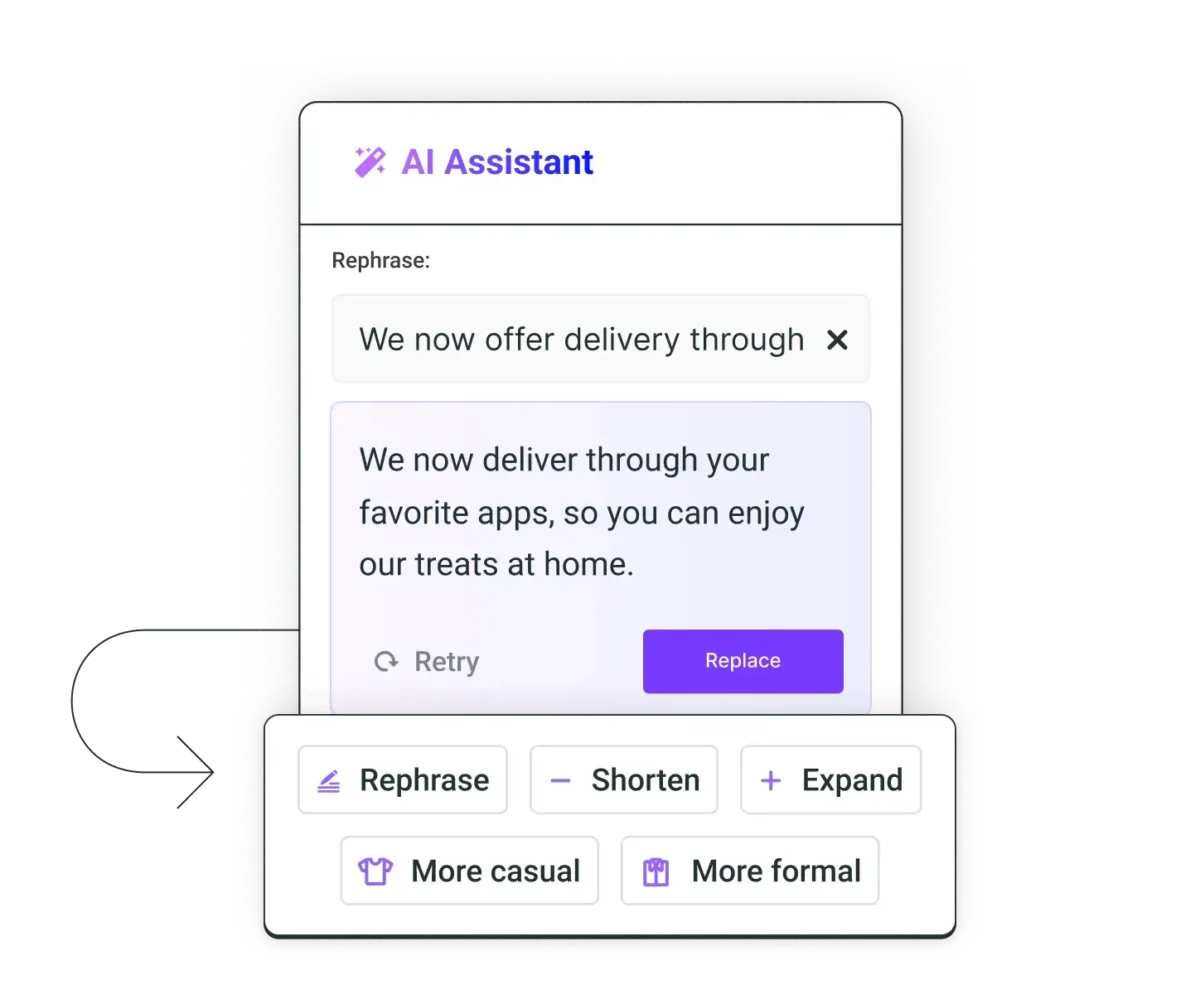
The realm of content creation, encompassing everything from strategic outlines and script development to compelling social media captions and extensive content repurposing, has long been characterized by a substantial writing burden. In recent years, the emergence and rapid evolution of Artificial Intelligence (AI) writing tools have fundamentally altered this landscape, offering unprecedented efficiencies and transforming how professionals approach textual output. While these advanced tools are not yet capable of delivering publish-ready drafts that perfectly encapsulate unique human voice, perspective, or lived experience with a single prompt, they serve as powerful accelerators, providing an invaluable starting point and significantly mitigating the pervasive challenge of "blank page syndrome."
The Evolution of AI in Content Creation
Until a few years ago, AI writing tools were considered nascent technologies, largely confined to specialized research or experimental applications. The trajectory of their development, however, has been meteoric. Driven by breakthroughs in natural language processing (NLP) and the advent of large language models (LLMs) such such as OpenAI’s GPT series and Anthropic’s Claude, these tools have transitioned from rare commodities to ubiquitous integrations within virtually every major software application. Platforms like Google Workspace and Notion now feature embedded AI writing assistants, signaling a profound shift towards AI-augmented workflows in mainstream productivity environments. This rapid integration underscores a broader industry trend where generative AI is no longer a futuristic concept but a present-day utility, projected by market analysts to see continued exponential growth and adoption across various sectors.

Despite many of these tools leveraging the same foundational AI models, their practical utility varies considerably. The core technology, or "AI model," can be likened to the engine of a car – for instance, GPT-4 or Claude 3.5. These models are trained on colossal datasets, enabling them to identify complex patterns, relationships, and logical structures to generate text. The "AI tool," conversely, represents the user-facing application, akin to the car itself. It packages the underlying AI model within a specific interface, workflow, and set of features tailored to streamline particular tasks. This distinction is crucial, as minute adjustments in interface design, workflow optimization, and ease of use can transform an AI tool from an indispensable sidekick into merely another unhelpful browser tab. Consequently, the focus for discerning users has shifted from merely popular applications to identifying the most genuinely useful AI writing tools that minimize formatting drudgery, reduce friction, and accelerate the writing process.
The "Human in the Loop" Imperative

A prevailing consensus across the content industry, exemplified by organizations like Buffer, emphasizes that AI is a tool, not a ghostwriter. The strategic integration of AI into content creation workflows consistently maintains a "human in the loop." This means that while AI can generate ideas, draft content, or refine text, the final responsibility for accuracy, tone, brand voice, and overall quality invariably rests with human oversight. Content generated by AI is best viewed as a robust first draft, requiring meticulous review, editing, and enrichment by a human creator to infuse it with authentic perspective and ensure factual correctness. This approach safeguards against potential inaccuracies, biases, or a generic tone that AI models, despite their sophistication, may still produce.
The question of AI detection also highlights the importance of human refinement. While many AI detection tools exist and can flag content that is heavily or purely AI-generated, their accuracy is not absolute. They can sometimes misidentify human-written text as AI-generated or fail to detect AI content that has been substantially edited. The most effective strategy, therefore, is to treat AI output as a foundational layer upon which human creativity and critical judgment are applied. By editing, adding unique insights, and thoroughly fact-checking AI-generated text, content creators not only ensure higher quality and authenticity but also naturally make the content indistinguishable from purely human-written material, irrespective of detection tool capabilities. This balanced perspective underscores AI’s role as an amplifier of human capability rather than a substitute.

Strategic Selection: Key Factors for Choosing an AI Writing Tool
The proliferation of AI writing tools has created a rich but often overwhelming marketplace. For content creators, small business owners, and marketers, navigating this array of options requires a strategic approach, considering factors beyond mere popularity or basic functionality. Key considerations for investing in an AI tool include:

- Specific Use Case: Does the tool align precisely with the primary writing tasks (e.g., social media, long-form articles, creative fiction, SEO)?
- Workflow Integration: How seamlessly does the tool fit into existing content creation and publishing workflows? Tools that minimize context switching are often more efficient.
- Ease of Use & Interface: Is the interface intuitive, and does it facilitate quick iteration and refinement?
- Output Quality & Customization: Can the tool generate high-quality text that is easily adaptable to a specific brand voice and tone? Does it offer granular control over output?
- Underlying AI Model: While not always directly visible, understanding if the tool uses a robust, up-to-date LLM (like GPT-4 or Claude 3.5) can indicate its potential for sophisticated outputs.
- Pricing Structure: Does the pricing model (free tiers, subscriptions, credit systems) align with usage volume and budget?
- Editing & Refinement Features: Beyond generation, what capabilities does the tool offer for editing, rephrasing, shortening, or expanding text?
- Collaboration Features: For teams, does it support collaborative editing, sharing, and feedback loops?
A Curated Overview of Leading AI Writing Tools
Based on extensive professional evaluation, the following AI writing tools stand out for their distinct capabilities and optimal use cases, offering diverse solutions for the modern content professional:
-
AI Assistant in Buffer
- Best for: Social media content and scheduling
- Starting Price: Free / $6 per channel
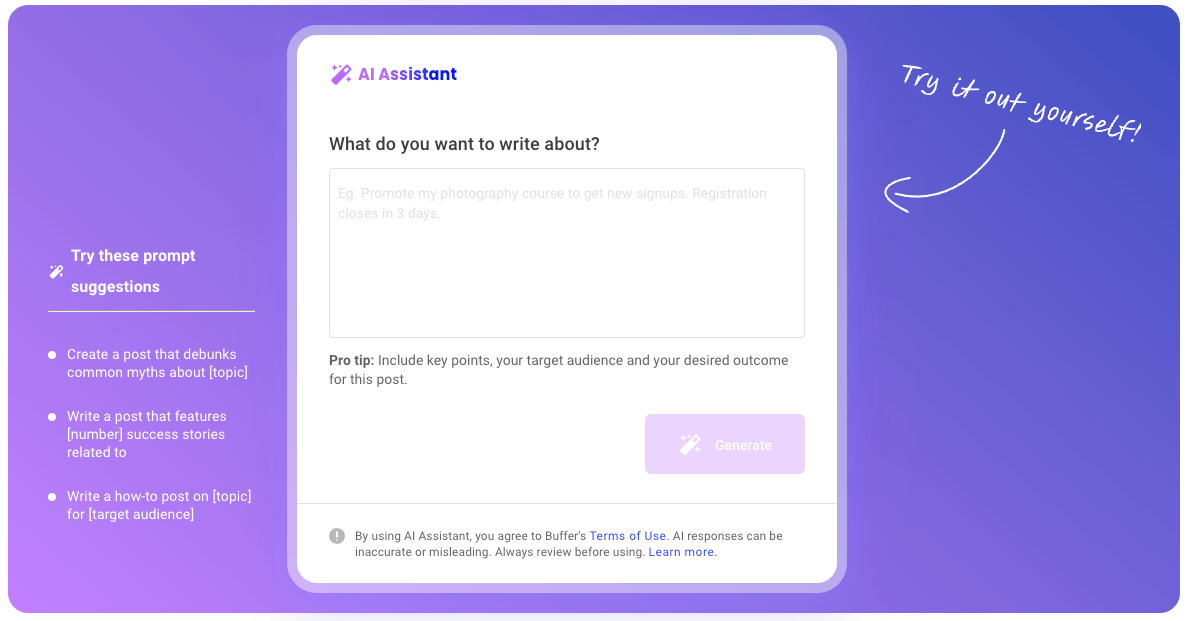
- Buffer’s AI assistant is meticulously engineered for social media content creation, integrating directly into the platform’s social media management workflow. This seamless integration allows users to generate and refine content for multiple platforms concurrently, eliminating the need for repetitive copy-pasting during cross-posting. The AI demonstrates an intelligent understanding of platform-specific nuances, automatically adhering to character limits for X (formerly Twitter) or adjusting tone for LinkedIn versus Instagram without explicit prompting. Its dedicated editing features, such as one-click buttons for shortening, expanding, or altering tone, significantly accelerate the refinement process. Beyond fundamental post creation, Buffer AI excels in generating personalized post ideas based on audience and business prompts, and efficiently repurposes existing high-performing content for different platforms, making it an indispensable asset for consistent social media presence. Uniquely, Buffer offers limitless AI usage on all its plans, including the free-forever tier, removing credit-based restrictions common in other tools.
-
Claude
- Best for: Structured writing and deep reasoning
- Starting Price: Free / $20 per month
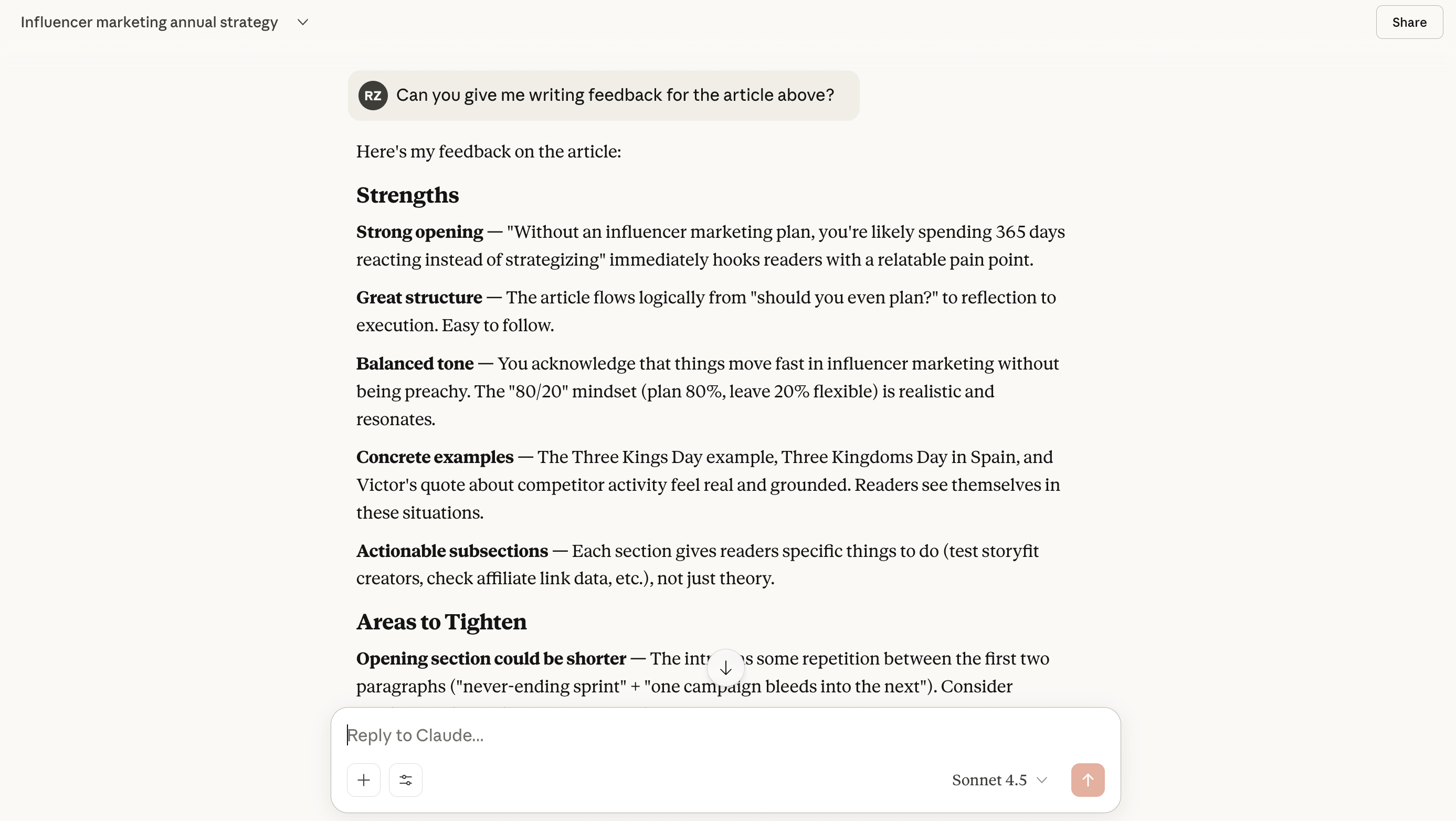
- Developed by Anthropic, Claude is distinguished by its exceptional capacity for contextual understanding and complex reasoning. While it performs admirably for basic tasks like brainstorming or short-form content, its true strength lies in handling long-form writing that demands coherent structure and nuanced argument development. This makes Claude particularly effective for detailed blog posts, in-depth articles, and even scriptwriting where natural flow over thousands of words is critical. Professionals often utilize Claude as an advanced editorial partner, leveraging its ability to identify logical gaps, suggest areas for deeper exploration, and maintain a consistent brand voice when adequately prompted. Its conversational yet precise output style offers a valuable alternative to other models, favoring detailed prompts for optimal results.
-
Jasper
- Best for: Marketing teams and campaigns
- Starting Price: $69 per month
- As one of the pioneering AI writing platforms, Jasper has evolved into a comprehensive AI marketing suite. It offers robust features tailored for marketing teams, including capabilities for generating diverse content formats—from ad copy and email sequences to blog posts and website content. Jasper excels at maintaining brand consistency through customizable brand voices and knowledge bases, allowing teams to scale content production while adhering to established guidelines. Its workflow automation features and integration with other marketing tools make it a powerful platform for orchestrating large-scale content campaigns and streamlining collaborative efforts across marketing departments.
-
Wordtune

- Best for: Polishing and paraphrasing
- Starting Price: Free / $6.99 per month
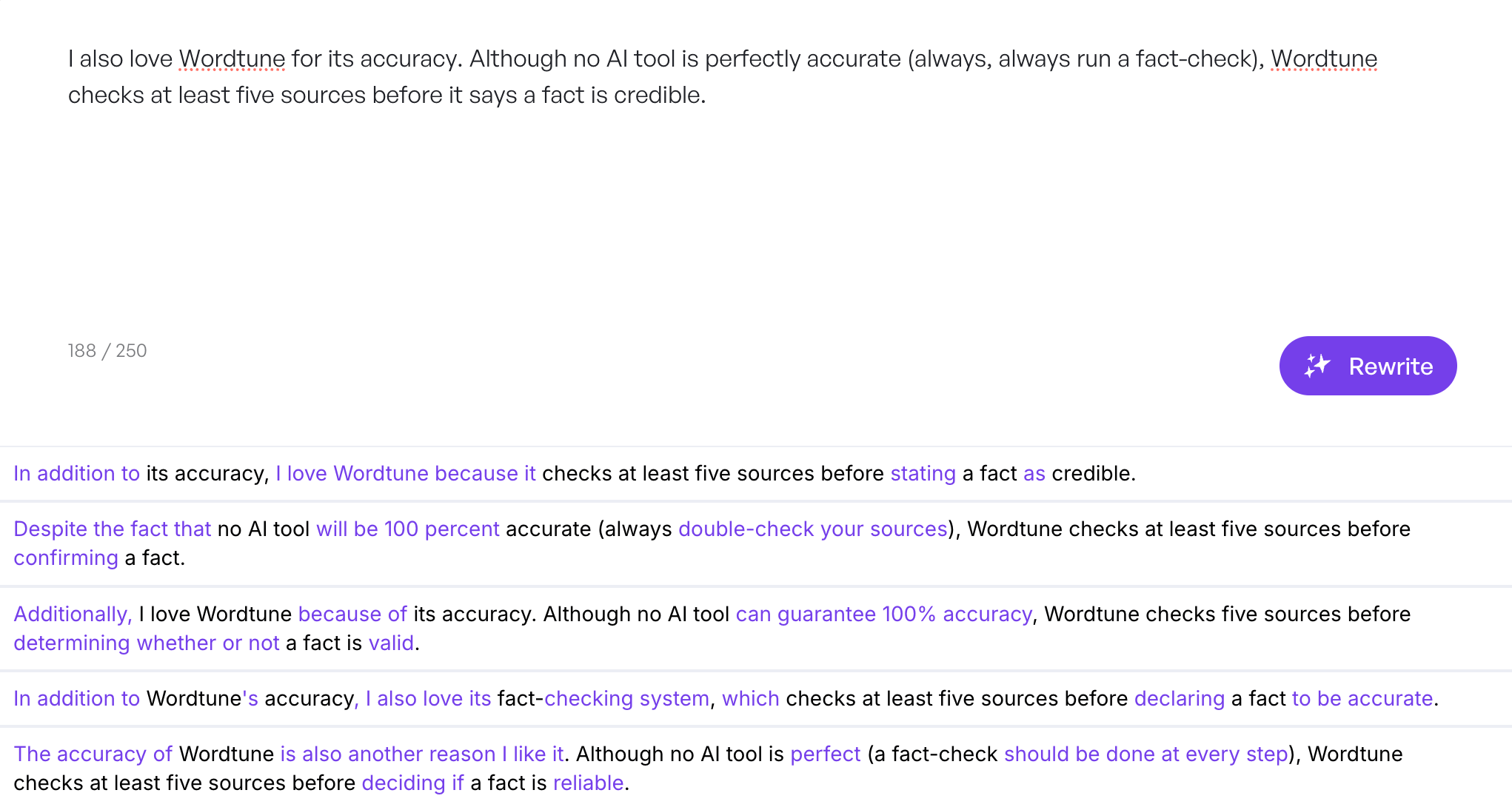
- Wordtune is an indispensable tool for writers focused on refining and enhancing their existing drafts. Rather than generating content from scratch, it specializes in intelligent rephrasing, tone adjustment, and simplification of complex sentences. Users can leverage Wordtune to make their writing more concise, engaging, or formal, ensuring clarity and impact. Its ability to provide multiple alternative phrasings for sentences or paragraphs allows writers to select the most appropriate option, significantly improving the overall quality and readability of their text. This tool acts as a sophisticated editorial assistant, ensuring precision and stylistic consistency.
-
Lex
- Best for: Professional copy and editing
- Starting Price: Free / $24.99 per month
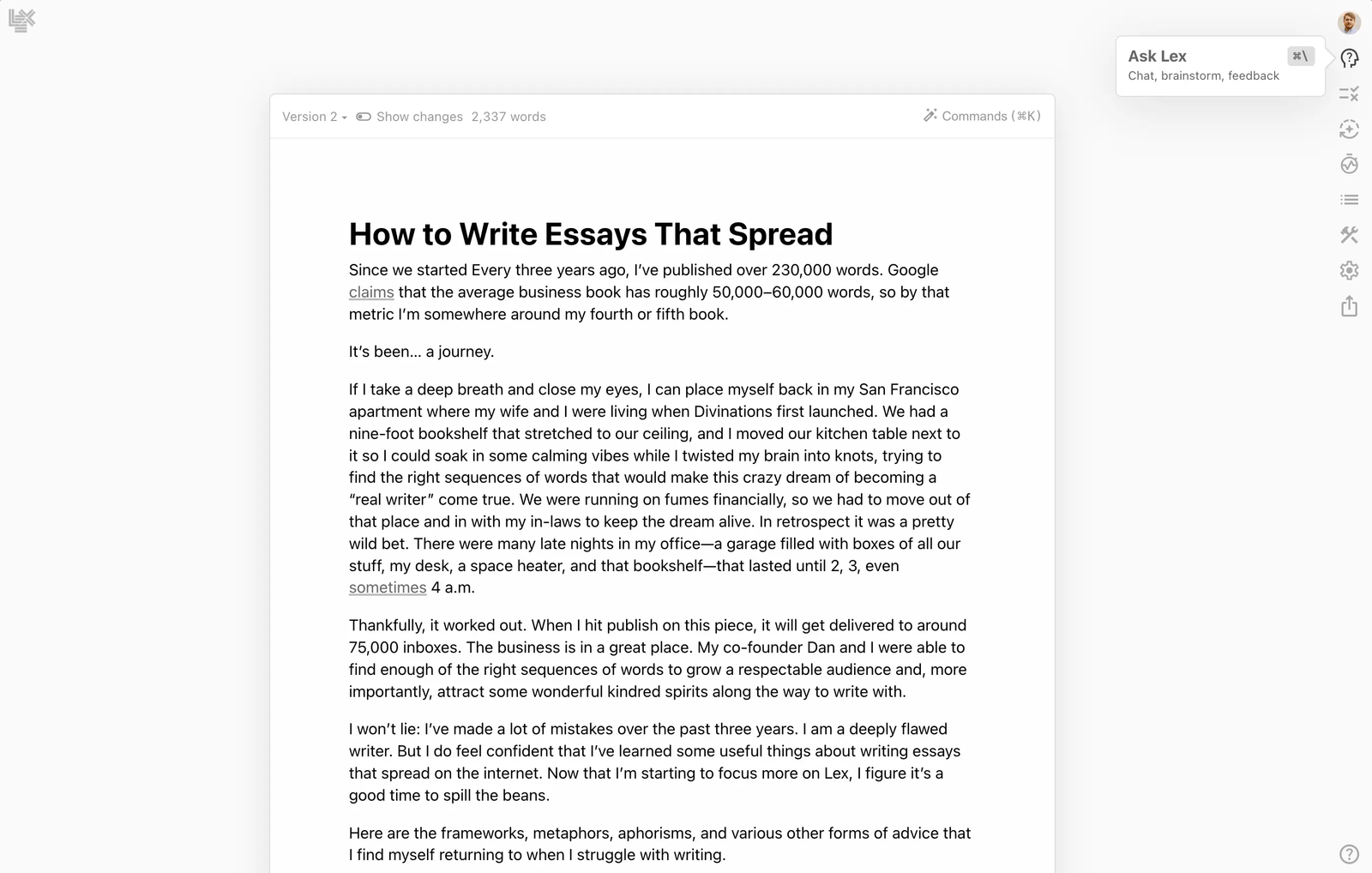
- Lex presents itself as a streamlined, intelligent word processor, often described as "Google Docs 2.0" due to its familiar interface combined with powerful AI capabilities. While it can generate drafts from prompts, Lex truly shines in its ability to assist with the editing and refinement of human-written content. It functions as an AI editor, providing suggestions for improvement, identifying areas for expansion, and helping writers polish professional copy with remarkable efficiency. Its minimalist design belies a sophisticated engine that prioritizes a clean writing experience while offering essential formatting and collaboration tools, making it ideal for professional writers seeking an intelligent, unobtrusive assistant.
-
Koala
- Best for: SEO articles
- Starting Price: $9 per month
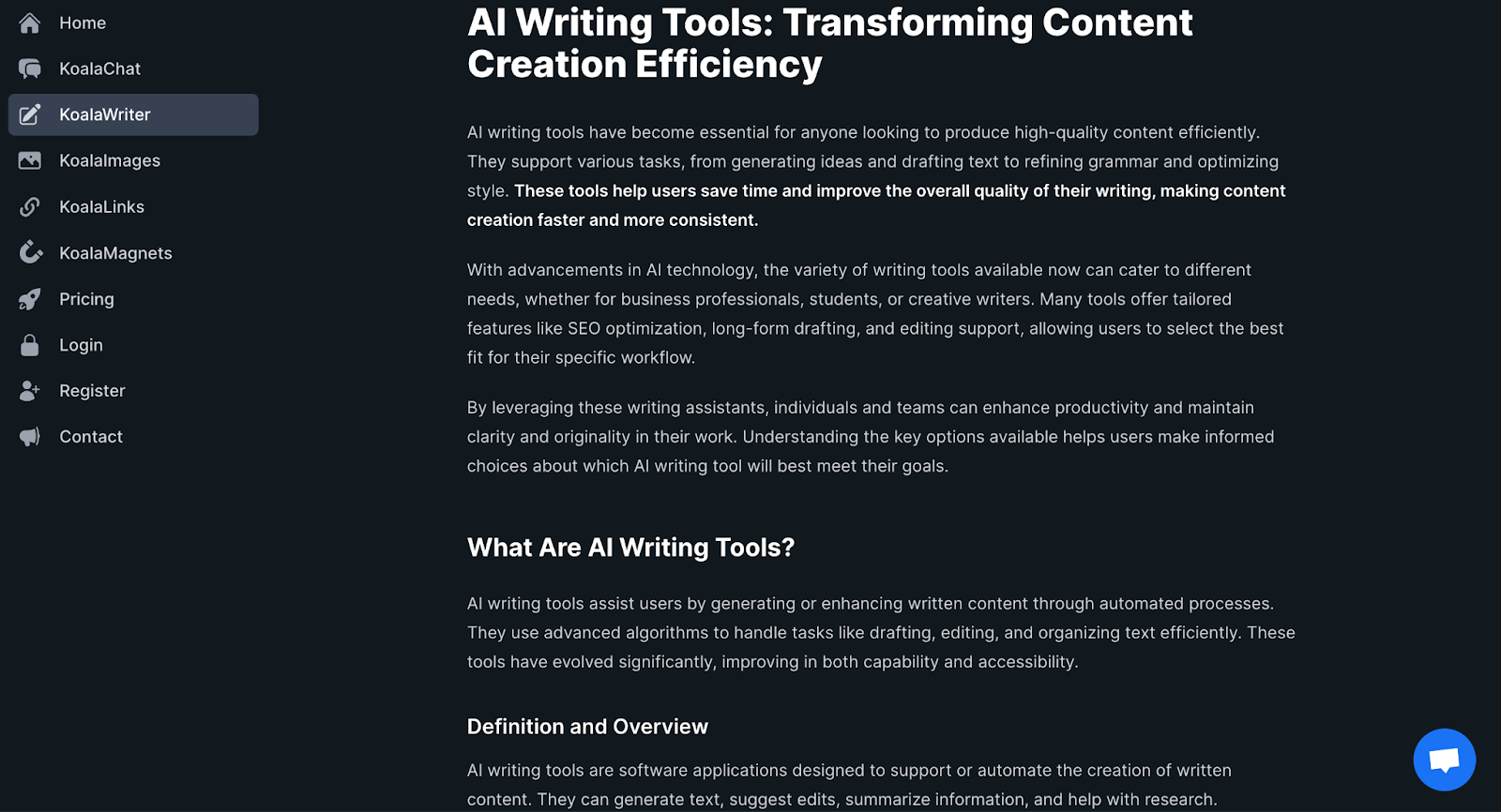
- Koala is a specialized AI writing tool designed to optimize long-form content for search engines. By leveraging advanced AI models like ChatGPT and Claude, it focuses on generating factual, research-backed articles that rank well. Its unique features include real-time access to current search data, allowing for the inclusion of up-to-date information, and direct integration with Amazon for affiliate content. Koala assists in structuring articles with relevant headings, optimizing for target keywords, and ensuring content depth, making it a critical tool for SEO specialists and content marketers aiming to improve organic visibility.
-
Sudowrite
- Best for: Creative writing and fiction
- Starting Price: $19 per month
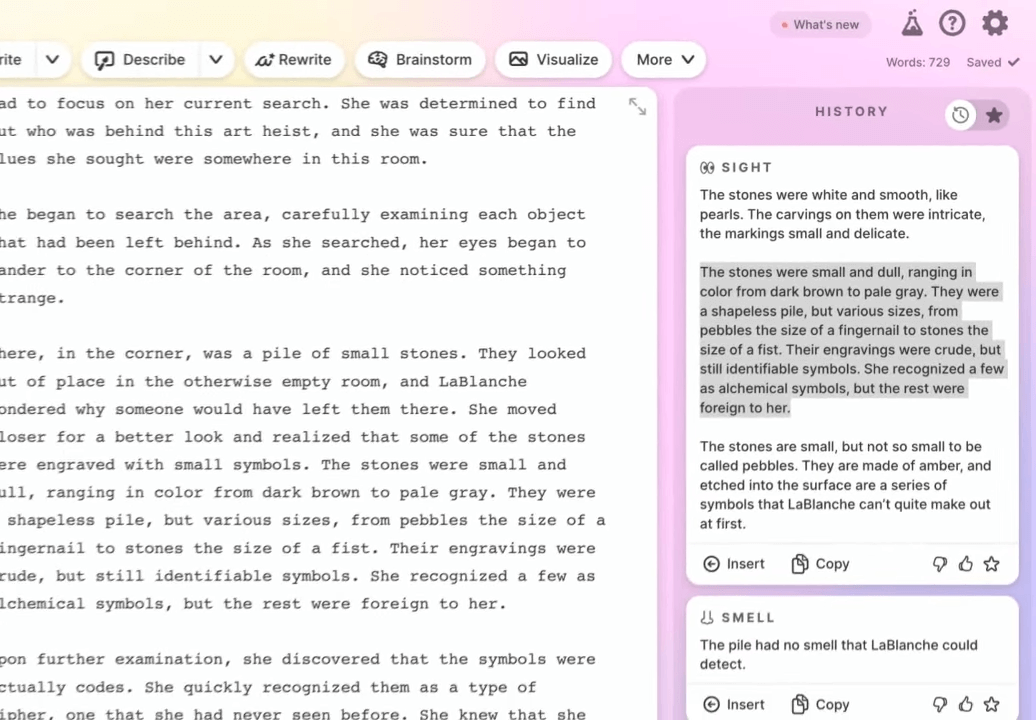
- Sudowrite is a groundbreaking AI tool specifically tailored for creative writers, novelists, and fiction authors. Equipped with its proprietary AI model, Muse, it goes beyond basic text generation to act as a comprehensive creative partner. Sudowrite can brainstorm plot points, develop character arcs, generate vivid descriptions, and even assist with world-building. Its unique features like "Describe" and "Visualize" help writers overcome creative blocks by offering sensory details and visual prompts. For aspiring and established authors, Sudowrite offers a dynamic environment to explore narrative possibilities and accelerate the writing process for novels, short stories, and screenplays.
-
Type
- Best for: Long-form professional drafts
- Starting Price: $12 per month
- Type is another robust AI writing assistant that excels in generating and refining long-form professional content. It offers three core features: the ability to generate drafts from prompts, intelligent grammar and style suggestions for improving readability and professionalism, and tools to summarize or expand sections of text. Type is designed to help users produce polished, well-structured articles, reports, and other extensive documents efficiently. Its focus on structural integrity and linguistic precision makes it particularly valuable for professionals who regularly produce detailed written outputs.
-
ChatGPT
- Best for: Conversational and fast writing
- Starting Price: Free / $4 per month
- ChatGPT, developed by OpenAI, holds a foundational place in the AI writing landscape, having popularized conversational AI interfaces. Even its free version is highly versatile, capable of assisting with a vast array of writing tasks, from generating email drafts and social media posts to simplifying complex sentences and finding synonyms. As the direct interface to OpenAI’s powerful GPT models, ChatGPT offers unparalleled flexibility for quick content generation, brainstorming, and iterative refinement. Its conversational nature allows users to interact with the AI in a natural language, making it accessible for diverse applications and serving as a benchmark for many other AI-powered tools.
Broader Impact and Future Outlook
The pervasive integration of AI writing tools heralds a transformative era for content creation. The primary implication is a significant boost in productivity, allowing individuals and teams to generate more content in less time, freeing up human creators to focus on higher-level strategic thinking, creative direction, and critical analysis. This democratization of content creation also lowers barriers to entry for aspiring writers and small businesses, enabling them to produce professional-grade material with reduced effort.
However, this shift also brings challenges and ethical considerations. Maintaining authenticity and originality in an AI-assisted environment remains paramount. Debates around data privacy, potential biases embedded in AI models, and the responsible use of generative AI are ongoing and will continue to shape industry standards and regulations. For content professionals, the evolving landscape necessitates continuous learning and adaptation. The skill set of the future will likely emphasize effective AI prompting, critical editing, strategic content planning, and the ability to leverage AI as a sophisticated partner rather than simply a tool.
In conclusion, AI writing tools have moved beyond novelty to become indispensable components of the modern content workflow. They effectively combat writer’s block, streamline repetitive tasks, and accelerate content production. Yet, their true value is unlocked when they are wielded strategically, with human creativity, critical judgment, and ethical oversight remaining at the core of every published piece. The journey of content creation, now augmented by AI, promises to be more efficient, innovative, and dynamic than ever before, provided the human element remains central to the process.