Ali Ikhwan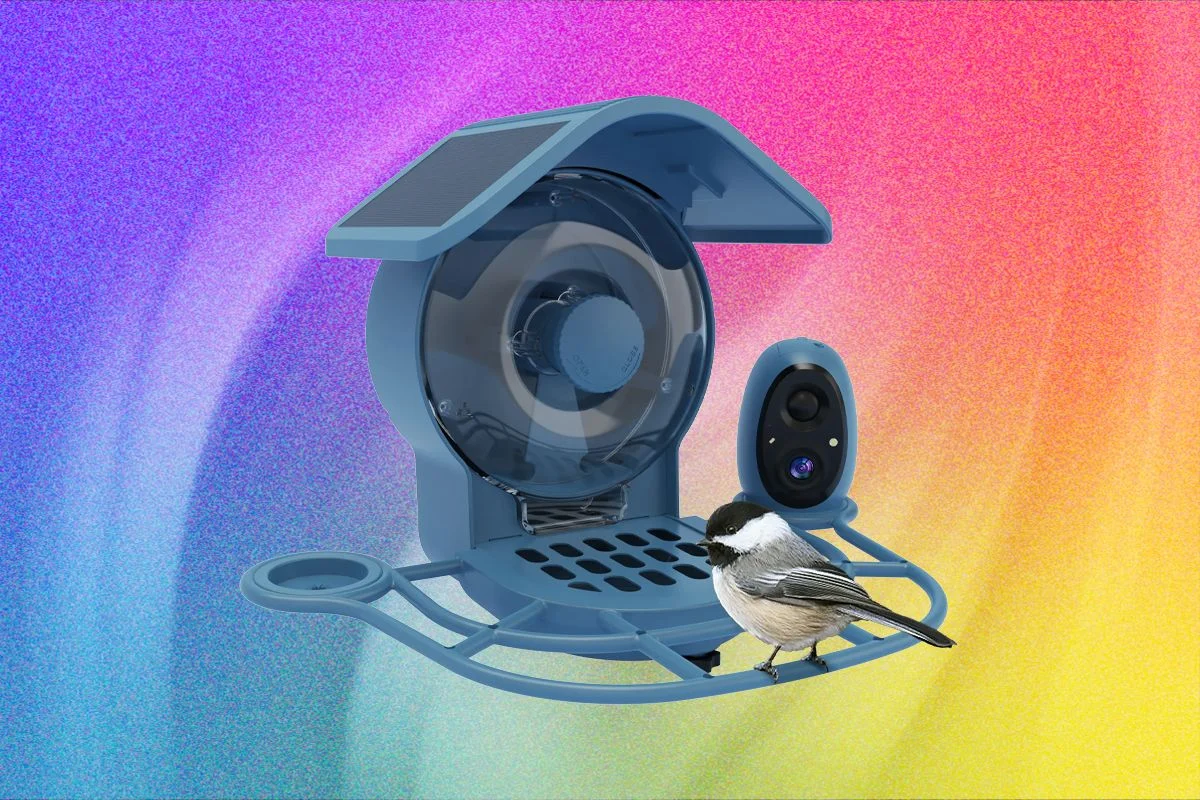
The emergence of smart home technology has expanded beyond the confines of the interior living space, moving increasingly into the realm of wildlife observation and ecological monitoring. Among the latest entries into this growing sector is the Coolfly Aura, a smart bird feeder designed to integrate high-definition videography with artificial intelligence to provide enthusiasts with a real-time window into local avian behavior. As the market for smart bird feeders matures, manufacturers are increasingly tasked with balancing hardware durability, optical clarity, and the computational demands of species identification. The Aura represents a specific mid-range solution in this landscape, prioritizing ease of assembly and a unique physical form factor while navigating the technical limitations of on-device edge computing.
Hardware Design and the Assembly Process
The consumer experience with the Coolfly Aura begins with a focus on accessibility and physical versatility. The assembly process is characterized by a tool-free design, utilizing a series of included knob screws that allow for rapid deployment. This modular approach is indicative of a broader trend in outdoor consumer electronics, where the reduction of friction in the setup phase is prioritized to appeal to a wider demographic of non-technical users.
Central to the Aura’s physical utility is its dual-mounting system. The unit provides options for both fence-mounting and pole-mounting. In the context of backyard birding, pole-mounting is often regarded as the superior configuration due to its efficacy in mitigating damage from squirrels and other opportunistic rodents. By elevating the feeder on a specialized pole—often equipped with a baffle—users can significantly reduce the risk of structural damage and seed theft, which are perennial challenges in maintaining a consistent feeding environment.
The physical architecture of the Aura is distinguished by a "wraparound" perch design. Unlike traditional linear perches, this configuration includes lateral platforms that provide multiple vantage points for visiting birds. This design choice is intended to maximize the number of subjects within the camera’s 150-degree field of view, a specification that exceeds the standard viewing angles found in many entry-level smart feeders.
Optical Specifications and Comparative Performance
In the current smart feeder market, optical quality serves as a primary differentiator. Current industry standards range from 1080p resolution on entry-level models, such as the Birdfy Lite, to high-end devices like the Camojojo Hibird Pro, which offers 32-megapixel still images and 4K video capabilities. The Coolfly Aura positions itself within the mid-tier of this spectrum, equipped with a camera capable of capturing 4-megapixel photographs and 2.5K Ultra HD video.
This resolution provides a balance between visual clarity and data management. While 4K video offers superior detail, it often necessitates higher bandwidth and more robust storage solutions. The 2.5K output of the Aura is sufficient for identifying subtle plumage patterns and behavioral nuances without overwhelming the local network or the device’s internal processing capacity.
The Portrait Mode Paradox and AI Constraints
One of the Aura’s most touted features is the ability to mount the camera in either a horizontal "landscape" orientation or a vertical "portrait" orientation. The latter is facilitated by a specialized adapter that connects to the rear of the camera and secures it to the right side of the perch. While portrait mode allows for a more focused, detailed view of individual birds, it introduces a significant technical limitation regarding the device’s artificial intelligence capabilities.
Testing revealed that the Aura’s automated bird identification system is non-functional when the camera is operated in portrait mode. This limitation is not a software glitch but a fundamental aspect of the device’s hardware-level programming. According to official statements from Coolfly representatives, the bird identification algorithm is hardcoded directly into the device’s hardware to facilitate a "Limited Free AI" model that does not require a monthly subscription fee.
This on-device neural network was trained exclusively on horizontal datasets. Consequently, physically rotating the camera to a vertical orientation disrupts the local algorithm’s spatial mapping, rendering it unable to recognize the shapes and features of birds from a 90-degree offset. To compensate for this, Coolfly has implemented a manual workaround known as "ChirpChat."

ChirpChat and Manual Identification Workflows
The ChirpChat feature acts as an interactive AI assistant within the Coolfly app. When the camera is in portrait mode and the automated ID fails, users can take a screenshot of the visitor and submit it to ChirpChat for analysis. While this secondary process has proven to be highly accurate in identifying species, it introduces a manual step into what is marketed as an automated experience.
The necessity of this step highlights the current challenges of edge computing in consumer-grade AI. By hosting the AI locally on the device to avoid cloud subscription costs, the manufacturer sacrifices the flexibility that cloud-based updates and multi-orientation training sets would provide. For many users, the convenience of automated, real-time identification in the default horizontal mode outweighs the aesthetic benefits of the vertical portrait view.
Software Integration and the User Interface
The Coolfly app serves as the central hub for the Aura experience, offering a suite of features including a bird search database, a localized "social feed," and a comprehensive capture album. The social feed allows users to share high-resolution captures with a community of fellow enthusiasts, though current data suggests the user base remains in its nascent stages, with limited global participation compared to more established platforms like Bird Buddy.
The app’s album functionality is designed for rapid sorting, utilizing bird-head icons to denote the species identified in each clip. This visual shorthand allows users to quickly scan for new or rare visitors. Furthermore, each icon links to an educational profile of the species, including audio clips of typical calls. This integration of multimedia resources serves an educational purpose, transforming the feeder from a simple camera into a tool for citizen science and ornithological learning.
However, the software experience is not without its drawbacks. One of the primary criticisms involves the frequency of marketing push notifications. The app has been noted for sending numerous alerts regarding sales and non-essential company updates, which can detract from the primary function of notifying the user of bird activity. This aggressive notification strategy often leads users to disable alerts entirely, thereby undermining the "real-time" value proposition of the smart feeder.
Market Context and Industry Implications
The development of the Coolfly Aura occurs within a broader context of surging interest in "nature-tech." The global bird-watching market is estimated to be worth billions of dollars, and the integration of AI is seen as a key growth driver. By automating the identification process, these devices lower the barrier to entry for amateur naturalists.
The Aura’s approach—offering a "subscription-free" AI model by hardcoding the neural network—represents a distinct business strategy in an era where "Software as a Service" (SaaS) dominates. While this model limits the adaptability of the AI (as seen in the portrait mode failure), it appeals to consumers who are increasingly wary of recurring monthly fees for hardware they already own.
Chronology of Development and Future Outlook
The trajectory of smart bird feeders has moved rapidly from simple Wi-Fi cameras to sophisticated AI-driven sensors.
- 2020-2021: Initial wave of crowdfunded smart feeders focused on basic motion detection and 1080p streaming.
- 2022: Introduction of cloud-based AI identification, leading to the rise of subscription-based models.
- 2023-2024: Market diversification, with companies like Coolfly attempting to integrate edge computing to eliminate subscription costs while experimenting with higher resolutions like 2.5K and 4K.
The future of the Coolfly Aura and similar devices likely lies in the refinement of these local algorithms. As mobile processing power increases and storage becomes more efficient, the spatial mapping issues currently plaguing vertical orientations will likely be resolved through more robust training sets.
In conclusion, the Coolfly Aura is a representative example of the current state of backyard avian technology. It offers high-quality optics and innovative physical mounting options that cater to the practical needs of birders. However, its reliance on hardcoded, orientation-specific AI serves as a reminder of the trade-offs between subscription-free hardware and the flexibility of cloud-integrated software. For the consumer, the Aura provides a capable, high-definition window into the natural world, provided they are willing to navigate the idiosyncrasies of its current technological framework.