Muhammad Hendra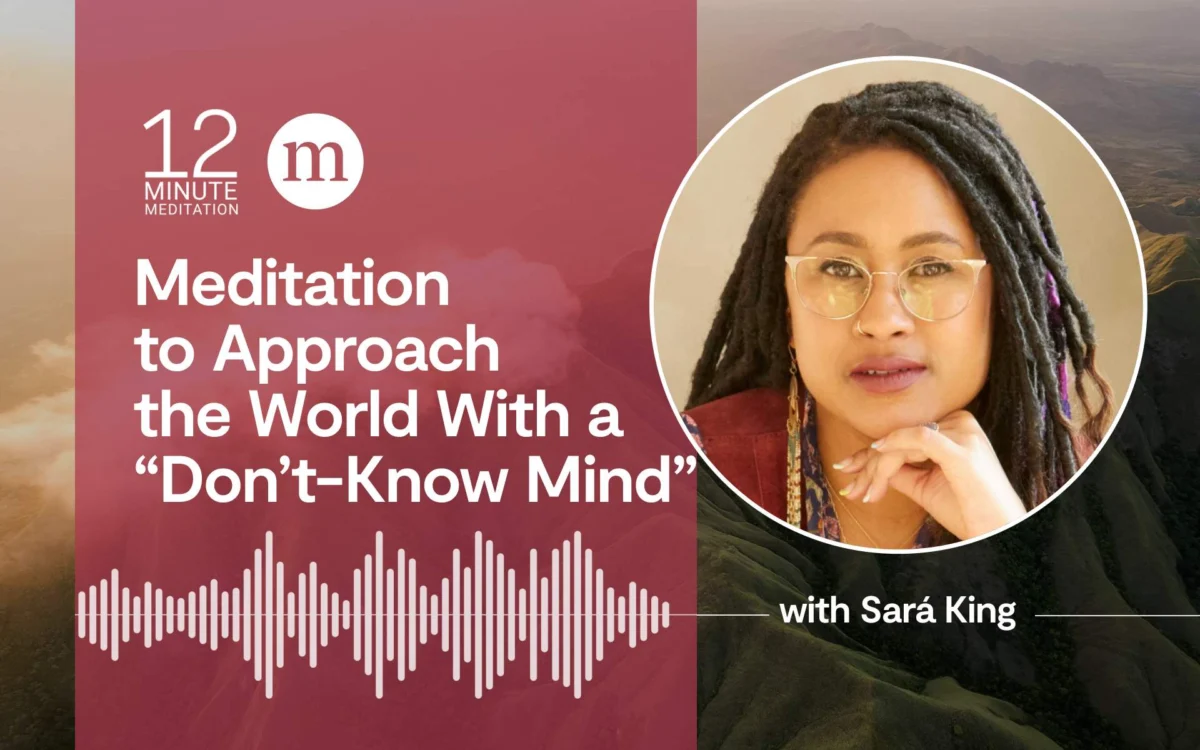
The profound capacity to cultivate strength and resilience through the familiar, subsequently leveraging these foundational feelings to confidently explore the unfamiliar, stands as a cornerstone of contemporary mindfulness practices. This principle is particularly embodied in the work of Dr. Sará King, a distinguished neuroscientist, political and learning scientist, medical anthropologist, social entrepreneur, public speaker, and certified yoga and meditation instructor, who advocates for a meditative approach she terms the "Don’t-Know Mind." This methodology, which begins with precise instructions on physical posture to ensure maximal bodily support during practice, aims to equip individuals with tools to confront the inherent uncertainties of life with openness and grounded awareness.
The Genesis of the "Don’t-Know Mind" Approach
Dr. King’s multifaceted academic and practical background uniquely positions her to integrate diverse disciplines into her teachings. Her specialization lies in researching and teaching the intricate relationship between mindfulness, community alternative medicine, and social justice, with a particular emphasis on how individual and collective awareness impacts well-being. The "Don’t-Know Mind" concept, while rooted in ancient contemplative traditions—particularly Zen Buddhism’s concept of shoshin or "beginner’s mind"—is reframed by Dr. King for modern application. It encourages practitioners to approach experiences, both internal and external, without preconceived notions, biases, or immediate judgments. This deliberate suspension of knowing is not an embrace of ignorance but rather an active cultivation of curiosity, humility, and radical openness. By establishing a stable physical foundation through mindful posture, practitioners create a ‘familiar’ anchor that allows the mind to safely venture into the ‘unfamiliar’ terrain of genuine inquiry and emergent understanding.
Mindfulness in a Contemporary Context: A Growing Imperative
The adoption of mindfulness and meditation practices has witnessed a significant surge over the past two decades, transitioning from niche spiritual disciplines to widely recognized tools for mental health, stress reduction, and cognitive enhancement. This proliferation is supported by an expanding body of scientific research validating its efficacy. Data from various studies indicate that regular mindfulness practice can lead to measurable changes in brain structure and function, particularly in areas associated with attention, emotion regulation, and self-awareness. For instance, research published in journals like Psychosomatic Medicine and Mindfulness has demonstrated that mindfulness-based interventions (MBIs) can significantly reduce symptoms of anxiety, depression, and chronic pain, alongside improving focus and overall psychological well-being. The market for meditation and mindfulness apps alone is projected to reach billions of dollars, reflecting a widespread societal need for tools to navigate the complexities of modern life.
Chronology of Mindfulness in Mainstream Adoption
The journey of mindfulness into the mainstream can be traced through several key developments:
- 1970s: Jon Kabat-Zinn establishes the Mindfulness-Based Stress Reduction (MBSR) program at the University of Massachusetts Medical School, marking a crucial step in secularizing mindfulness for clinical applications.
- 1980s-1990s: MBSR gains traction in healthcare settings, with early research highlighting its benefits for various health conditions. Academic interest begins to grow.
- 2000s: The "decade of the brain" sees increased neuroscientific investigation into meditation, revealing its impact on neural pathways and brain plasticity. Publications like Mindful magazine emerge, further popularizing the concept.
- 2010s: Mindfulness enters corporate wellness programs, education systems, and even government initiatives. Digital platforms and apps make meditation accessible to millions globally. Dr. King’s work emerges within this period, bridging neuroscience, social science, and contemplative practice.
- 2020s: The COVID-19 pandemic further accelerates interest in mindfulness as a coping mechanism for widespread anxiety, isolation, and uncertainty, underscoring its role in fostering resilience and social connection.
The "Don’t-Know Mind" and its Psychological Underpinnings
At its core, the "Don’t-Know Mind" challenges the brain’s natural inclination to categorize, label, and predict. While such cognitive shortcuts are often efficient, they can also lead to rigid thinking, prejudice, and a closed stance towards new information or experiences. Dr. King’s approach leverages neuroplasticity, the brain’s ability to reorganize itself by forming new neural connections. By repeatedly engaging in practices that cultivate openness and non-judgment, individuals can gradually rewire their cognitive patterns, fostering greater flexibility and adaptability. This process is crucial in an era characterized by rapid change and information overload, where dogmatic adherence to existing beliefs can hinder problem-solving and interpersonal understanding.
The initial instruction on posture, which Dr. King consistently provides, serves as a practical anchor. This ‘familiarity’—the sensation of the body, the breath, the groundedness of the sitting position—creates a safe internal environment. From this secure base, the practitioner is then invited to explore the ‘unfamiliar’—the emergent thoughts, emotions, and sensations that arise, as well as the external world, without the filter of predefined knowledge. This systematic approach is designed to build self-efficacy and emotional regulation skills, empowering individuals to face external uncertainties not with fear, but with a composed and curious mind.
Fostering Resilience in an Era of Global Uncertainty
The concept of resilience—the ability to adapt and recover from adversity—has become increasingly vital in the face of global challenges ranging from climate change and economic instability to public health crises. The COVID-19 pandemic, as highlighted in related discussions such as Barry Boyce’s article, "How COVID Reminded Me We’re All Connected," starkly underscored the interconnectedness of human societies and the fragility of established norms. In this context, the "Don’t-Know Mind" offers a powerful framework for cultivating resilience. Instead of resisting change or clinging to outdated models, individuals and communities can use this approach to remain agile, learn from emergent situations, and adapt effectively. By embracing a stance of not-knowing, one becomes more receptive to novel solutions and collaborative efforts, essential ingredients for collective resilience.
Furthermore, empirical data supports the link between mindfulness and resilience. A meta-analysis published in Clinical Psychology Review found that mindfulness-based interventions were effective in enhancing psychological resilience across diverse populations. The ability to observe challenging situations without immediate reactivity, to pause and consider multiple perspectives, is a hallmark of both mindfulness and resilience. The "Don’t-Know Mind" specifically trains this capacity, enabling individuals to navigate ambiguity with greater equanimity and strategic insight.
Mindfulness as a Catalyst for Social Justice
Dr. Sará King’s distinctive contribution lies in explicitly linking mindfulness to social justice. This connection is not immediately obvious to all, but her work demonstrates how the internal cultivation of awareness can profoundly impact external social dynamics. The "Don’t-Know Mind" is particularly relevant here. Social justice issues often involve deeply entrenched beliefs, systemic biases, and historical grievances. Approaching these complex issues with a "Don’t-Know Mind" encourages individuals to:
- Deconstruct Implicit Biases: By observing one’s own thoughts and assumptions without judgment, individuals can become more aware of their unconscious biases, a critical first step in dismantling them.
- Cultivate Empathy and Perspective-Taking: When we approach others with an open, "Don’t-Know Mind," we are more likely to truly listen, to understand their experiences from their perspective rather than projecting our own. This fosters genuine empathy, a cornerstone of social change.
- Engage in Constructive Dialogue: Many social justice conversations are hampered by defensiveness and a desire to be "right." The "Don’t-Know Mind" promotes a stance of curiosity and humility, enabling more productive and less confrontational dialogue, even on highly sensitive topics.
- Promote Collective Awareness and Action: Dr. King’s focus on the relationship between individual and collective awareness suggests that widespread adoption of these practices can lead to more compassionate, equitable, and effective collective action towards social justice.
Statements from thought leaders in the social justice space often emphasize the need for deep listening and self-reflection as prerequisites for meaningful change. The "Don’t-Know Mind" provides a structured pathway for developing these capacities. For example, research into implicit bias reduction strategies frequently includes mindfulness components, recognizing the power of heightened awareness in disrupting automatic prejudicial responses.
Integrating Familiarity and Unfamiliarity: The Meditative Framework
The initial instruction on posture in Dr. King’s meditation practice is more than just a physical alignment; it is a foundational act of establishing familiarity. This involves consciously settling the body, noticing the points of contact with the ground or cushion, and becoming aware of the breath. This familiarization process grounds the practitioner, creating a stable internal reference point. This stability is crucial because the subsequent exploration of the "Don’t-Know Mind" can involve confronting uncomfortable thoughts, emotions, or perceptions. Without a sense of internal familiarity and safety, the mind might resist this exploration or become overwhelmed.
Once this familiar foundation is established, the instruction guides practitioners into the "unfamiliar." This is not about seeking novelty for its own sake, but about encountering the present moment as it truly is, stripped of learned interpretations and expectations. For instance, rather than immediately labeling a feeling as "anxiety," the "Don’t-Know Mind" approach encourages observing the raw sensations of that feeling—its location, intensity, and changing nature—without the narrative overlay. This process can lead to profound insights and a greater capacity to respond wisely rather than react impulsively to life’s challenges.
Implications for Future Well-being and Societal Progress
The work of Dr. Sará King and the increasing prominence of approaches like the "Don’t-Know Mind" have significant implications for the future. As societies grapple with complex global issues, the ability to foster both individual resilience and collective empathy will be paramount. The integration of mindfulness into various sectors—from healthcare and education to corporate leadership and social activism—suggests a growing recognition of its utility beyond mere stress relief.
The analytical implication is that by investing in practices that cultivate an open, curious, and non-judgmental mind, individuals and institutions can enhance their adaptive capacities. This can lead to more innovative problem-solving, more inclusive decision-making, and a greater capacity for compassionate engagement with diverse perspectives. The "Don’t-Know Mind" offers a practical pathway to embody the very principles of interconnectedness and interdependence that are so critical for navigating a shared, uncertain future, reminding us that true strength often emerges not from knowing all the answers, but from the courage to genuinely ask the questions.