
 Indra Kusuma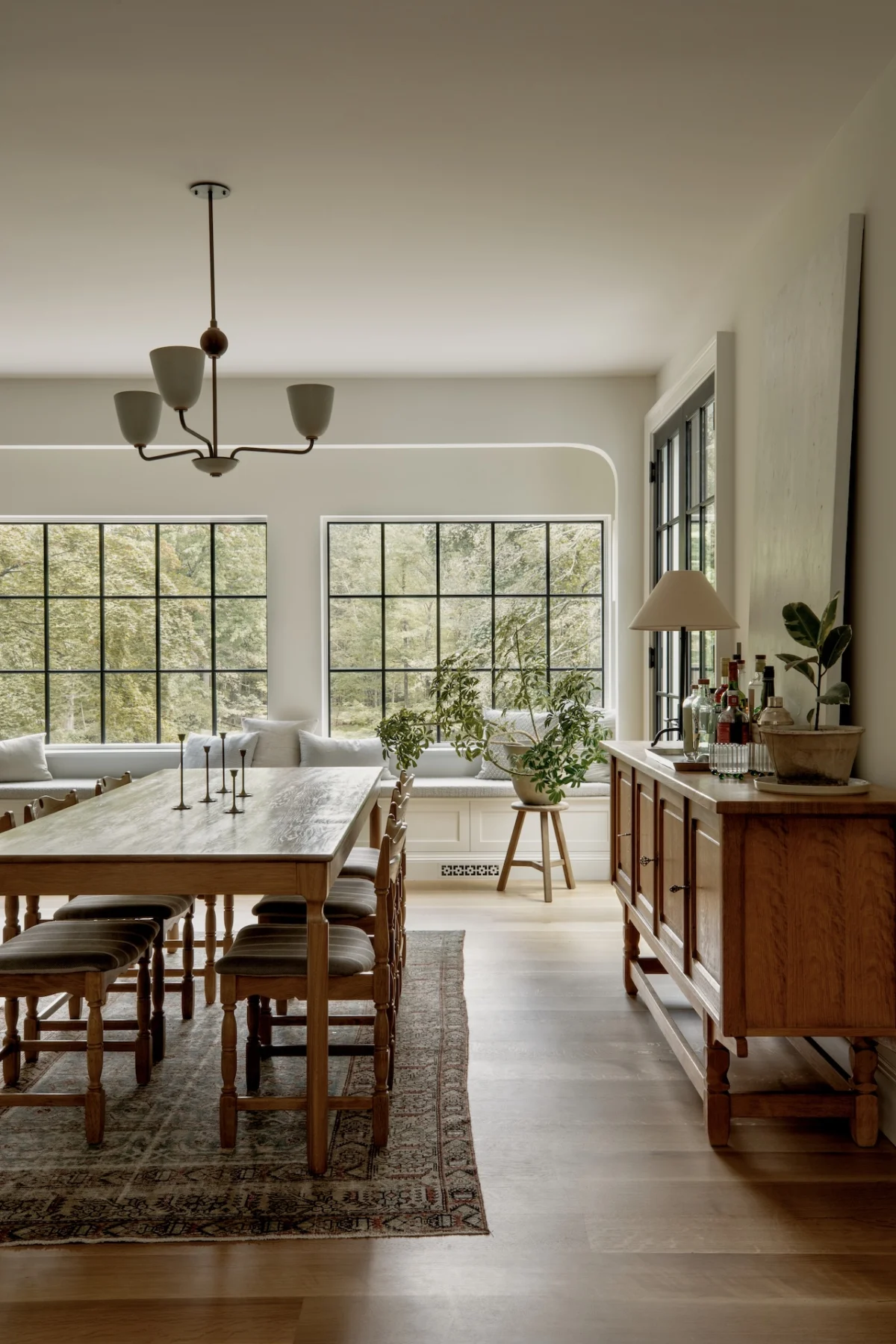
The enduring stone houses of Westchester’s early 20th-century neighborhoods stand as testaments to a particular material candor, their robust masonry drawn directly from the region’s geological bedrock. This deep connection to the landscape imbues these structures with a profound sense of permanence, making them direct expressions of Westchester’s inherent character. In a groundbreaking project situated in Mount Airy, Croton-on-Hudson, Ravi Raj Architects has undertaken a renovation that elevates this original fabric to the central thesis of its design. The firm’s approach meticulously organizes every intervention around the existing structure, skillfully weaving together elements of the past and present into a cohesive and harmonious whole, setting a new benchmark for sensitive architectural stewardship in the region.
Preserving Westchester’s Architectural Legacy: The Mount Airy Context
Westchester County, a picturesque area north of New York City, is renowned for its diverse architectural landscape, which includes a significant number of early 20th-century homes built with locally quarried stone. These residences, often characterized by their robust construction and integration with the natural terrain, represent a crucial chapter in American domestic architecture. They reflect a period when craftsmanship and a deep respect for local materials were paramount, embodying a permanence that speaks to the very soul of the region.

Mount Airy, a hamlet within Croton-on-Hudson, itself carries a rich history, known for its scenic beauty and an architectural heritage that often blends rustic charm with understated elegance. The challenge for any intervention in such a context is to respect this legacy while simultaneously adapting properties for the demands and aesthetics of contemporary living. Many older homes face issues of outdated layouts, energy inefficiency, and previous, often insensitive, modifications that detract from their original integrity. The subject property, typical of its era, featured the iconic stone base but was burdened by a disjointed 1980s addition that fragmented its roofline and disrupted its formal continuity. This presented Ravi Raj Architects with an opportunity to not merely renovate, but to perform an architectural reclamation, restoring visual logic and functional coherence.
An Architectural Dialogue: Reimagining the Exterior

Ravi Raj Architects embarked on the Mount Airy renovation with a clear vision: to maintain an authentic dialogue between the home’s historic essence and its future trajectory. The exterior transformation began with reinforcing the house’s base. Local flagstone, meticulously sourced to precisely match the existing masonry, was extended, subtly expanding the building’s footprint while rigorously preserving its historic texture and geological connection. This material choice was not arbitrary; it speaks to a deep understanding of the region’s vernacular architecture and a commitment to authenticity. The new flagstone seamlessly merges with the old, creating a sense of natural growth rather than abrupt addition.
In a deliberate and striking contrast, the upper floors were wrapped in white lap siding. This introduction of a lighter, more contemporary expression serves a dual purpose. Firstly, it visually distinguishes the new interventions from the original stone, creating a clear yet respectful demarcation between historical fabric and modern adaptation. Secondly, it contributes to a more expansive and airy aesthetic, signaling the home’s updated character without disrupting its overall architectural narrative. This interplay of heavy stone and light siding articulates a sophisticated balance, preventing the renovation from appearing either anachronistic or overly modern.

A critical aspect of the exterior redesign involved rectifying the structural and aesthetic dissonance introduced by the 1980s addition. This previous intervention had inadvertently fragmented the roofline, disrupting the inherent grace and order of the original design. Ravi Raj’s team approached this challenge by entirely reworking the addition. Its massing was clarified through the introduction of a new upper level, crowned by a steeply pitched roof and thoughtfully integrated dormers. This strategic intervention restored a profound sense of formal continuity, echoing the region’s traditional architectural forms and re-establishing the home’s harmonious relationship with its immediate environment. The outcome is an exterior that feels both deeply rooted in its history and refreshingly contemporary, a testament to careful planning and execution.
Crafting the Interior: A Journey of Materiality and Flow

The interior design palette is established immediately upon entry at the below-grade level, setting the tone for a deeply immersive experience. The foyer and an adjacent mudroom unfold with textured limestone flooring and elegantly wood-paneled walls. These material choices are deliberate, grounding the arrival experience in textures and tones that directly echo the surrounding terrain and the home’s stone foundation. This initial impression reinforces the architectural thesis of integrating the building with its natural site, blurring the lines between built environment and landscape.
From this grounded entry point, circulation gracefully rises towards the main level, guided by a sculptural staircase. This isn’t merely a functional element; it is Ravi Raj’s reinterpretation of a former spiral staircase, now envisioned as both a connective tissue and a powerful spatial anchor. Its presence transcends simple movement, becoming a focal point for orientation within the home. The staircase is strategically designed to frame calibrated views of the majestic stone boulders nestled behind the house, thereby reinforcing a continuous and dynamic dialogue between the interior spaces and the dramatic natural landscape beyond. This conscious framing of views ensures that the occupants are always aware of their unique surroundings.

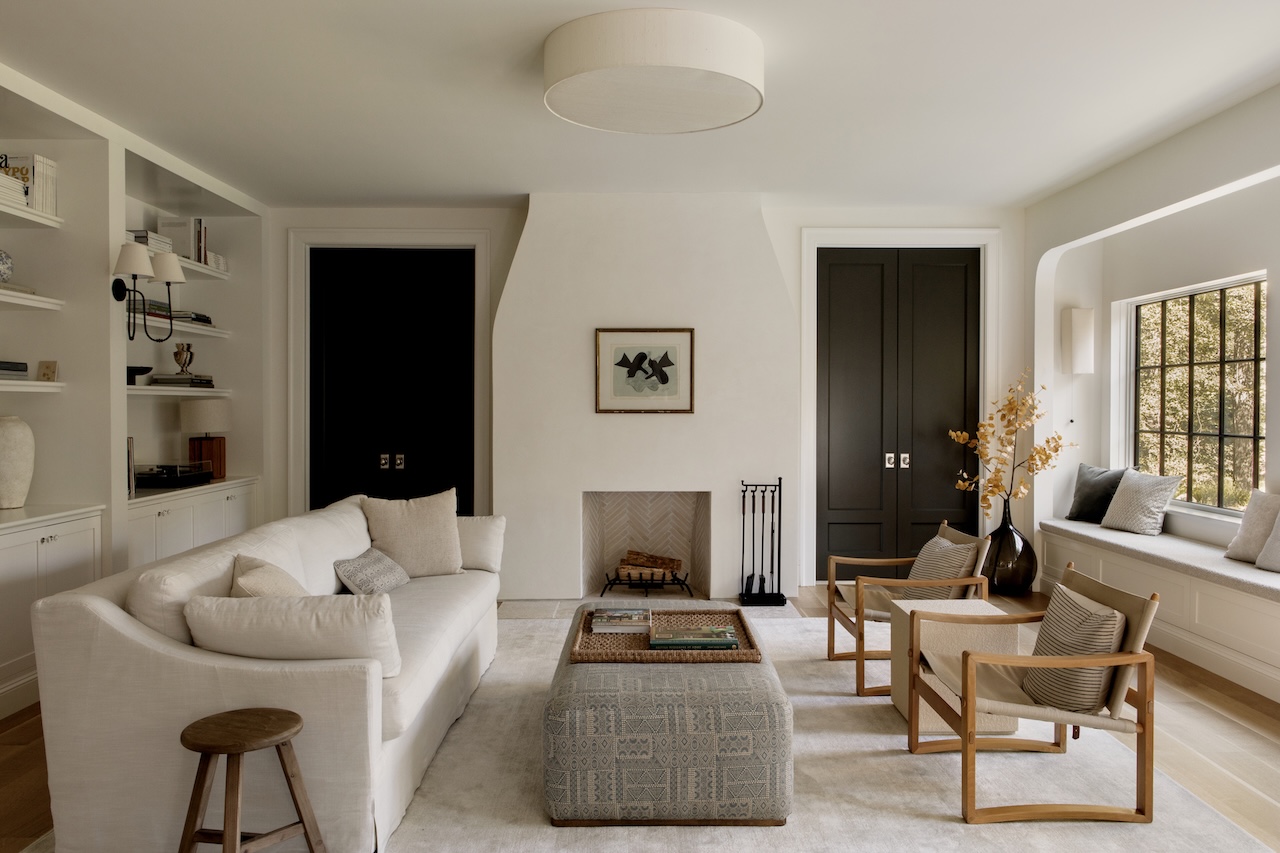
Throughout the plan, curved thresholds carry this thoughtful spatial logic, softening transitions between rooms and introducing a measured rhythm to the interior flow. This subtle curvature creates a gentle, inviting progression, enhancing the sense of movement and discovery within the home. The main level itself unfolds seamlessly from the central stair into a sequence of well-defined yet interconnected living spaces: a sophisticated galley kitchen, an expansive great room, and a serene primary suite. Each of these areas is harmoniously tied together through this consistent language of subtle curvature, fostering a sense of unity and continuity.
Within the great room, this motif is further extended through specific design elements. A gently sloped fireplace commands attention, its form echoing the organic contours found in nature. An elegantly arched portal over built-in seating provides both an architectural feature and a cozy nook. These elements collectively balance formal restraint with moments of permeability, allowing the interior to gracefully open outward to the densely wooded site beyond, inviting nature in and extending the living experience outdoors.

The Primary Suite: A Testament to Temporal Layering
The primary suite serves as a microcosm of the entire renovation’s philosophy, brilliantly holding the residence’s temporal layering within two adjacent rooms. In the bedroom, the exposed original rafters, now painted a deep, rich green, serve as a poignant reminder of the earliest structure. They retain the weight and memory of the home’s origins, providing a palpable connection to its past. This historical element is thoughtfully paired with a restored fireplace, clad in dark soapstone. The matte density of the soapstone further reinforces a profound sense of historical grounding, anchoring the space in a timeless elegance. The dark tones create an intimate and reflective atmosphere, a sanctuary within the historic shell.

In deliberate contrast, the adjoining primary bathroom introduces a distinctly brighter and more contemporary sensibility. Here, the floor is adorned with elegant marble hex tiles, while white lacquered wood wainscoting adds a touch of refined modernity. This shift in material and palette articulates a quieter, more refined aesthetic, creating a space that feels fresh, clean, and utterly current. The juxtaposition between the robust, historical character of the bedroom and the luminous, contemporary feel of the bathroom is not jarring but rather a masterful demonstration of how distinct temporalities can coexist harmoniously within a single architectural narrative. It showcases Ravi Raj Architects’ ability to create spaces that honor history without being confined by it, offering occupants the best of both worlds.
Integrating Architecture with the Landscape: Outdoor Living

Beyond the meticulously crafted interiors, the project extends its architectural language thoughtfully into the surrounding landscape through a series of strategic outdoor interventions. Recognizing the inherent beauty and potential of the Croton-on-Hudson setting, Ravi Raj Architects designed exterior spaces that not only enhance the home’s aesthetic appeal but also significantly expand its functional living areas.
An elevated deck, seamlessly accessible from the great room, serves as a prime example of this integration. Anchored by a burnished metal firepit, this outdoor living space invites relaxation and social gathering. The choice of burnished metal for the firepit introduces a contemporary touch that complements the home’s updated aesthetic while providing a robust and enduring feature. This deck offers a vantage point from which to appreciate the natural surroundings, creating an intimate connection between the interior and the expansive outdoors. It is envisioned as a space for enjoying crisp evenings, fostering conversations around a warm fire, and extending the home’s usability across various seasons.

Adjacent to the kitchen, a bluestone patio with a built-in barbecue further enhances the outdoor living experience. Bluestone, a material deeply rooted in the regional vernacular, ensures that this new addition feels organic and complementary to the existing stone foundation of the house. The built-in barbecue transforms this patio into an ideal space for al fresco dining and entertaining, seamlessly integrating culinary activities with outdoor enjoyment. These multiple points of occupation – the elevated deck and the bluestone patio – are strategically placed to allow the house to engage with its site throughout the year, offering diverse opportunities for residents to connect with nature, whether for quiet contemplation or vibrant social gatherings.
The Overarching Narrative: Timelessness and Deliberation

Throughout the entire renovation, a restrained yet rich palette of natural finishes underpins the project’s success, contributing to an atmosphere that feels both timeless and deliberately curated. Materials such as lacquered wood, honed marble, soft textiles, and custom built-ins are employed with precision and sensitivity. Each choice reflects a commitment to quality, durability, and a subtle elegance that allows the inherent beauty of the materials to shine. The thoughtful integration of these elements ensures that the home, despite its comprehensive transformation, retains an authentic character that resonates with its historical context.
The genius of Ravi Raj Architects’ approach lies in its ability to take a once-disparate structure – one marred by incongruous additions and an unclear identity – and unify it. This unification is achieved through a powerful combination of material continuity, where new elements echo and complement the old, and calibrated interventions, where every change is precise and purposeful. The result is a clear architectural narrative that bridges the home’s inheritance with its contemporary inhabitation. The Mount Airy house is no longer just an old stone dwelling or a mixed-era structure; it has been reborn as a cohesive, elegant residence that respectfully acknowledges its past while confidently embracing its future. It stands as a testament to the power of thoughtful design to not only restore but also to elevate and redefine architectural heritage.

Statements on the Project’s Significance
Ravi Raj, the principal architect, reflected on the project’s core philosophy: "Our primary objective was never to erase the past, but rather to engage in a respectful and dynamic dialogue with it. The inherent character of the original stone house in Mount Airy was our guiding star. Every new element, every calibrated intervention, was carefully considered to complement, rather than compete with, the existing fabric. We aimed to create spaces that feel both deeply rooted in history and utterly responsive to the demands of contemporary living, allowing the home’s soul to shine through."

The homeowners, deeply satisfied with the transformation, echoed this sentiment. "We envisioned a home that felt profoundly connected to its place, a sanctuary that honored its heritage while providing the openness, functionality, and aesthetic of modern design," they stated. "Ravi Raj’s team delivered precisely that. The thoughtful integration of materials, the graceful flow between spaces, and the seamless connection to our natural surroundings have created a residence that feels both historic and refreshingly new. It’s a testament to how architectural vision can bridge centuries."
Local architectural critics have also lauded the project as a significant contribution to regional design. "This renovation by Ravi Raj Architects sets a new benchmark for sensitive architectural intervention in Westchester County," noted Dr. Eleanor Vance, an architectural historian specializing in regional vernaculars. "It demonstrates a profound understanding of how thoughtful design can preserve a property’s historical soul, correct past architectural missteps, and elegantly prepare it for the next century of inhabitation. It is a masterclass in architectural reclamation and respectful modernization."

Broader Implications and a Model for Future Renovations
The Mount Airy renovation by Ravi Raj Architects carries significant implications, serving as a compelling model for future architectural endeavors, particularly in regions rich with historical properties. Firstly, it underscores the value of preserving existing structures rather than resorting to demolition and new construction. By working with the original fabric, the project inherently embraces a form of sustainable design, reducing waste and minimizing the environmental footprint associated with new building materials and processes. The careful sourcing of local flagstone further reinforces this commitment to ecological responsibility and regional authenticity.

Secondly, the project demonstrates that modernization does not necessitate the sacrifice of heritage. Through intelligent design choices – like the clear distinction between the stone base and lap siding, or the careful reinterpretation of the roofline – it proves that contemporary needs and aesthetics can be seamlessly integrated into historical contexts. This approach encourages homeowners and developers alike to view older properties not as limitations, but as canvases for innovative, respectful design.
Finally, this renovation reinforces the unique architectural identity of Westchester County. By celebrating and reinterpreting the region’s vernacular traditions, it contributes to a stronger sense of place and a richer architectural tapestry. It encourages a deeper appreciation for the local geology and the craftsmanship of previous eras, ensuring that the distinctive character of Westchester’s stone houses continues to define its landscape for generations to come. The Mount Airy house, under Ravi Raj’s masterful hand, stands as a shining example of how inheritance and inhabitation can converge to create truly exceptional, timeless architecture.







