
 Ali Ikhwan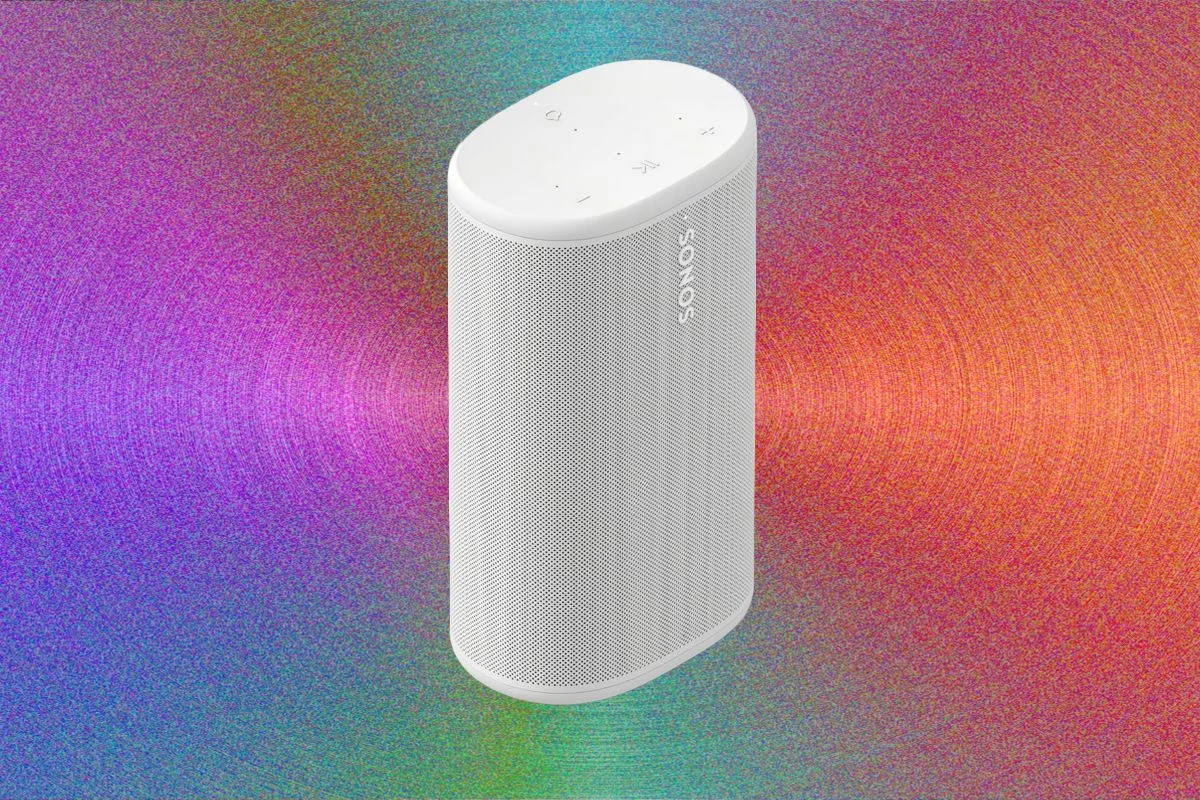
The global consumer electronics market has witnessed a significant shift toward hybrid audio solutions, and the release of the Sonos Play marks a pivotal moment in the evolution of the brand’s portable ecosystem. Positioned strategically between the heavy-duty Move 2 and the ultra-portable Roam 2, the Sonos Play aims to capture a "Goldilocks" segment of the market—users who demand high-fidelity sound without the cumbersome weight of traditional outdoor speakers. Following a series of technical hurdles regarding its "Battery Saver" functionality, the device has emerged as a centerpiece of the Sonos lineup, offering a blend of stationary performance and mobile flexibility that challenges the traditional boundaries of home audio.
Product Architecture and Industrial Design
The Sonos Play arrives in a stout, tubular form factor that prioritizes ergonomic utility and structural integrity. Measuring 7.6 by 4.4 by 3 inches and weighing approximately 2.9 pounds, the device is engineered to be significantly more manageable than the 6.6-pound Sonos Move 2, while offering a substantially larger acoustic chamber than the 0.95-pound Roam 2. The exterior features a rubberized loop integrated into the chassis, facilitating easy transport or hanging, which underscores its identity as a lifestyle-oriented device.
In terms of aesthetics, the Sonos Play adheres to the Scandinavian minimalist philosophy that has defined recent Sonos hardware, such as the Arc Ultra soundbar. The packaging reflects an industry-wide trend toward sustainability, utilizing brown cardboard and white acoustic fabric wrapping in place of traditional plastics. However, this commitment to environmental consciousness extends to the controversial omission of a wall adapter. While a wireless charging stand is included in the box, users must provide their own power source. Sonos recommends a 15-volt, 3-amp (45-watt) adapter for optimal charging speeds, though a minimum of 18 watts (9V/2A) is required for basic operation. This decision mirrors similar moves by Apple and Samsung, which the company justifies as an effort to reduce electronic waste (e-waste), despite the availability of a branded 45W adapter for an additional $29 purchase.
Technical Specifications and Connectivity Ecosystem
The Sonos Play is built upon a sophisticated internal architecture designed to rival the Era 100 in terms of soundstage and depth when used in a fixed environment. Its integration into the Sonos ecosystem is managed primarily through the proprietary Sonos app, which facilitates the discovery and synchronization of the device across a home network.
Key technical features include:
- Streaming Versatility: The device supports over 100 streaming services natively through the Sonos app, alongside direct streaming via Spotify Connect, Tidal Connect, and Apple AirPlay 2.
- Trueplay Tuning: Utilizing internal microphones, the Play employs Sonos’ proprietary Trueplay technology. This feature automatically analyzes the acoustic properties of the surrounding environment—be it a kitchen counter or an outdoor patio—and adjusts the speaker’s EQ to compensate for reflections and absorption.
- Battery Performance: Sonos claims a 24-hour battery life on a single charge, a figure that places it at the top of its class for Wi-Fi-enabled portable speakers.
- Network Integration: The speaker functions as a distinct "Room" within the Sonos software, allowing for multi-room synchronization or standalone operation.
Chronology of Technical Challenges and Firmware Resolution
The launch of the Sonos Play was not without its complications, specifically regarding its power management software. During the initial review and testing phases, early units exhibited significant network instability. This was traced back to the "Battery Saver" toggle, a feature enabled by default to preserve power during periods of inactivity.
The following timeline outlines the identification and resolution of these issues:

- Initial Deployment: Early testers reported that the speaker would frequently lose its connection to the Wi-Fi network after entering idle mode, requiring manual resets to rejoin the system.
- Diagnostic Phase: Sonos engineering teams identified a conflict between the deep-sleep power state and the network handshake protocol. The "Battery Saver" mode was effectively severing the connection in a manner that the software could not automatically recover from upon wake-up.
- Firmware Intervention: A critical firmware update was pushed to the Play units. This update recalibrated the power-saving parameters, ensuring that the Wi-Fi radio remained in a low-power "listening" state rather than shutting down entirely, or improved the speed at which the device re-authenticated with the router.
- Validation: Post-update testing confirmed that the 24-hour battery claim remained viable and that the network disruptions were eliminated. In subsequent week-long stress tests, the speaker successfully powered down and reconnected without user intervention.
Contextual Background: The 2024 Sonos Software Transition
To understand the significance of the Play’s performance, one must look at the broader context of Sonos’ recent corporate history. The year 2024 was a period of intense scrutiny for the company following a major redesign of its mobile application. The app update, intended to modernize the user experience, was initially met with widespread criticism due to missing features and stability issues.
The Sonos Play represents a critical opportunity for the company to demonstrate that its hardware-software synergy has returned to its historical standard of excellence. By addressing the Play’s connectivity bugs swiftly via firmware, Sonos is attempting to rebuild consumer confidence. The success of the Play is essential for the company to prove that its "New Era" of products can deliver the seamless "plug-and-play" experience that originally built the brand’s loyal following.
Comparative Market Analysis
The Sonos Play enters a competitive landscape populated by both traditional Bluetooth speakers and modern smart speakers. Its primary advantage lies in its dual-mode capability: it acts as a high-end Wi-Fi speaker when on its cradle and a rugged Bluetooth/Wi-Fi portable when removed.
| Feature | Sonos Play | Sonos Move 2 | Sonos Roam 2 |
|---|---|---|---|
| Weight | ~3 lbs | 6.6 lbs | 0.95 lbs |
| Battery Life | 24 Hours | 24 Hours | 10 Hours |
| Connectivity | Wi-Fi 6, BT, AirPlay | Wi-Fi 6, BT, AirPlay | Wi-Fi, BT, AirPlay |
| Primary Use | Indoor/Outdoor Hybrid | Large Outdoor/Home | Ultra-Portable/Travel |
| Charging | Wireless Base/USB-C | Wireless Base/USB-C | USB-C/Qi Wireless |
Supporting data suggests that the "mid-size portable" category is currently the fastest-growing segment in the premium audio market. Consumers are increasingly moving away from "fixed" home theater systems in favor of modular units that can be grouped for a party or taken to a secondary residence. The Play’s ability to rival the Era 100’s sound quality while maintaining a 3-pound profile makes it a formidable competitor against the likes of the Bose Portable Smart Speaker and the JBL Authentics series.
Official Responses and Strategic Outlook
While Sonos has not issued a formal press release regarding the specific "Battery Saver" bug, technical support channels and internal statements have emphasized the company’s commitment to continuous software optimization. In communications with hardware reviewers, Sonos representatives stated that the identification of the "root cause" was a priority to ensure that the 24-hour battery claim did not come at the expense of user convenience.
Industry analysts suggest that the Sonos Play is a strategic pivot. "Sonos is no longer just a home audio company; they are an ‘everywhere’ audio company," says senior tech analyst Marcus Thorne. "The Play is designed to be the only speaker a modern apartment dweller needs. It replaces the bookshelf speaker and the beach speaker simultaneously. The resolution of the firmware issues was mandatory for this product to survive in a market where reliability is the number one consumer demand."
Broader Impact and Implications for the Audio Industry
The launch and subsequent refinement of the Sonos Play signal several key trends in the consumer electronics sector:
- The Normalization of Firmware-First Launches: Like many modern tech products, the Sonos Play relied on a "Day One" or "Day Seven" patch to achieve full functionality. This highlights an industry trend where hardware is shipped with the expectation that software will be polished post-release.
- The Power Supply Standard Change: By recommending a 45W adapter but not including it, Sonos is pushing consumers toward standardized USB-C Power Delivery (PD). This may accelerate the phase-out of proprietary, low-wattage charging bricks in the home audio space.
- The Hybridization of Audio: The distinction between "home" and "portable" audio is blurring. As battery technology improves and Wi-Fi range extends, the need for separate product lines for indoor and outdoor use is diminishing.
In conclusion, the Sonos Play stands as a testament to the versatility of modern engineering. Despite an initial stumble with its power management software, the device provides a compelling argument for the integrated ecosystem. For users already invested in the Sonos platform, it offers a necessary bridge between the diminutive Roam and the massive Move. For new users, it provides a high-entry-point experience that justifies its premium positioning through a combination of 24-hour endurance, robust environmental tuning, and now, stabilized network performance. As the firmware continues to mature, the Play is likely to become the benchmark against which all other mid-sized portable Wi-Fi speakers are measured.







