rifanmuazin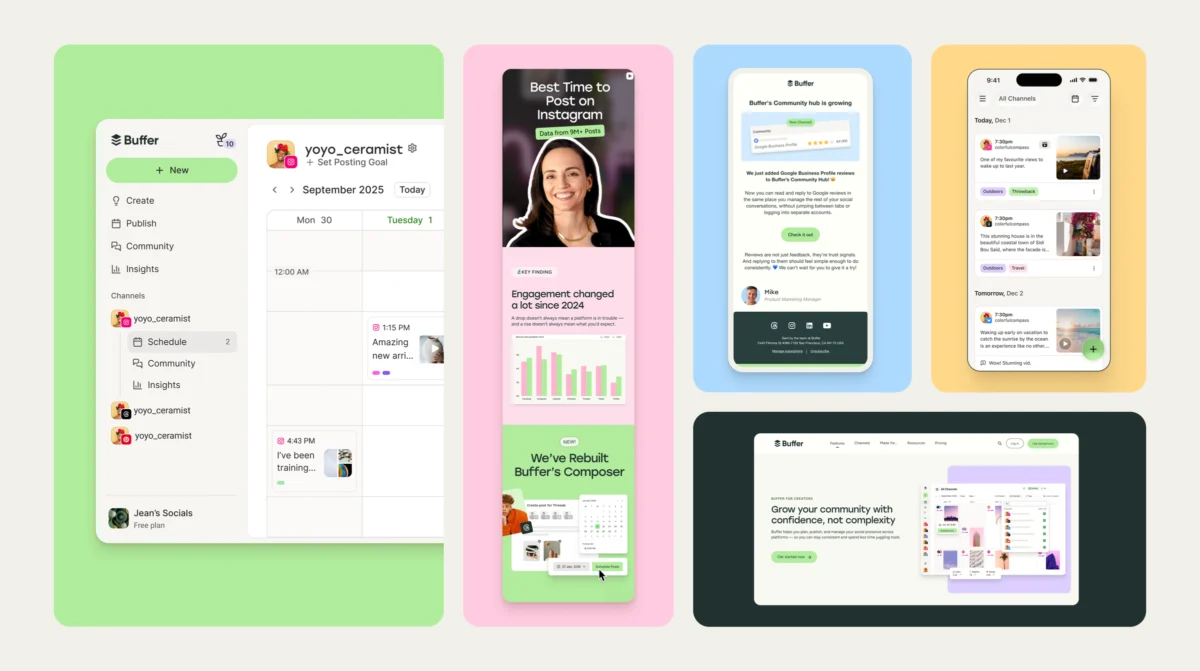
San Francisco, CA – Buffer, a prominent social media management platform, today announced the rollout of a comprehensive redesign across its entire product suite. This significant overhaul introduces a refreshed navigation system and an updated visual language, meticulously crafted to provide creators and businesses with enhanced flexibility and a more intuitive experience as the social media landscape continues its rapid evolution. The redesign is positioned as a pivotal step towards making Buffer a calmer, clearer, and more efficient tool for daily social media operations, laying a robust foundation for future innovations, including advanced AI capabilities.
The core objective behind this extensive update is to simplify the user journey, mitigating the inherent complexities and often chaotic nature of managing multiple social media channels. Buffer’s leadership emphasized a commitment to fostering "momentum" for users, a concept they define as a harmonious blend of calm, insightful data, and adaptable tools tailored to diverse business needs and content strategies. This philosophy underscores the new design principles now visible across the platform.
Background: Buffer’s Evolution in a Dynamic Digital Landscape
Founded in 2010, Buffer initially distinguished itself by offering a straightforward solution to a burgeoning problem: scheduling social media posts with ease. In an era when social media was nascent and largely unstructured, Buffer’s minimalist approach resonated with early adopters, quickly establishing it as a go-to tool for streamlining content distribution. Over the past decade, however, the digital ecosystem has undergone a profound transformation. Social media platforms have matured into intricate "public squares," driven by opaque algorithms, an explosion of content formats, and an increasingly polarized discourse. This evolution has presented significant challenges for brands, marketers, and individual creators striving to build consistent online presences and meaningful engagement.
The global social media marketing industry, valued at an estimated $170 billion in 2023, is projected to reach over $770 billion by 2030, highlighting the immense pressure on businesses to excel in this domain. Yet, alongside this growth, social media professionals frequently report high levels of stress and burnout due to the relentless demand for content, the complexity of platform-specific nuances, and the constant battle for algorithmic visibility. A recent industry survey indicated that over 60% of social media managers feel overwhelmed by the pace of change and the sheer volume of tasks. It is against this backdrop of both opportunity and challenge that Buffer undertook its most significant product redesign to date.
For several months leading up to today’s announcement, Buffer had been quietly signaling this strategic shift. A new look began appearing on its marketing website, alongside updated campaigns and a refreshed homepage, all hinting at a broader brand evolution. Today marks the culmination of these efforts, unifying the product experience with the refreshed brand identity. This phased approach allowed the company to gather initial feedback and ensure a cohesive transition for its global user base.

The Impetus for Change: Navigating Complexity with Calm
As Buffer expanded its feature set over the years to meet growing user demands, the product, like many successful software platforms, gradually accrued layers of complexity. What began as a simple publishing tool evolved to incorporate analytics, engagement features, and team collaboration functionalities. While beneficial, this growth occasionally led to a less streamlined user experience, diverging from the core principle of simplicity that defined Buffer’s early success. The company acknowledged that its original structural framework was becoming a limiting factor, impeding further innovation and user satisfaction.
A central motivation for the redesign stems from Buffer’s recognition of the "chaotic public squares" that modern social platforms have become. Algorithms are often difficult to decipher, and online discourse can be contentious, creating a challenging environment for brand building. Buffer believes that optimal work is not achieved in chaos. By transforming its platform into a "calm space," the company aims to empower users to focus on strategic content creation and genuine community engagement, rather than being overwhelmed by the digital noise. This philosophy underpins the entire redesign, prioritizing ease, flexibility, and insightful guidance.
Key Pillars of the Redesign: A Focus on User Experience and Efficiency
The comprehensive redesign introduces several key enhancements designed to elevate the user experience:
-
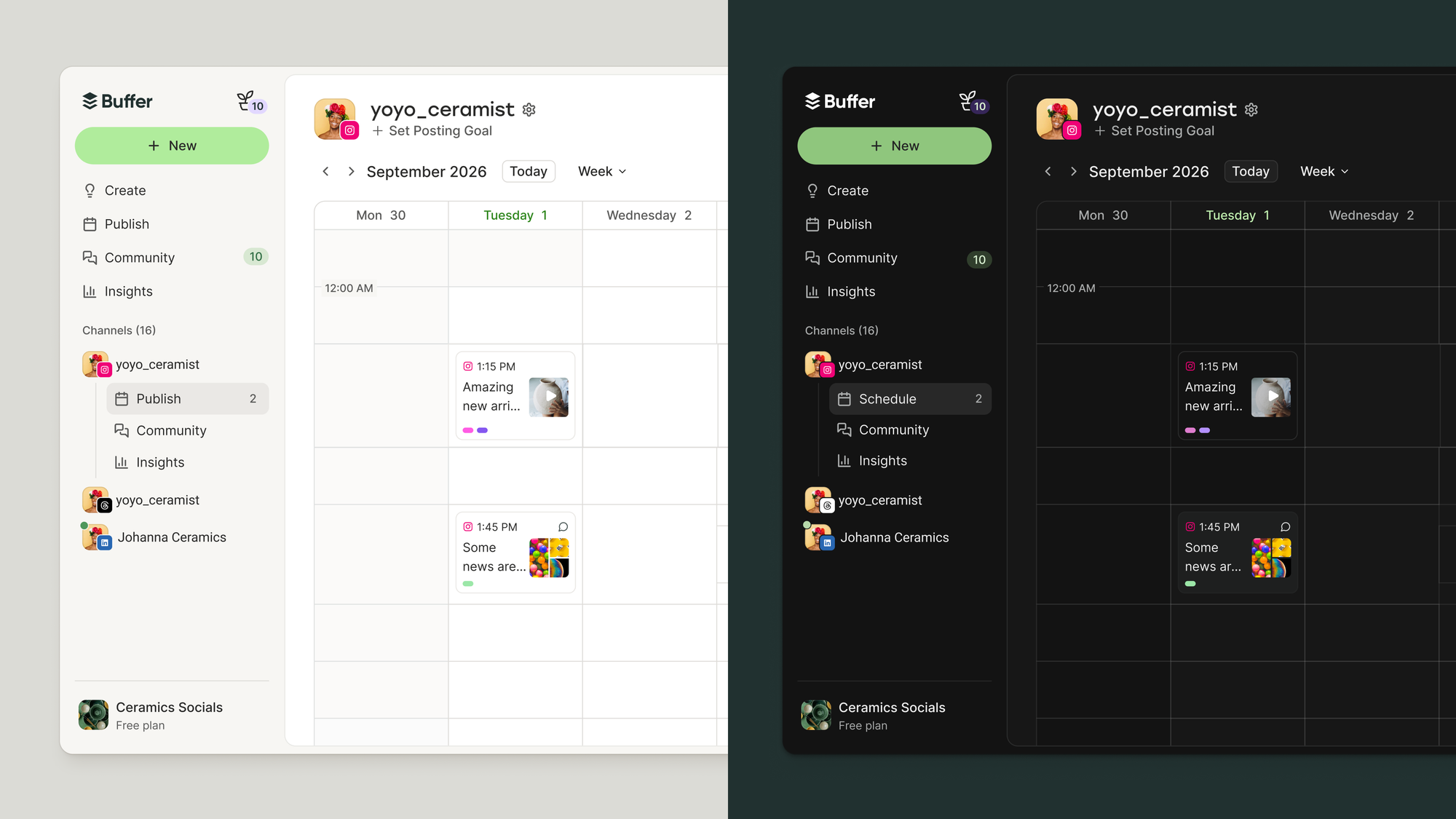
A Refreshed User Experience: Calmness and Clarity: The immediate impression upon logging into the redesigned Buffer platform is one of renewed spaciousness and clarity. Analogous to "rearranging furniture" in a familiar space, the underlying functionalities remain robust, but the interface now flows more intuitively. This includes a palette of updated brand colors and refined typography, contributing to a lighter, more inviting interface that is easier to navigate. The goal is not to reinvent Buffer’s fundamental capabilities but to enhance their accessibility and usability, creating a stronger foundation for future advancements.
-
Strategic Navigational Overhaul with a Centralized Sidebar: A cornerstone of the new design is the introduction of a centralized sidebar. This fundamental change organizes Buffer’s main features into a single, cohesive location, eliminating the need for users to search across disparate menus or contexts. Users can now seamlessly switch between various social media channels, content groups, and work types – whether they are scheduling posts, engaging with their audience, or analyzing performance data. This streamlined navigation is expected to significantly improve workflow efficiency, allowing both new users and seasoned professionals to maintain focus and build personalized workflows that align with their specific needs. For new creators, the consistent layout promises a quicker onboarding experience, reducing the cognitive load often associated with learning new software. For professionals managing multiple accounts and complex campaigns, the centralized sidebar offers unprecedented flexibility and visibility across their entire social media operation.
-
A Modernized Design Language Aligned with Brand Identity: Buffer has historically cultivated an identity distinct from typical corporate software – embracing a quirky, independent, and curious spirit. While the product evolved, the brand’s visual identity and interface did not always keep pace. The current refresh endeavors to reintegrate this unique spirit, applying it consistently across every touchpoint: the brand’s marketing materials, the web product, and mobile applications. This strategic alignment ensures that Buffer’s unconventional ethos is now visually reflected throughout the user experience, reinforcing a cohesive brand narrative. The process involved extensive design iterations and user feedback, ensuring that the updated aesthetics support the platform’s functionality and future direction, rather than merely superficial changes.
Foundation for Future Innovation: Smarter, More Insightful Social Media
Beyond immediate user experience improvements, the redesign serves a critical strategic purpose: creating ample "space to grow" for the next generation of features. Buffer’s leadership has explicitly outlined a roadmap that includes a suite of advanced functionalities aimed at transforming social media management from a reactive task into a proactive, data-driven strategy.
-
Paving the Way for Advanced Features: The enhanced structural integrity and clearer interface are essential prerequisites for integrating sophisticated tools. These forthcoming features include smarter scheduling algorithms, which will leverage data to optimize post times for maximum reach and engagement. Deeper insights will move beyond basic analytics, offering actionable intelligence on audience behavior, content performance trends, and competitive analysis. Critically, Buffer is also committing to the integration of AI assistance, which could manifest in various forms, such as AI-powered content generation suggestions, automated sentiment analysis for engagement, or intelligent recommendations for audience targeting. The overarching goal is to equip creators with tools that help sustain momentum over time, moving beyond mere task execution to strategic decision-making.
-
Buffer’s Vision for 2026 and Beyond: Looking towards 2026, Buffer envisions itself as a truly "smarter, more insightful" platform. This vision extends beyond current functionalities to anticipate the evolving demands of the digital economy. The redesign is not merely an aesthetic update but a foundational architectural shift enabling Buffer to deliver on this ambitious future. By integrating AI and advanced data analytics, Buffer aims to empower users to make more informed decisions about their social media strategies, ultimately leading to more effective campaigns and stronger online presence. This proactive approach underscores Buffer’s commitment to remaining at the forefront of social media technology.
Industry Context and Implications: Setting a New Standard
This strategic redesign positions Buffer strongly within the highly competitive social media management market, which includes major players like Hootsuite, Sprout Social, and Later. In an industry where user experience, efficiency, and access to cutting-edge tools are paramount, Buffer’s move to prioritize "calmness" and "clarity" could resonate deeply with a user base increasingly fatigued by digital overload. The emphasis on AI integration and deeper insights aligns with broader industry trends, where artificial intelligence is rapidly becoming a differentiator across various SaaS categories.

For creators and businesses, the implications are significant. A more intuitive and less overwhelming platform can lead to increased productivity, reduced stress, and potentially more effective social media campaigns. By simplifying complex tasks and providing a clearer path to advanced features, Buffer aims to democratize sophisticated social media management, making it accessible to a wider range of users, from solo entrepreneurs to larger marketing teams. This redesign could set a new benchmark for user-centric design in social media tools, challenging competitors to re-evaluate their own user experiences.
Official Statements and a Forward Look
Buffer’s leadership expressed immense pride in the team’s accomplishments, highlighting the meticulous care, attention to detail, and deep empathy for users that guided the redesign process. They also extended gratitude to the creators who provided invaluable feedback, directly shaping the evolution of the platform.
The company reaffirmed its enduring mission: to help creators and businesses establish and grow their online presence, publish consistently, understand performance, and achieve growth without feeling perpetually at odds with complex systems. While this mission remains steadfast, the methodology for achieving it is clearly evolving. Today’s redesign marks the crucial first step in Buffer’s journey toward becoming the comprehensive, intelligent, and user-friendly product it aspires to be. Users are invited to follow along as Buffer continues to innovate and roll out further enhancements in the months and years to come.