
 Ali Ikhwan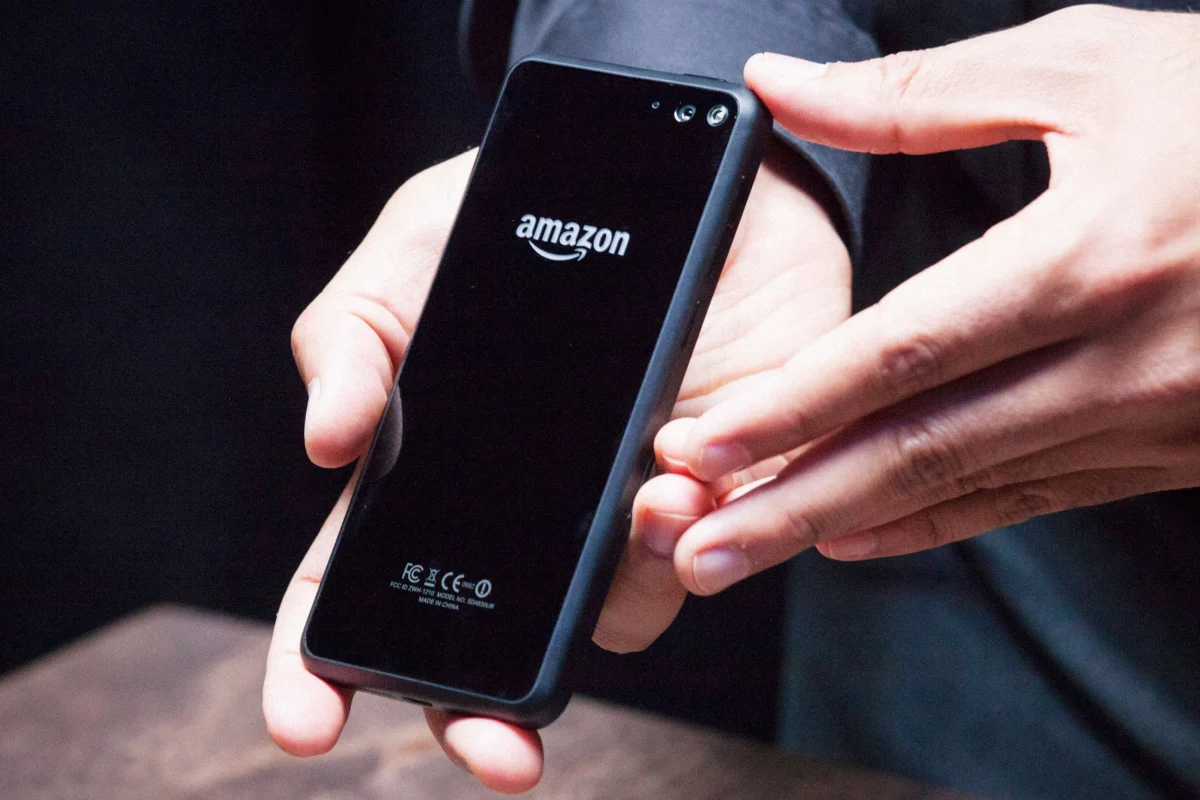
Amazon is reportedly developing a new smartphone, internally codenamed Transformer, marking the e-commerce giant’s first significant foray back into the mobile hardware market since the discontinuation of the Fire Phone over a decade ago. According to reports from Reuters, the project is being spearheaded by Amazon’s Devices and Services unit and is designed to leverage the company’s advanced Alexa+ artificial intelligence to create a shopping-centric, AI-first user experience. While Amazon has officially declined to comment on the project, labeling it as rumor and speculation, industry insiders suggest the device represents a fundamental shift in how the company views the intersection of hardware, ambient intelligence, and retail.
The Transformer project arrives at a pivotal moment for the smartphone industry, which is currently transitioning from a traditional app-based ecosystem toward generative user interfaces and autonomous AI agents. Unlike its predecessor, which struggled with a lack of native applications and a cluttered user interface, the Transformer phone is rumored to utilize a "Generative UI" that could potentially eliminate the need for a traditional app store altogether. This approach aligns with broader industry trends where AI models are increasingly capable of performing complex tasks—such as booking travel or ordering groceries—on behalf of the user, bypassing the need to open individual applications.
Historical Context: The Shadow of the Fire Phone
To understand the stakes of the Transformer project, one must look back at Amazon’s initial entry into the smartphone market in June 2014. The Fire Phone was launched with significant fanfare, featuring a unique "Dynamic Perspective" 3D display and a tool called Firefly that allowed users to identify products and media for immediate purchase on Amazon. However, the device was widely panned by critics and consumers alike. Within months of its release, Amazon was forced to take a $170 million write-down on unsold inventory, and by September 2015, the product was officially discontinued.
The failure of the Fire Phone was attributed to several factors: its high price point relative to established competitors, its exclusive carrier deal with AT&T, and most notably, the limitations of Fire OS. Because the operating system was a "forked" version of Android, it lacked access to the Google Play Store, depriving users of essential apps like YouTube, Google Maps, and various banking tools. The Transformer project appears designed to solve these legacy issues, potentially by embracing a more standard Android framework or by leapfrogging the app problem entirely through advanced AI integration.
The Strategy of the Generative User Interface
The most distinctive feature of the rumored Transformer phone is its reliance on a generative user interface (GUI). In this paradigm, the phone does not present a grid of icons but instead generates a dynamic interface based on the user’s immediate needs or vocal commands. This concept was recently demonstrated at Mobile World Congress 2024 by Deutsche Telekom, and it reflects a growing sentiment among tech leaders that the "app era" is nearing its end.
Carl Pei, CEO of Nothing, has previously suggested that the smartphone of the future will essentially be a single "app" that functions as the entire operating system. Amazon’s Transformer aims to capitalize on this by positioning Alexa+—a more sophisticated, large language model-powered version of its voice assistant—at the heart of the device. By utilizing agentic AI, the phone would be able to handle "intent-based" requests. For example, rather than a user opening the DoorDash app to order dinner, they would simply tell the phone what they want, and the AI would handle the logistics, payment, and tracking.
Leadership and the Panos Panay Influence
A significant factor in Amazon’s renewed confidence in hardware is the 2023 appointment of Panos Panay as the head of Devices and Services. Panay, formerly the Chief Product Officer at Microsoft, is credited with transforming the Surface line from a struggling experiment into a premium, multi-billion-dollar hardware brand. His reputation for "emotionally charged" product design and meticulous attention to hardware-software integration is seen as a vital asset for Amazon.
Industry analysts, including Francisco Jeronimo of IDC, suggest that if anyone can navigate the complexities of launching a new smartphone in a saturated market, it is Panay. His experience in creating "aspirational" hardware could help Amazon move beyond its reputation for "budget-friendly" devices like the Kindle and Fire Tablet, positioning the Transformer as a high-end companion or even a primary device for the AI era.
Strategic Acquisitions and the Always-Listening Ecosystem
The development of the Transformer phone is also supported by Amazon’s recent acquisition of Bee AI, a startup known for "always-listening" wearable technology. Bee AI’s software is designed to record and summarize daily conversations, automatically creating to-do lists and identifying user needs without manual input. Integrating this technology into a smartphone would grant Amazon unprecedented access to user data and behavioral patterns.
This "always-on" capability is central to Amazon’s long-term strategy of "ambient intelligence," where technology recedes into the background but remains constantly available to assist the user. However, this strategy also raises significant questions regarding data privacy and the centralization of consumer information within the Amazon infrastructure.
Market Challenges and Economic Headwinds
Despite the technological ambitions of the Transformer project, Amazon faces a daunting competitive landscape. The U.S. smartphone market is currently dominated by a duopoly, with Apple and Samsung controlling approximately 80% of the market share. For a third player to succeed, it must offer a value proposition that neither incumbent can match.
Furthermore, the economic environment for hardware manufacturing has grown increasingly hostile. The global semiconductor industry is currently grappling with a "memory crisis" and supply chain disruptions exacerbated by geopolitical tensions, such as the conflict in the Middle East and shifting trade policies. Analysts point out that the cost of components—including high-end AI chips and specialized displays—has risen significantly since the Transformer project was likely conceived, which may force Amazon to reconsider its pricing strategy or subsidize the device heavily through its Prime ecosystem.
Privacy Concerns and Regulatory Scrutiny
Privacy remains perhaps the most significant hurdle for Amazon. The company has a checkered history in this department, having been ranked second to last in privacy protections by the 2025 Ranking Digital Rights Index. Previous investigations have revealed that Amazon failed to adequately protect customer data, and its Ring surveillance cameras have drawn criticism for creating a "suburban surveillance state."
Critics, including Alexander Gamero-Garrido of the University of California, Davis, argue that an Amazon-branded smartphone would significantly increase the scale of potential privacy harms. Because smartphones are carried everywhere and used for nearly every aspect of daily life, they provide a much richer data stream than a home-based Echo speaker. There are concerns that Amazon could use the Transformer to listen to conversations and identify when a user is sick or stressed, subsequently serving targeted advertisements for cold medicine or healthcare services through Amazon Health.
The "Companion Device" Hypothesis
Given the difficulty of unseating the iPhone, some analysts speculate that Amazon may position the Transformer not as a primary phone, but as a "companion device" or a "minimalist" alternative, similar to the Light Phone. This would target users looking for a "digital detox" or those who want a secondary device dedicated primarily to AI assistance and shopping. By focusing on a niche market of "AI-first" users, Amazon could establish a foothold without needing to immediately capture tens of millions of users.
If Amazon follows the model of its Fire TV platform—where it integrates its software into third-party hardware—it could also seek to license its generative UI to other manufacturers. This would allow Amazon to collect valuable user data and expand its advertising network without the financial risk of large-scale hardware production.
Future Outlook and Implications
The success or failure of the Transformer project will likely serve as a bellwether for the future of AI-integrated hardware. If Amazon can successfully launch a device that eliminates the friction of the app store and provides a truly helpful AI assistant, it could disrupt the current mobile hierarchy. However, if the device is seen as a glorified shopping portal with intrusive data-gathering features, it may suffer the same fate as the Fire Phone.
As of early 2026, the project remains in active development, but its path to market is fraught with technical, economic, and ethical challenges. Whether the Transformer becomes a revolutionary new category of device or another entry in the graveyard of failed tech experiments will depend on Amazon’s ability to balance its retail ambitions with consumer demands for privacy and genuine utility. For now, the tech world watches closely as the "everything store" attempts to become the "everything device" company once again.







