
 Ali Ikhwan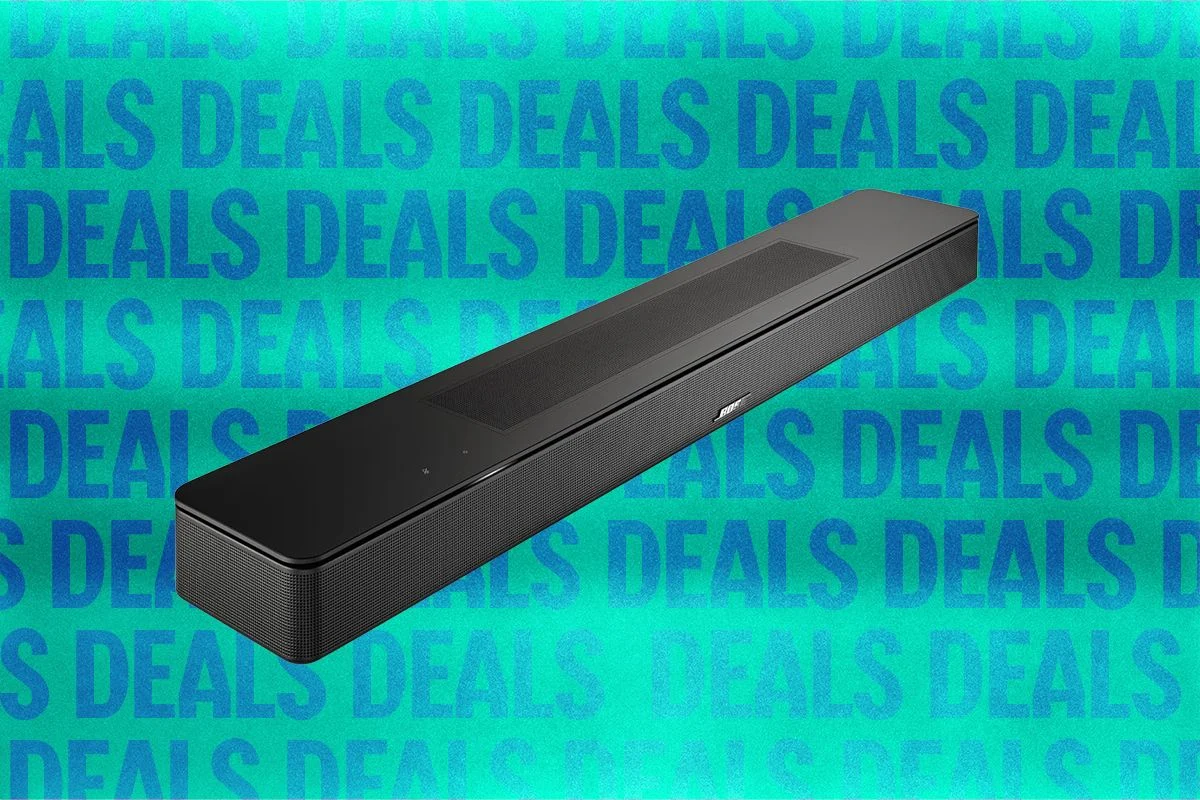
The consumer electronics market has observed a notable shift in the home audio sector as major retailers and manufacturers adjust pricing strategies to capture a growing demographic of urban dwellers seeking high-fidelity sound in smaller footprints. Leading this trend, Amazon has implemented a significant price reduction on the Bose Smart Soundbar, lowering the cost from its standard retail price of $499 to $419. This $80 discount represents a strategic move by Bose to maintain its competitive edge against rivals such as Sonos and Sony in the premium compact soundbar category. The device, which has gained critical acclaim for its integration of Dolby Atmos and proprietary spatial audio technology within a chassis measuring only 27 inches in width, serves as a focal point for the current intersection of artificial intelligence and acoustic engineering.
Technical Specifications and Design Philosophy
The Bose Smart Soundbar is engineered specifically for environments where space is at a premium, such as apartments or secondary viewing rooms. Standing at a mere 2.2 inches in height, the unit is designed to sit unobtrusively beneath the majority of modern television panels without obstructing the screen or infrared sensors. Despite its diminutive physical presence, the internal architecture of the device is complex. It houses five transducers, including two custom-engineered up-firing drivers designed to reflect sound off the ceiling. This hardware configuration is essential for the delivery of Dolby Atmos, an object-based audio format that provides a sense of height and immersion previously reserved for multi-speaker theater setups.
Beyond the physical drivers, the soundbar utilizes Bose TrueSpace technology. This proprietary digital processing analyzes non-Atmos signals—such as stereo or 5.1 surround sound—and upmixes them to create a multi-channel experience. This ensures that even legacy content benefits from the soundbar’s spatial capabilities. The inclusion of HDMI eARC (Enhanced Audio Return Channel) connectivity allows for the high-bandwidth data transfer required for uncompressed Atmos signals, while optical input remains available for older television models.
The Evolution of the Bose Soundbar Lineage
To understand the significance of the current Bose Smart Soundbar, it is necessary to examine the chronology of the company’s audio development. Bose has historically transitioned from large, wired "LifeStyle" systems to the more streamlined "Solo" series, eventually culminating in the "Smart" ecosystem.
- 2016-2018: Bose introduced the SoundTouch series, focusing on Wi-Fi connectivity but lacking the unified smart home integration seen in today’s models.
- 2019-2021: The launch of the Smart Soundbar 300 and 700 marked the company’s pivot toward integrated voice assistants (Amazon Alexa and Google Assistant) and the Bose Music App ecosystem.
- 2022-2023: The release of the Smart Soundbar 600 brought dedicated up-firing drivers to a mid-range price point, democratizing spatial audio.
- 2024: The current iteration of the Bose Smart Soundbar refines these technologies, introducing AI-driven dialogue enhancement and expanded "SimpleSync" capabilities for personal listening.
This timeline illustrates a clear trajectory toward software-defined audio, where the physical limitations of small speakers are mitigated by advanced algorithms and machine learning.
AI Dialogue Mode and Software Integration
One of the most significant features of the current model is the AI Dialogue Mode. In modern film production, sound mixing often prioritizes dynamic range and atmospheric effects, which can result in dialogue being buried under loud music or explosions. Bose addresses this through a machine-learning algorithm that has been trained on thousands of voice patterns. When activated, the soundbar identifies vocal frequencies and boosts them relative to the background noise. Unlike traditional "night modes" that simply compress the entire audio signal, the AI Dialogue Mode maintains the clarity of the surrounding soundscape while ensuring speech remains intelligible.
Furthermore, the soundbar functions as a central hub for the Bose ecosystem. Through the Bose Music App, users can group the soundbar with other Bose Wi-Fi speakers for synchronized multi-room audio. A unique feature of this generation is the integration with Bose Ultra Open Earbuds. Using SimpleSync technology, a user can pair their earbuds to the soundbar for a private surround sound experience. This is particularly useful for late-night viewing where high volume is not feasible, allowing the listener to maintain the spatial audio effect without disturbing others.

Market Context and Competitive Analysis
The home audio market is currently valued at several billion dollars globally, with the soundbar segment seeing the fastest growth. Industry analysts suggest that the rise of high-quality streaming services (such as Netflix, Disney+, and Apple TV+), which offer 4K resolution and Dolby Atmos audio, has driven consumers to seek hardware that can replicate the cinema experience.
Bose faces stiff competition in this $400 to $600 price bracket. The Sonos Beam (Gen 2) is often cited as its primary rival. While the Sonos Beam utilizes "virtual" Atmos through software processing, the Bose Smart Soundbar distinguishes itself by using physical up-firing drivers. However, market data indicates that Sonos holds an advantage in ecosystem "stickiness" due to its extensive range of architectural and outdoor speakers. By reducing the price of the Smart Soundbar to $419, Bose is aggressively positioning itself to attract "entry-level premium" buyers who might otherwise choose a lower-tier product from Samsung or Vizio.
Supporting Data: Performance and Limitations
While the Bose Smart Soundbar excels in spatial imaging and dialogue clarity, empirical testing and consumer feedback highlight certain trade-offs inherent in compact designs.
- Frequency Response: The soundbar performs admirably in the mid and high frequencies, providing crisp detail for orchestral music and sound effects. However, due to the small diameter of its drivers and the lack of a dedicated external subwoofer in the base package, low-frequency extension is limited. Users seeking "room-shaking" bass typically need to add a Bose Bass Module 500 or 700, which can double the total system cost.
- Audio Format Support: The device fully supports Dolby Atmos, Dolby Digital, and Dolby Digital Plus. However, it notably lacks support for DTS:X and other DTS formats. While most streaming services have standardized on Dolby, this may be a consideration for enthusiasts with large physical Blu-ray collections.
- Connectivity: The unit supports Bluetooth 5.0, Apple AirPlay 2, and Spotify Connect. In testing, these connections remain stable, though some users have noted that the initial setup through the Bose Music App can be sensitive to network configurations.
Official Responses and Industry Implications
While Bose Corporation rarely comments on specific third-party retail discounts, spokespeople for the company have consistently emphasized a commitment to "sound that fits the lifestyle." In previous press releases, Bose has stated that their goal is to eliminate the complexity of traditional home theaters without sacrificing the emotional impact of the audio.
Industry observers view this Amazon discount as part of a broader trend of "seasonal normalization." As the mid-year point approaches, manufacturers often clear inventory to make room for late-quarter product announcements. For the consumer, this represents a high-value window where flagship technology becomes available at mid-range pricing.
The implications for the broader industry are clear: hardware alone is no longer the sole selling point. The success of the Bose Smart Soundbar relies as much on its AI-driven software and its ability to integrate with wearable technology as it does on its acoustic transducers. As televisions continue to become thinner—and their built-in speakers continue to decrease in quality—the soundbar has transitioned from a luxury add-on to a functional necessity for the modern home.
Broader Impact on Consumer Behavior
The shift toward compact, high-performance audio systems like the Bose Smart Soundbar reflects changing domestic habits. With the rise of the "home-as-hub" lifestyle, the living room now serves as a cinema, a concert hall, and a gaming arena. The ability of a single, 27-inch device to pivot between these roles—providing clear dialogue for news, immersive heights for gaming, and a "musical" profile for background audio—is a significant driver of consumer interest.
As the $419 deal continues on Amazon, it is expected that other retailers like Best Buy and Walmart will feel pressure to match or beat the pricing, potentially leading to a short-term "price war" in the compact soundbar segment. For now, the Bose Smart Soundbar remains a benchmark for what is possible when high-end acoustic engineering is applied to the constraints of modern urban living. Consumers are advised to monitor stock levels, as premium audio deals at this price point often result in rapid inventory depletion.







