
 Ali Ikhwan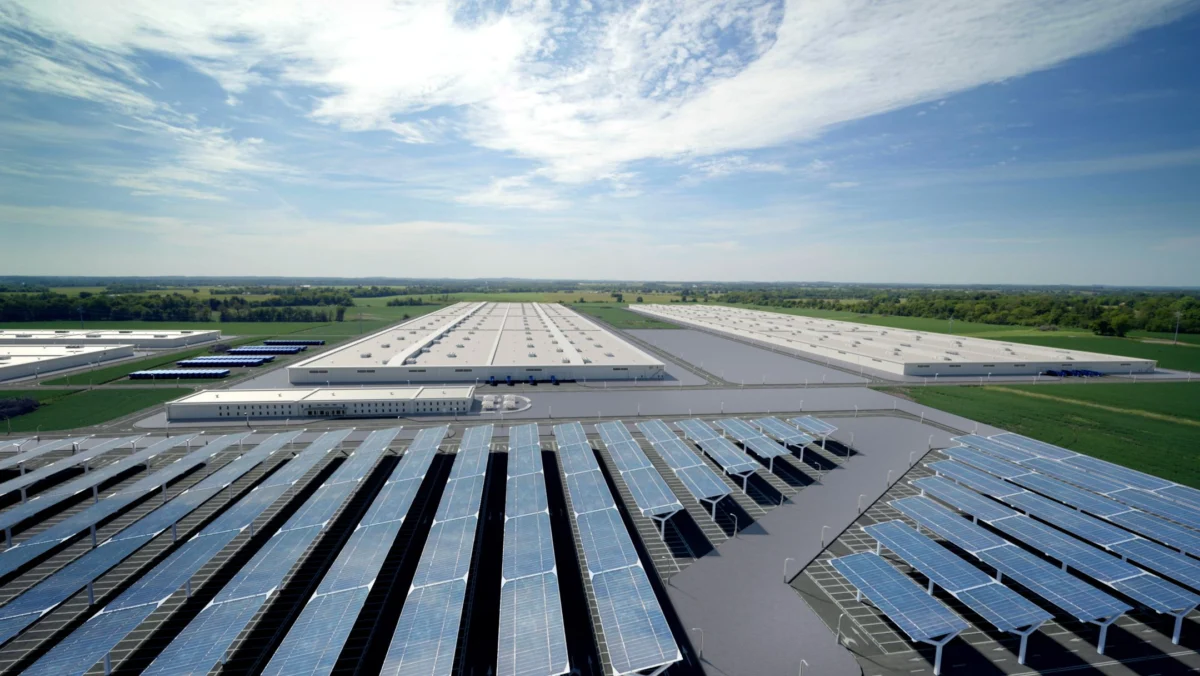
The American automotive industry is undergoing a fundamental transformation that extends far beyond the assembly line, as major manufacturers increasingly position themselves as energy infrastructure providers. Ford Motor Company’s recent announcement of its new subsidiary, Ford Energy, marks a definitive shift in corporate strategy, aiming to capitalize on the burgeoning demand for large-scale battery energy storage systems (BESS). This pivot comes at a critical juncture for the industry, which is grappling with a cooling electric vehicle (EV) market, shifting political landscapes, and the insatiable power requirements of the artificial intelligence (AI) revolution. By repurposing manufacturing assets once dedicated to EV production, Ford and its peers are seeking more stable, high-margin revenue streams that decouple their financial performance from the volatility of consumer vehicle sales.
The Launch of Ford Energy and the Kentucky Repurposing
Ford Energy is designed as a dedicated business unit focused on the development, sale, and maintenance of utility-scale and industrial battery storage solutions. The company’s initial roadmap targets a diverse client base, including public utilities, heavy industrial operators, and, perhaps most significantly, the massive data centers required to train and run generative AI models. According to official company filings, Ford plans to begin the first deliveries of these systems in late 2027.
The operational backbone of this new venture will be located in Glendale, Kentucky. Ford had originally intended for this facility to produce batteries for its next generation of electric trucks and SUVs. However, as EV demand growth slowed throughout 2023 and 2024, the company opted to retool unused production lines for BESS manufacturing. This decision allows Ford to utilize existing infrastructure and workforce training while pivoting to a product with a more predictable commercial demand profile.
The financial markets responded with rare enthusiasm to the announcement. Ford’s stock price surged by 13 percent in a single day, marking its most significant gain in years. Investors appear to view the move as a pragmatic hedge against the uncertainties of the EV transition, providing the company with a foothold in the rapidly expanding green energy infrastructure sector.
A Chronology of the Automotive Battery Transition
The road to the current BESS pivot has been marked by ambitious promises followed by significant tactical retreats. To understand the significance of Ford Energy, one must look at the timeline of the North American battery landscape over the last four years:
- 2021-2022: The Gold Rush. Following the passage of the Inflation Reduction Act (IRA), automakers announced tens of billions of dollars in investments for domestic battery plants. The focus was almost exclusively on powering a fleet of millions of new EVs.
- Late 2023: The Reality Check. Ford announced a massive $19.5 billion write-down on its EV programs, specifically within its "Model e" division. High interest rates and consumer range anxiety led to a buildup of unsold EV inventory across the industry.
- Early 2024: The Strategic Pivot. Ford, General Motors, and Stellantis began delaying or canceling specific EV models in favor of hybrids. Concurrently, the rise of Large Language Models (LLMs) created a sudden, massive demand for grid stability and backup power for data centers.
- Late 2024: The Energy Subsidiary Era. Ford officially spins off Ford Energy, while General Motors and Stellantis finalize their own energy storage partnerships, effectively signaling that the "Battery Belt" in the American South and Midwest will serve more than just the transportation sector.
The AI Factor: Data Centers as the New Primary Customer
The primary catalyst for the sudden bullishness surrounding BESS is the explosive growth of the AI sector. Data centers are notoriously energy-intensive, and the hardware required for AI processing consumes significantly more electricity than traditional cloud computing. Tech giants like Microsoft, Google, and Amazon are under immense pressure to maintain 24/7 uptime while also meeting ambitious "net-zero" carbon goals.
Shan Tomouk, lead battery energy storage researcher at Benchmark Mineral Intelligence, notes that batteries are an ideal solution for the modern data center. "Batteries can help directly power the very energy-hungry centers, which constantly run servers and other hardware, but also the cooling systems that keep them functioning," Tomouk stated.
Beyond simple power supply, BESS units provide several critical functions for data centers:
- Peak Shaving: Data centers can draw power from batteries during times of high grid demand, reducing costs and preventing localized blackouts.
- Frequency Regulation: AI training involves wild fluctuations in power usage; batteries can smooth out these spikes to protect sensitive hardware.
- Backup Power: As an alternative to diesel generators, large-scale lithium-ion or lithium-iron-phosphate (LFP) batteries offer a cleaner, faster-responding backup solution.
The drive to keep the United States at the forefront of AI development has essentially created a "floor" for battery demand that is independent of how many individual consumers choose to buy an electric car.
Legislative Tailwinds and the Domestic Manufacturing Incentive
While consumer-facing EV incentives have become a point of political contention, support for industrial and commercial energy storage remains robust. The Inflation Reduction Act provides significant tax credits for the domestic production of battery cells and modules, regardless of whether they end up in a vehicle or a stationary storage rack.
Interestingly, the current political climate in Washington has created a bifurcated incentive structure. While some GOP-led initiatives have sought to roll back consumer EV tax credits, the incentives for commercial battery storage projects—and the domestic manufacturing of those batteries—often enjoy more bipartisan support due to their association with energy independence and the strengthening of the national power grid.

Furthermore, these tax credits are structured to incentivize the use of "all-American" materials. By focusing on BESS, Ford and other manufacturers can capitalize on these subsidies while avoiding the direct competition with their own profitable internal combustion engine (ICE) and hybrid vehicle lines.
Comparative Industry Landscape: Tesla, GM, and Stellantis
Ford is not the first to recognize the potential of the stationary storage market, but it is among the most aggressive in retooling its core manufacturing base to meet it.
Tesla: The "elder statesman" of the group, Tesla has operated its Energy Generation and Storage division for over a decade. Its Megapack (for utilities) and Powerwall (for homes) have often served as a financial buffer when vehicle deliveries lagged. In recent quarters, Tesla’s energy business has shown high growth, though it remains a smaller portion of total revenue compared to its automotive sales. Tesla is currently expanding its footprint with a new Megapack facility in Houston, Texas.
General Motors (GM): GM has taken a partnership-heavy approach. Last year, the company announced a collaboration with Redwood Materials to integrate recycled battery materials into energy storage systems. More recently, GM and LG Energy Solution announced they would repurpose a Tennessee plant—originally intended for EV cells—to produce batteries specifically for BESS applications.
Stellantis: The parent company of Chrysler and Jeep entered a joint venture with Samsung SDI in Kokomo, Indiana. While that facility began production in 2024, Stellantis has already pivoted a portion of its capacity toward energy storage. However, recent reports suggest Stellantis may be looking to exit certain battery ventures as it seeks to minimize losses in its broader EV portfolio.
Financial Analysis and High-Margin Opportunities
For automotive CEOs, the appeal of BESS lies in the margins. The car manufacturing business is notoriously capital-intensive with thin profit margins, often in the low single digits for mass-market vehicles. In contrast, energy storage systems for industrial and utility customers are sold as part of long-term infrastructure contracts that include software management and maintenance services.
Ford CEO Jim Farley has characterized the battery energy storage business as one of the company’s "high-margin opportunities." By leveraging its partnership with CATL, the world’s largest battery manufacturer, Ford can utilize established LFP (lithium iron phosphate) technology, which is cheaper to produce and more durable for stationary use than the nickel-cobalt chemistries typically required for high-performance EVs.
This strategic shift also addresses a looming problem for the "Big Three" automakers: the threat of cannibalizing their own ICE sales. Gil Tal, director of the EV Research Center at UC Davis, suggests that if automakers are going to struggle for profitability in the green transition, they would prefer to do so in a sector that doesn’t compete with their existing truck and SUV sales. "It makes perfect sense, unfortunately," Tal noted, highlighting the pragmatic, if somewhat cynical, logic of the pivot.
Broader Implications for the National Power Grid
The move by Ford and others to flood the market with BESS capacity could have profound implications for the stability of the American power grid. As the U.S. transitions toward intermittent renewable energy sources like wind and solar, the ability to store vast amounts of electricity becomes the "holy grail" of energy policy.
If automakers successfully transition from being "car companies" to "energy companies," they may play a more significant role in national security and infrastructure than ever before. The deployment of thousands of Megapack-style units across the country could mitigate the risks of extreme weather events and reduce the nation’s reliance on aging peaker plants that burn natural gas.
Conclusion: A New Era of Industrial Convergence
The launch of Ford Energy and the broader retooling of the American "Battery Belt" signify the end of the first chapter of the EV revolution. The initial assumption—that the path to a zero-emission future would be paved solely by consumer car sales—has been replaced by a more complex reality.
Automakers are now realizing that the battery is the product, and the vehicle is just one possible casing for it. By targeting the data centers that power the AI economy and the utilities that power the nation, Ford and its competitors are attempting to build a future that is less dependent on the whims of the individual car buyer and more integrated into the fundamental infrastructure of the 21st century. Whether this pivot will be enough to offset the massive capital expenditures of the last decade remains to be seen, but for now, the industry’s path forward is being powered not by the highway, but by the grid.







