 Cintya Tara Annisa

The specialty coffee industry operates as a complex global network, moving from high-altitude farms to the sophisticated machinery of urban roasteries. Within this ecosystem, few figures have bridged the gap between origin, education, and competitive excellence as effectively as Seidy Selivanow. As a co-founder of Kafiex Roasters and a recurring finalist in the U.S. Barista Championship, Selivanow has become a pivotal voice for inclusivity and technical rigor. Her recognition as part of the Sprudge Twenty—an initiative presented in partnership with Pacific Barista Series—serves as an acknowledgment of her contributions to elevating coffee literacy and championing representation for Latin American producers and professionals.
A Trajectory of Professional Growth and Competition
Seidy Selivanow’s tenure in the coffee industry, while spanning only eight years, has been characterized by a rapid ascent from an aspiring entrepreneur to a recognized industry educator. Her entry into the market began in 2018 with the launch of Kafiex Roasters, a venture that necessitated a steep learning curve. At the outset, Selivanow faced the common challenges of small-business ownership, including mastering the technical nuances of espresso extraction, milk texturing, and pour-over methodology.
The year 2019 marked a definitive shift in her career path. While volunteering at the U.S. Barista Championship (USBC) qualifiers in Sumner, Washington, Selivanow witnessed the high-stakes environment of professional competition. This experience served as a catalyst, moving her focus from foundational retail operations to the rigorous standards of competitive coffee. By 2022, she began her competitive journey, eventually securing high-ranking positions on the national stage, including an 8th-place finish in 2024 and a 7th-place finish in 2025. These rankings are statistically significant within the U.S. coffee circuit, as they place her among the top echelon of baristas who manage to balance complex sensory science with narrative storytelling.
The Pillars of Mentorship and Technical Excellence
Selivanow’s professional development has been heavily influenced by a structured mentorship model. Her technical foundation was established through a partnership with her husband and business co-founder, Matthew Selivanow, who facilitated her early training in roasting and extraction physics. This partnership allowed the duo to scale their operations from a single café to a recognized roasting brand.
Beyond her internal operations, Selivanow has integrated herself into the broader coffee education infrastructure. Her collaborations with industry veterans like Nathanael May and Lem Butler have provided her with a framework for advanced sensory analysis. These relationships have not only shaped her competition routines but have also informed her pedagogical approach at events such as Coffee Fest, the World of Coffee, and the Women-Powered Coffee Summit. By serving as an educator in both English and Spanish, she addresses a critical demographic gap in global coffee education, ensuring that knowledge transfer is not limited by linguistic barriers.
Technological Advancements and Origin-Level Innovation
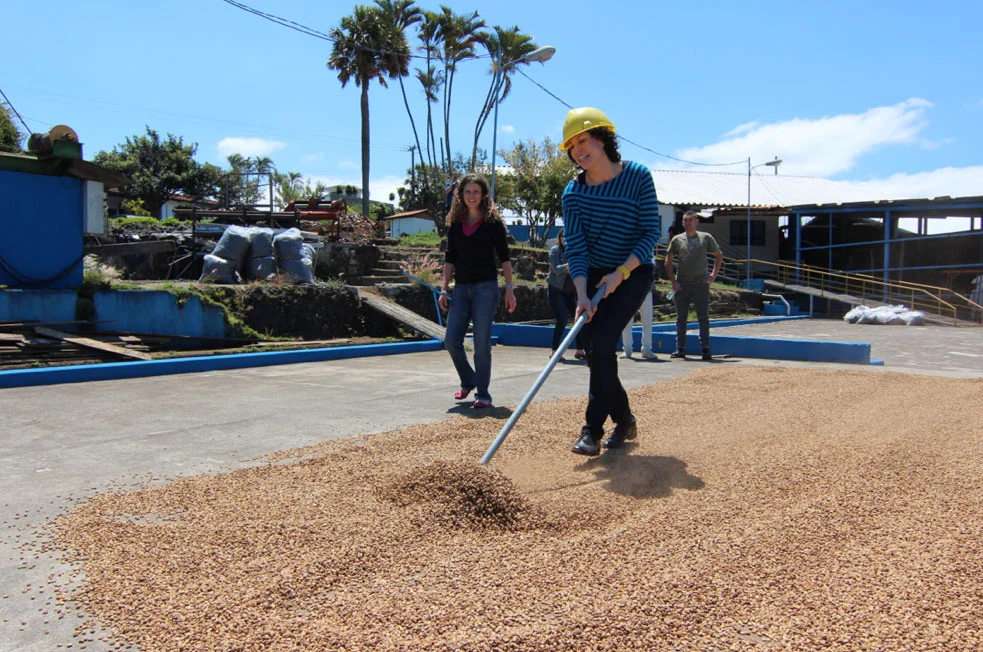
A core component of Selivanow’s philosophy is the acknowledgment of the technological shift currently transforming the coffee supply chain. She highlights that the most significant change in the industry over the last decade has been the integration of precise processing techniques at the farm level. Producers are now employing sophisticated methods—including controlled anaerobic fermentation, co-fermentation, and specialized drying protocols—that allow for the development of specific flavor profiles before the green coffee ever reaches a roastery.
This shift has profound implications for the industry. As farmers gain greater control over the chemical composition of their harvest, the traditional supply chain model is being disrupted in favor of direct-trade, quality-focused partnerships. Selivanow advocates for a shift in consumer perception, arguing that the industry must move toward a model where the labor, risk, and technological investment of the producer are reflected in the final retail price. This economic argument is supported by data regarding the "third wave" coffee movement, which suggests that consumer willingness to pay for transparency and traceability is the primary driver for sustainability in the coffee sector.
Advocacy for Representation and Equitable Access
One of the most defining aspects of Selivanow’s career is her focus on the lack of representation for professionals from coffee-producing countries. Her journey from Mexico to the United States provided her with a unique perspective on the disparity in access to equipment, education, and industry resources. She notes that in many producing nations, high-end specialty coffee remains an export-oriented product rather than a locally accessible commodity.
Selivanow’s advocacy is rooted in the belief that the "specialty" designation should include the voices and the market participation of those in the regions where the coffee originates. By bringing her own Mexican heritage to the national competition stage, she challenges the traditional, Eurocentric narrative of the coffee professional. Her efforts at the Women-Powered Coffee Summit and her work mentoring the Mexican Roasting Champion reflect a strategic push to decentralize industry authority.
The Economic and Cultural Impact of Coffee
The broader implications of Selivanow’s work extend into the sustainability of the coffee business model. She argues that the industry’s long-term health depends on the professionalization of the entire chain. This includes fair wage structures for baristas, sustainable business models for café owners, and equitable pricing for producers.
Analysis of the current coffee market suggests that businesses operating on the "Kafiex model"—which prioritizes education, direct relationships with producers, and a commitment to technical precision—tend to exhibit higher resilience against market volatility. By positioning coffee as an experience rooted in human connection rather than a mere commodity, professionals like Selivanow are helping to redefine the value proposition of a cup of coffee.
Looking Toward the Future
As an honoree of the Sprudge Twenty, Selivanow represents a demographic of coffee professionals who view their work as a holistic blend of agriculture, science, and social equity. Her career serves as a roadmap for those entering the industry: emphasizing the necessity of curiosity, the embrace of failure as a learning mechanism, and the imperative to advocate for those who are often marginalized within the supply chain.
Reflecting on her journey, Selivanow often points back to her origins in Córdoba, Veracruz, where her early coffee experiences were marked by family connection rather than technical jargon. These personal memories serve as the bedrock for her current professional output. Her ability to synthesize these emotional connections with the clinical, high-pressure environment of the U.S. Barista Championship underscores a key trend in the modern coffee industry: the successful integration of human-centric storytelling with rigorous, data-driven professional standards.
The impact of her work—ranging from her roles at Kafiex Roasters to her educational outreach—highlights the ongoing shift toward a more inclusive, globally connected, and technically proficient coffee community. As the industry continues to evolve, the contributions of individuals like Seidy Selivanow provide a critical framework for understanding how coffee can continue to serve as a medium for both economic development and cultural exchange.